

When Hellraiser came out in 1987, I can honestly say that I became a bit obsessed with it. So much so that it led me to finding the original The Hellbound Heart novella and, by proxy, the rest of Clive Barkers work. Which I also became a bit obsessed with. What stood out for me with Hellraiser, beyond the wonderful designs of the Cenobites and the practical gore, was the intelligence that permeated the movie and that I found to run through most of Barker’s work. In a time when slashers were king, here were monsters that could just as easily and eloquently debate philosophy with you as they could tear you apart. Hellraiser, and Barkers work, earned itself somewhat of a moniker for been the thinking mans horror.
It certainly didn’t hurt that Pinhead was given some truly delicious lines from Hellraiser 1 to 3 from scriptwriters Peter Atkins, Tony Randel and, of course, Clive Barker that did a great job at hinting at the deep, metaphysical ideas permeating the world. The less said about everything that came out after Hellraiser: Bloodlines, the better.
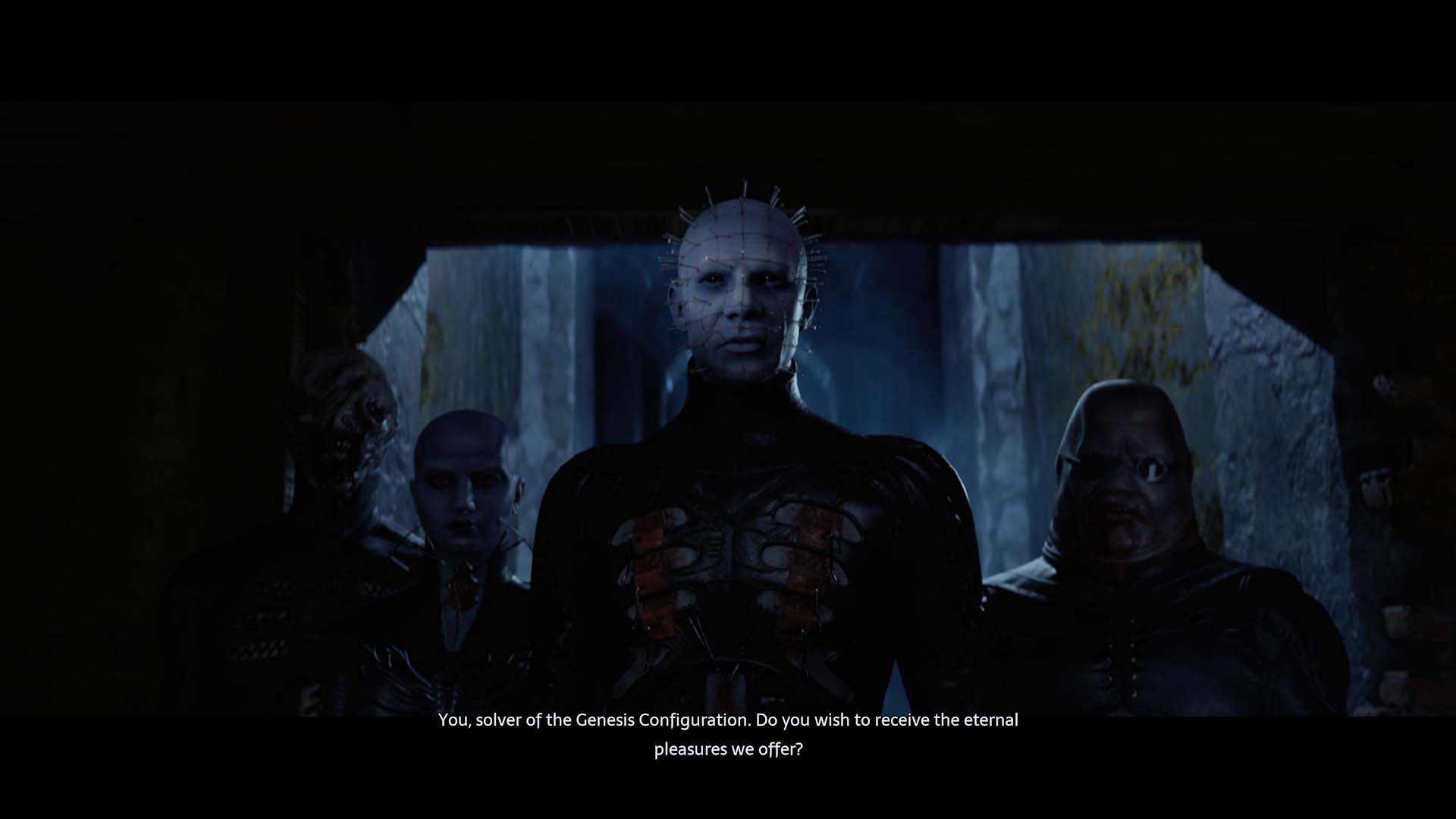
A good, new entry into the filmography hasn’t been on my bingo card for years. A videogame adaptation certainly was something I would never have expected, at least not one that didn’t delve into the asymmetrical multiplayer game-type. That would have been the easiest way to go for any developer honestly, but Saber Interactive chose another direction and instead have given us a single player Hellraiser game that really goes out of its way to adapt Clive Barkers nightmares as faithfully as possible.
And Boss Team Games have damn near succeeded with that directive!
Hellraiser: Revival is a dark, messy, hedonistic journey into the Hellraiser mythos told through the lens of a first-person survival-horror game. It’s brutal and messy and definitely not for the squeamish or those who have a disdain for… extreme sexuality.
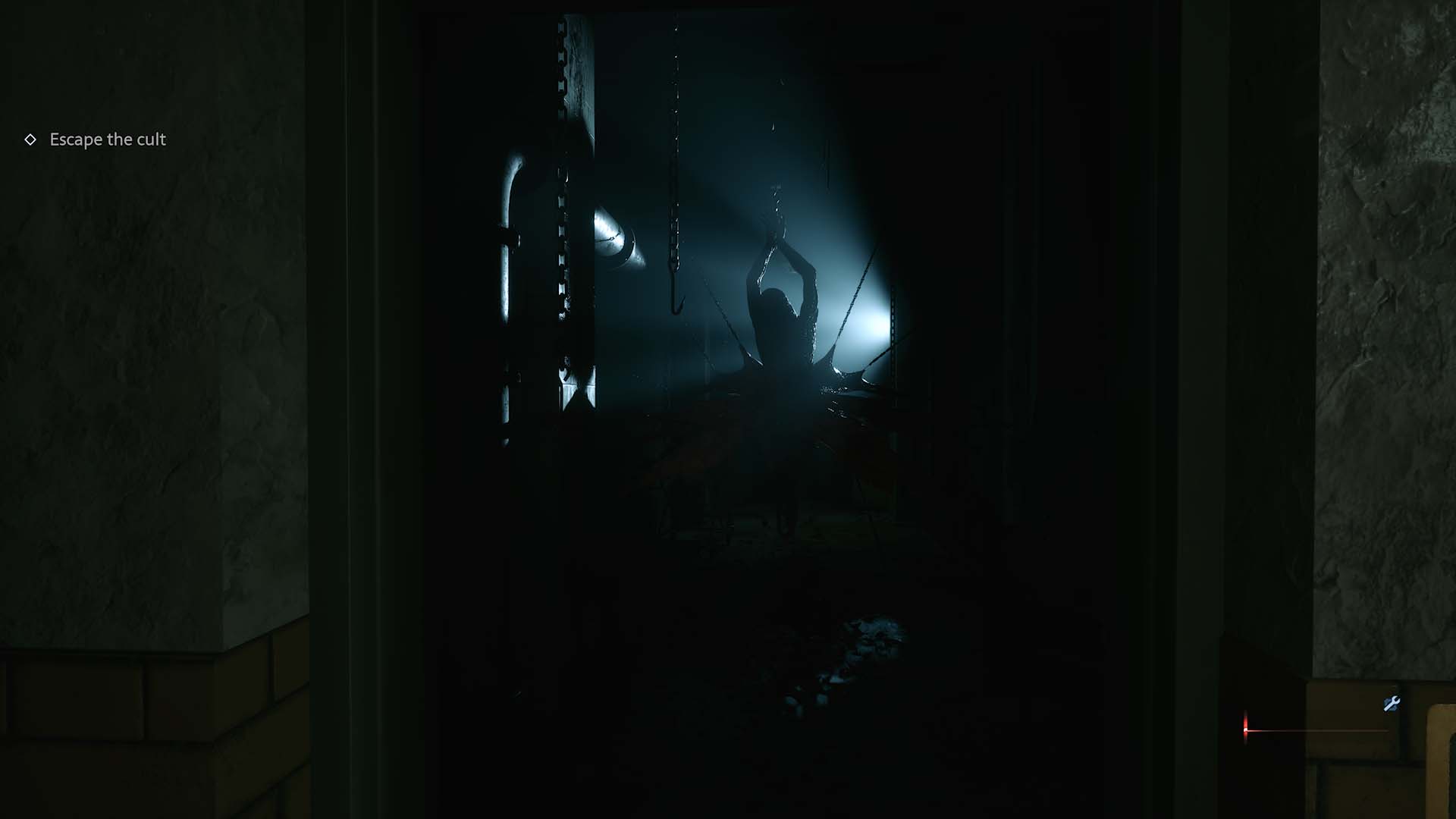
Which, in a nutshell, is a lot of what Hellraiser is about: those who break every rule and taboo to find the ultimate in physical sensation and pleasure. Only, Hellraiser definitely comes with a “be careful what you wish for” mentality.
You play as Aidan, a sexual and pain thrill-seeker who feels he’s found his love with Sunny. But when one of their after hours recreational events finds them solving a certain, mysterious puzzle-box, Aidan watches helplessly as Sunny is torn apart and transported to the Hell that is The Labyrinth. This is only the beginning of Aidan’s problems as a cult dedicated to the Cenobites and the God of The Labyrinth, has other uses for him. As do the Cenobites themselves. Aidan is given a choice: give himself to the Cenobites and he can have Sunny back.
Off course its not that easy and there’s a whole lot of hoops to be jumped through and blood to be spilled before Aidan can be properly reunited with Sunny. But like a heat-seeking missile, once Aidan has his targets, there’s only one way to go. The question is, will he survive either the Cult or the Labyrinth before his quest is successful.
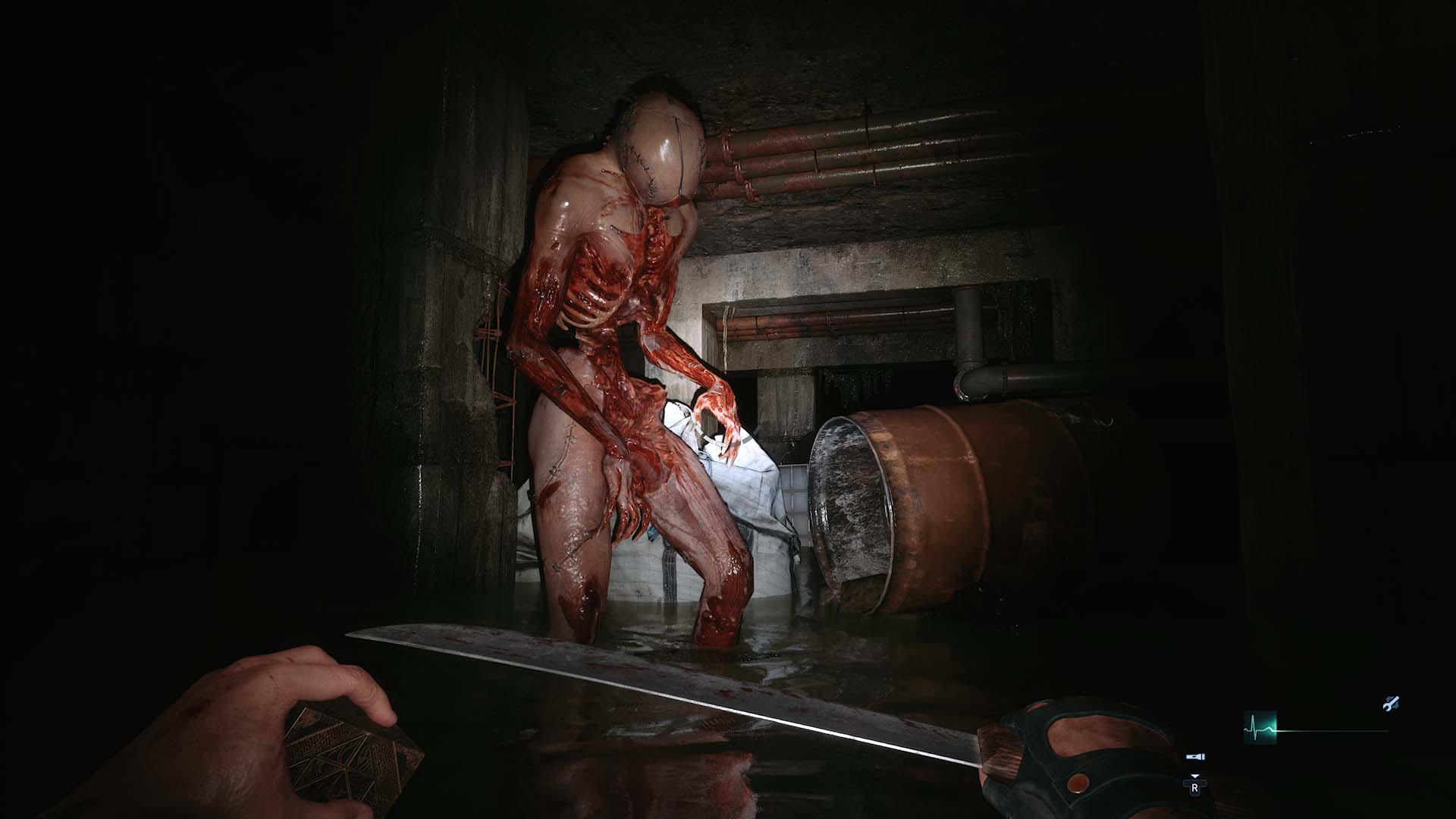
Hellraiser: Revival goes all in on the background behind what inspired The Hellbound Heart novella. So yes, there’s BDSM, sex clubs and lots and lots of leather and gore floating around the game. Make no mistake, Revival’s opening hours go out of their way to earn its 18 age restriction. But, and this is the part that’s important to note, is that side of the game quickly falls away in favour of more traditional survival horror fare and gore and shock moments. That said, those opening moments are nowhere near as explicit as they could have been. Quite frankly, there’s modern streaming and television entertainment that is far more explicit and gory. Instead there’s a heavy reliance on painting the human body as another canvas to be experimented on, as displayed by the amount of unworthy monsters trying to take you down.
Like Frankenstein’s monster and the bootleg Cenobites roaming this games halls, Hellraiser: Revival is a patchwork combination of survival-horror games and gameplay systems. There’s melee combat, shooting combat, some light crafting, item management, a shop to sell and buy goods from, and a more than healthy for itself dose of chase and instant death sequences.
Stealth plays a huge role in surviving Revival’s hordes and it’s a simple and effective enough system to make it worth your while. Crouching moves you stealthily around, though you have to be aware of broken glass and items like bottles and rocks in the environment. One can alert enemies that you’re around while the other can be used for distraction. Stealth kills are the recommended way to go, when you’re not in a horde mode section, and the kills themselves are fairly brutal finishers.
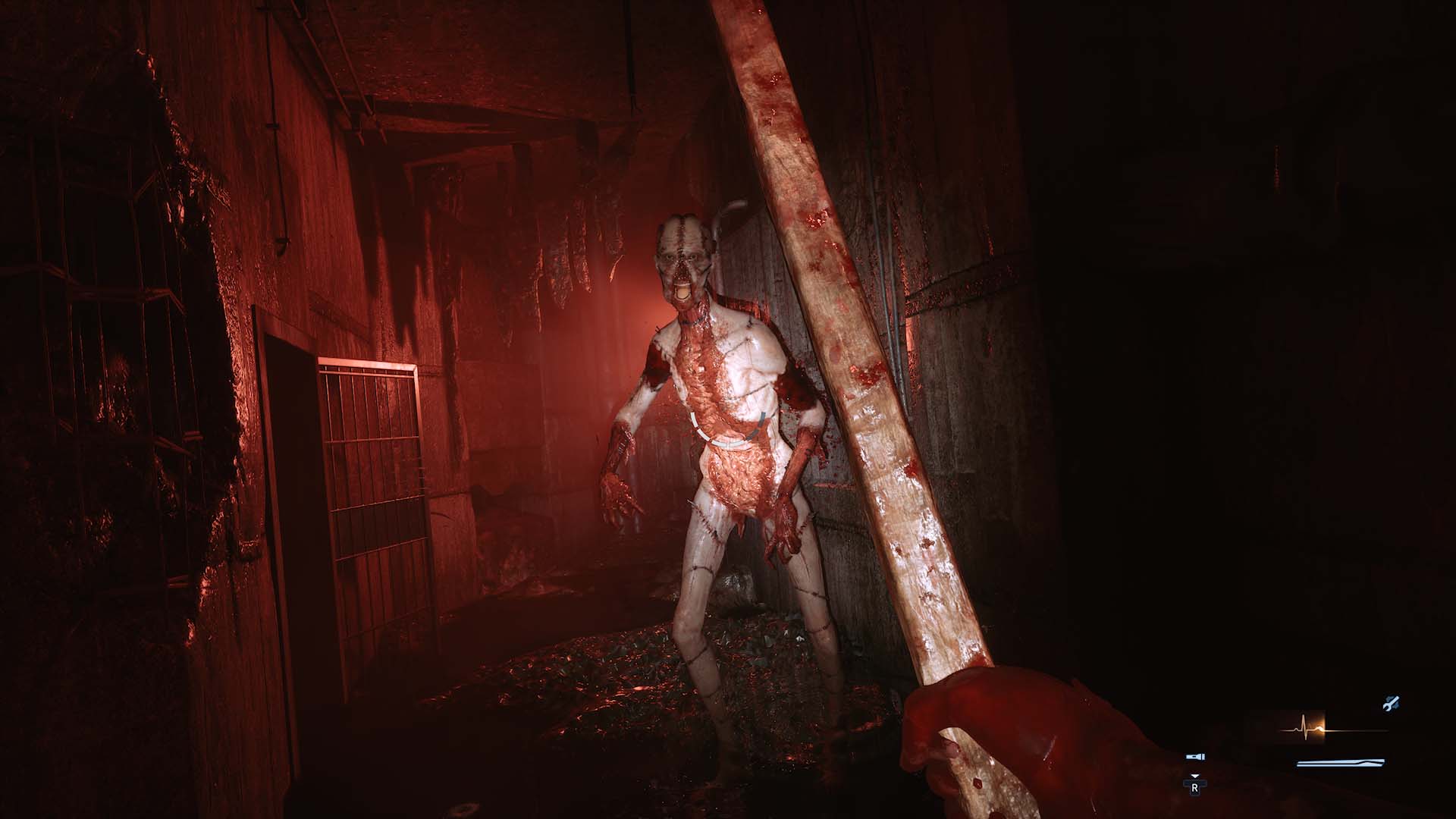
If you’re discovered it’s either melee combat or shooting your way out. Ammo is very, very limited in the environment so using a gun should be your last option. As Aidan is no combat veteran, combat in general is a slow, awkward dance between dodging enemy attacks and waiting for an opening. Even at its easiest setting, Hellraiser: Revival is challenging and the combat system the developers have put in place really do make each encounter feel like a tense fight for survival, especially if you choose to go with the melee approach. The manner in which you dodge and sway makes each encounter feel threatening and unpredictable.
All enemies come in armored and unarmored varieties. Those with no armour are easier to dispatch while those that are need you to hit or shoot the armour off of them before they can be hurt. There is a dismemberment system in place that works with what weapon you have in combat. Blades, for instance, are great at severing limbs but bounce off armour while bats and the like are great at removing opponents armour and bludgeoning them. Melee weapons have a durability meter and break once it’s depleted. You can pick up and craft repair kits to fix and strengthen them but, luckily, you’ll never be short of things to cut or stab with.
Guns do provide a nice boost to your survival odds, especially since headshots kill human opponents easily. Monsters and once-humans suck up damage quite a bit though. But bullets are very limited, even once you buy recipes to craft them yourself, so you have to really think about whether or not it’s worth taking that shot versus going in for a close kill. Guns can be upgraded with mods you can buy from the games vendor or found in the environment, but not all mods can be equipped at the same time, leaving you with decisions on what to use. Do you go for a mod that adds extra penetration power to your slugs, or for the dragon’s breath mod that lights enemies on fire? Choices, choices.
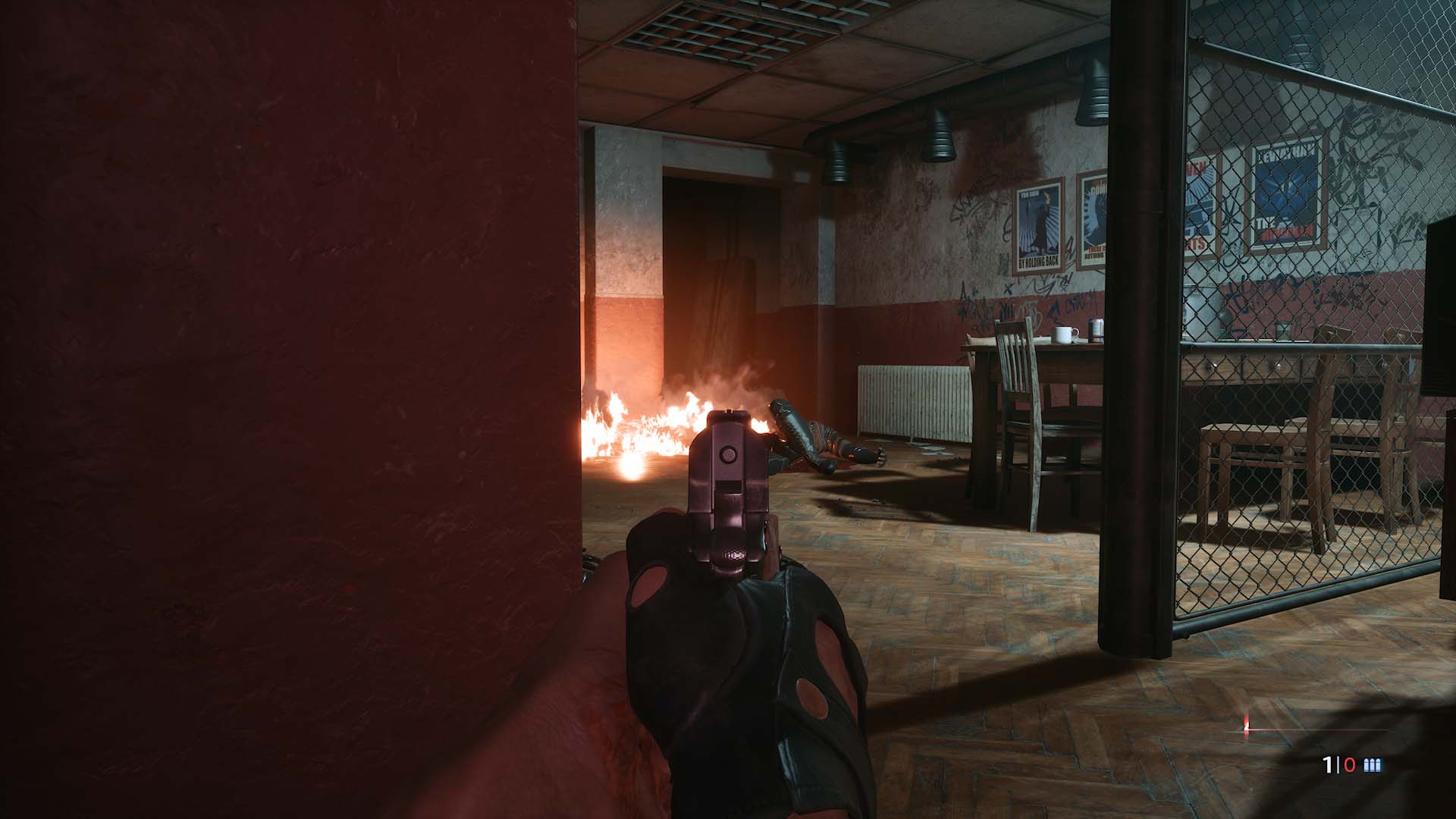
Most fights take place in small, enclosed locations, which adds to the tenseness of combat. A lot of the time there’s barely room to maneuver, let alone dodge three or four ghouls lunging at you.
Aidan does have an ace up his sleeve: the Genesis Configuration. This version of LeMarchand’s Configuration, the iconic puzzle-box of the series, gives Aidan some otherworldly powers, such as telekinesis, elemental attacks and a super that can shank everything in the room at once. The environment holds items such as rusty nails and sawblades that you can fling into enemies and cut them in half so there are a variety of ways to approach combat. That said, even with the puzzle box in your possession, there’s never a moment where you feel overpowered in Hellraiser: Revival. The developers have done a great job of making you always feel like you’re on the back foot.
Apart from sharp, stabby melee weapons, everything else, including those saw blades, is desperately limited.
There’s a light crafting system in place. Items scavenged from the environment can be used to make bandages, band-aids, shotgun ammo and even bear traps. But as with everything else, this is limited and you have to choose what you’re going to need more than something else. Recipes are brought through the games merchant and more become available throughout the campaign.
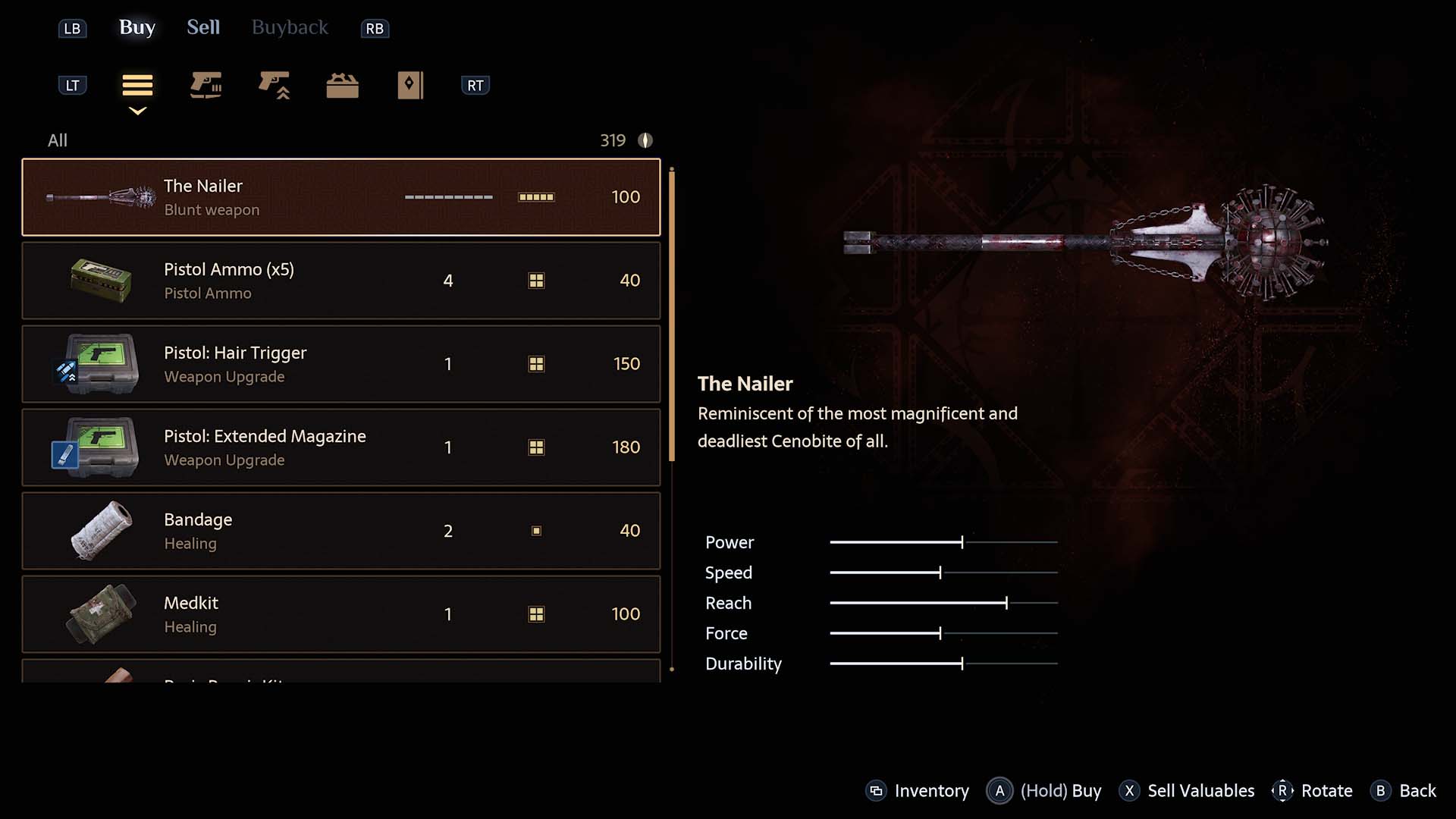
Speaking of said merchant, you can sell unwanted items to them and valuables, while they will provide you with the more exotic weapons as the campaign goes on. If you hadn’t noticed the theme in the game already, money, as well, is in short supply. You can pick up coins in the environment or from enemies that drop them, but you’re going to be really thinking about what you should be spending it on.
In traditional survival-horror tropes, there’s a limit to what you can carry in your Resident Evil-inspired grid spaced inventory. You will pick up inventory space add-ons, but you’re always going to be constrained to what you can keep on you. You can store items in a storage box, but its space is also limited. Thankfully, quest and puzzle items don’t take up inventory space. That’s reserved for you to decide what you may need and hope you don’t run out of.
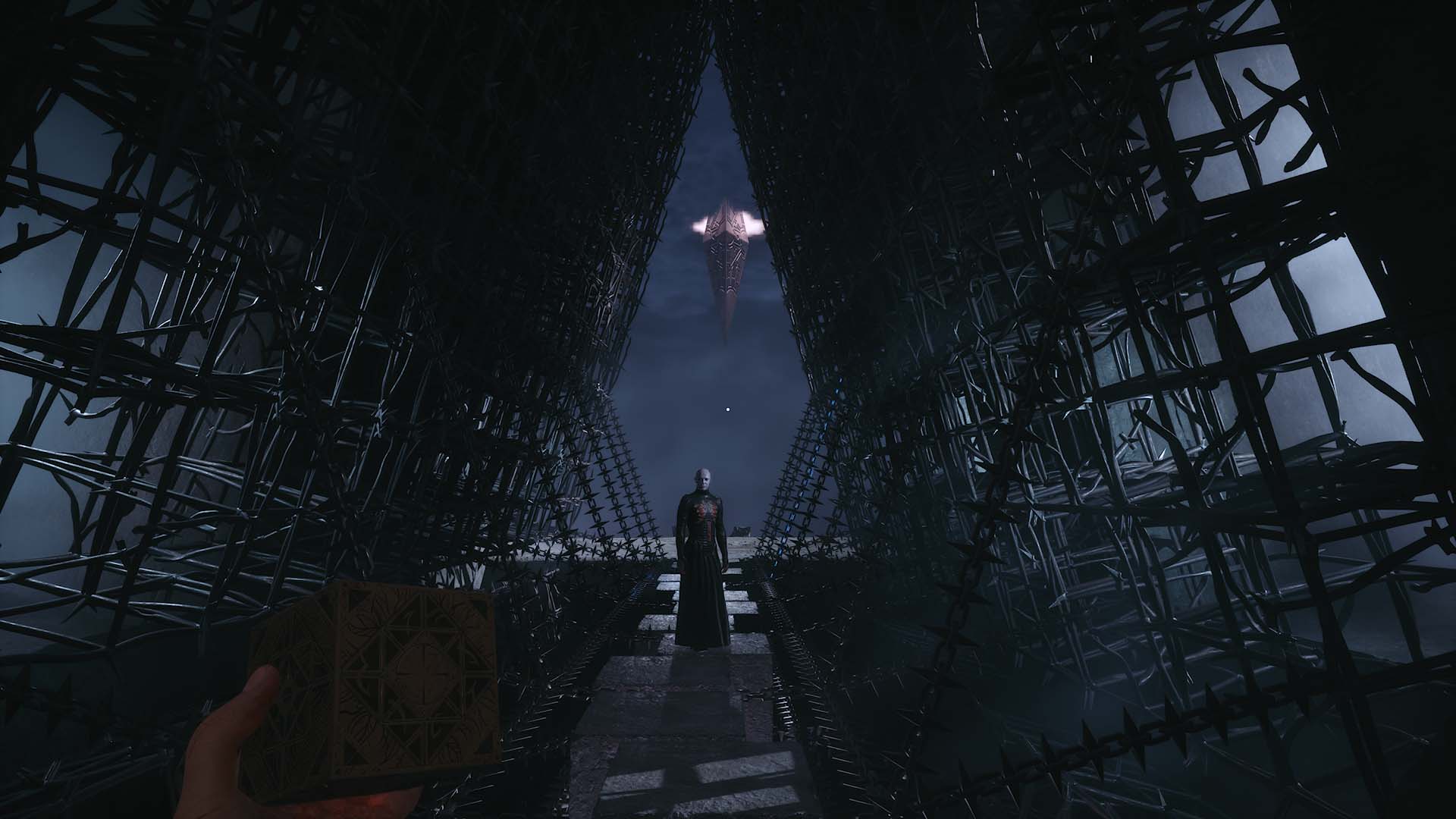
There’s also some light puzzle solving here. Most of it is environment puzzles of the find this and use it here style. Occassionally you’ll find something a bit more taxing, such as connecting the right wires in an electrical box. The slightly tougher environment puzzles require you to use the box to move the labyrinths paths and blocks around you. And they’re only tough because you’ll probably be tasked with doing this to create a path while been chased.
Which brings me to the one game style that I don’t particularly like: instant death chase sequences. Of which Hellraiser: Revival has more than its fair share. Once is fine, two is okay, but by the fifth time you’re running through the labyrinth from some demonic entity looking to separate you from your skin, it gets a bit tiresome. Getting caught is instant death and while the game loads you instantaneously right at the start of each sequence, it’s still a tiresome gameplay style that, for me, is far too overused here.
Visually Hellraiser: Revival is a stunning looking game. The development team have gotten the original Cenobite designs down perfectly. Quite frankly these are the best looking models in the game. The various ghouls are also wonderful realisations of wrecked humanity. And the labyrinth is stunningly realised, especially in the panoramic shots that make you stop to grab your breath when presented with the vastness of this chamber of horrors. It’s backed up by some great sound design, especially the tolling of bells style music that heralds the coming of the Cenobites or when you’re getting a look at Leviathan itself. The entire game is suitably, audibly… squeashy.

If there’s one negative for me to the entire experience it would be that, even with Clive Barker on board, this misses the intelligence and philosophical and metaphysical underpinnings of the source material. It gets all the gooey parts right, and highlights exactly what people would do when presented with powers greater than them, but feels a little lacking in the thought department. Don’t get me wrong, it’s a good story about obsession, but I would have liked a bit more mental meat to chew on. No pun intended.
Hellraiser: Revival is a revelation. As a tie-in game to an existing cinematic universe that, not only understands the world, but gets its adaptation right without sacrificing much of what makes it so unique. It’s a gloriously messy and demented dive into a nihilistic universe of pain and suffering that, while it could have done with a bit more depth, captures the spirit of Hellraiser perfectly. Here’s hoping that Saber Interactive get the go ahead to keep telling more stories in the Hellraiser universe.
Pros:
- Faithfully captures much of what makes Hellraiser Hellraiser
- Tense survival-horror gameplay
- More quality Pinhead is never a bad thing
- Beautiful visuals and great sound design
Cons:
- Far too many chase and instant death sequences
- Could have done with a bit more depth in the storyline
Score: 8/10
Hellraiser: Revival was played on Xbox Series X using a code provided by the publisher. It is also available on PC, Xbox Series S, PS5, and Nintendo Switch 2.

