Author: M. A. Ligocki

  • Review: Turbo Kid (Nintendo Switch)

    Review: Turbo Kid (Nintendo Switch)

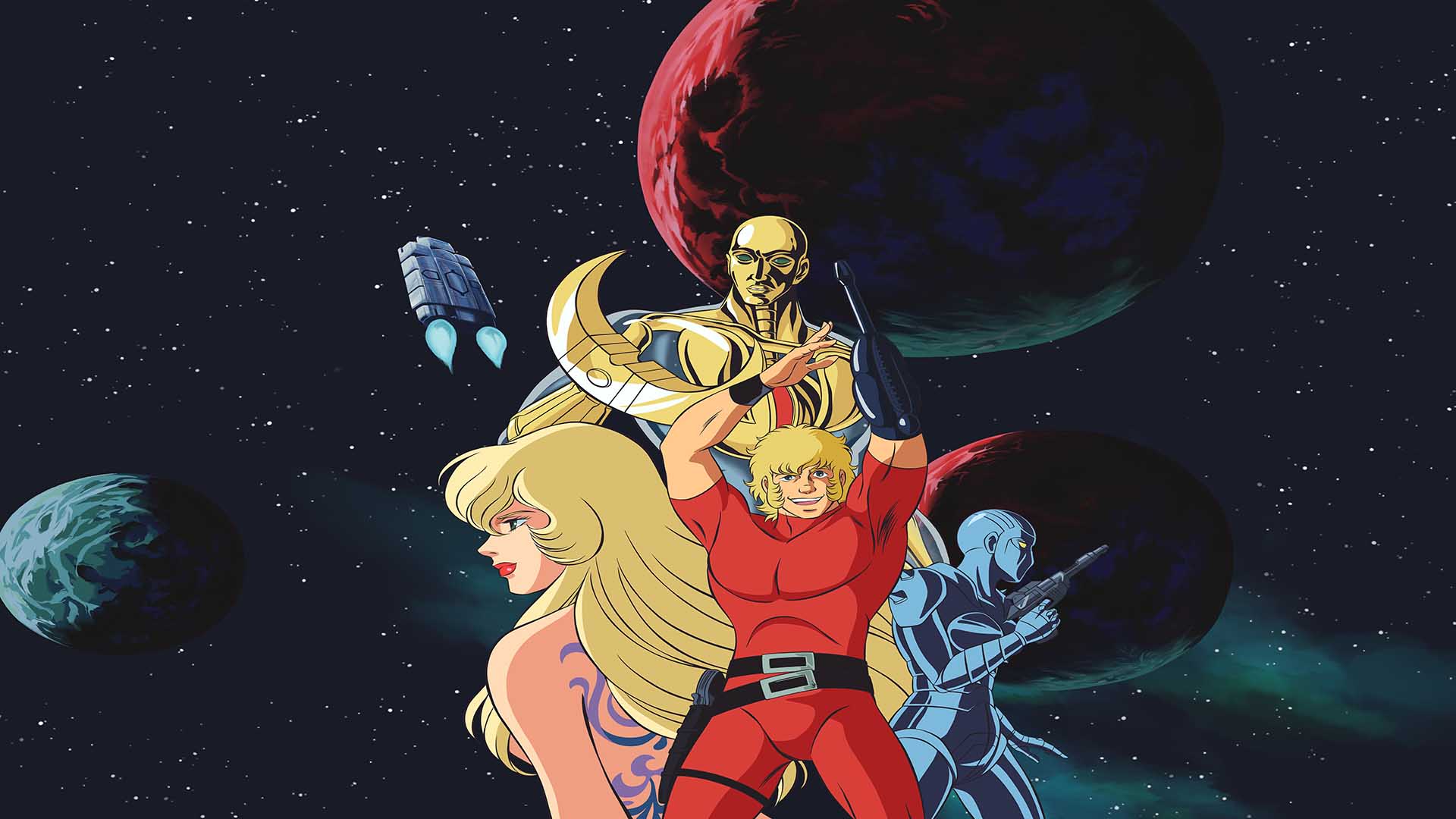
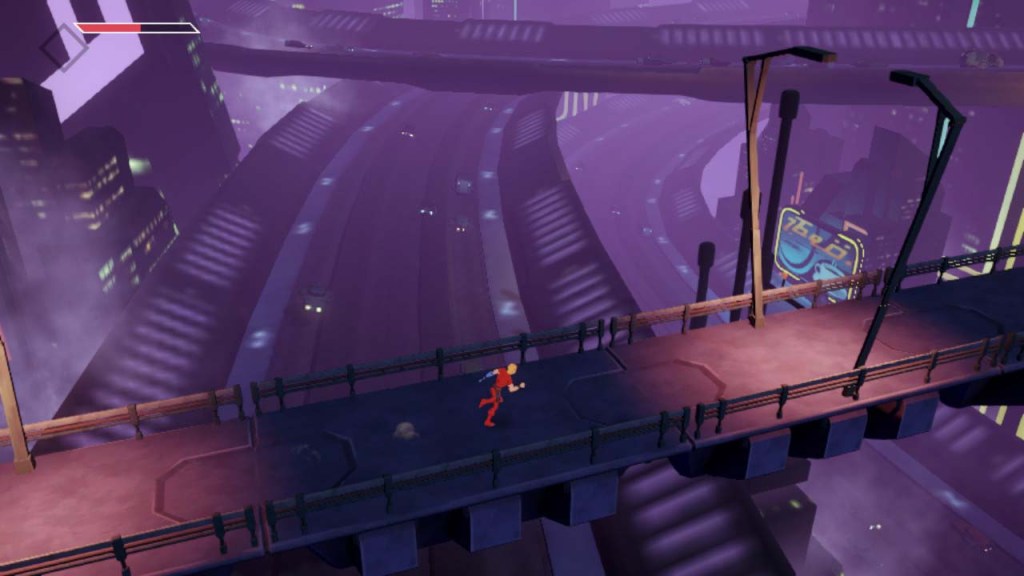
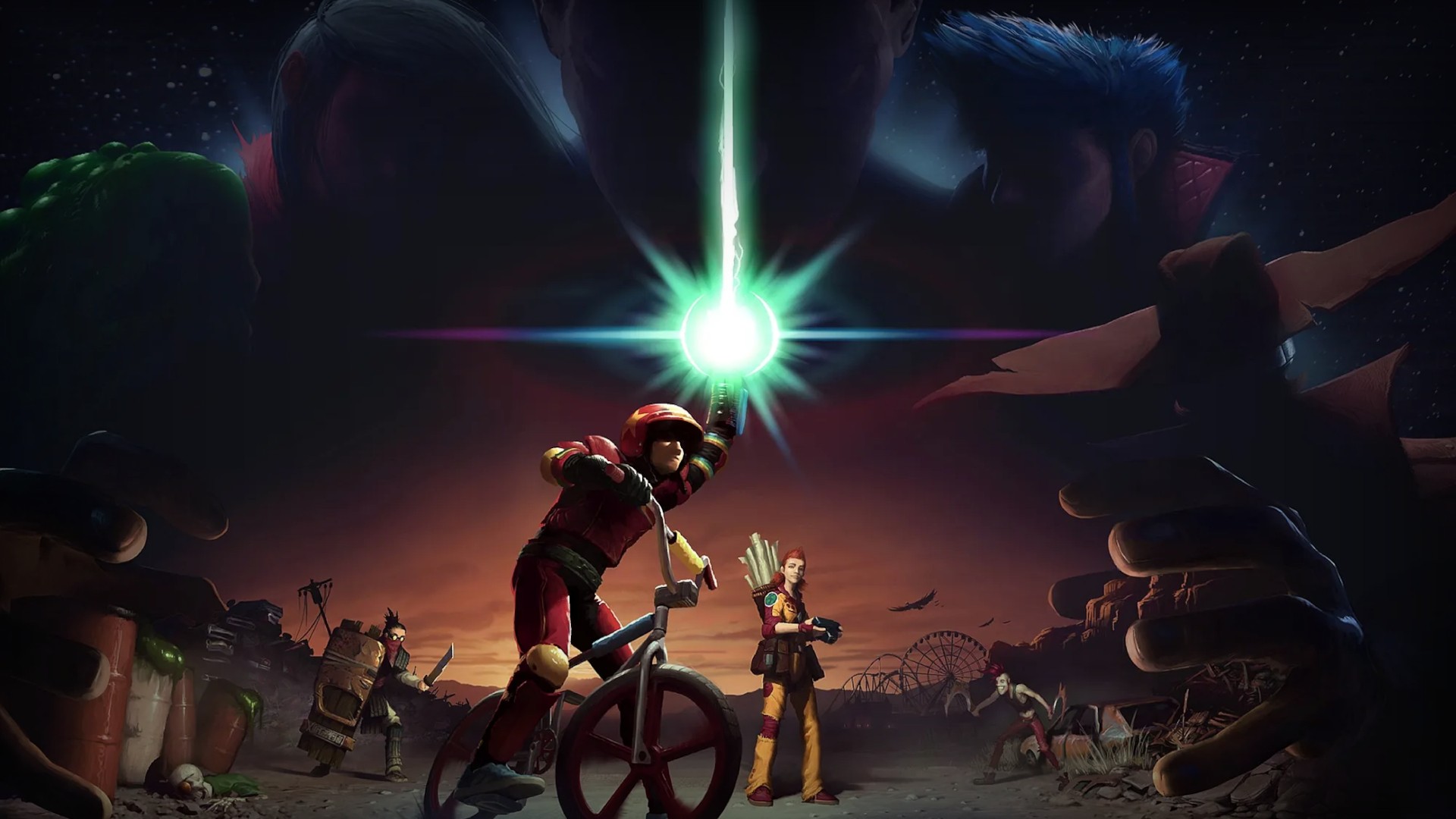
    Once upon an apocalypse, in a 1997 wasteland, there was a kid, his friend, and a bad guy trying to control everything. With his BMX and Turbo Glove, the “Kid” had no choice but to take on the bad guy in a no-holds-barred, gory brawl. But, when the dust had settled and the damage was too great, the Kid rode away into the Wasteland sunset to explore what was left of the world.

    That, boiled down to its essence, is the synopsis of Turbo Kid, a low-budget SF/Superhero movie that, most likely, many have never heard of nor seen. That makes reviewing a videogame based upon said movie a rather amazing thing in of itself. Not only because it’s based on a movie that came out in 2015 and promptly disappeared into the cult market, but because movie tie-ins have a checkered past. The chances of a good adaptation are, as we’ve sadly come to accept, pretty thin on the ground if not backed by massive studios.

    We throw around the expression “labour of love” around a lot when it comes to entertainment and this is one of those times where it shows throughout the experience. Developers Outermind Inc., have joined forces with the original movie team to create an experience that channels the essence of the movie, while expanding upon it in significant ways.

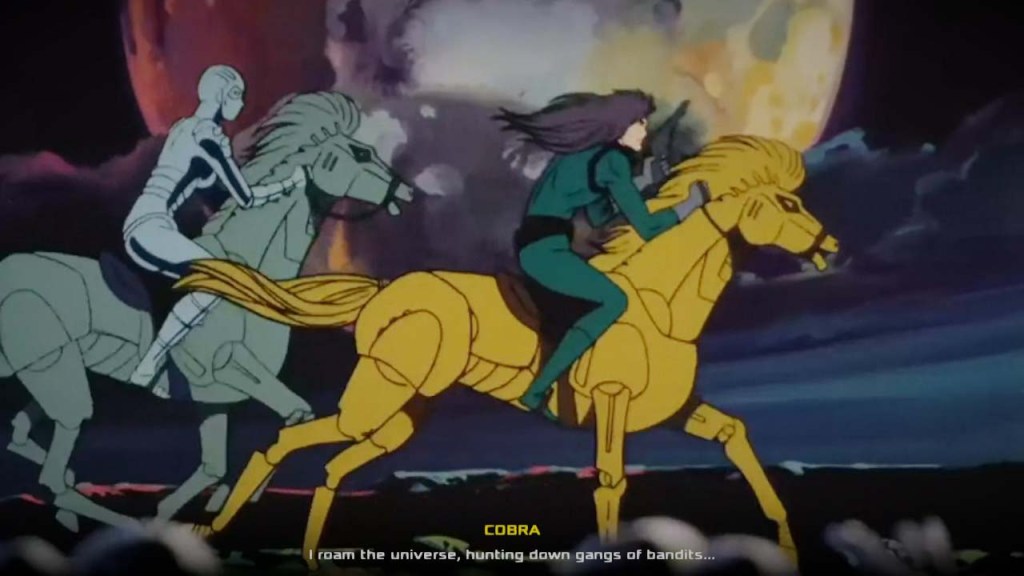
    The world feels bigger and more detailed, with a history behind it that shines through in what you’re told, along with the many visual clues showcasing this new version of post-apocalyptic 1997. There’s a new cast of odd characters, even weirder situations, and a more fleshed out take on the world revealed through impressive visual storytelling.

    The game doesn’t set out to recreate the movie in playable form, instead it continues where the movie left off with the Kid riding out into the Wasteland. He doesn’t get very far though before he’s ambushed and robbed of his weapons and bike. Thus begins a new journey to get his stuff back that eventually dovetails into a new threat for the struggling survivors of this world.

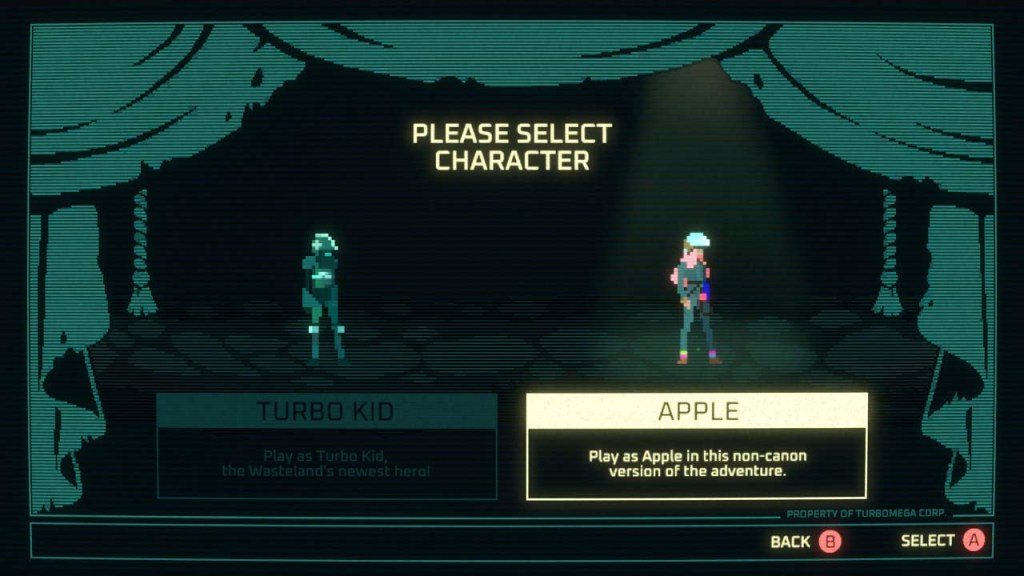
    The Kids journey is canon, though there are two playable characters you can choose from: the Kid or his friend Apple. Apple’s journey is a non-canon one and, even if you haven’t watched the movie, it’s not hard to guess why.

    There’s a lot of story on offer here, either to give context to what’s happening or merely to add some humour to the proceedings – usually through the sidequests which are fun to do because of how they play out versus the rewards. There’s a giant mutant rat looking for sweet, sweet turtle meat; a mysterious voice educated on bygone cult movies; and a sad tale of a robot looking for meaning, amongst others.

    While the story alone is worth the price of admission, we’re lucky that it’s been paired with some truly addictive gameplay.

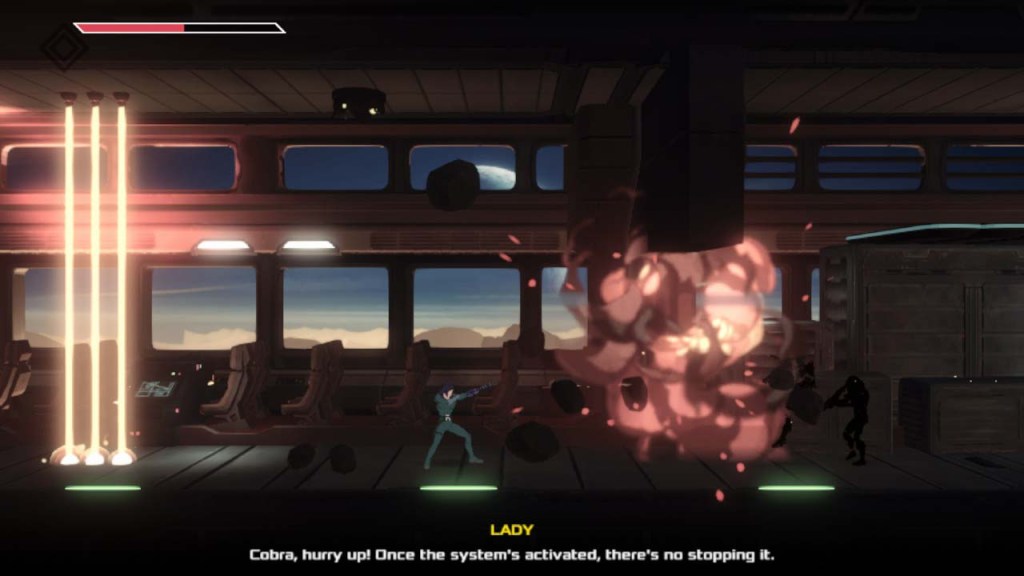
    Turbo Kid is as Metroidvania as it gets, following the common gameplay designs to a tee. There’s the expansive world to explore, replete with blocked off passageways and doors that can only be opened with new abilities; a variety of enemies that make exploration challenging; hidden pathways to find; and bosses to fight for the aforementioned abilities.

    While that is as traditional as it gets, Outermind have managed to implement whatever digital magic it is that makes a genre you’ve played a thousand before times feel just as exciting and fun as your very first go around. Turbo Kid managed to grab me right from the get go and never let go.

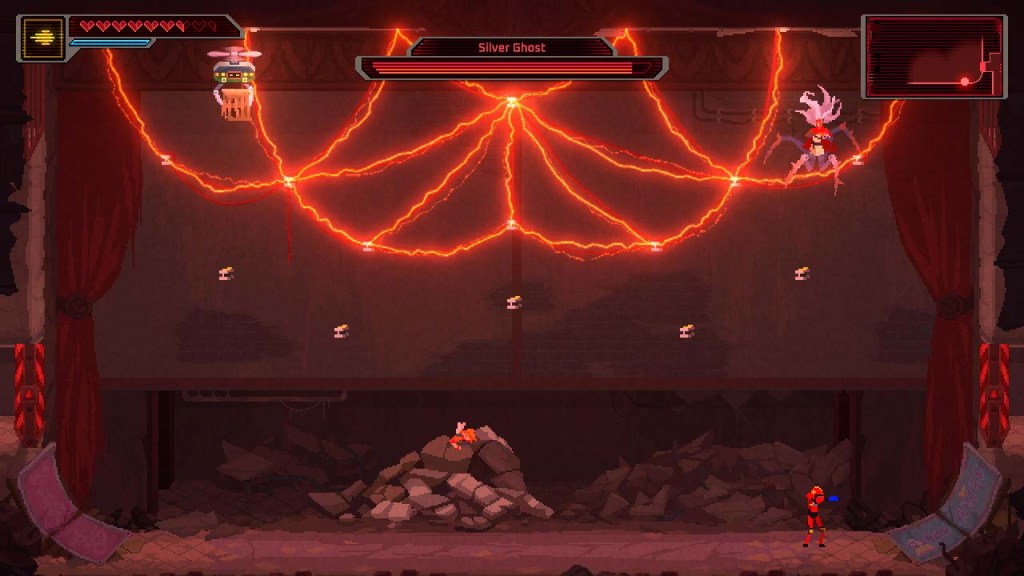
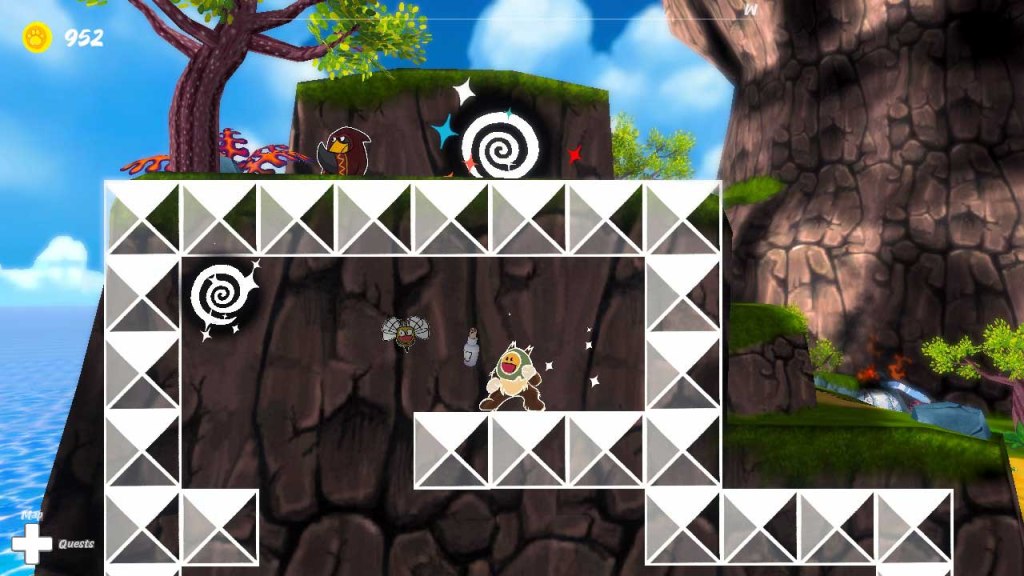
    As expected, the Kid’s BMX plays a huge part in traversing the landscape once you’ve reacquired it. Thanks to the magic of technology, you can teleport it to you anytime, anywhere. Once you have it in your arsenal, it becomes even more apparent just how much like a BMX track the world has been designed to emulate. The labyrinthine layout makes great use of half-pipes and jumps to get you around and reach those hard-to-get to areas. You can pull off tricks on your bike and engage in races for various upgrades, such as spiked tires that help you scale walls and ceilings. And it plays just as much a part in the multiple-stage boss fights as your Turbo Glove does.

    While the bulk of your upgrades will be familiar – such as Air Dashes and charged shots – the game lets you customise passive abilities through a chip system which gives you extra abilities or enhances standard ones, such as letting your BMX’s spike wheel ability last longer. You can only equip three chips at a time though.

    One control aspect that took me a bit of time to come to grips with is needing to hold down a button to crouch. Holding down a shoulder button for precision aiming was fine, but having to hold one to crouch went against years of ingrained muscle memory of just pressing down on a D-pad or analog stick to crouch in a 2D game.

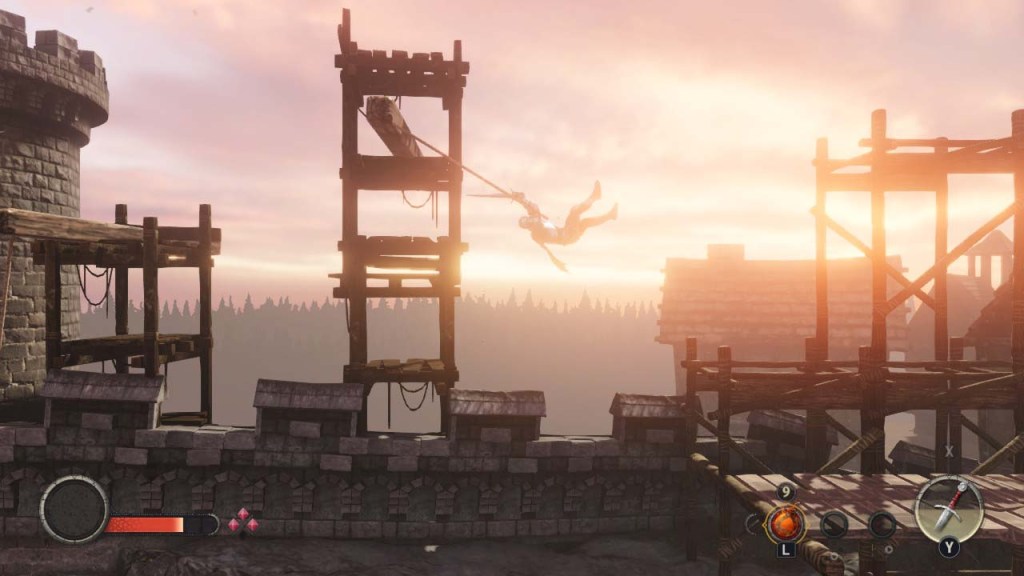
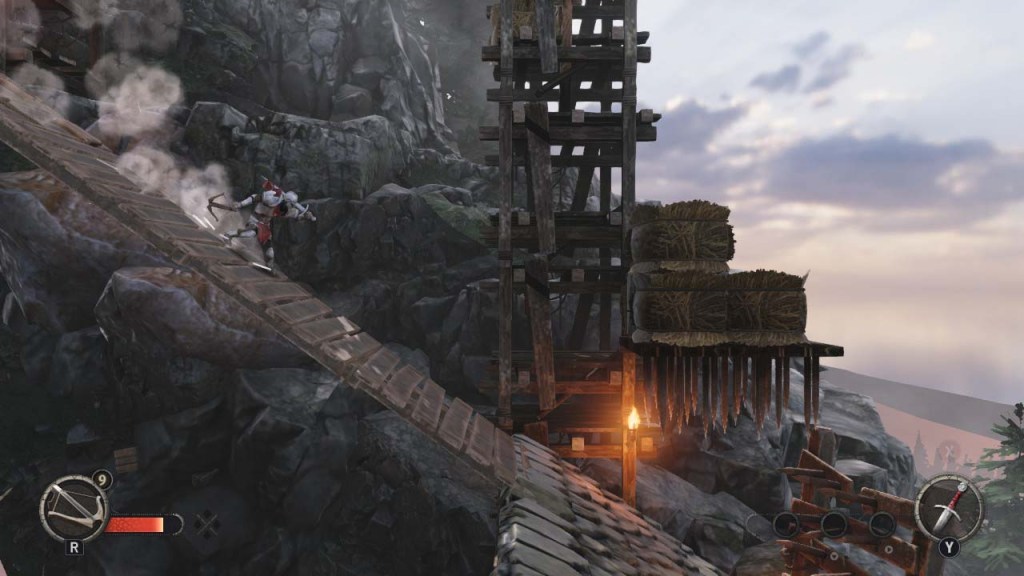
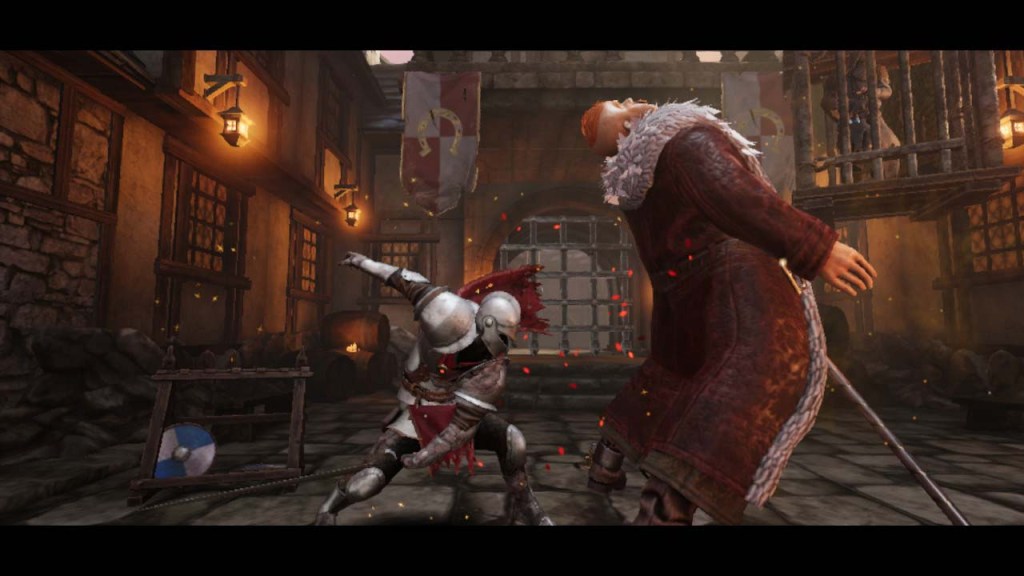
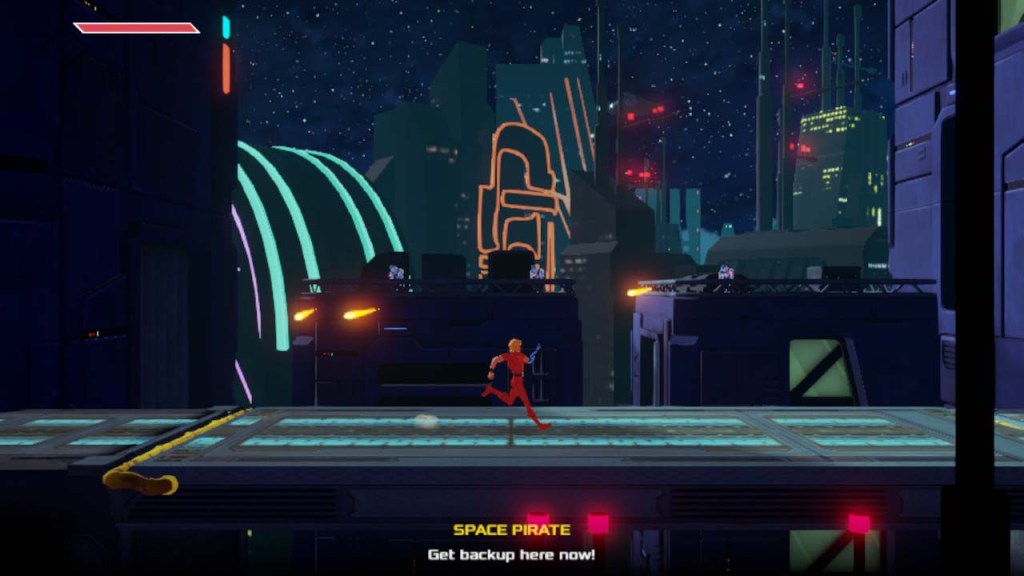
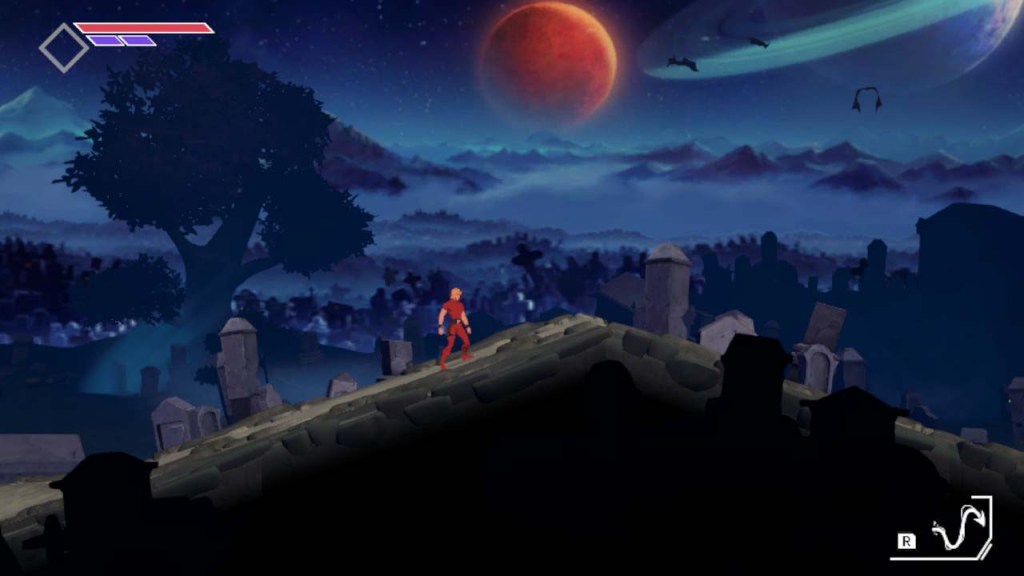
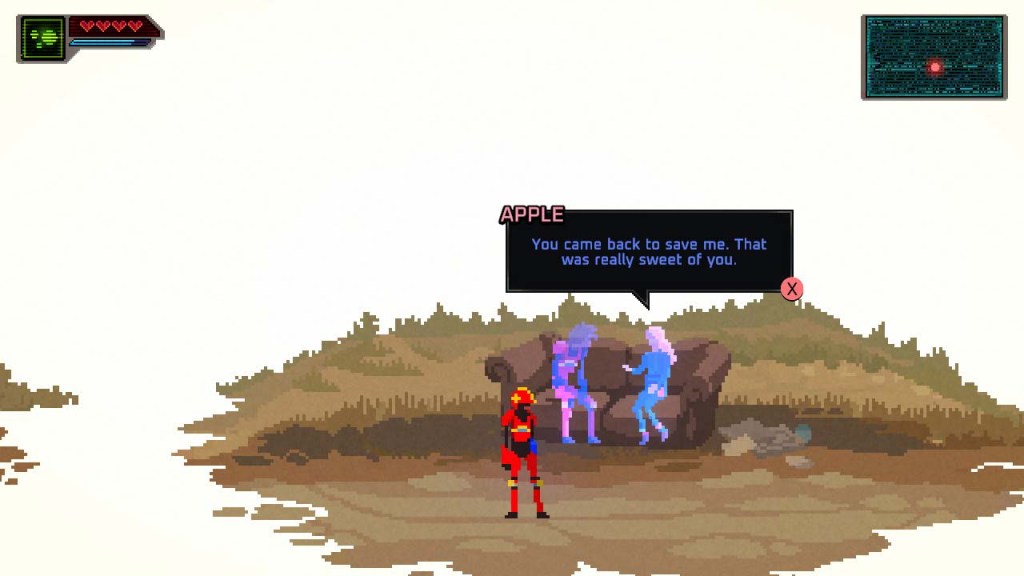
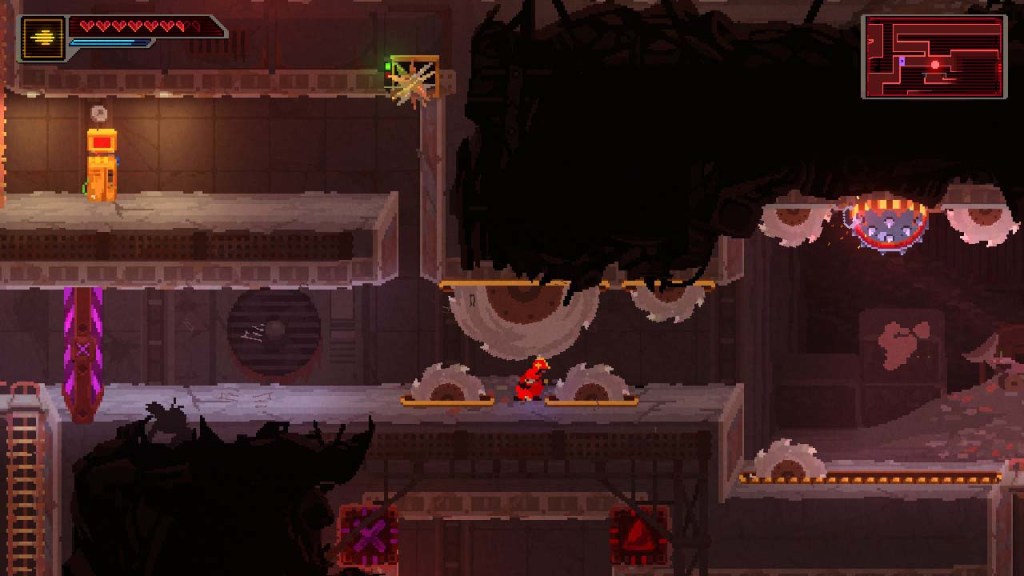
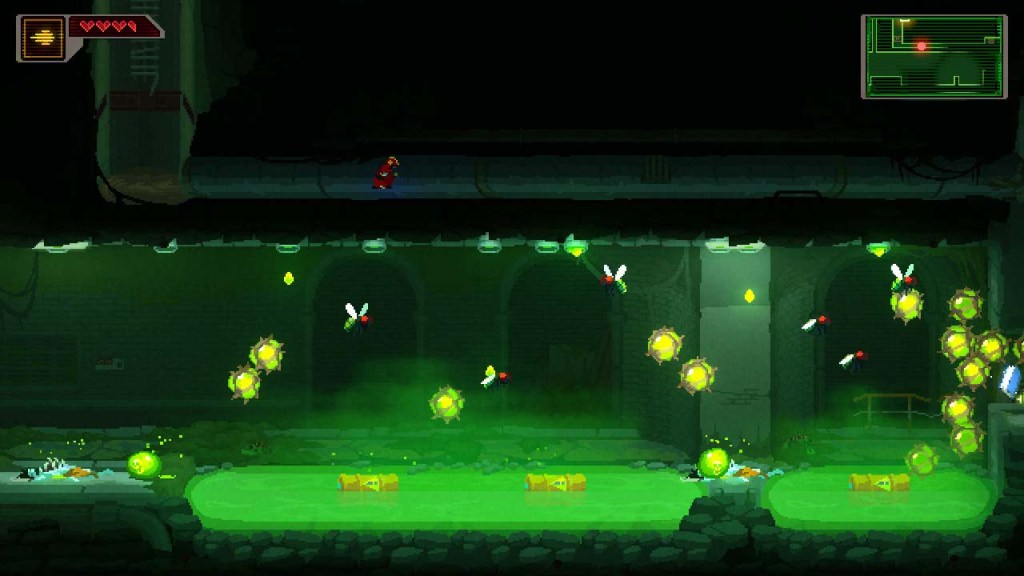
    Visually Turbo Kid is a gorgeous pixel art game featuring wonderful animations for both the characters and background elements. As I’ve stated before, the visual design does a ton of heavy lifting in breathing life into the world while telling you it’s backstory.

    From the enemies that heft weighty spiked shields around to those ambiguous, drill-headed characters in the background drilling through garbage, Turbo Kid is gorgeous to look at. The art style reminded me of that classic 1991 2D adventure game Another World, though a more direct inspiration can be found in that other phenomenal 2D action platformer from 2021, Narita Boy. And it’s all rounded out with a pretty good soundtrack to boot.

    If I have any issues with Turbo Kid, it would be that boss fights, while inventive, can feel a little bullet spongy. It’s the one area in the game that did frustrate me occasionally, but on the whole, Turbo Kid is a case of the stars aligning to buck the trend of poor movie tie-in adaptations. It’s addictive, impressive, and a whole heap of fun that kept me hooked from the opening to the finale. Turbo Kid isn’t just amazing, it’s bloody brilliant and one of the best games I’ve played this year.

    Pros:

    • Fun and addictive gameplay
    • Fleshed-out world
    • Gorgeous visuals and animations
    • Labrynthine maps
    • Great soundtrack

    Cons:

    • You need to hold a shoulder button to crouch
    • Bosses can feel like bullet sponges

    Score: 9/10

    Turbo Kid was reviewed on Nintendo Switch using a code provided to gameblur by the publisher. It is also available on PC and Nintendo Switch 2.

  • Review: Dead of Darkness (Nintendo Switch)

    Review: Dead of Darkness (Nintendo Switch)

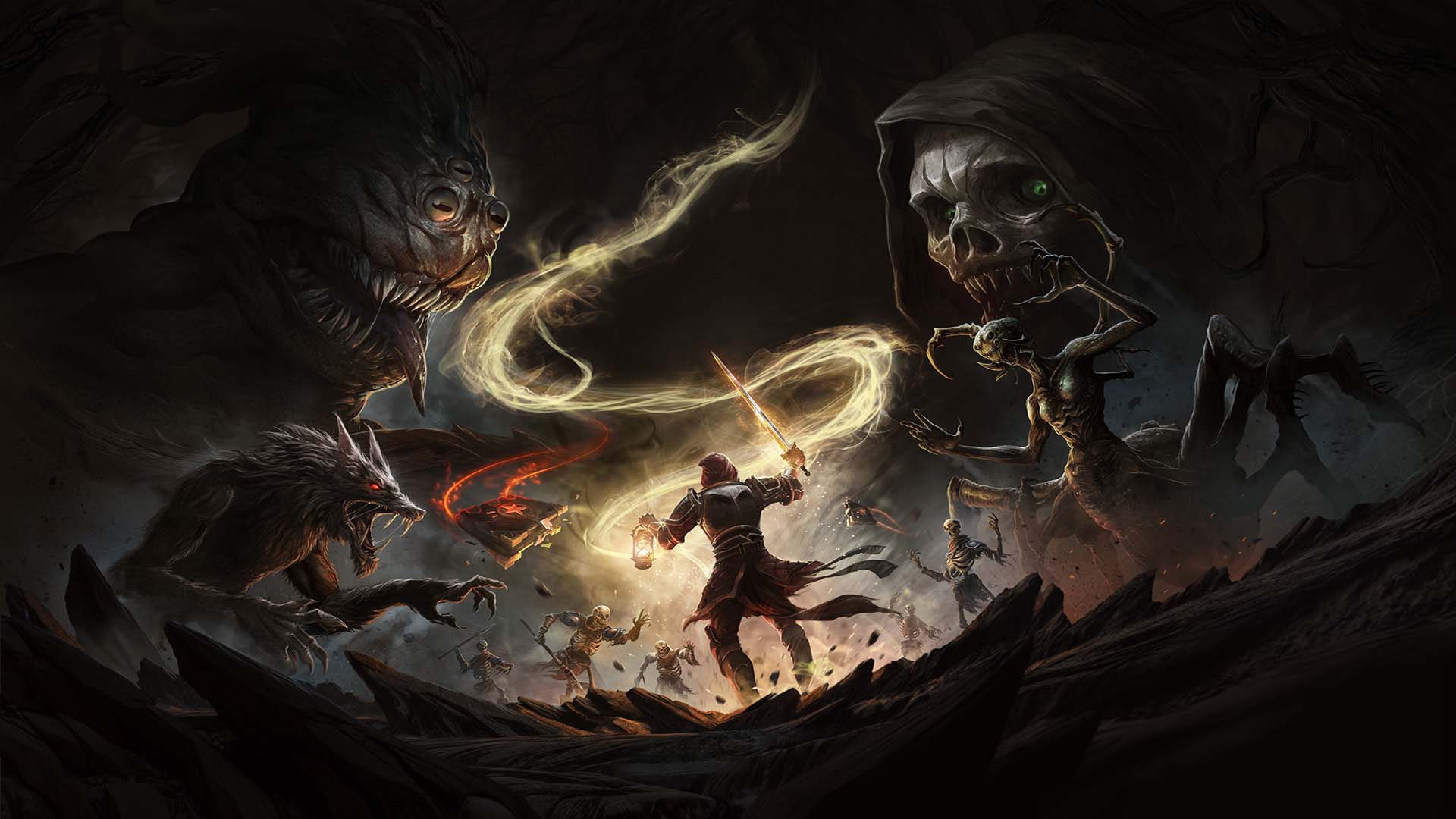
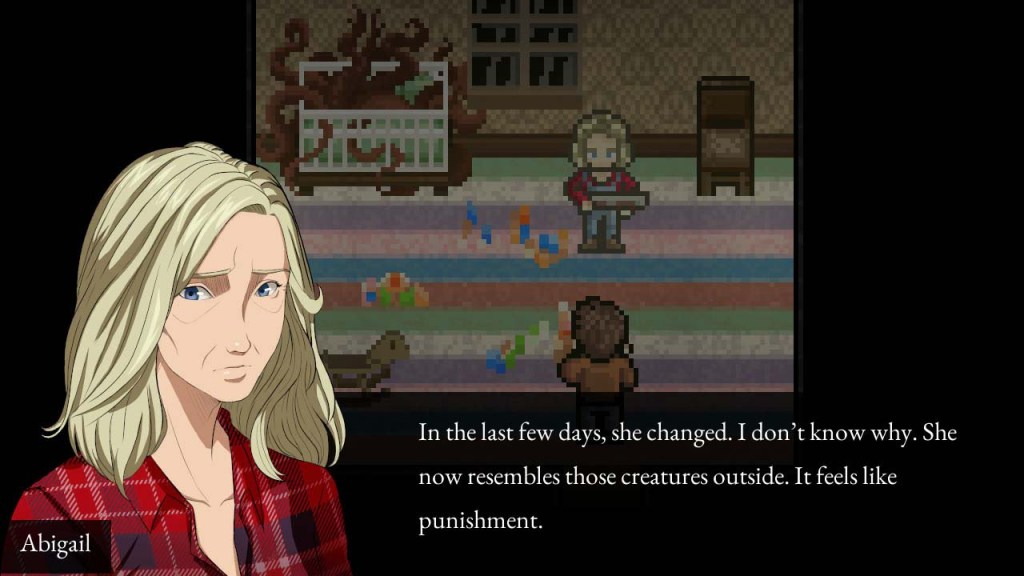
    Dead of Darkness is the kind of title that screams pure pulp horror. The kind of title you’d expect to see plastered on the cover of an ‘80’s direct-to-VHS horror. You know the kind, on the shelf in the dark corner of the store that you’d rent for the weekend, watch on repeat with your best mate, and then talk about for years even if wasn’t any good. Yeah, it’s that kind of pulpy, badass title.

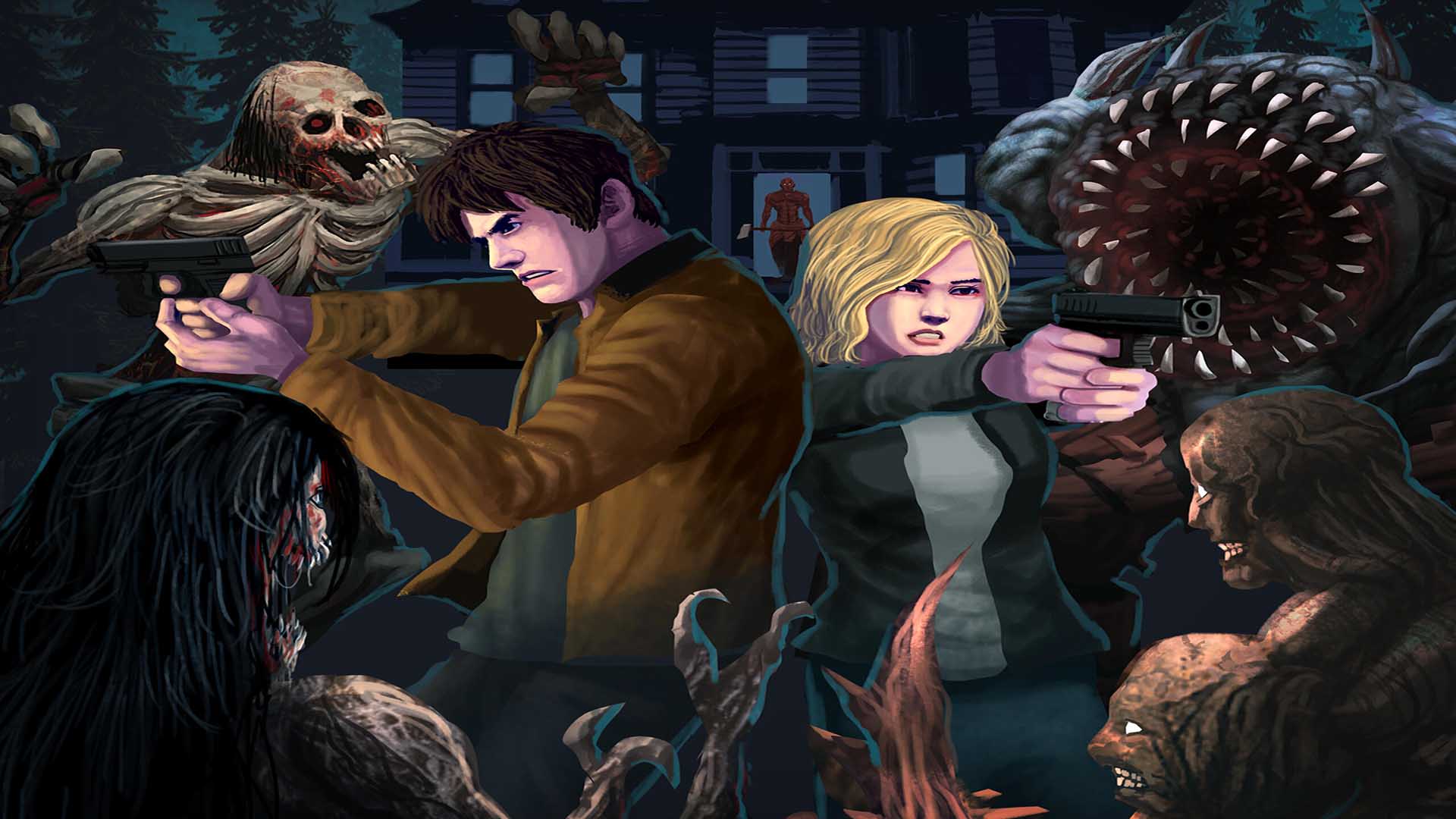
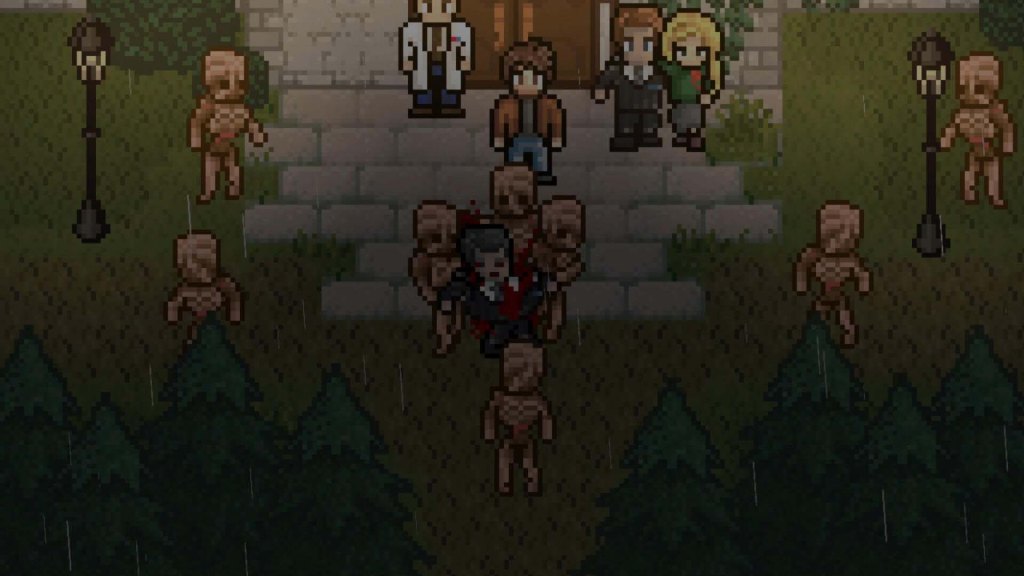
    But instead of a movie, it’s strapped on to a 2D survival-horror title. The sort that we might call a love-letter to the greats of genres past. Dead of Darkness takes us back to that time when survival-horror ruled the roost and you couldn’t take two steps outside your front door without been accosted by any number of games trying to cash in on the genre’s success. The game is bathed in the tropes of old school survival-horror, from the story to the various gameplay mechanics. It’s like a mash-up between Resident Evil and Alone in The Dark, with a bit of cosmic folk horror thrown in for good measure.

    Like any good pulp horror story, Dead of Darkness provides us with a colourful cast of characters and a significantly ominous location. A damaged ex-cop turned drunken private eye? Check. A mysterious, isolated island chock-full of secrets? Check. A strange family that aren’t all that they seem to be? Check. Armies of monstrous abominations stalking the darkness? Double-check to infinity and beyond!

    Set in 1985, Dead of Darkness throws you into the shoes of a reluctant P.I. When a letter arrives asking him to come to Velvet Island for answers surrounding his daughter’s death, Miles Windham doesn’t hesitate to grab the next ferry out. But things on the island are about to go from bad to worse when a scream shatters the dead of night.

    Instead of throwing us into a classic whodunit, Dead of Darkness propels us headfirst into a creature feature as monstrous forms roam the island and mansion hallways, tearing apart anyone foolish enough to get too close. The shambling horrors are only the beginning though and, as the night crawls on, nastier creatures come looking for a snack too. Does the island harbour the truth Miles needs? Will he even survive to find it?

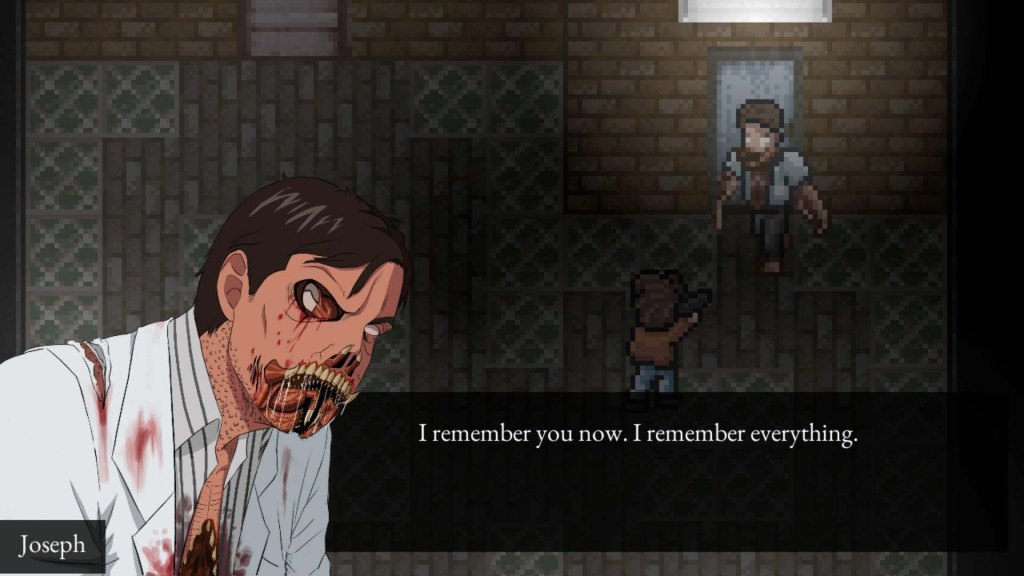
    The only way you’re going to know that is to run through Velvet Islands death trap locations. And, thankfully, the games story is it’s single, strongest element pushing you forward. This twisty, turny tale is powered by some great voice acting as well, though be warned, like Still Wakes the Deep, there’s surprisingly adult language chucked your way at times. And while the usual Resident Evil-like ne’er-do-well corporation conspiracies do make an appearance, the bulk of the narrative – also fleshed out through plenty of letters – is a really good tale and well worth the time to explore.

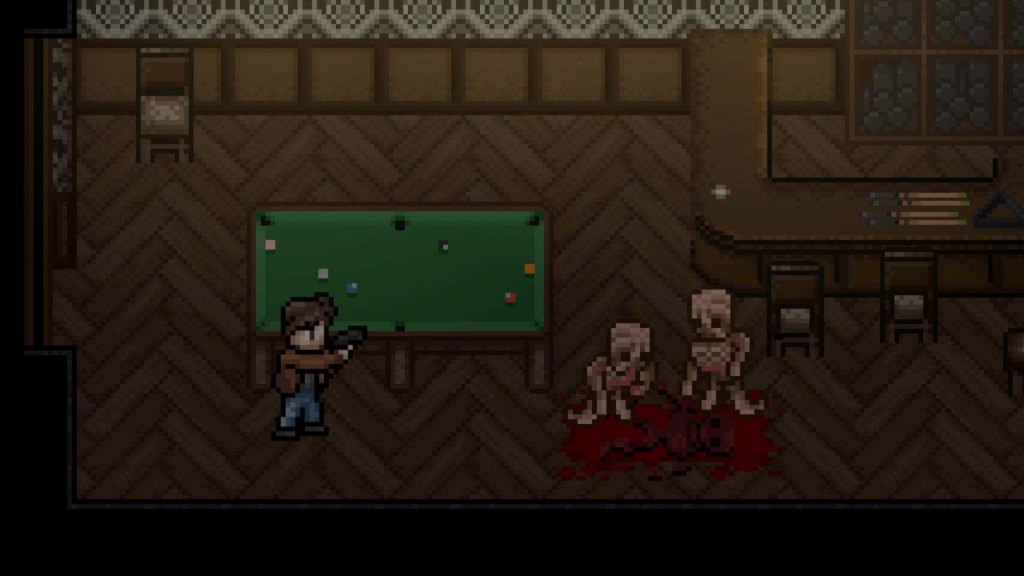
    Gameplay is traditional survival-horror to the tee, just in a top-down, isometric 2D world. There are plenty of items to collect, locked doors needing specific keys, there are puzzles to solve, and not enough ammo to go round. Some of the best moments are built around puzzle solving, which lets you combine clues with items to do so. While there’s nothing in here that will cause the old brainpan to overheat, they’re nice filler to the rest of the gameplay, which is as traditional as can be – though not always for the best.

    Item management, along with an unhealthy amount of back-and-forth between locations, will be taking up most of your playtime as you struggle to manage what you need for a specific task versus what you need to keep yourself from keeling over. One nice addition to the map system is that any room you haven’t cleared or collected everything in, remains coloured red on your map, along with doors that need specific colour-coded keys. This way, you’re never lost as to where you still have to explore or complete an objective.

    The problem, of course, is that inventory space is limited to a measly eight slots. You can chuck items into the storage crate in every save room, which synchronises its contents across all crates, but it doesn’t stop you from having to run around picking up and dropping off items all of the time. Your weapon selection may be limited, but you’re going to have juggle that along with ammo and health pickups, which left me with only two open slots most of the time. And, because monsters can respawn or get swopped out for different ones in areas you’ve already cleared, you don’t want to be left short of ammo.

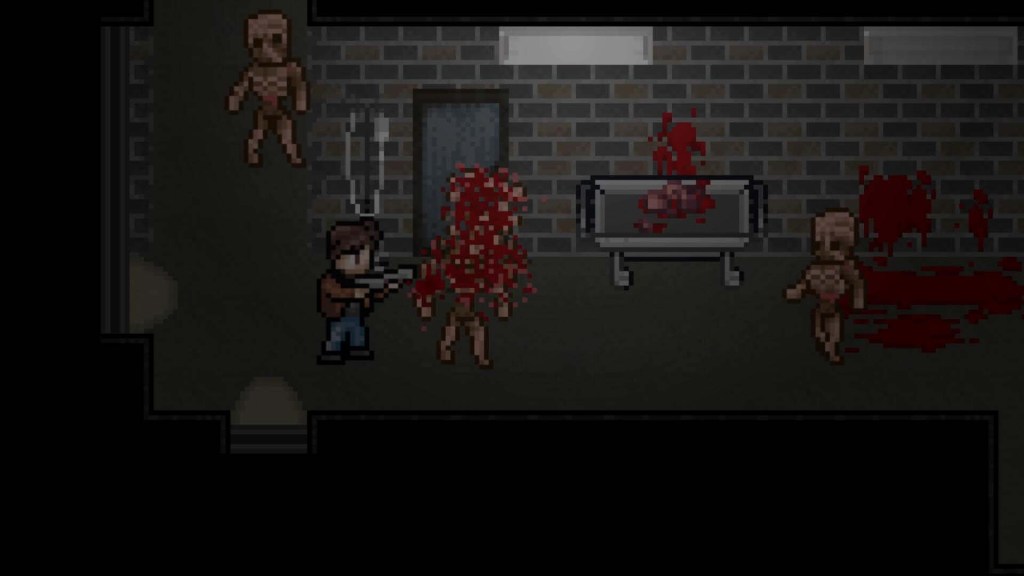
    Ammo is certainly in short supply. Not so much because there isn’t enough to pick up, but more because enemy damage seems to be randomised. When your regular flesh-eating zombie things can take between three to five pistol shots to go down, those seventy rounds of ammo you’ve picked up disappear pretty quickly. The shotgun, thankfully, packs a nice, meaty and disgusting punch, especially on the more common grunts that it turns into misty gibbets with ease. Weapons can be upgraded, but that random element means that I didn’t notice as much difference in stopping power as I would have liked. There are multiple difficulty settings to choose from but, honestly, I only noticed about a one bullet difference between normal and easy most of the time.

    The amount of back and forth does damage the games pacing as well. During a second playthrough, after a consistent and unavoidable crash was patched, I found the pacing more enjoyable as I already knew where to go and what to do, thus cutting the tiring backtracking. This did wonders for improving the pacing. While I admire the developers desire to make a truly retro experience, certain elements were best left in the past.

    One of the other aspects I enjoyed, even if it meant sacrificing an item slot, was the sanity meter. Every successful monster attack doesn’t only damage your health but your sanity. There are items to help restore it, but the game does throw in some cool insanity effects when it starts to get low, like creepy voices and the game seeming to “crash”. Beware though, if your sanity drains completely, you can die.

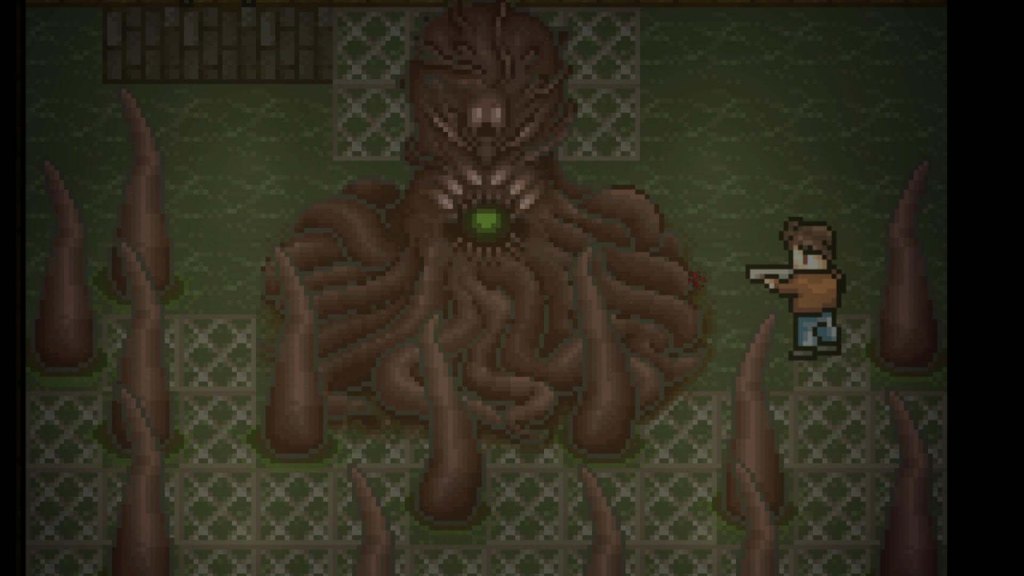
    Combat may divide players. As with classic games, you can’t move while shooting or reloading, so you have to use the environment to your advantage during combat and boss fights revolve around observing attack patterns. In general, combat just feels very basic. It’s effective but doesn’t get the blood pumping. And while there’s guts and gore galore, Dead of Darkness isn’t very scary at all, even with some insta-death sections that I could have done without. This may be a buzzkill for some, but the general overall enjoyment of the game goes a long way to making up for a lot of its flaws.

    Another potential issue for some will be the pixel art that, although nice to look at, is far less detailed than what we’ve come to expect from many indie games lately. It does a bit of disservice to the monster designs and animations but, like the combat, the visuals are serviceable.

    Overall, Retrofiction Games’ Dead of Darkness is an ambitious title in the 2D survival-horror genre. While the combat may be passable and the pacing could be better, it’s buoyed by a great story, good voice acting, and fun puzzles that mostly manage to capture the best parts of survival-horrors past.

    Pros:

    • Great story
    • Fun puzzles
    • Good voice acting

    Cons:

    • Pacing hampered by too much back and forth
    • Combat is just okay
    • Insta-death sections were painful

    Score: 7/10

    Dead of Darkness was reviewed on Nintendo Switch using a code provided to gameblur by the publisher. It is also available on PC, Xbox One/Series S|X, PS4/5, and Nintendo Switch 2.
  • Review: Final Fantasy XVI Complete Edition (Xbox Series)

    Review: Final Fantasy XVI Complete Edition (Xbox Series)

    With Final Fantasy XVI, Square Enix has continued to experiment with and dramatically depart from their flagship IP’s traditional roots. At the same time, it is a game that feels closer to those classic roots than the series has been for some time. That experimentation, over the course of many mainline games and spin-offs, has had variable degrees of success that seems to have finally culminated with the splashiest Final Fantasy to date.

    To say that Final Fantasy XVI feels like the offspring between Final Fantasy and Devil May Cry will give you a clear indication as to what Square Enix has cooked up with this one. Now, two years after its initial PS5 launch, Xbox Series owners can join in on the fray.

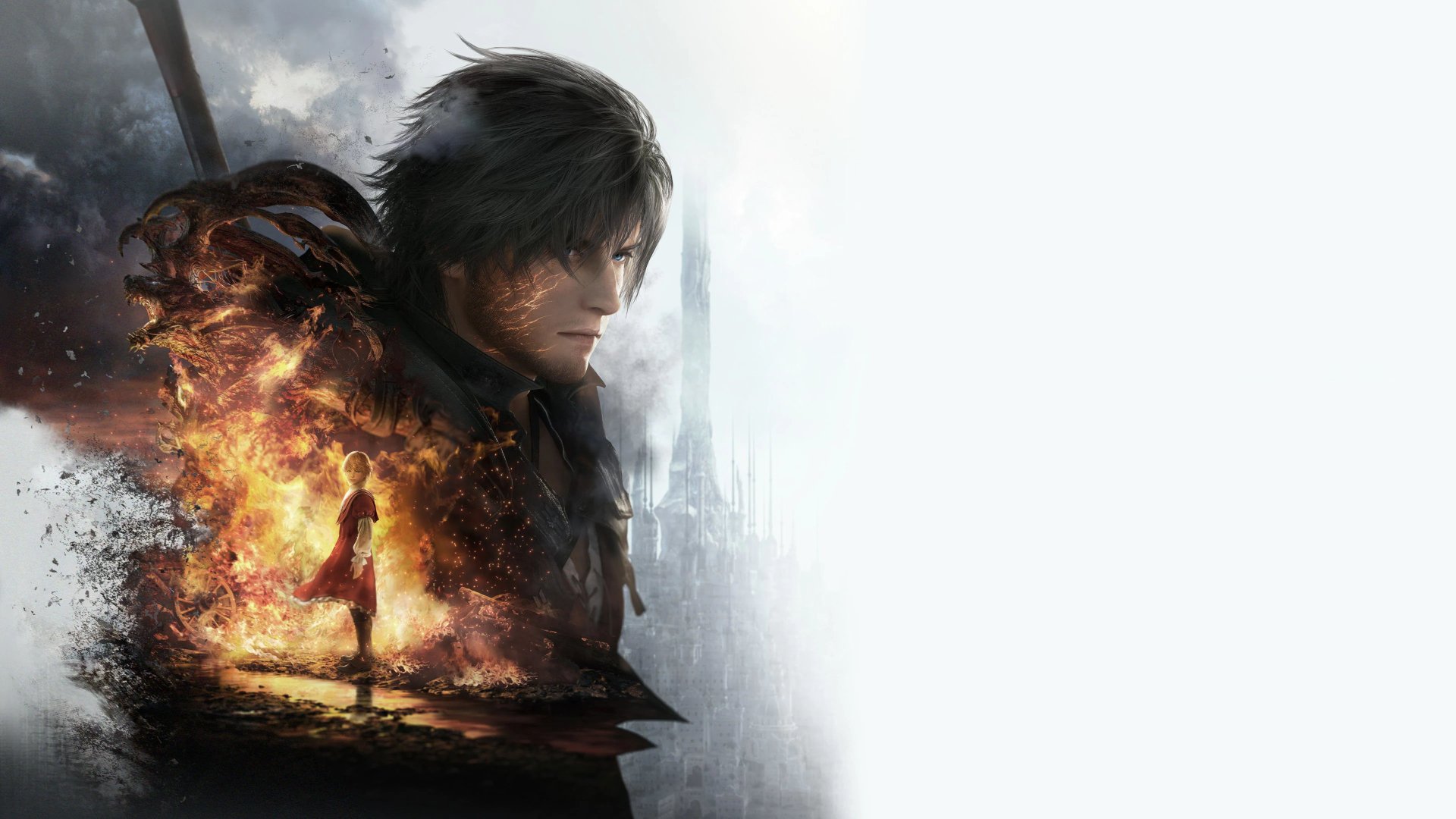
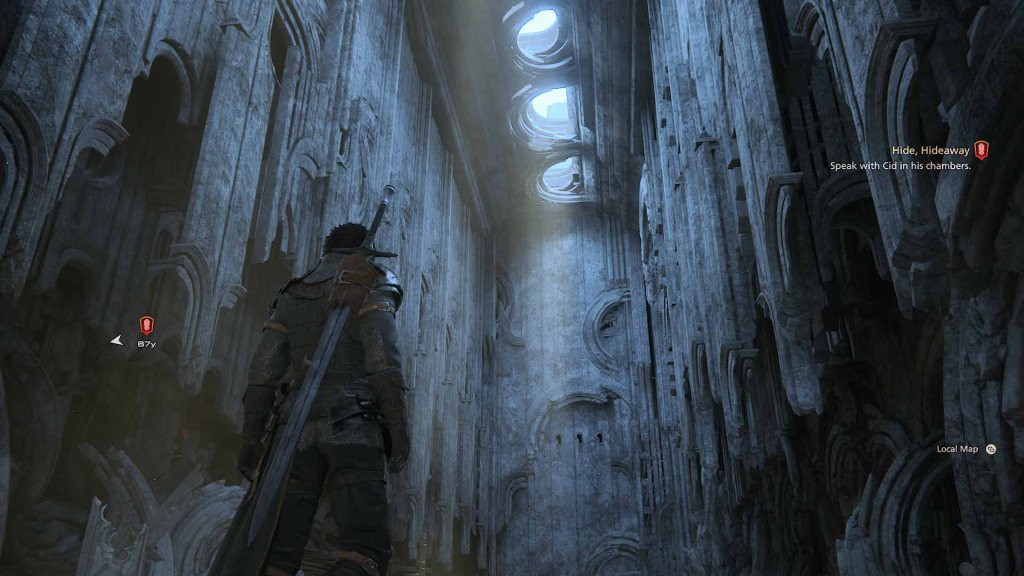
    Final Fantasy XVI takes place on the continent of Valisthea, a world on the brink of an environmental disaster that pushes the world’s nations into resource-driven conflicts. Players are dropped into the shoes of Clive Rosfield, a young lord whose empire is destroyed overnight and his younger brother murdered. Clive embarks on a journey of vengeance to find his brothers killer, a journey that will reveal mysteries about himself, while plunging the world deeper into political conflict.

    Final Fantasy XVI is the very definition of an action-RPG. This is a big, bold, and splashy visual extravaganza, much like a summer blockbuster movie, that straddles the line between hack-and-slash and JRPG. Those expecting a return to traditional mechanics will be disappointed as the RPG elements are stripped back even further when compared to previous entries in the series.

    The main essence of an RPG still remains, with plenty of locations to explore and angsty moral dilemmas to chew on. There are enough NPCs to speak to that flesh out the world, and there’s a lengthy, complicated story that veers from vengeance to world saving. The story is certainly one of the games strongest aspects and benefits from some stellar voice acting that raises the bar for the series.

    The story and setting are where the game does hark back to its roots. The ubiquitous crystals are here, along with a medieval fantasy setting reminiscent of the original hexalogy, and a story that veers between personal and political.

    Gone, though, are tons of items to manage in your inventory, replaced by a moderate amount of consumables that are hot-linked for combat. Instead, copious amounts of crafting materials take the space normally reserved for endless inventory glut. The amount of gear you can equip has also been scaled back, limiting you to a weapon and some accessories that change up your effectiveness in combat significantly. Gone too is an overworld to run around in, replaced by a world map that lets you fast travel between locations. The locations themselves are large enough to allow for exploration on the back of a Chocobo, but can’t hide the games overall linearity.

    In its place are systems more at home in action games. There are skill trees to purchase and upgrade new abilities, while combat loadouts play a significant role towards the end-game. Clive’s combat abilities allow for the use of fast sword strikes that can be charged up for heavy blows; the use of magical abilities based on the elements; a dodge that can allow you to counterattack if done quickly enough; and a quick dash that’s close to a classic teleport move.

    Party members help out in combat as well, which allows you to chain combos with them or use your trusty hound, Torgal, to launch enemies into the air for some punishing aerial combos. Instead of learning traditional FF spells, Clive can harness Eikon abilities. Eikons in Final Fantasy XVI are the classic summon spells, only this time Bahamut and its ilk play much larger roles in the game. Literally.

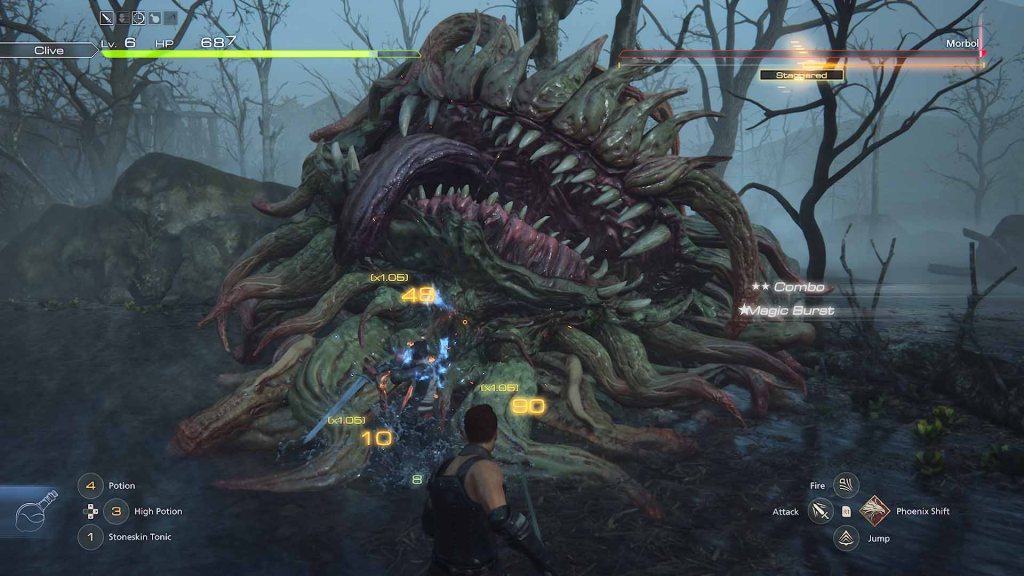
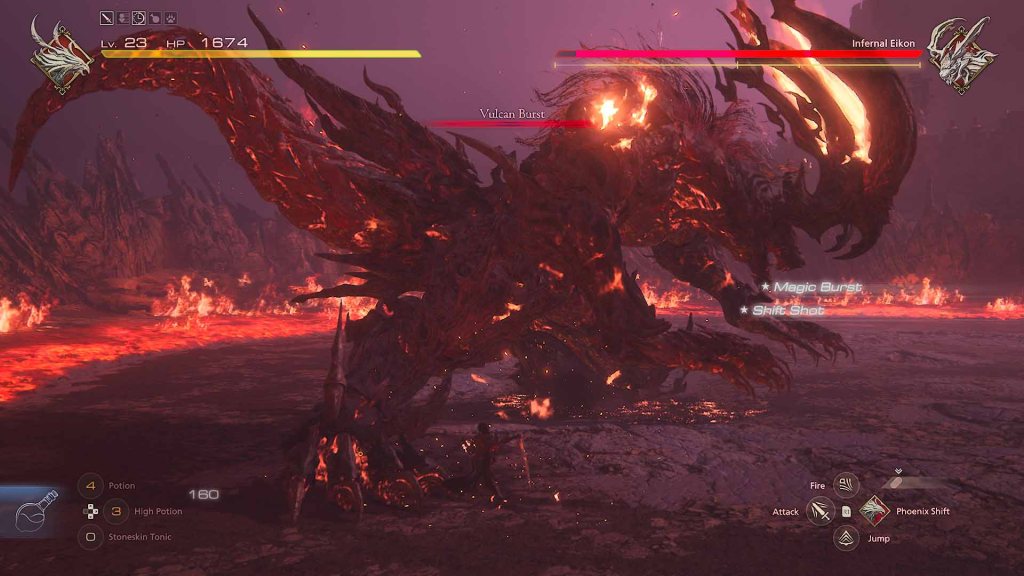
    Clive can use the abilities of Ifrit, Phoenix, or whichever Eikon you’ve beaten to spice up combat significantly, flowing between hectic sword strikes into Eikon specific abilities: such as launching walls of flame across the ground or multiple wind-based slashing attacks that look and feel stupendous when used in an air juggle.

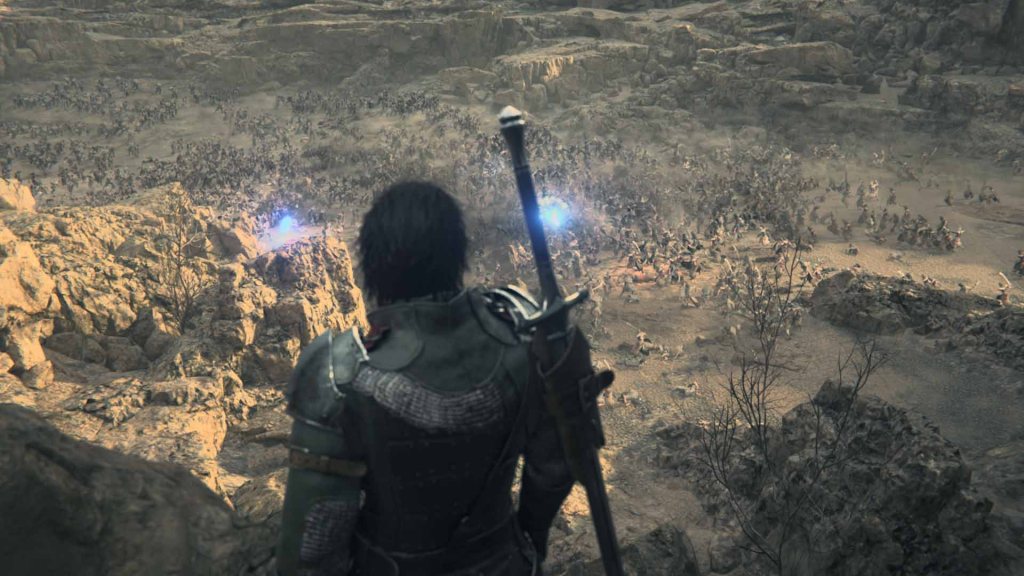
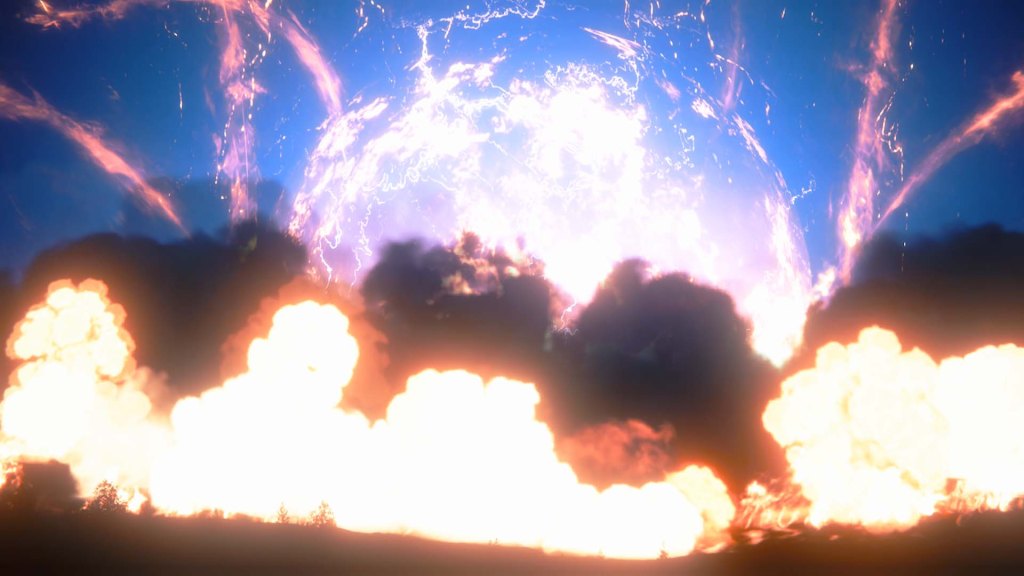
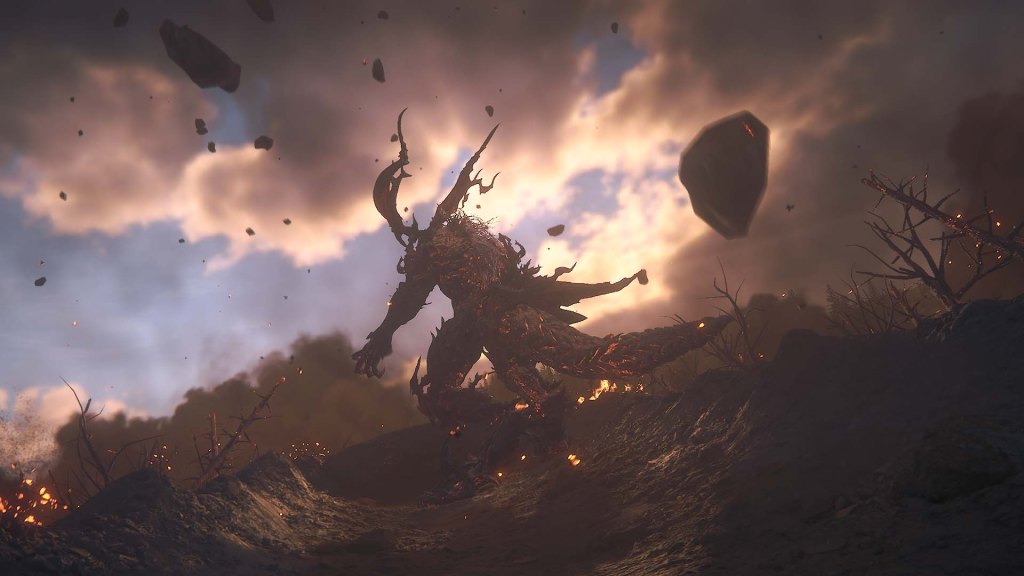
    The big selling point for Final Fantasy XVI are the Eikon fights, in which you either transform into one yourself, or take on one of them in a blistering duel of pyrotechnic spectacle that’s right up there with any modern high octane Kaiju fight. As good looking as Final Fantasy XVI is, it’s these moments that are truly a sight to behold and the games showcase. Make no mistake, normal combat is blisteringly fast and flashy, with enough special effects and fireballs thrown around to trigger an epileptic fit, but it pales in comparison to the Eikon battles that are on par with any modern Hollywood blockbuster.

    From Crisis Core to Final Fantasy VII Remake, it’s a testament to how much Square Enix have learned over the years that I can call Final Fantasy XVI’s combat thrilling.

    That said, Final Fantasy XVI isn’t a perfect game. The pacing can be inconsistent in terms of how much is doled out for you to tackle.

    The bulk of the game favours a linear thrust to keep the story flowing, with the occasional side-quest doled out to offer a break and help with the world-building. However, towards the games climax, you’re suddenly inundated with a list of people to help out. I’m all for more content, but these optional quests could have been better sprinkled throughout the games runtime to break up the corridor feeling that the main story evokes.

    Combat-wise, the game also favours bullet-sponge enemies and bosses, which makes many fights last far longer than they should. There’s a stagger mechanic at play that lets you stun an enemy for a short duration once you’ve broken its stagger bar. The further into the game you get, the more reliant you become on exploiting this mechanic to deal significant amounts of damage. Towards the endgame, it’s essential to set up your character to quickly break stagger bars and keep the enemies in a stun-lock state. This overrides a lot of the thrill of the games heavily DMC-inspired combat, as it becomes less about skilfully chaining attacks and more about triggering staggers to shave those massive health bars down.

    As with the PS5 version of the game, the Xbox Series X version comes with two graphic modes: Quality and performance. Quality favours visual fidelity with a 30fps frame rate, while Performance favours a 60fps frame rate at the expense of visuals. Both modes on Series X ran well and I never noticed performance issues regardless of which mode I played with.

    Performance mode feels silky smooth, but that does come at a noticeable visual cost. It runs at a much lower resolution that makes the visuals seem a little blurry and less defined. And with a game so built on visual spectacle as this one, a lower resolution really isn’t the way you should have to experience it.

    Quality mode still has visual issues if you look closely enough, such as shimmering when the characters move, but the performance is still rock solid and fast enough that I never felt as though the 30fps cap was limiting me in anyway.

    Final Fantasy XVI Complete Edition Eikon Battles Xbox

    The last thing to touch on that the Complete Edition of Final Fantasy XVI obviously comes with the two expansions: Echoes of The Fallen and The Rising Tide. Both add even more goodness to an already stacked game and, with the Complete Edition installed, you’ll be able to access them at key points during the main campaign.

    Elevated by an intensely fun battle system and stunning voice acting, Final Fantasy XVI is easily one of the best mainline games in the series in recent years. It manages to capture the spirit of the original games with a strong story and great characters, while the spectacular boss battles and pyrotechnic visuals are the icing on a particularly wonderful action-RPG cake.

    Pros:

    • Excellent hack-and-slash combat
    • Boss battles are an intense visual highlight
    • The story and setting hark back to the classic games
    • Stellar voice acting
    • Both Quality and Performance modes run well

    Cons:

    • Bullet-sponge enemies drag out battles
    • Poorly paced distribution of sidequests
    • The resolution drop in Performance mode is noticeable

    Score: 8/10

  • Review: Ruffy and the Riverside (Nintendo Switch)

    Review: Ruffy and the Riverside (Nintendo Switch)

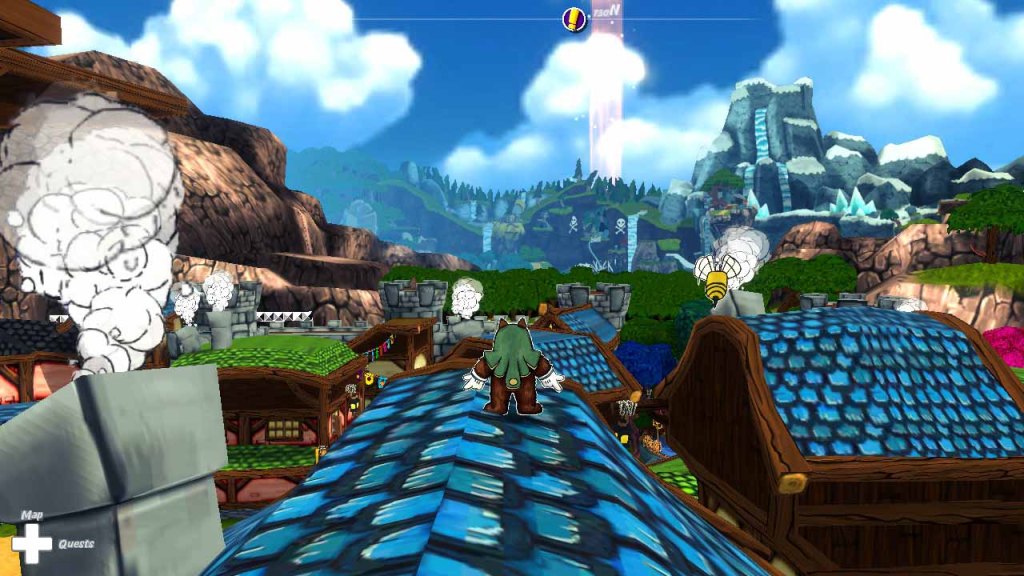
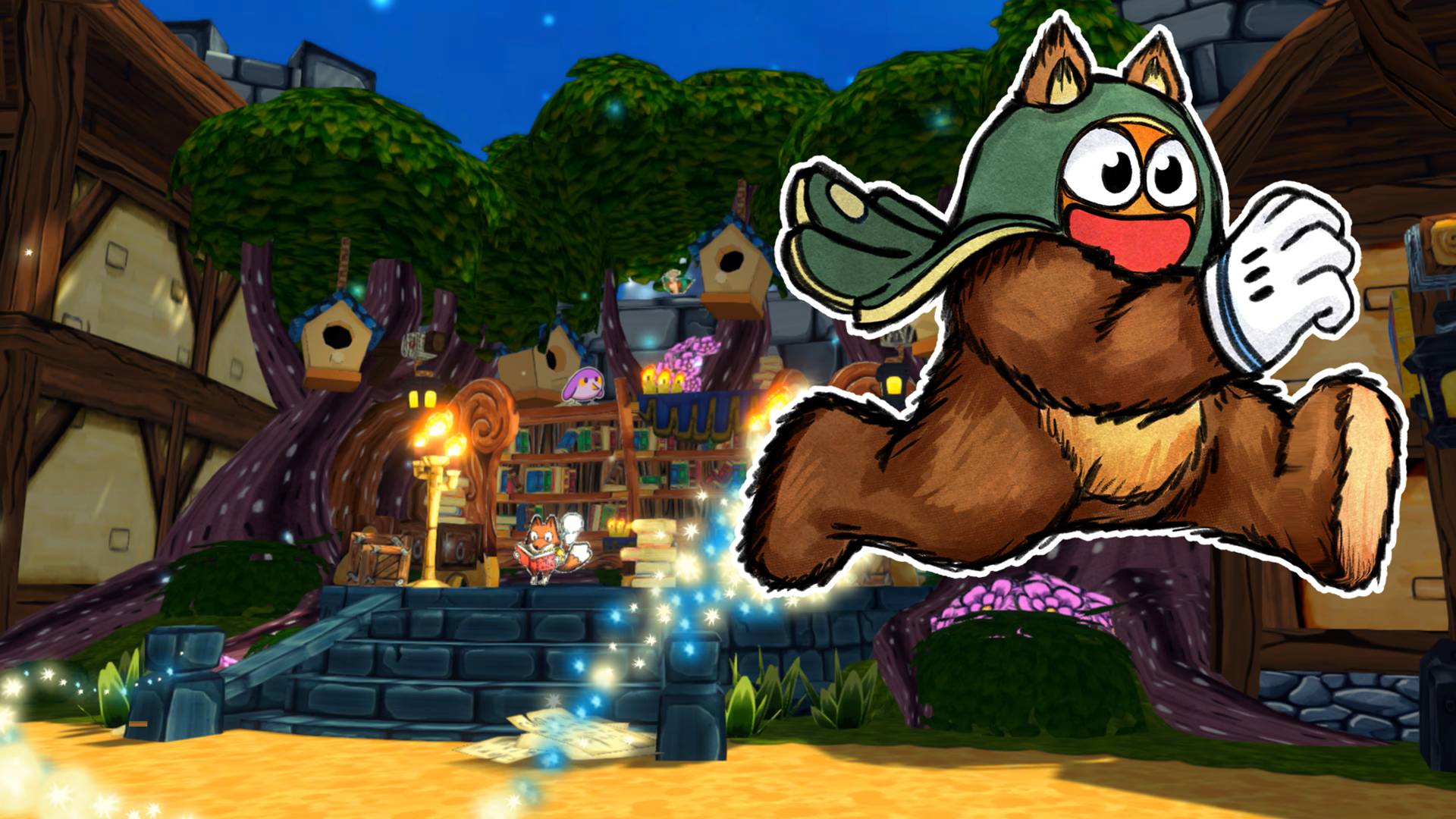
    Playing Ruffy and the Riverside has been like jumping back into the past. Like way, way back into the good old days of PS1, PS2, and, more specifically, N64 platforming.

    There’s an earworm of a soundtrack that embeds itself in your mind, an expansive world to jump and run through, tons of quirky characters to meet, gorgeous visuals bringing the world to virtual life and, the most important ingredient to stand out in a crowded market, superb gameplay innovation that turns a fun time into a must-play title.

    And that is exactly what Ruffy and the Riverside is: a must play platformer for all platformer fans who want the nostalgia of the past running on modern engines and hardware. But Ruffy and the Riverside is so much more than nostalgia-in-a-box, it’s a joyously addictive exercise in taking a simple concept and spinning it into a defining gameplay mechanic.

    Sure, the basic action-platforming rulebook is at play here, with melee attacks, a gliding system, and a butt smash to deal with certain enemies to go along with traditional platforming shenanigans. There are platforms to pounce around on, spiked traps to avoid, and puzzle areas to navigate. But what really shines a light on Ruffy’s already colourful world is the main gameplay trick: the “Swap”.

    Ruffy has the god-level ability to transform one object into another by swapping textures around – essentially changing its look and properties. This really simple concept elevates a good platformer into a great one, creating a myriad of charmingly inventive gameplay moments. These range from the more obvious uses of the mechanic to think-outside-the-box moments that are always a highlight.

    Need to get to the top of a cliff but can’t find a path there? Just copy a vine texture and turn that waterfall in front of you into a giant vine to climb. Stone pillars blocking your path? Turn them to wood and punch ‘em down. Need to cross a body of water? Why not make use of that ice floe just to your left?

    These, of course, are the more obvious uses of Ruffy’s power designed to help you move across the world, but you’ll also solve simpler puzzles by changing the markings on rocks or turning a pillar into a magnet to break the chains holding a door closed. The world has been designed to make use of the Swap mechanic at just about every moment, with some changes more permanent than others and some more beneficial.

    But it’s really those think-outside-the-box moments that breath such fresh air into the genre with their more elaborate puzzle solutions, such as turning a stone pillar blocking your path into wood and the water spout just beneath it into fire to bring a fiery end to the obstacle, before turning that fire spout back into water and riding it up to your goal. The game is full of these kinds of puzzle sequences which, I must admit, occasionally had me scratching my head. But they were never too tough to figure out in time, and always left me with a “Damn, that’s cool” smile on my face.

    Of course, if you are struggling to figure them out, the NPCs are always willing to help you out for a few coins. Though I’d argue against it, because part of the charm of Ruffy and The Riverside is seeing just how much creativity you can get away with. There are obviously limitations to what the Swap mechanic can achieve as, if there weren’t, you’d probably be able to break the game in ways the developer hadn’t conceived. Still, it’s rather surprising at the level of leeway you’re given to play around with the world and its textures and properties.

    The world itself is rather large and perhaps a little too full of things to do and collect. Seasoned gamers who love that stuff will find plenty of collectibles to scour high and low for, while the rest of us can focus on every little platforming, puzzle, or racing sequence on offer.

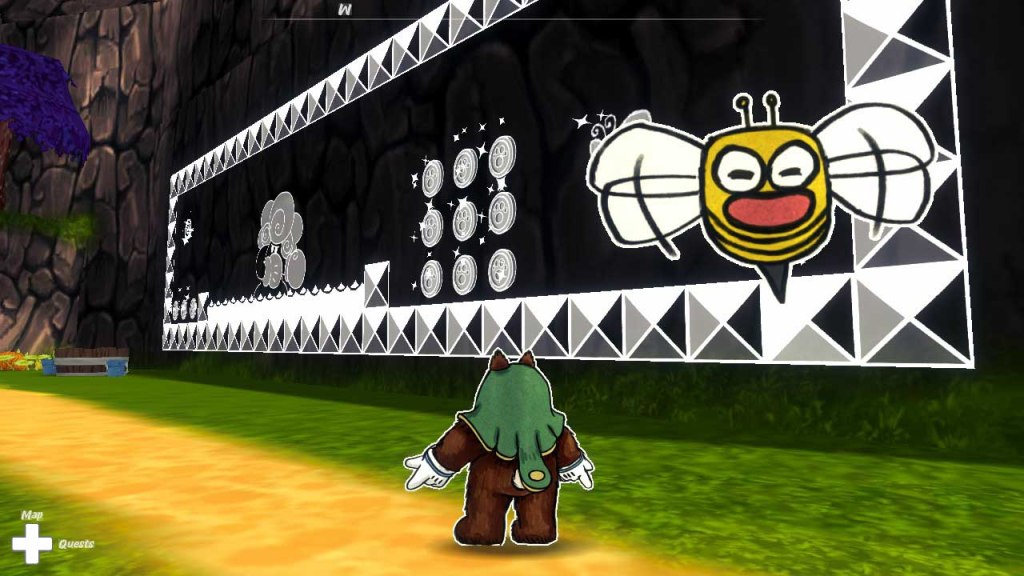
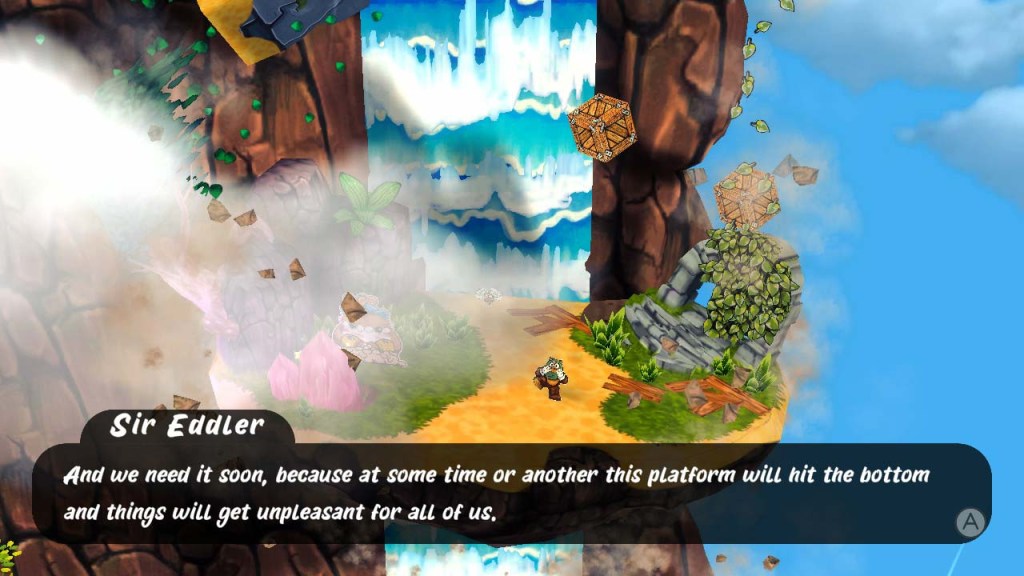
    Visually, the game is gorgeous and really looks like a an N64 game presented at an ultra-high resolution. And I mean that in the best way possible. The world and its segmented areas are gorgeously colourful and exude personality. The art style, which goes back to that 90’s blocky aesthetic while using 2D sprites in a 3D world, is just stunningly realised, bringing to mind classics like Super Mario 64 and Banjo Kazooie. It’s all backed up with some wonderful 2D animation for the games oddball characters and a soundtrack (and sound effects) that really stuck around long after I’d finished playing.

    If you haven’t figured it out already, I’m smitten by the games infectiously joyous charm.

    That said, it’s not a perfect blast-from-the-past as the original Nintendo Switch occasionally struggles when there’s too much being rendered onscreen. There’s some frame rate jitters and a bit of a sluggish feeling in the controls during these sections. To keep the frame rate high, I imagine, distant vistas fade in an out depending on the camera angle your distance from those areas, giving a bit of a fog-of-war feeling to the proceedings, while making sure the zone you’re in gets rendered in full.

    Ruffy and the Riverside is easily one of the better, nostalgia-tinged platformers of late. It’s gorgeous visuals and enthusiastic characters are elevated by one of the more fun gaming mechanics in recent years that will have you spending hours swapping around textures and properties just to see what can be done. Performance issues on the original Switch aside, developer Zockrates Laboratories has developed an impressive and fantastic debut title that platforming fans should play.

    Pros:

    • Super fun texture swapping mechanic
    • Gorgeous N64-inspired visuals
    • Stunning 2D art and animations
    • Impressively large world full of things to do

    Cons:

    • Some performance issues on the Nintendo Switch

    Score: 9/10

    Ruffy and The Riverside was reviewed on a Nintendo Switch using a code provided to gameblur by the publisher. It is also available on PC, Xbox One/Series S|X, PS4/5, and Nintendo Switch 2.
  • Review: S.T.A.L.K.E.R.: Legends of The Zone Trilogy Enhanced Editions (Xbox Series)

    Review: S.T.A.L.K.E.R.: Legends of The Zone Trilogy Enhanced Editions (Xbox Series)

    My experience with the original S.T.A.L.K.E.R.: Shadow of Chornobyl, released way back in 2007, was a brief affair of unrealised possibility. An experience quickly neutered by the numerous bugs and awful performance. It was a game I always meant to get back to but never did. The game spawned two expansions in the following years; Clear Skies and Call of Prypiat and, in 2024, a Legends of The Zone Trilogy that bundled all three games arrived as a refined package for last-gen consoles – with backward-compatible performance modes for current-gen consoles.

    This release was a timely affair, coinciding with the long-awaited and highly-anticipated sequel, S.T.A.L.K.E.R. 2: Heart of Chornobyl. A little over a year later, the “enhanced” Legends of The Zone Trilogy has arrived as an alternative to the PC originals, and offers a few embelishments for modern consoles. The question is, does this update make it worth braving the radioactive and mutant-infested wilds of The Zone again?

    Before we get to that, S.T.A.L.K.E.R. is, if you have never played it, an FPS survival-action hybrid that dips its toes into the scientific-horror genre. As the name implies, it’s set after the Chernobyl nuclear meltdown that, in this universe, has given birth to The Zone, a large expanse of land now haunted by radiation pockets, deadly anomalies, and all manner of nightmarish, mutated creatures. Into this inimical landscape have come the titular stalkers; soldiers, mercenaries, and all manner of folks for whom the draw of The Zone is too much to ignore.

    In the original, you play as an amnesiac stalker, on a journey to find and eliminate another stalker named Strelok, who once made it to the mythical centre of The Zone. What has he done to deserve this fate, and how does it tie into the ongoing expansion of The Zone? All these questions, and many more, may be answered in your journey.

    The prequel, Clear Skies, and direct sequel, Call of Prypiat, throw you into the boots of different stalkers, fleshing out events that led into Shadow of Chornobyl, and setting the scene for the sequel, S.T.A.L.K.E.R. 2: Heart of Chornobyl.

    Despite new mechanics and quality-of-life improvements in the subsequent games, the one thing that remains consistent is the unforgiving, hardcore, role-playing experience. The life of an unprepared and reckless mercenary is short, and life in The Zone is shorter still.

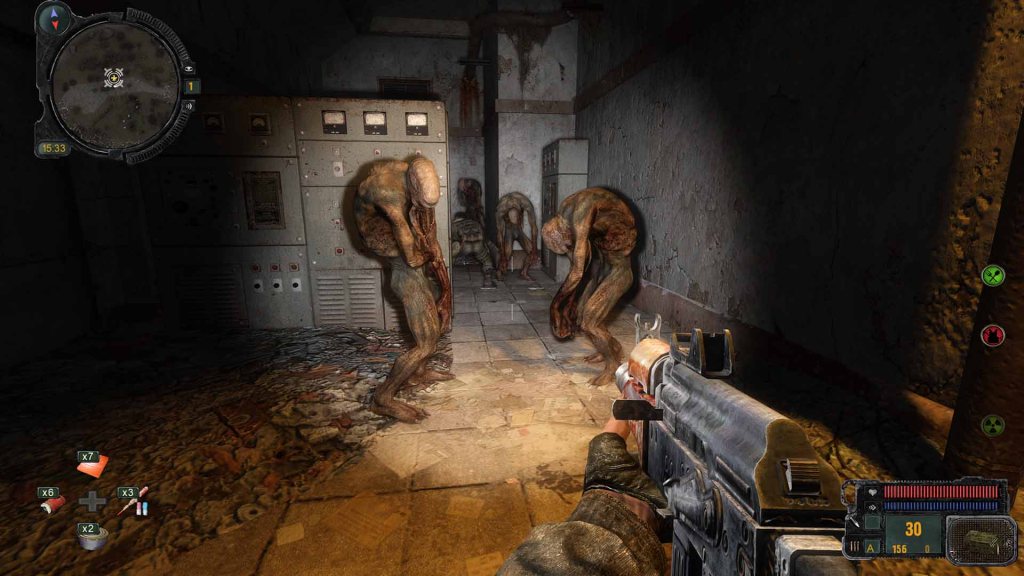
    While most FPS at the time were content to continue as blistering fragathons, the S.T.A.L.K.E.R. games chose a more RPG-like and survival-focused approach. Supplies were in short, well, supply. Armour would deteriorate. Weapons would jam. Pockets of radiation and anomalies littered the landscape, so you had to keep an eye on your Geiger counter and detector while simply exploring.

    Gunfights against mutants and other stalkers were tense affairs that could result in a lot of autosave or quick-save reloads. Even if you found exoskeleton armour and a decent shotgun, you were no Duke Nukem, and running around in the open was certain death.

    Finally, there was the quest and reputation system to keep you pushing deeper into The Zone. All three games are full of primary quests and no shortage of secondary tasks to earn money and move the story along. All of which results in a lot of back and forth across the relatively large and dynamic world. Add in a quest failure system and NPC’s that could be killed, and you have a game that requires careful thought to how you approached its world and tasks.

    Now while I use the term “roleplaying”, it’s not in the traditional videogame sense. There are no skill trees to upgrade or new abilities to learn. Improved weapons and armour can be picked up or crafted in the later games. Instead, roleplaying is about how you approach the game, its many combat scenarios, and a few mission choices. It’s about immersing yourself in the experience and taking responsibility for acquiring gear and stockpiling sufficient ammunition and consumables before heading out.

    By today’s standards, what S.T.A.L.K.E.R. was attempting with its gameplay may seem commonplace but, at the time, it felt groundbreaking and its influence can be seen in the Metro IP and no shortage of other first-person survival games since then.

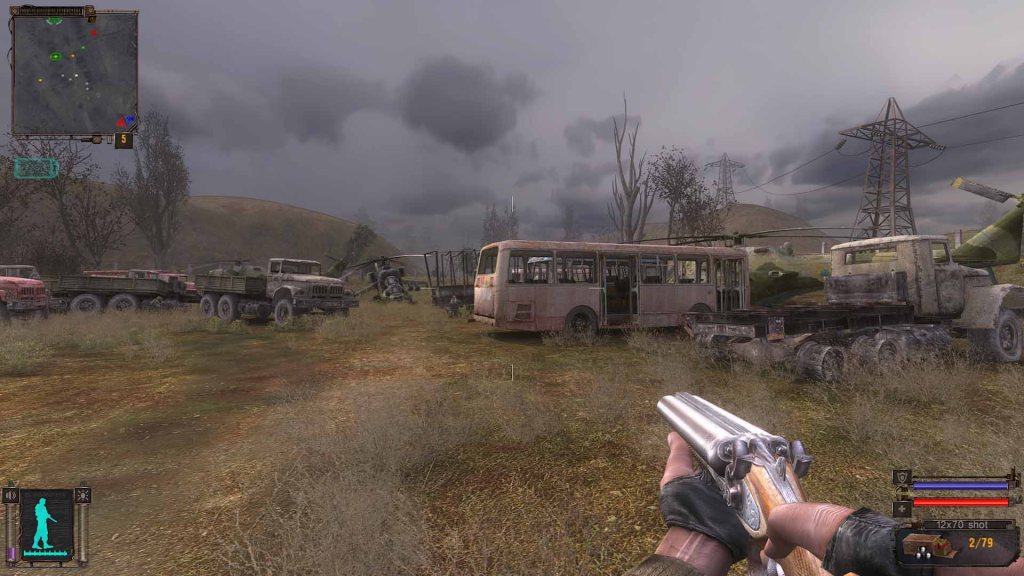
    The “Enhanced” editions boast a number of changes, from bug fixes to an enhanced UI, gamepad support, and other quality of life changes. Beyond resolution and framerate optimisations for current-gen consoles, there are a myriad of visual tweaks.

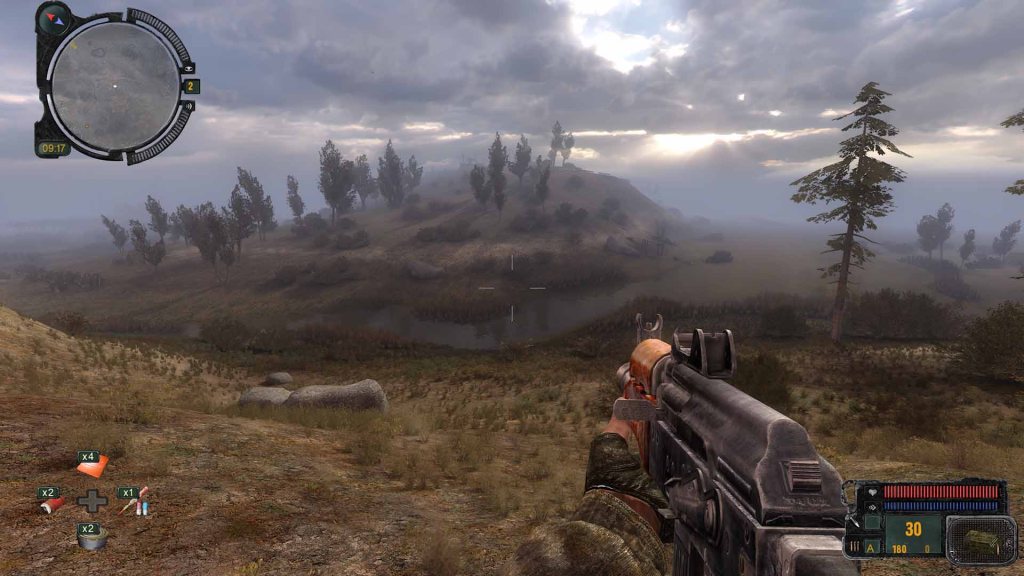
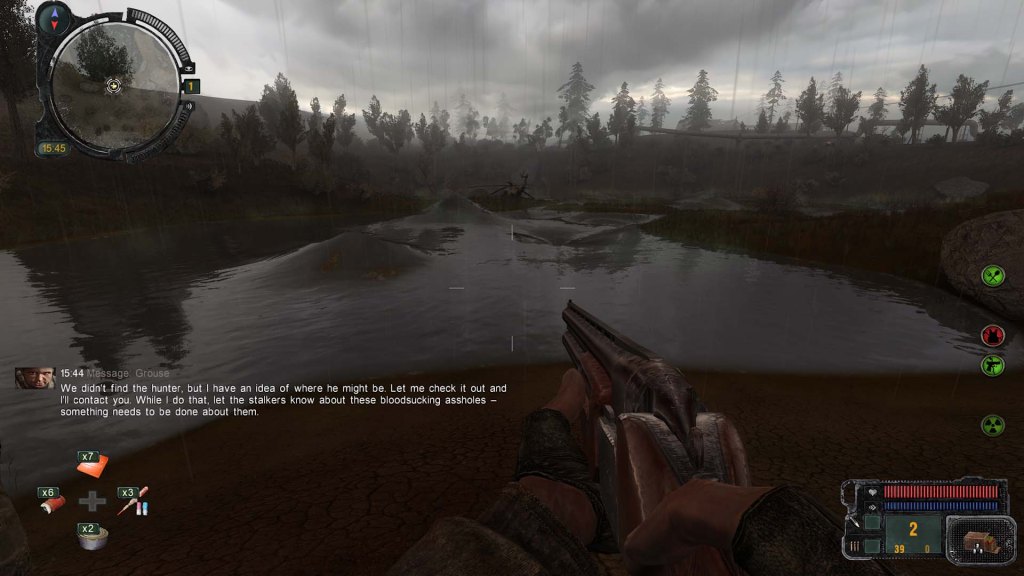
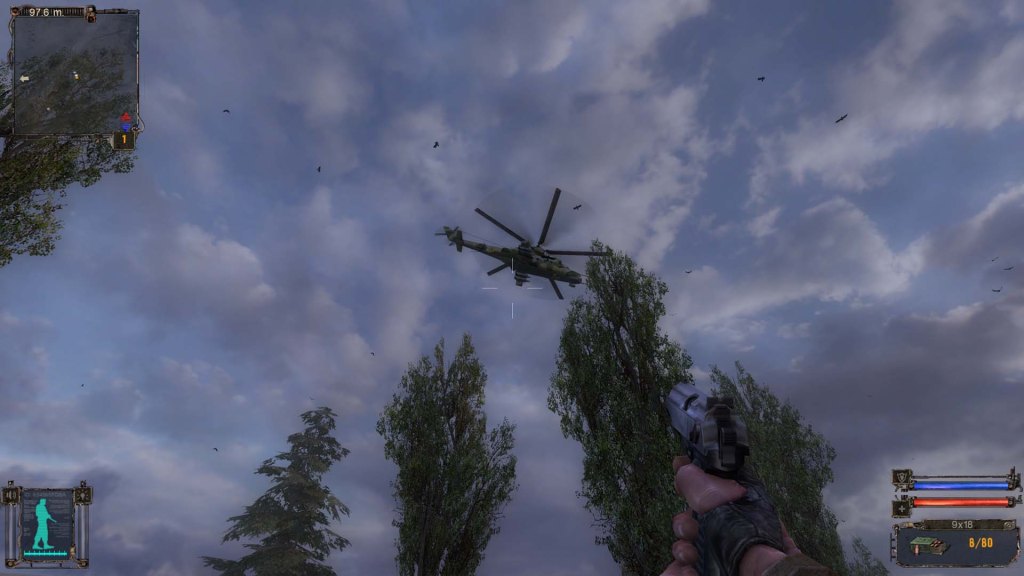
    Water quality and surface shaders result in a more realistic appearance for fluids, with wetness shaders to make the world look that much more muddy. Skyboxes and atmospheric effects have been enhanced too and look fantastic, with a more painterly look to the clouds that better match the various weather settings and locales.

    Legends of The Zone Enhanced Lighting Upgrades
    The field of view has been expanded if you want it, and textures for characters, clothing, weapons, and the environment have also received an overhaul, featuring more noticeable details such as creases on cloth and the wrinkles on character faces. Perhaps the most significant change was to the lighting system, which includes new effects and global illumination. Rounding out the visual enhancements are screen space reflections that look great on water surfaces in a few maps.

    There is a big caveat though. If we’re comparing the Legends of The Zone Trilogy – even before this latest update – to the original PC S.T.A.L.K.E.R. release, the difference is night and day. But if we’re comparing it to last years console release, it gets a little muddier. In short, this release is going to feel most impactful to PC players who have only experienced the vanilla games, are looking for official gamepad support, and aren’t interested in modding the game.

    Unless you’re starting off with Clear Skies or Call of Prypiat, both of which give you a nice view of the new water effects and reflections in their swampy starting areas, the bulk of the additions will be barely noticeable to returning console players.

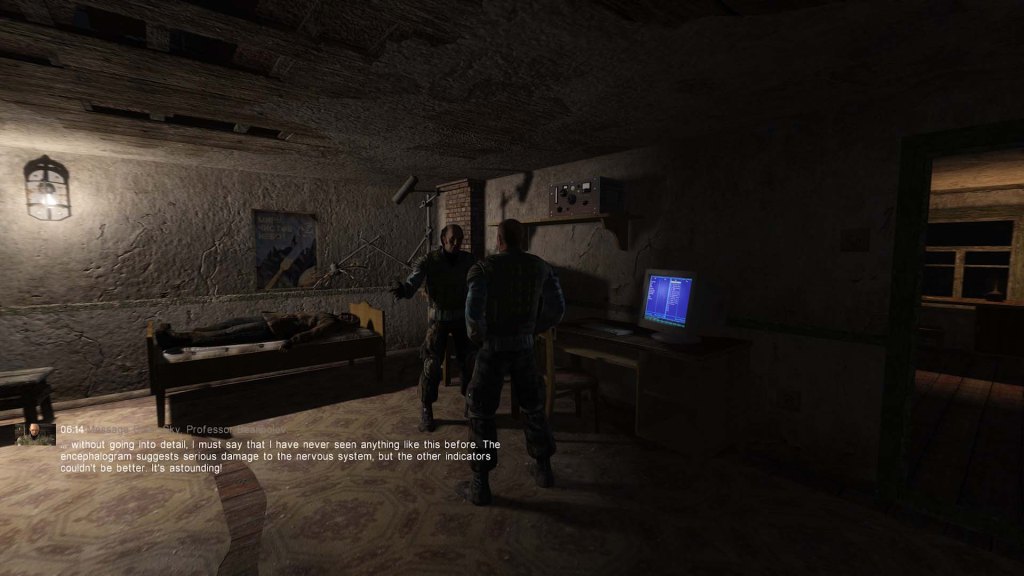
    Nowhere is this more true than in Shadow of Chornobyl. While the updated character textures are noticeable in direct comparisons, aspects like the changes to the lighting system either don’t stand out much, or don’t interact with environments and NPC’s in the way you’d want them to. As an example, in the opening scene that has you chatting with the merchant Sidorovich, you’ll immediately notice how the lighting emphasises the polygonal nature of his face but does not illuminate it correctly as it moves.

    As later and more refined releases, Clear Skies and Call of Prypiat interact better with the new visual features, while Shadow of Chornobyl probably needs a more substantial overhaul of assets. These are 18-year-old games after all, and it would take a full remastering to bring them up to modern visual standards.

    One the upside, these enhanced Legends of The Zone versions of the game are a free upgrade to all owners of the PC originals (on Steam and GOG) and for consoles bar the original Nintendo Switch at the moment – something I expect may change with the arrival of the Nintendo Switch 2.
    While the enhancements may not be as visually enthralling or noticeable as one would hope on console, they’re still nice additions to a classic collection of games whose PC originals are looking a bit long in the tooth – particularly for those who don’t want to navigate the trial and tribulations of modding (and just because you’ve been doing it all your life, that doesn’t make it easy for others).
    GSC Game World also deserves credit for simply ensuring these iconic and influential games remain accessible on as many platforms as possible. Regardless of your feelings on the visual “enhancements”, S.T.A.L.K.E.R.: Legends of The Zone Trilogy Enhanced provides some much-needed fixes while keeping the spirit of the original games intact.

    S.T.A.L.K.E.R.: Legends of The Zone Trilogy Enhanced was reviewed on Xbox Series S|X using a code provided to gameblur by the publisher. It is also available on PC and PS5.

    Pros:

    • It’s a solid choice for PC players who want gamepad support and dislike modding
    • The spirit and atmosphere of the original games is untouched
    • New water shaders and screen space reflections look great in a few areas
    • The new skyboxes are wonderful and better match weather conditions

    Cons:

    • Console players will find most enhancements difficult to spot compared to the 2024 release
    • Shadow of Chornobyl doesn’t always work well with the updated lighting

    Score: 7/10

  • Review: Song of Horror (PS4)

    Review: Song of Horror (PS4)

    Travel with me, if you will, back to the 1990’s when survival horror titles were all the rage. When pre-rendered backdrops presented an immense amount of world depth and tank controls were just another challenge to be overcome. To the days when Resident Evil and all its sundry impersonators were the juggernauts of our nightmares and thrilled us late into the night.

    Time has moved on since then, with the likes of Resident Evil reinventing itself into a brand new Juggernaut, yet the thrill of those games remains ever vigilant in our nostalgic memories, providing moments and scenarios that we still talk about enthusiastically today. Even if replaying them in the light of modern amenities removes some of their sheen and lets us realise that some things were best left in the afterglow of our memories. Not that we would ever really admit that.

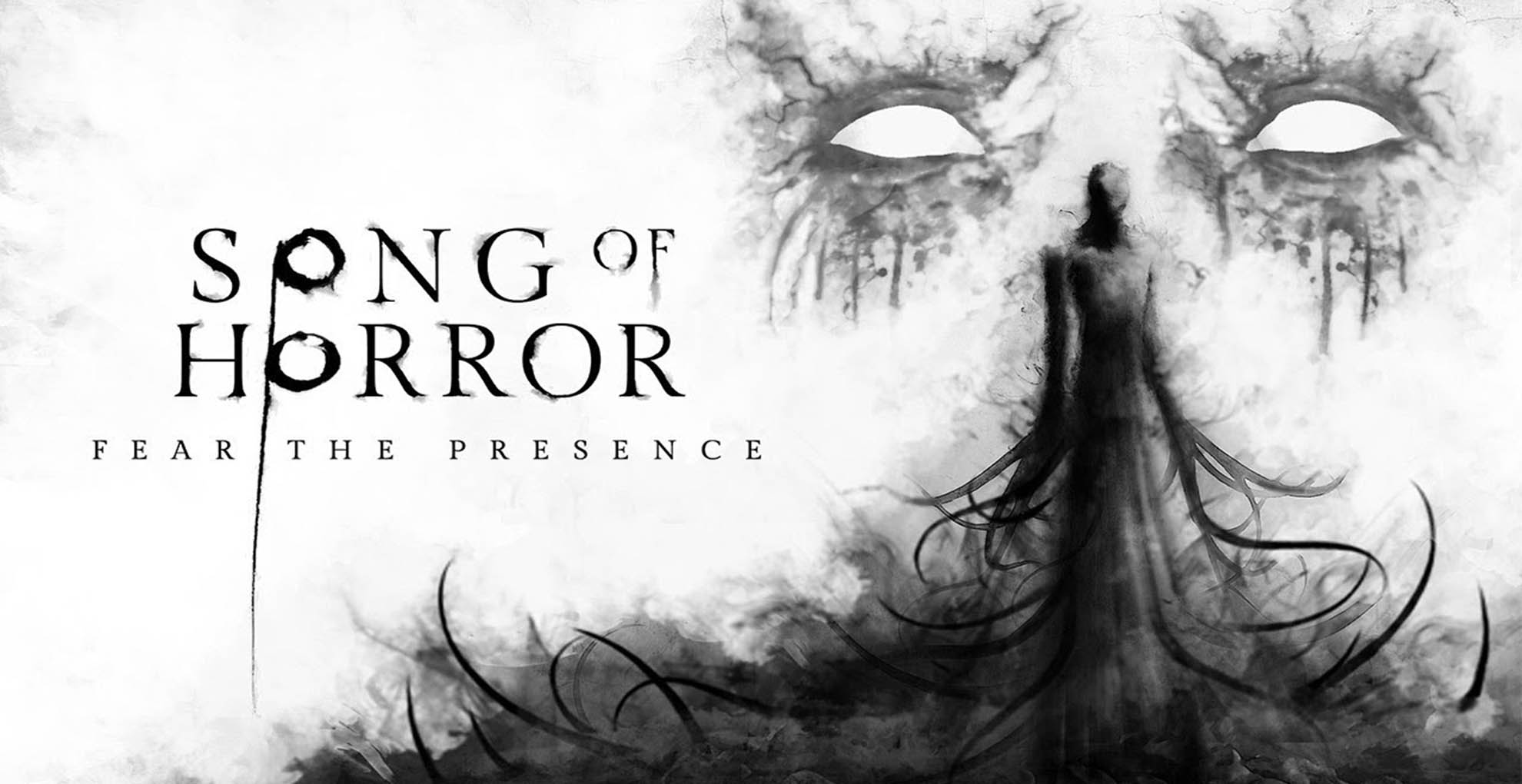
    If this longing for the gloried past of survival horror games still has a hold on you, then look no further than Song of Horror for this retro-inspired title has all the goods. Developer Protocol Games brings back the heyday of 90’s survival horror games, warts and all.

    Set during 1998, Song of Horror begins with the disappearance of author Sebastian Husher. Sent by his publisher to find him, Daniel Noyer soon disappears as well and it’s up to a varied group of individuals to find both him and what happened to Husher and how it all seems to tie into a missing music box. Before long our protagonists find themselves haunted by a malignant supernatural presence. Spanning five episodes, it’s up to you to find the origin of the curse and hopefully, some way to nullify it, before you’re dragged screaming into the darkness.

    If you’ve played any survival horror game in the last two decades, then you’ll know exactly how Song of Horror plays. You’ll investigate each location for clues and items to use to solve the puzzles around you while reading the notes left behind to further the story and explain why each location is devoid of human life. Because Song of Horror focuses on a cursed music box, sound plays a vital role in the game. If you choose to run, the noise you make can attract the entity, known as The Presence, to your location. This adds a wrinkle to how fast you can get through each location to the game’s overall mechanics. Paying attention to the noises around you are vital to your survival. One of the mechanics of listening at a door to what’s behind it before you open a room, will save you from many instant death moments.

    And these moments are frequent, depending on the difficulty you choose. Song of Horror is littered with instant death moments and trap locations. If you hear crying behind a door, then it’s not a good idea to enter the room, as is pulling the tarp off a strangely covered mirror in a storage room or sticking your hand into a bathtub full of grotty water. Song of Horror is designed with permadeath in mind, meaning you can lose the character you’re playing with permanently if you’re not careful. Lose all the characters or the main one for the game and you’ll have to restart the episode. When a new character enters the fray, you can pick up the previous characters items where they perished.

    With four difficulty settings to choose from, each named after a horror writer such as M. R. James and Edgar Allen Poe, determine the games severity. Higher difficulties have more shock encounters and permadeath is a feature of all, with one caveat. The easiest difficulty lets you load up a checkpoint save when a character dies to just before that fatal moment if you’re not in the mood to lose anyone. With Trophies for completing each episode without losing a character and for completing each episode with every character available for that scenario, gives completionists a reason to replay.

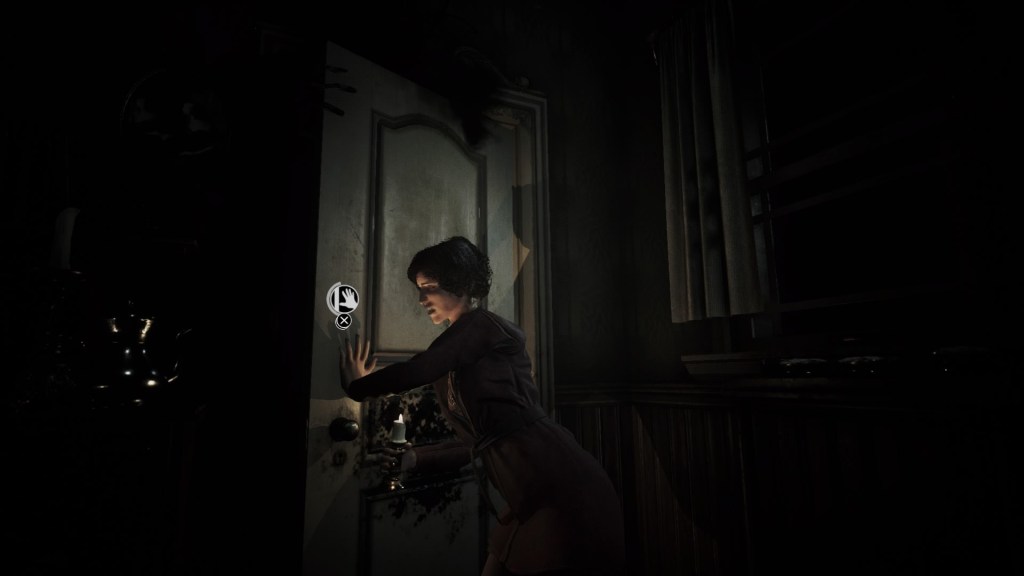
    The game has no combat as you can’t fight The Presence. The most you can do is hide from it or interact in mini-games that have you trying to slam a door closed in time while it’s trying to break through or to control your breathing while hiding from one of its manifestations. Knowing your surroundings is important so that you can get to a cupboard or beneath a table in time. Hiding spots do get scarcer as the game progresses.

    Song of Horror places you in familiar haunted locales; an abandoned manor, a mental hospital, an empty apartment block, etc. The scares are also of the traditional haunted house variety, though there’s definitely an Asian horror vibe to many of the manifestations and blink and you miss it moments.

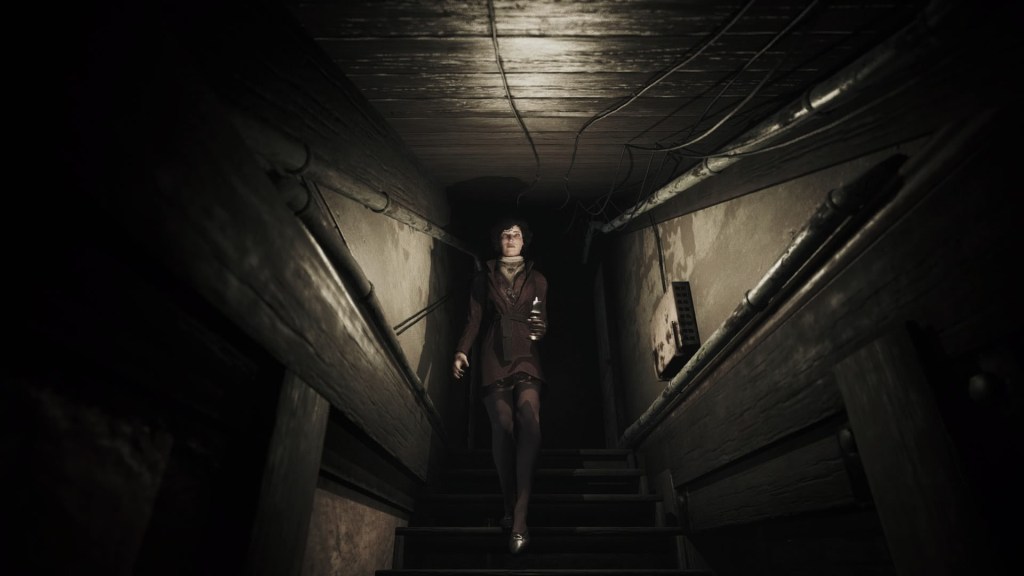
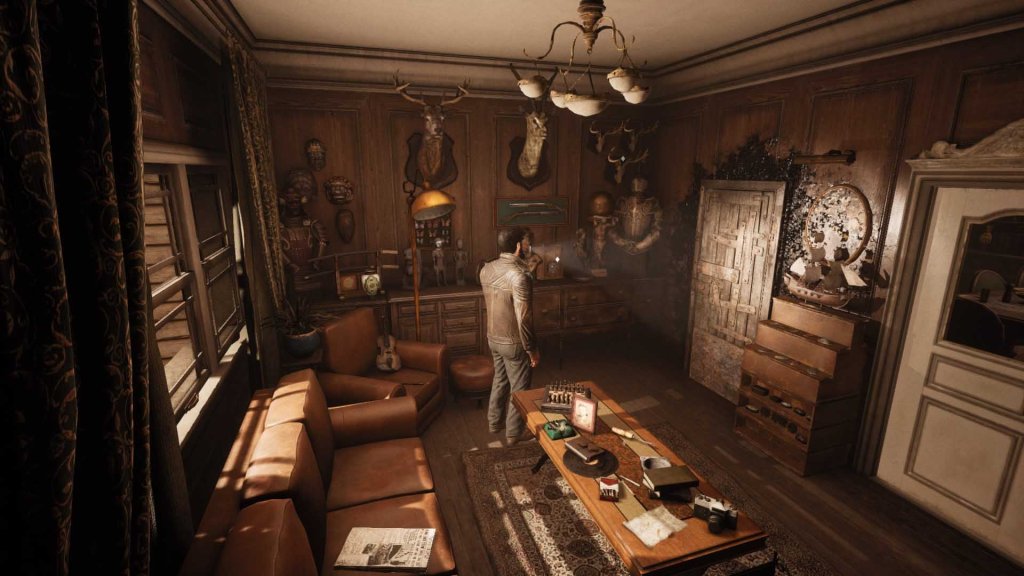
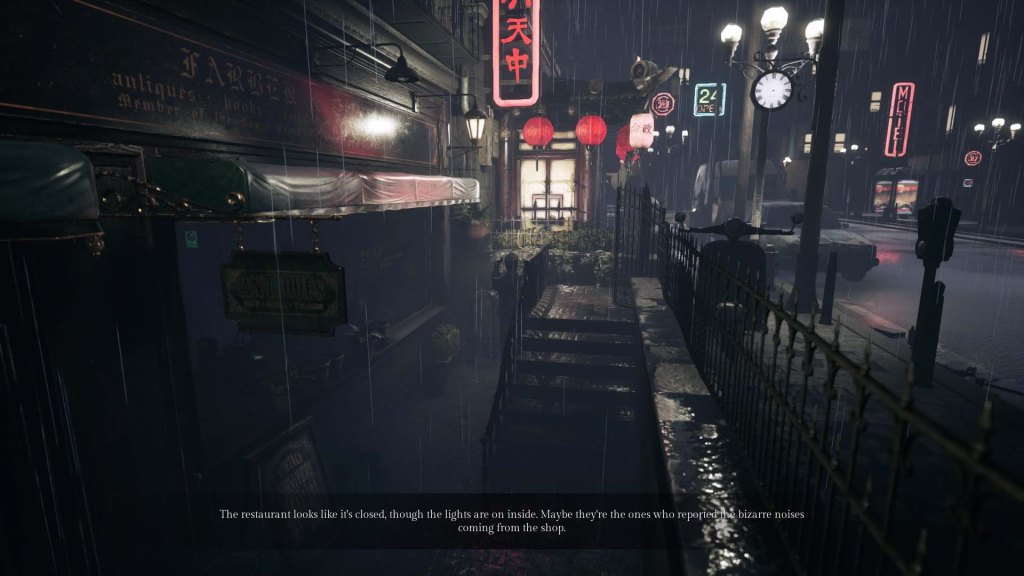
    Though the game uses static camera angles for its environment, the environment itself is fully 3d modelled and is one of the games strongest assets. The set dressing is absolutely superb with Husher Mansion and an antique shop looking absolutely gorgeous in the amount of detail and clutter present. Character models look good, but don’t quite measure up to the environment around them.

    Sadly, for a horror title, Song of Horror isn’t actually scary. Dealing with The Presences attacks becomes rote unfortunately. However, where the game does succeed wonderfully, along with its sumptuous environment details, is in atmosphere. With the use of sound as a warning trigger, the developers have managed to craft a sense of tension and expectancy that permeates each area as you’re always waiting for the shoe to drop, as it were. The palpable sense of dread and suspense is wonderfully realised, something even movies often struggle to get right.

    Song of Horror does have some issues though. First is the character’s movement and speed. Close to “Tank Controls” are the order of the day, making characters a bit of a chore to get used to. Controlling them is tricky with a turn radius that can get you stuck on objects in tight locations or go the wrong way at times, especially when a camera change occurs. Then there’s the character speed which can be frustrating. When you’re being chased by a nigh unstoppable force that can disembowel you with ease, you should be taking off like the Road Runner and not like a geriatric on a Sunday walk down by the lake. This is a peeve I have even with modern horror titles that feel like a slow walk through a museum when you should hot-footing it for your life.

    Finally there’s the game’s bugs. While not game breaking at all, there were plenty of instances of enemies spawning in the floor, characters walking through doors and in one instance Daniel’s torch not syncing with the character as you walk.

    With an atmosphere seeped in tension and dread that can have you holding your breath, Song of Horror more than makes up for its lacklustre scares with gorgeous set dressing and an intriguing, Lovecraftian story.

    Pros:

    • Gorgeous set dressing and environment design
    • Intriguing story

    Cons:

    • Bugs
    • Tank controls
    • Slow movement speed

    Score: 9/10

    A review code for Song of Horror was provided to Gameblur by the publisher.

  • Review: Wonder Boy: Asha in Monster World (Nintendo Switch)

    Review: Wonder Boy: Asha in Monster World (Nintendo Switch)

    You know the story. A once peaceful land suddenly assailed by dark forces. Ancient prophecies of a great evils return. Adults doing the one thing they’re clearly good at: sending a kid to slay an adult’s problem.

    Enter Asha, a young warrior looking to earn her badge amongst her people as a great warrior, ready to stand tall and defend her homeland. Before you know it, a simple trial to prove your worth as a fighter turns into a fight to save the world before you can even say; “Isn’t that your job?”. Asha handles it all like a champ though, with a smile and aplomb and tonnes of personality.

    Welcome to Wonder Boy: Asha in Monster World, a remake of the 1994 Mega Drive, Sega published and Westone developed Monster World 4. Developed by Artdink, this new version of the game updates Asha for modern console owners while preserving its gameplay design and story.

    Now sporting full 3D graphics and a cel-shaded aesthetic, Asha in Monster World completely redesigns the game’s visual elements into a gorgeous new skin full of personality. Asha in Monster World is a bright, primary coloured explosion of a game, with a cheery exterior that fully matches our protagonist’s personality. Asha doesn’t say much, but her personality shines through in her every action. Whether she’s sliding across ice, opening a chest or seeing something amazing for the first time, her personality exudes charm and fun.

    While that same level of design doesn’t extend to all of the games characters, Artdink have done a great job of making every NPC that needs to stand out, do so.

    Now having never played the original Monster World 4 game, I can’t tell you just how much of a liberty Artdink have taken with redesigning the environment for 3D. Judging by screenshots of the original game, most of the levels look exactly as they did in the original 2D version but with that cartoony 3D makeover. While they look good, if somewhat basic, they don’t exude the same level of personality as our plucky protagonist and are rather bare when compared to the level of detail and bric-a-brac that litter modern games.

    As a RPG platformer, Asha more than delivers on the platforming front while having just enough RPG elements to break up all the dungeon crawling that you’re going to be doing. Once you’ve made your way to the city of Rapadagna, you’ll be able to walk around the multi-layered environment, talking to people, completing easy sidequests and purchasing new swords, shields and bracelets for Asha. Swords and shields are pretty explanatory while the bracelets increase the amount of hearts our protagonist has.

    Across her adventure, Asha will be collecting coins and money dropped from enemies to buy new upgrades, while collecting the Life Drops scattered across the environment will award a permanent extra heart for every ten drops. Asha’s pet, the Pepelogoo, is an indispensable tool in the game. Pepe can be used to collect items just out of Asha’s reach, block certain environmental hazards, act as a platform and help Asha to float short distances and act as a double jump when she is holding onto him. The double jump system is, initially, an awkward mechanic of having to press a button to summon Pepe before you can use him as such. It quickly becomes second nature though. If killed in action, Pepe can also use one of Asha’s elixirs to revive her exactly where she pegged it.

    Both the city and dungeons employ a depth level approach to level design with various elements of the city and dungeons placed on different layers for you to walk into and out of. This is employed to good effect in the dungeons to create a maze-like environment that lightly hints at Metroidvania elements. Dungeons are self-contained though so there’s no reason to go back and forth between locations if you’ve thoroughly explored it the first time round.

    Wonder Boy: Asha in Monster World does make some concession to modern design though. Firstly you can now save anywhere via the system menu. The Sage that acted as a save point in the original game is still there but his job is now yours for whenever you feel the need. Secondly, in the original game you could miss items if you killed the level boss before completely exploring the area. This was due to the fact that defeating a boss would lock for the level for the rest of the game. Now you can jump back in, with a handy little display next to the entry point of the four main dungeons showing you how many Life Drops you’ve missed in the area. One concession that I do wish the developers had made was the inclusion of a map for each of the dungeons. Only the Ice Pyramid section comes with a map to help you navigate its corridors.

    Since Asha on Monster Land is a slavish remake of the original game, the actual gameplay may either make it or break it for you. While the platforming can get fairly involved especially with Pepe making up a good portion of manouverability, the combat is rather rote. Asha has four attacks. She can attack in front of her, above her and below her during a jump. She has a magical sword attack that deals extra damage when activated, though you do this by holding down a button and then just slashing away with one of her three attacks.

    By not changing the game at all in this manner, Artdink have made certain that the game stays absolutely true to its roots, but it also creates a game that is extremely light on challenge. Yes it has that 90’s flavour that games of the time had, but by today’s 2D platforming standards it’s nearly devoid of challenge, at least for me. Certain platforming sections cost me some hearts but ultimately the game, including the bosses who are based on pattern recognition, were a cakewalk. And I’d honestly be lying if I said this bothered me. Gamer’s who order the physical edition of the game will be blessed with the original Monster World 4 so that they can check out the differences for themselves.

    Wonder Boy: Asha in Monster World may not provide you with a challenging experience but what it will give you is a bright, cheery adventure filled with personality and charm. This is the sort of game that I feel we need more of; whimsical, entertaining and all about having fun.

    Pros:

    • Platforming can be a little challenging
    • Easy and whimsical in nature
    • Asha has loads of personality
    • Visually pretty

    Cons:

    • Only physical copies come with the original Monster World IV
    • Some may find the game too easy

    Score: 8/10

    Wonder Boy: Asha in Monster World was reviewed using a code provided to gameblur by the publisher.

  • Review: Capcom Arcade Stadium (PS4)

    Review: Capcom Arcade Stadium (PS4)

    Capcom has a long, storied career in the gaming industry, pushing out some of gaming’s greatest titles that are still known today. But, as with many publishers, they have just as many titles that have been forgotten outside of the retro gaming community, and sometimes even there too. Retro compilations, such as Capcom Arcade Stadium, help to fill in those gaps while providing you with a way to play some of your favourite titles without hassle.

    Whether you have fond memories of playing some of these games in the arcades, or perhaps at home, if you were lucky enough to have a console as a kid, there’s no denying both the artistry and business acumen that went into making these games. Yes, they were meant to entertain and enjoy, but they were also meant to separate a child from his parent’s money. And they were very, very successful at it too.

    Now, with Capcom Arcade Stadium you can relive those fond moments again from the comfort of your home and without the need to spend, spend and spend some more on tokens just to finish one game. Instead, you’ll just have to spend on buying the games themselves as Arcade Stadium itself is a free download, the ROMs themselves, not so much.

    Running on Capcom’s RE Engine, Arcade Stadium has thirty-two of Capcom’s Arcade classics for you to enjoy. The gamut of titles runs roughly from 1984 to 2001 and Capcom have packaged them into three packs with ten games to a pack. Capcom’s classic Ghosts ‘n Goblins is a standalone paid-for download, though it was originally free on release for a limited time.

    The titles you’re looking at right now are: Ghosts ‘n Goblins, Section Z, Tatakai no Banka, Legendary Wings, Bionic Commando, 1943, Forgotten Worlds, Ghouls ‘n Ghosts, Strider, Dynasty Wars, Final Fight, 1941 – Counter Attack, Senjo no Okami II, Mega Twins, Carrier Air Wing, Street Fighter II, Captain Commando, Varth, Warriors of Fate, Street Fighter II – Hyper Fighting, Street Fighter Turbo, Powered Gear, Cyber Bots, 19XX, Battle Circuit, Giga Wing, 1944, Progear, Vulgus, Pirate Ship Higemaru, 1942 and Commando.

    There’s definitely a larger selection of beat-‘em ups and shmups in the line-up, though the releases more than likely will give you an insight into what was popular back in the arcades during each of those generations.

    What’s important to note though is just how well these games run, and how playable many of them still are. Whether you’re looking for some quick action to pass the time or to hone your fighting skills to perfection, there’s something here for you. Ghosts ‘n Goblins will still test your platforming patience while Street Fighter II (which I now seem to suck at) will remind you just how fantastic 2D sprite animation is, along with how much harder 2D fighters are. Strider is still a hard, action-platformer while the 1940’s series is still addictive twitch shooting action. And now you can finish them thanks to infinite credits too.

    As with any compilation of games, your mileage will vary on what’s in the collection. So with all the retro compilations that have come out, what is it that makes Capcom Arcade Stadium stand out from the rest?

    The answer to that comes down to two things. One, that Arcade Stadium is a dedicated platform to host Capcom’s arcade titles with substantial possibility for future growth, and two, the wealth of options built into the platform for you to tailor the gaming experience to suit you.

    With the RE Engine powering it and games treated as DLC, Capcom can bring even more of their titles to the platform in the future if it’s worth their while. So here’s hoping for some more of their classic titles, such as Knights of The Round, and more “recent” fair such as Powerstone, Cannon Spike, and my favourite Spawn game, Spawn: In The Demons Hand.

    Arcade Stadiums presentation is top-notch and Capcom have gone out of their way to ensure that you can have a modern, respect-your-time playing experience, or to make it as hardcore as you could want. Beyond changing the game’s difficulty, amount of lives you begin with, etc. you can also save your game at any time and reload whenever you choose to. Game speed can also be sped up or slowed down to suit you to the point where it feels like a Zack Snyder slow-mo shot. If you happen to mess up a section there’s also a handy rewind feature to take you back to just before your bungle and put it right. Of course, you can also play the games as they were meant to be played at their default setting and hope your controller can withstand the manhandling sure to follow. A nice feature is that most of the games, bar those that either didn’t get English translations or releases, have both their original Japanese roms and English versions included, switchable on the main menu screen.

    Before you load up a ROM, which is instantaneous, you can change a whole bunch of options along with viewing a digital manual for the game. Viewing options run the gamut from different backgrounds and wallpapers to a whole bunch of filters you can apply. My favourite backgrounds are the 3D tilted arcade cabinets which emulate the viewing experience you would have had in an actual arcade. It does make the game screen smaller but it’s absolutely classy. When you combine this with the various visual filters such as pixel smoothing, a CRT filter for that authentic look along with different screen types, such as oval, to further emulate screen shapes back in the day, you have yourself just about the perfect visual customisation service.

    Speaking of that menu screen, it really is gorgeous. Showcasing a digital line of arcade cabinets, each one home to a game as you scroll through the list. On the menu, games are broken up into various filters, such as action, fighting, etc. The only option missing is a list by alphabet tab which hopefully Capcom can include at a later date.

    While Capcom Arcade Stadium doesn’t include all the games you may want, when thinking of the gaming giant’s roster, it is a fantastic platform that can be further built upon. With a great presentation system, perfect emulation of the games on display, Capcom Arcade Stadium is the best retro platforming system I’ve seen and used from any of the collections released thus far.

    Pros:

    • Fantastic presentation
    • Wealth of options
    • CRT filters are the way
    • Ghosts ‘n Goblins and Street Fighter II, need I say more?

    Cons:

    • Can only purchase games in packs and not singularly at the moment

    Score: 8/10

  • Review: Glyph (Switch)

    Review: Glyph (Switch)

    Amidst the desert ruins of an ancient civilization, you take on the role of Glyph, a mechanical scarab tasked with exploring the sand-drowned ruins of a once-mighty civilization. Buried beneath shifting sands and rolling dunes, this once mighty empire has taken their secrets with them and it’s up to you to find out what those were. Be warned though, for the further in you go, the harder it becomes to extract what those secrets may have been.

    Will you take on the challenge of navigating the lost remnants of this world or will the truth be forever buried beneath the sands of time?

    That is the background to Bolverk Games’ light physics-based platform puzzler, Glyph.

    As the construct Glyph, you’ll be spending nearly all of your time in ball mode, rolling across the landscape while prey to the whims of physics that such a form entails. But fear not, as you’re not entirely helpless. Glyph has a few abilities that the game’s tutorials will take you through in an extensive fashion. What you learn here will be the basis for how you navigate the game’s navigation puzzle levels.

    Glyph can jump, or more correctly bounce, when in contact with surfaces while specific tiles will allow it to double jump. Glyph can also use a ground slam ability to launch itself higher into the air. The final ability unfurls Glyph into avatar mode for a short flight duration to cover the larger distances between platforms and ledges. Combining all these moves together, while paying attention to the way physics affects the way Glyph moves, is the key to success.

    Bolverk Games have designed levels that, while small, will both entertain and challenge you in equal measure. Sporting a vaguely Egyptian motif, the ruins that you will need to traverse are usually the final remnants of toppled pillars, shattered buildings, and tilted ledges and tiles. Navigating your way across the levels can be an arduous and tricky affair that usually requires all of Glyph’s move set to complete.

    As a ball, Glyph rolls around as physics would dictate to a degree, meaning that you’ll constantly be nudging him back and forth across the environment lest momentum lets you roll off a ledge to the deadly sands – or clouds as some levels are set in them – below. But Glyph isn’t slavishly locked to the laws of physics. A jump can carry you quite far on its own and Glyph has just enough floatiness and control in the air to make even the minutest of course corrections.

    Scattered across each level are coins to collect, gems to find, keys to pickup to open the level exit, artifacts to procure, and different avatar forms to unlock. The avatar forms are for cosmetics only but the other items are needed to progress. Once you’ve exited the tutorial into the game’s hub, coins will unlock new levels while the gems will open up new pathways to new levels in the hub. The artifacts will open up the game’s incredibly challenging Time Trial levels.

    If you die during a level – it only takes touching the corrupted sands once to send Glyph back to the beginning of the stage – keys and artifacts are reset but thankfully the coins you’ve picked up stay with you. And you will die a lot because Glyph is an incredibly challenging game that walks that tight line between been fun enough to pick up for some relaxing platforming, but hard enough to ensure a tense playing experience that, when you finally complete a level, you’re rewarded with a sense of satisfaction.

    Very early on the challenge picks up significantly, even in the levels that have a lower skull rating. Levels are rated from one to five skulls for difficulty. Often I’d find that I’d been holding my breath and my shoulders and wrists were tense when I’d completed a level, having to put my Switch down for a well-deserved break from what was an ultimately rewarding experience.

    Your completion times are recorded and you can go back to replay the levels for better times if you prefer. Like a parkour game, finding that perfect line takes time but is worth the effort.

    The Time Trial levels are where Glyph throws its hardest challenges at you. They’re small but require serious mastery of the game’s mechanics to reach even its gold, silver, and bronze levels. The gold time can be as low as ten seconds. Each tier per Trial will net you a gem making the effort worth it.

    Visually Glyph is a beautifully stylised game that ran perfectly on the Switch Lite and is drenched in a wonderful fable-like aesthetic and atmosphere. Controls for Glyph are pitch-perfect as well, making your failures your own.

    Packing in a ton of levels, Glyph is the sort of puzzle platforming experience that doesn’t come around often. With stunning visuals, solid controls, and gameplay that appeals to those looking for a laid-back exploration experience as well as a nerve-wracking one, Glyph soars above the competition and should be in your collection.

    Pros:

    • Visually stunning
    • Wonderfully challenging
    • Great level design

    Cons:

    • Recollecting artifacts and keys can get frustrating with repeated deaths

    Score: 8/10

  • Review: Ghosts ‘n Goblins Resurrection (PS4)

    Review: Ghosts ‘n Goblins Resurrection (PS4)

    After a hard day of knighting, you just want to get out of that stiff armour and lounge around in your boxers, hopefully while in the company of your dearest princess. But wouldn’t you know it, evil doesn’t care about your day off, or that princesses have better things to do than get abducted every second week. So off you go, grabbing that armour while, in the distance, your kingdom burns beneath a devilish assault.

    So with armour clenched tight, lance in hand and a permanent scowl on his face, our hero Arthur prepares to face another manic Monday. . .

    Well okay, it’s not really Monday. I’m pretty sure what day it is doesn’t matter when your kingdom is burning. But what it is, is the day we welcome the Ghosts ‘n Goblins series back with Ghosts ‘n Goblins Resurrection. That’s right, the original rock hard, make you cry Dark Souls of its day has a new game and it’s here to show you what hard really is all about.

    Ghosts ‘n Goblins Resurrection originally launched earlier this year, February to be exact, on Nintendo Switch and now Capcom has finally brought it to PS4 with PS5 backwards compatibility, Xbox One and PC, letting the rest of the gaming community experience one of gaming’s toughest hard love franchises.

    As both a reboot and a remake of the original Ghosts ‘n Goblins, Resurrection yet again places you in the armour of put upon knight Arthur as his princess is kidnapped while a demonic invasion turns the kingdom into an overrun, twisted hellscape. You’re going to have to side-scroll and platform your way through one tough level after another in an attempt to beat the ever-loving snot out of the dastardly evil behind this plot while, hopefully, not breaking your controller in the process.

    Once you get past the stunning visual style that Capcom has employed for this reboot which makes the game look like a fable drawn from a storybook, you’ll find that Capcom has employed the old adage of “if it ain’t broke, don’t fix it”. Arthur moves exactly as he did in the older games, just with better animation. He possesses the same level of speed, making timing a critical choice and can only jump over and onto objects if you jump while moving. Jumping while standing still will merely propel Arthur straight up, meaning you have to unlearn many of the moves that modern platformers have brought to the table since then. Arthur can also attack in three directions: in front of him, above him by aiming up and below him if you attack while jumping and pressing down on the D-pad or directional buttons.

    The key to success in a level, beyond mastering the way Arthur controls and having twitch reflexes, is in memorising the level design and enemy attack patterns. Levels usually have moving parts to them, which adds a nice sense of dynamics to the environment. What weapon you wield is just as important as all of the above. Arthur’s arsenal has expanded since the first game though his trusty default lance is usually the best all-rounder. Picking the right tool for the job, as the saying goes, is tantamount to success. The hammer that unleashes a small arc of energy across distances requires you to get too close to enemies while the dual-shot crossbow requires a lot of jumping to hit an enemy because of the arrows diagonal shots. The holy water is still useless. Weapons can drop from chests or jar carrying enemies.

    Two big additions to this game are Umbra bees and a local two-player co-op mode. Collecting the bees scattered across the levels will unlock magic abilities for Arthur. Magic does need to be charged up for use so you with a brief cool down so you can’t just spam it, making its use more tactical than a Hail Mary when you suddenly find yourself surrounded. The two player co-op lets a second player use a ghostly ancestor of Arthur’s to help him through the levels. Controlling one of three spirits with their own abilities, player two can help Arthur through a level by carrying him around, for instance.

    The games visuals are gorgeous, employing a multi-layered approach to screen elements that make the characters seem like a combination of paper art and puppets with elements placed on top of one another. The animation is also wonderful and each enemy has their own distinct visual style and movement. The visuals, which look straight out of a storybook, can’t hide the games difficulty though.

    Because Resurrection, as befitting a GnG title, is hard. But not unbeatably so. Capcom has chosen to incorporate four difficulty settings, aiming at embracing modern gaming conventions while still attracting the hard-core crowd.

    Page lets you respawn at the exact spot you died at with no level time limit and a max of four hits you can take before crumbling to a skeleton. Squire gives you the same four hit limit, level checkpoint and mid-level rebirth checkpoints but throws back in the time limit. Knight takes you down to three hits, checkpoints, a time limit and an increase in enemy speed. Legend takes you back to the original GNG settings by dropping you down to a two hit maximum with no rebirth checkpoints and more enemies.

    Ghosts ‘n Goblins Resurrection is the perfect platform to showcase Arthur’s return to his own series. It’s both difficult enough to appeal to stalwart series veterans while making enough concessions that casual gamers too will be able to finish it. It’s also a wonderful showcase for the versatility of the RE Engine with its gorgeous visuals and animation. Whether you’re a GNG neophyte or accomplished devil slayer, this game should not be missed.

    Pros:

    • Not as difficult as the original Ghosts ‘n Goblins
    • Gorgeous storybook aesthetic
    • Full of character
    • Different difficulty levels

    Cons:

    • Magic takes a bit too long to activate

    Score: 9/10

    Ghosts ‘n Goblins Resurrection was reviewed using a code provided to gameblur by the publisher.