Tag: Headware Games

  • Review: Hollowbody (PS5/PS5 Pro)

    Review: Hollowbody (PS5/PS5 Pro)

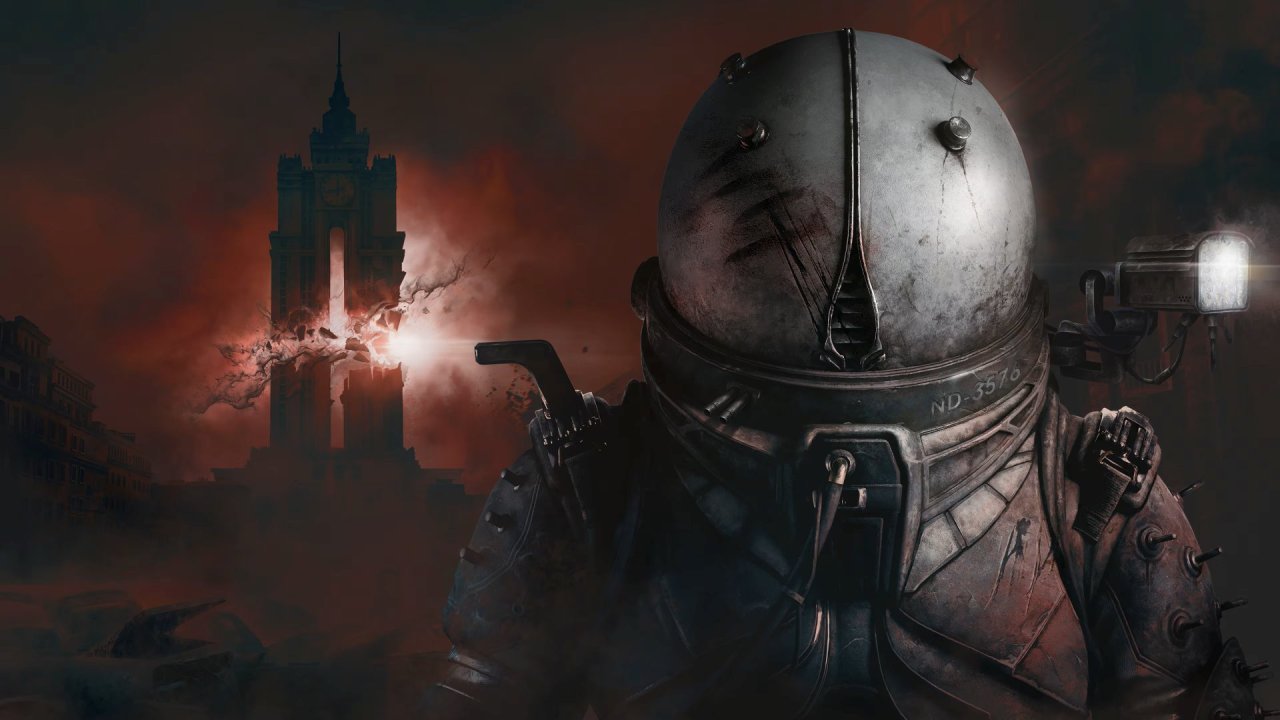
    I can’t fault Hollowbody for being authentic to the era it emulates – from the visuals and atmosphere to the controls, puzzles, and combat – but it never feels as cohesive as the classics. It has a strong start, an overlong and boring middle section, and solid finale if you’re fine with gimmicky boss fights. There were times I could believe it was a lesser-known and underappreciated Silent Hill clone from the early 2000s, but other times it felt a little aimless and lacking a clear vision.

    The impact of the visuals and atmosphere cannot be understated. Hollowbody looks, sounds, and feels like a PS2 survival-horror title around the time developers were transitioning to fully 3D environments. Semi-fixed camera angles, wonky movement and combat, mist-shrouded streets, gloomy maze-like interiors, the limited use of music with a focus on ambience – it was only the high-quality voice work that felt out of place.

    Hollowbody first places you in the boots of Sasha – a member of some sort of UN observation team – as she traverses a grey and desolate British coastline. Searching for a lost colleague, she descends into a dark cave system only to stumble upon a mysterious pit overgown with organic material and her seemingly deranged companion. Jump forward 12 days and you take control of Mica, a black-market smuggler now looking for a way into an exclusion zone to find her partner who disappeared at the end of the intro sequence.

    The British sci-fi setting is refreshing and the premise intriguing. You have a dystopian near-future dealing with extensive urban decay; the promise of urban regeneration from a charitable organisation with questionable intents; a biological disaster that left entire cities walled off; and a rushed government coverup to minimise accountability.

    All the basics are there but, aside from one NPC and some scattered documents, the only significant narrative beats are the lengthy opening cutscene and an ending that strings together up to four fade-to-black, cliffhanger-style scenes. I guess it’s a love-story at heart, but every other element felt disjointed or dependent on secret documents that demand a ton of backtracking to uncover. Denying the player key information and leaving them confused can be deliberate and effective in horror games but in Hollowbody it simply feels like some sequences were just less developed than others.

    As an example, an early trawl through an abandoned apartment block felt perfectly paced. A distorted voice taunts Mica over old landlines (that double up as manual save points); environmental details and scattered notes reveal the desperation of those living there; you get your first taste of the twisted monsters that stalk the quarantine zone; and an encounter on the roof that marks a divergence point that will  see you go on alone or with a companion that’ll drip-feed a few more details and trigger a different ending.

    When it comes to gameplay, you have puzzles and combat that also follow the classic formula. You hunt for actual keys or key-like items to progress, sometimes manually inspecting or combining objects to progress. The puzzles are self-contained and logical (outside of one elaborate secret) but get satisfyingly weirder as you push forward. Standing in your way are monsters that you’re never forced to fight, but dodging their shambling attacks can be difficult in tight spaces or when changing camera angles sabotage your movement.

    If you resort to combat, ammunition is scarce enough that you’ll want to save it for bigger or faster-moving creatures. As a result, much of the game is spent baiting attacks, backpedalling, then laying in with an assortment of equally useless melee weapons with inconsistent hitboxes.

    Fans of classic survival-horror might think this sounds par for the course and, yes, you are the target audience. However, Hollowbody relies too heavily on monster gauntlets and backtracking during a bland middle section, consisting of streets, parks, and sewers that connect the apartment block opening with the train station finale. The environments blur together, there’s little narrative momentum, puzzles feel simpler, and there far too many enemies roaming around aimlessly. Hollowbody may not be particularly long at 4-ish hours for a first playthrough, but if the opening and closing hours feel like excellent homages to classic games, the entire middle sequence is uninspired filler.

    It is worth pointing out that Hollowbody has options to reduce the enemy count and switch to a third-person camera system that works alright in outdoor areas. It also has a secret dog ending; an elaborate hunt for data disks to unlock lore; and some other familiar modes like enabling a big-head or playing from the first-person (which is worth messing around with in interiors to better appreciate the details in the environment).

    Now I’ve come across as more negative than intended, especially considering Hollowbody is a budget-priced indie game, so it’s worth reiterating it serves as an impressive nostalgia trip for those after classic vibes. The problem is that while game length is an eternal debate, after one and a half playthroughs, I feel Hollowbody would have been better off taking the Resident Evil 2 approach; offering an even shorter and less padded playthrough with the focus instead on pathing and puzzle variations between runs as you unlock new endings.

    Pros:

    • It captures the look and feel of early 2000s survival-horror games on the PS2.
    • Increasingly weird yet logical puzzles.
    • A novel setting, smart writing, and great voice work.
    • Limited music but excellent use of unsettling ambience.

    Cons:

    • Clunky combat and clunkier camera controls.
    • The middle section of the game is heavy on backtracking and monster gauntlets.
    • A gimmicky final boss battle.

    Score: 7/10

    Hollowbody was reviewed on PS5 using a code provided by the publisher. It is also available on PC and Xbox Series S|X.