
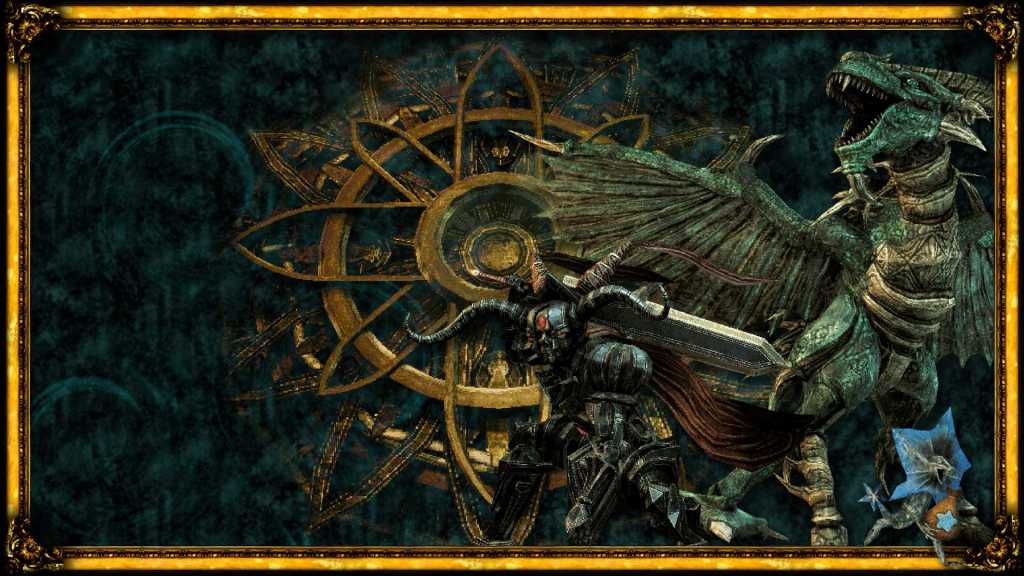
Queen’s Domain is a remarkable, retro-inspired, yet modernised King’s Field homage from tiny developer Freshly Baked Games – though it doesn’t feel that way during the opening hour or two. You can expect aimless wandering along corridor-like paths; pixel-hunting for key-items and consumables among the grainy, pixellated textures; and being beaten down repeatedly by bizarre animal hybrids and insufferable laser-flowers while you get to grips with the clunky, bait-and-counter combat. If you can endure that and vanquish the first boss, however, Queen’s Domain suddenly opens up, revealing environments, traversal, and combat with far more depth than appearances first suggest.
Queen’s Domain is familiar fare for those who enjoy the classics it emulates, and it should click with modern ‘Souls-like players if they can stomach the perspective switch. You have dense, interconnected environments full of elaborate locks, secrets, and fantastical beasts that want to kill you. You wield various melee weapons and ranged support weapons, each with different damage types, status effects, and alternate attack patterns best suited for certain foes. Character and weapon progression is simple but impactful. Combat is slow and deliberate as the bait-and-counter strategy stays effective throughout and you often need to find space to charge up attacks to inflict maximum damage.
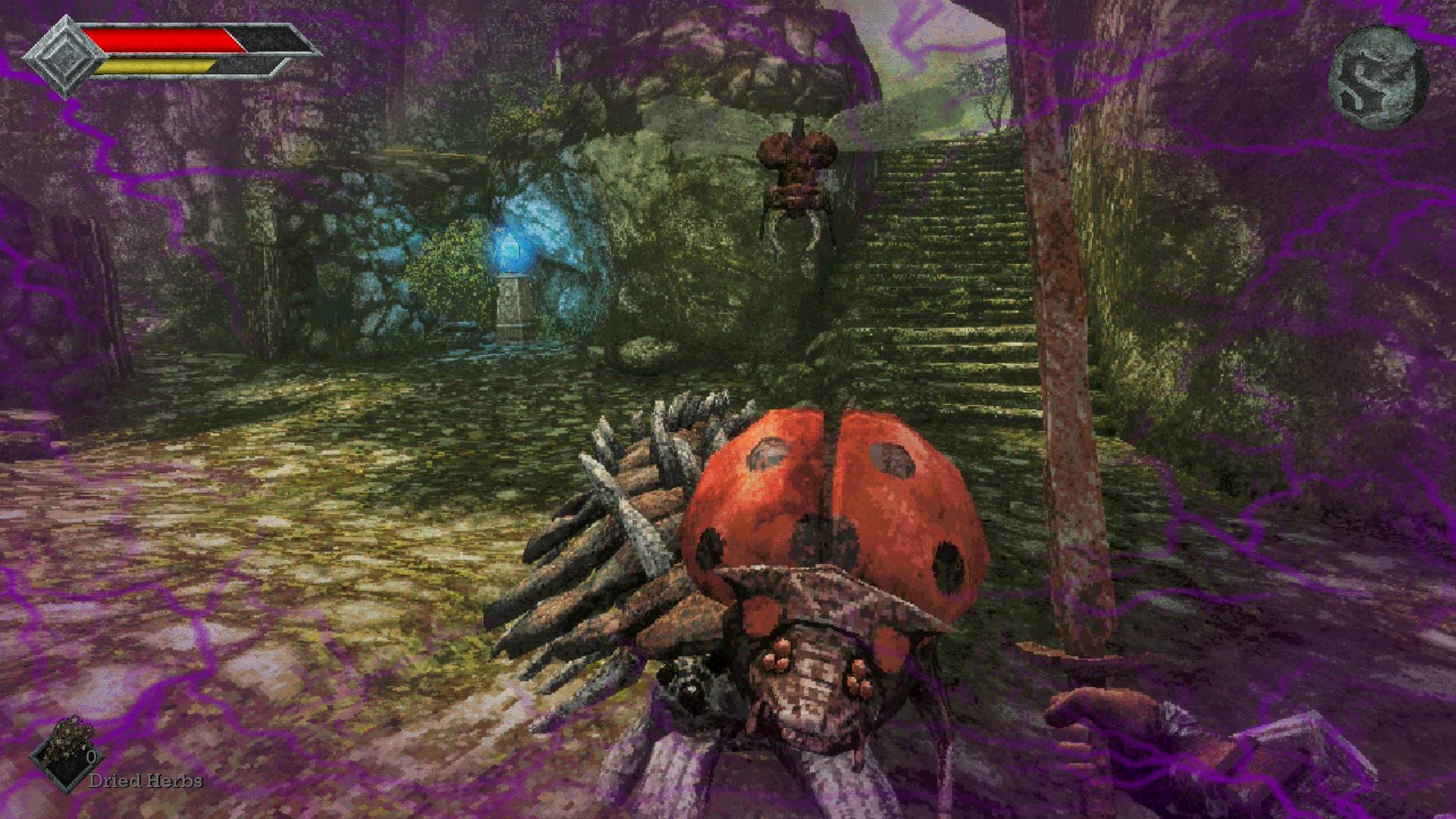
What makes Queen’s Domain compelling – and I say this as someone who has drifted away from ‘Souls-like games over time – is the satisfying cycle of angst and elation as you come to grips with the layout of each new environment and the master the mechanical depth on offer. The early slog was through narrow valleys, cliffside paths, and tombs that provided little room to manoeuvre. After observing the leaping range of a “Ratty Bug”, I synchronised it with the charge time of my rusty sword, and felt the brief thrill of victory. Then I backpedalled into the range of a poisonous centipede beast I couldn’t damage without a piercing weapon and was promptly finished off by a laser-spewing flower mid-retreat.
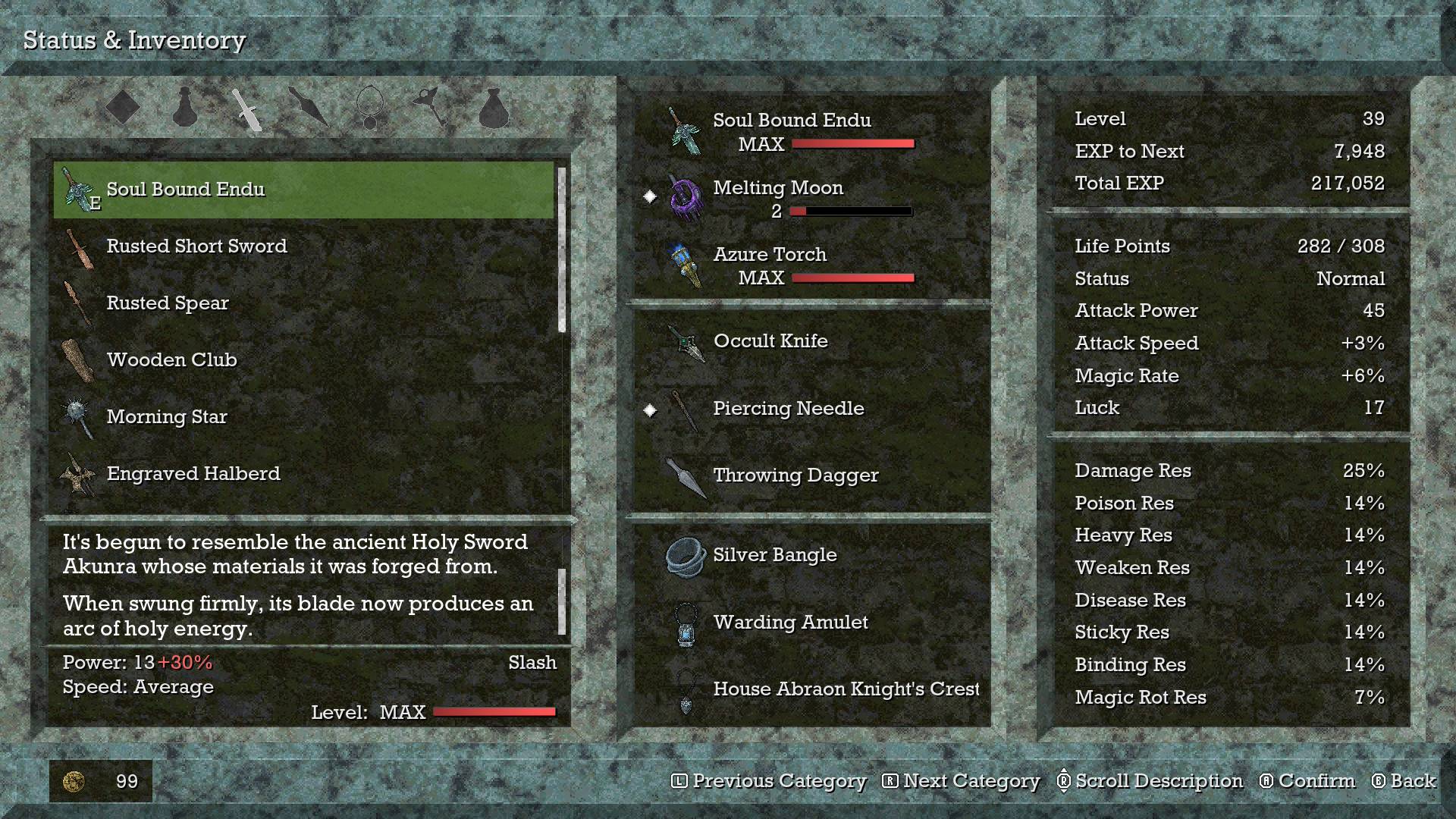
After cursing and gesticulating angrily at the screen, I found a belt of magically returning daggers and a piercing spear with a useful back-dash secondary ability. Now I had a way to trigger wall switches, stab out-of-reach flowers in their stupid laser-eyes from afar; chip away at armoured “Chilopoda” before dashing back when they lunged; and I could spam ranged daggers while exploiting level geometry to cheese tougher encounters when needed. Then I found myself trapped in a small boss arena with a big skeleton, got bludgeoned a few times, my euphoria abated, and I settled back into a routine of careful observation and counters. Then I got the wind-infused Endu sword.
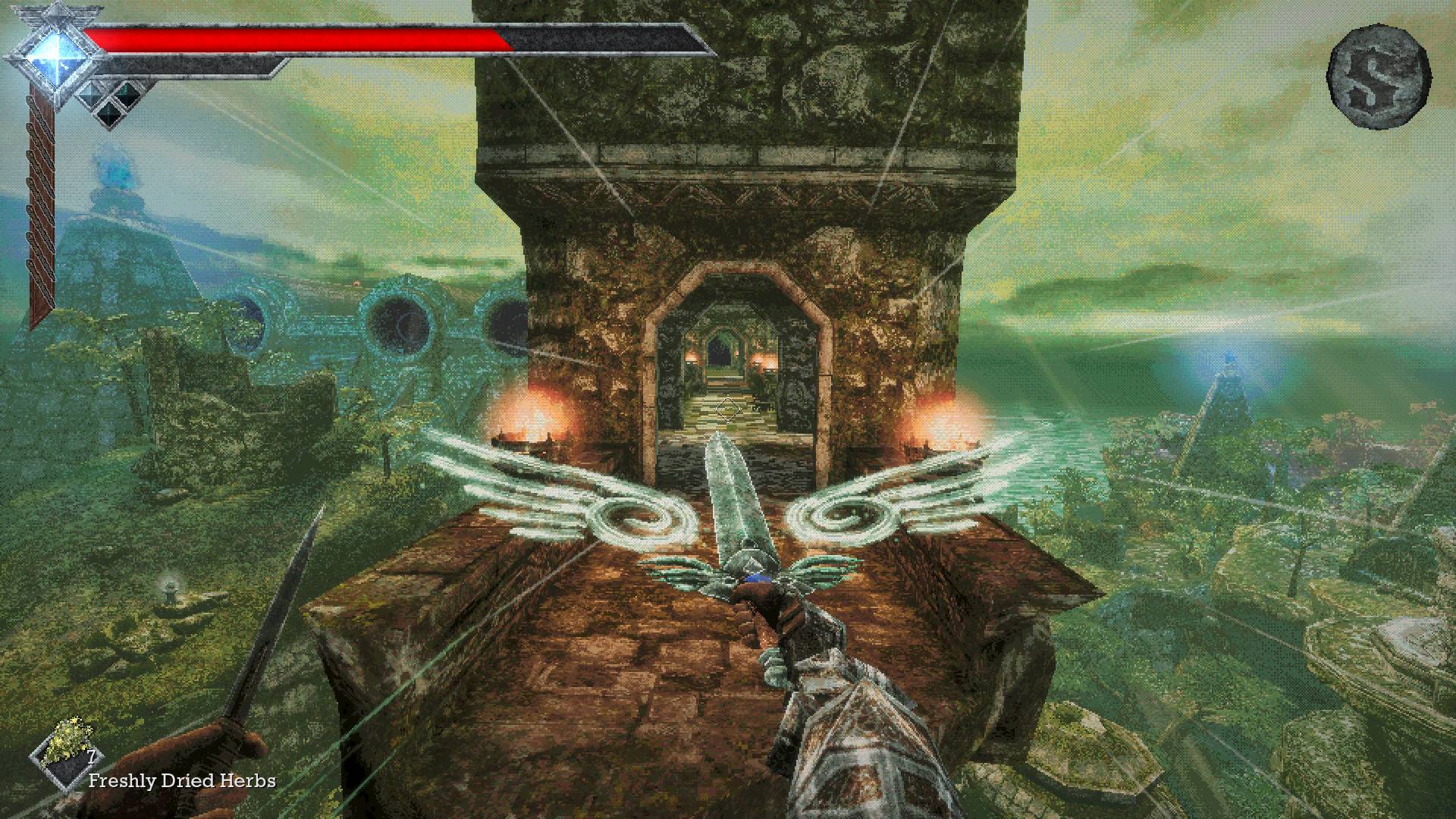
Once Queen’s Domain introduces aerial dashes, the island evolves from restrictive corridors into a sprawling landmass of complex vertical dungeons, from looming towers stretching skywards to gloomy mausoleums carved into the depths (and no shortage of hidden alcoves or secret chambers off the beaten path). As you collect more wind gems, you can chain together more dashes, but only horizontally without gaining height. This allows the developers to create elaborate puzzle-dungeons while still guiding the player based on the gaps they can traverse. As you explore, you also come to appreciate how interconnected the world feels is as you unlock shortcuts to earlier zones.
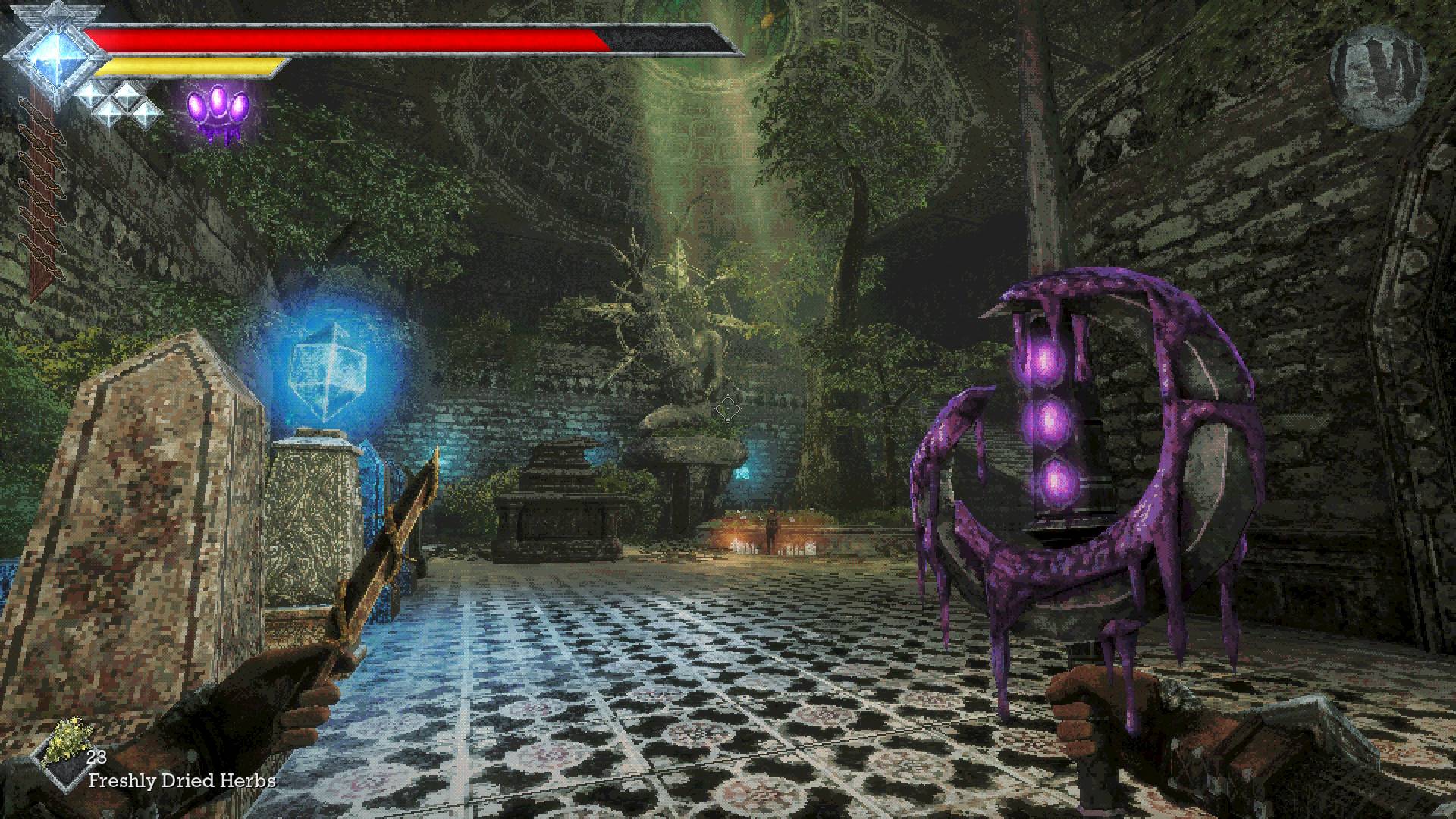
Certain consumables and scattered fast-travel shrines near a handful of quest-giving NPCs are a convenience, but I rarely used them as the highlight of Queen’s Domain remained exploration with a constant sense of discovery in a hand-crafted world. That said, battles are frequent and the dash mechanic enhances the initially stodgy combat. No matter the weapon equipped, a dedicated button allows you to dash in any direction. This allows massive boss fights to evolve from methodical bait-and-counter affairs into more complex and frenetic battles that have you dodging screen-filling blows, negative status inflicting area-of-effect attacks, and avoiding or kiting supporting mobs.
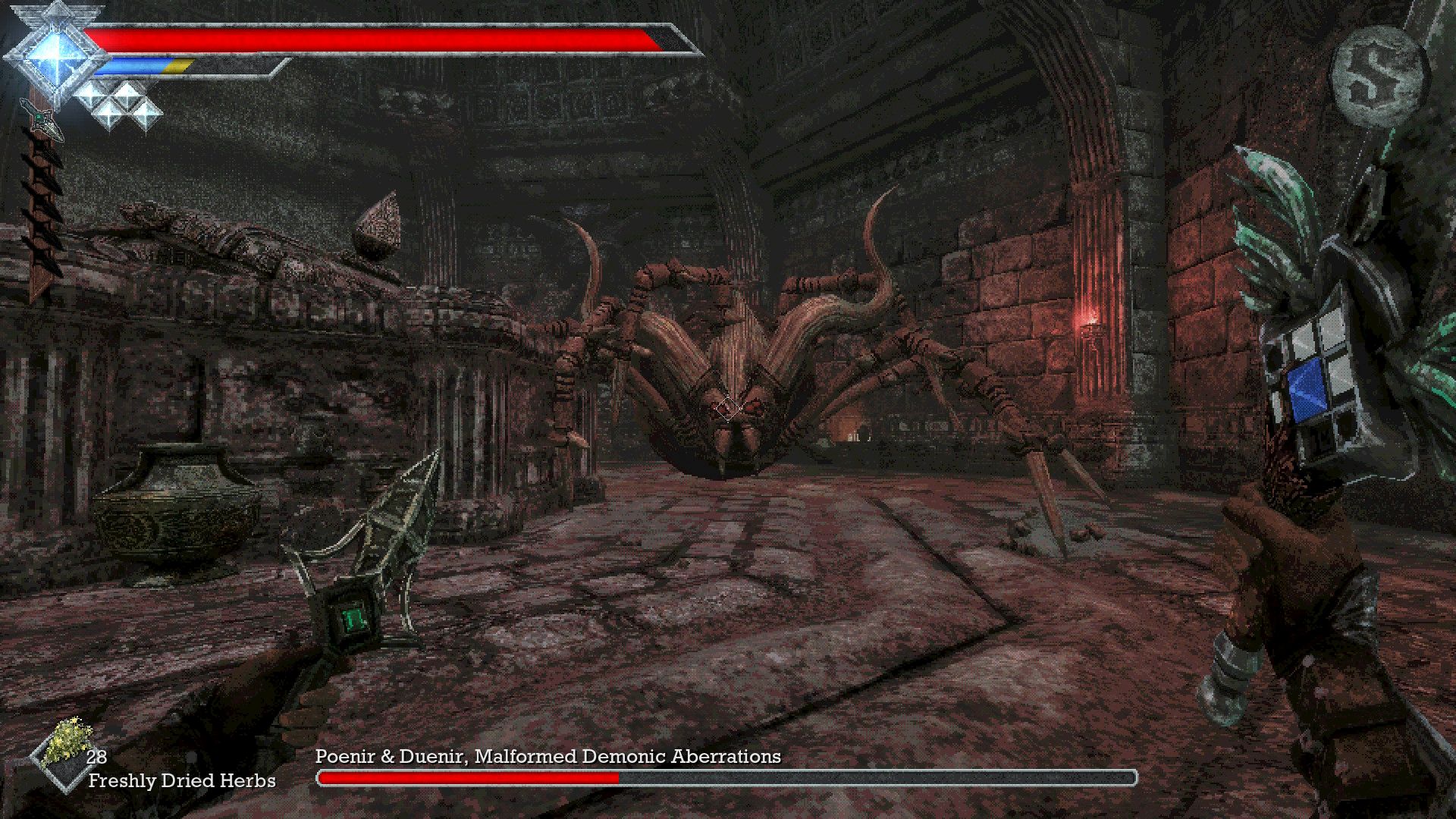
As someone who finds the difficulty of most ‘Souls-like games more infuriating than invigorating, the battles felt tense but never so complex or fast I couldn’t master them with the right gear, move-set, or consumables. If that failed, Queen’s Domain still facilitates classic strategies like grinding player and weapon levels, or farming consumable drops. There is also a duck-obsessed vendor that can help stack the odds in your favour with a selection of trinkets to bolster your damage output or resistances. Like so many classics, mastering the combat rhythm is satisfying, but it rarely feels visually or viscerally thrilling thanks to floaty animations and weak hit reactions.
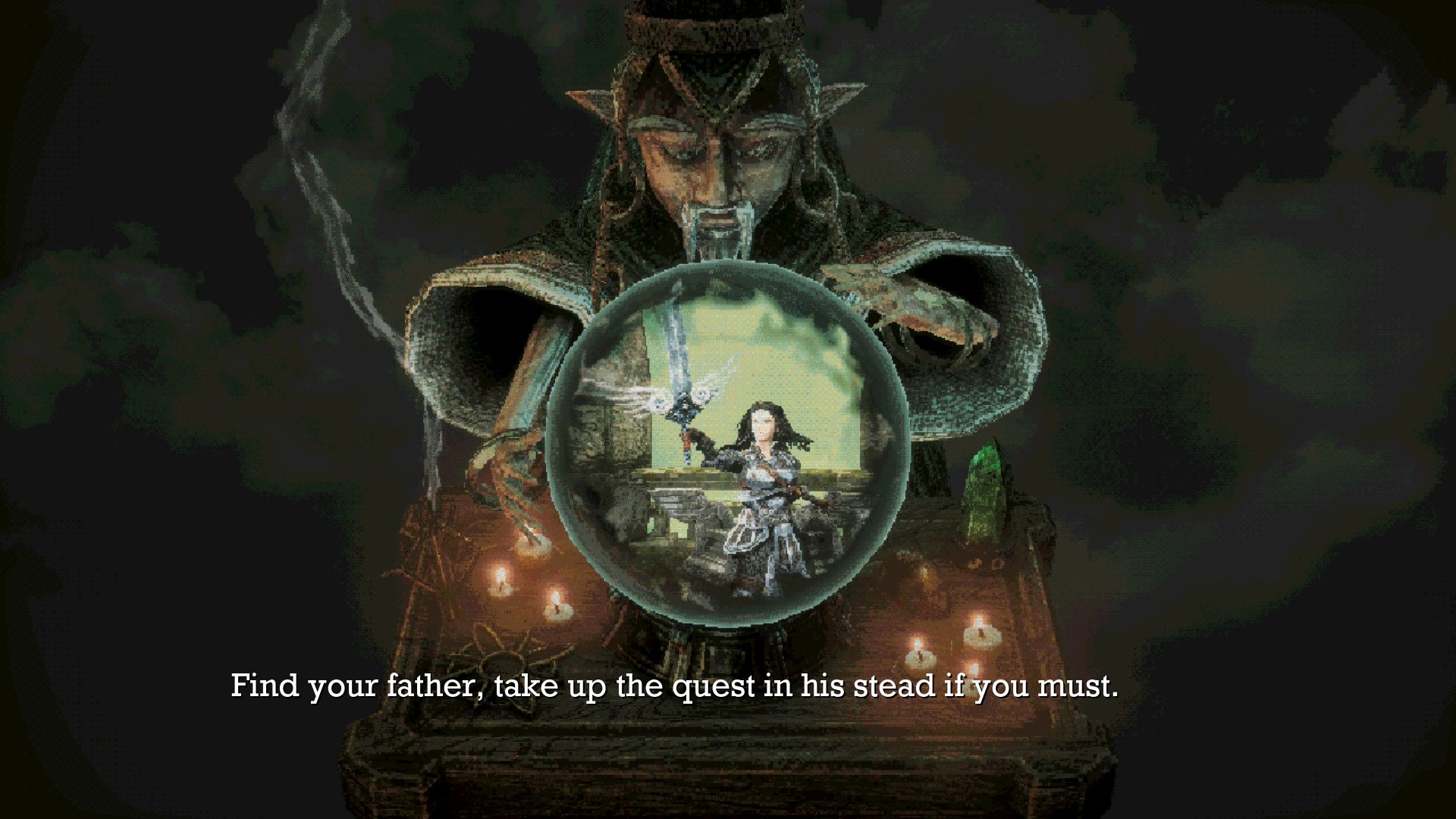
On that note, Queen’s Domain is not without flaws, such as a story that feels too generic until a midgame twist changes up the atmosphere and some mechanics (around the 18-hour mark for me). An evil queen emerges on a magical island; the king and his retinue disappear trying to subdue the threat; and a young prince takes up their father’s quest. Survivors only live long enough to provide guidance or a key item, while quirky NPCs offer quests that have ambiguous outcomes. It’s classic ‘Souls-like fare but the writing for unvoiced dialogue, the prince’s commentary, and scattered notes feels concise and suitably embellished. I prefer narrative context in my games but, to the credit of the gameplay mechanics, I was more always interested in exploring the next dungeon than any story beats.
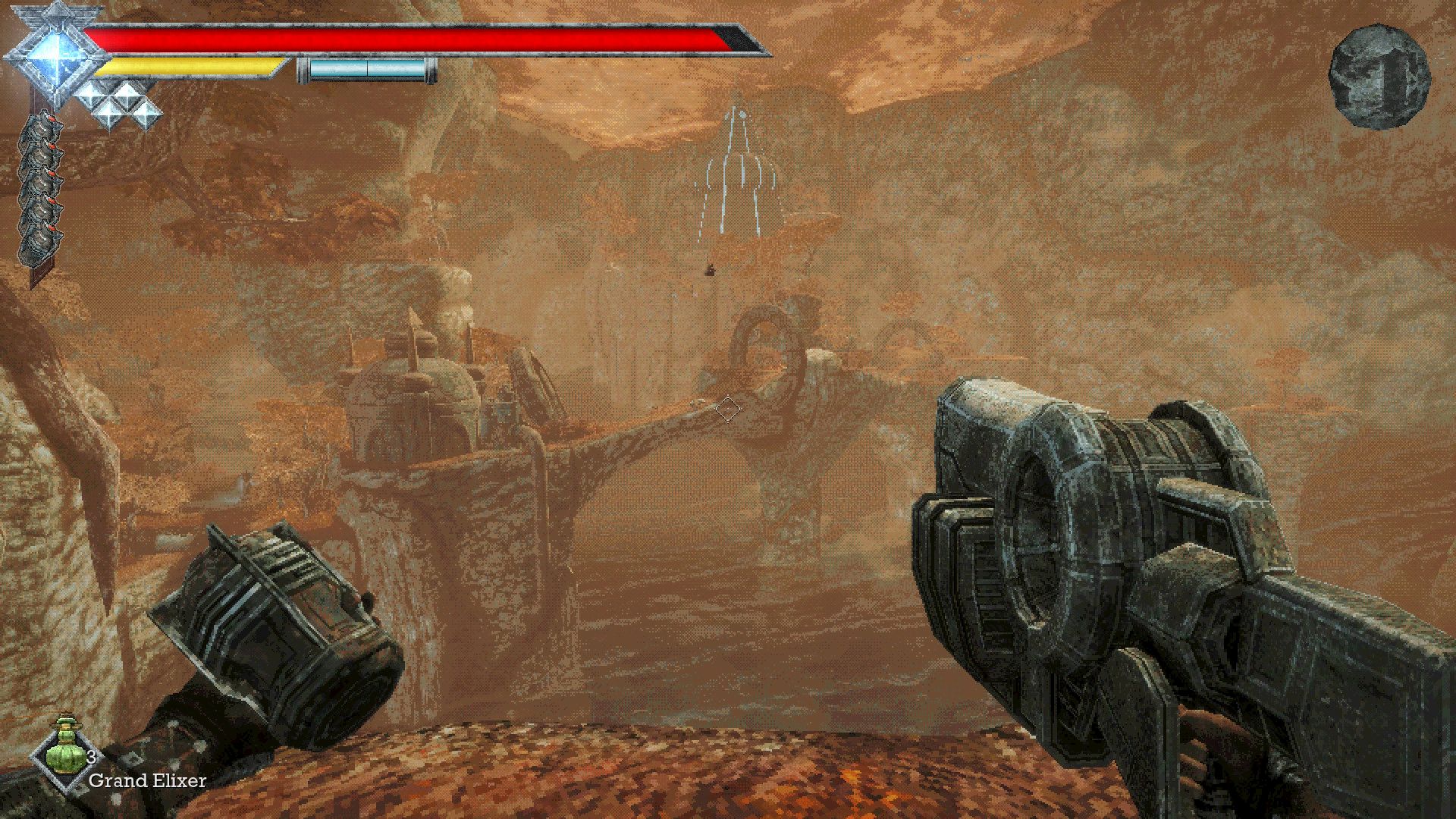
A big part of the experience are the visuals that might prove divisive. I found them beautiful despite the grainy retro-aesthetics and framerate drops on Nintendo Switch 2, and they’re complemented by a fantastic, earworm of a soundtrack with unique themes for each zone. That said, despite the use of visual cues like light sources, it can be difficult to spot essential key items, while creatures can be hard to track against backdrops. My only major gripe is the monster respawn system that messes with exploration. Respawning creatures after using a shrine to heal or when fast-travelling to another zone make sense, but they also respawn on a timer – sometimes literally in front of you – which can make puzzling through complex dungeons or secret hunting more frustrating than captivating when faced with more annoying variants or combinations.
Despite those gripes, I’ve sunk 20 hours into the critical path, some light secret hunting, and only just scratched the surface of the “Ancient World”. The urge to push forward remains strong. I know I’ll eventually stumble upon an annoying enemy type or boss encounters that punishes me for reckless play but, with Endu sword in hand, I know there are more biomes to discover, more massive vertical dungeons to conquer, more secrets and gear to uncover, and that slow but steady sense of growing power and mastery. Perhaps the greatest praise I can give Queen’s Domain is that by emulating and modernising a classic formula, it might just make me reconsider my waning interest in the ‘Souls-like genre.
Queen’s Domain was played on Nintendo Switch 2 using a code provided by the publisher. It is also available on PC, Xbox Series S|X, and PS5.

