Author: Andrew Logue

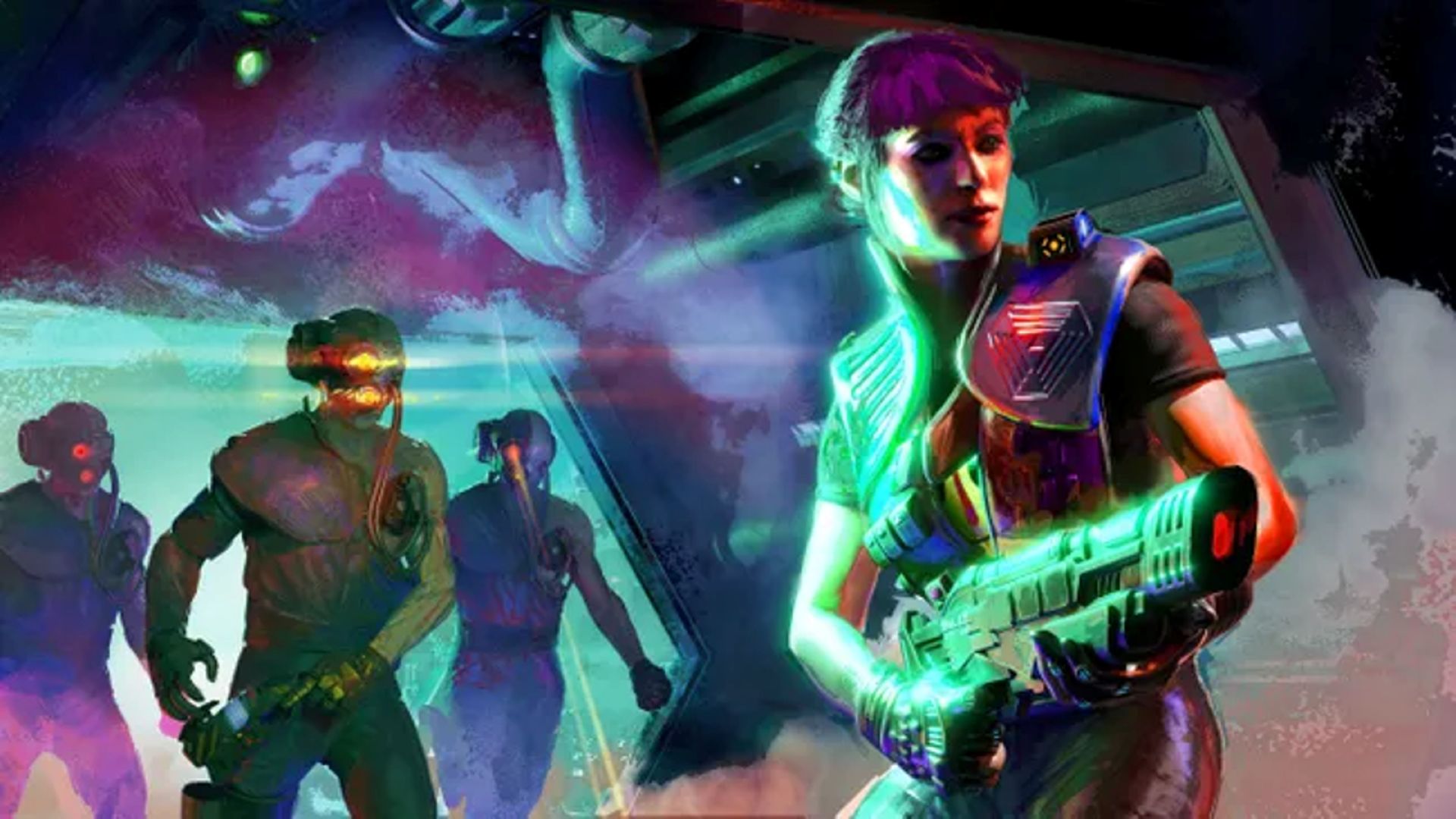
  • Preview: Starship Troopers: Extermination offers cooperative chaos that could do with a little more order (v1.4)

    Preview: Starship Troopers: Extermination offers cooperative chaos that could do with a little more order (v1.4)

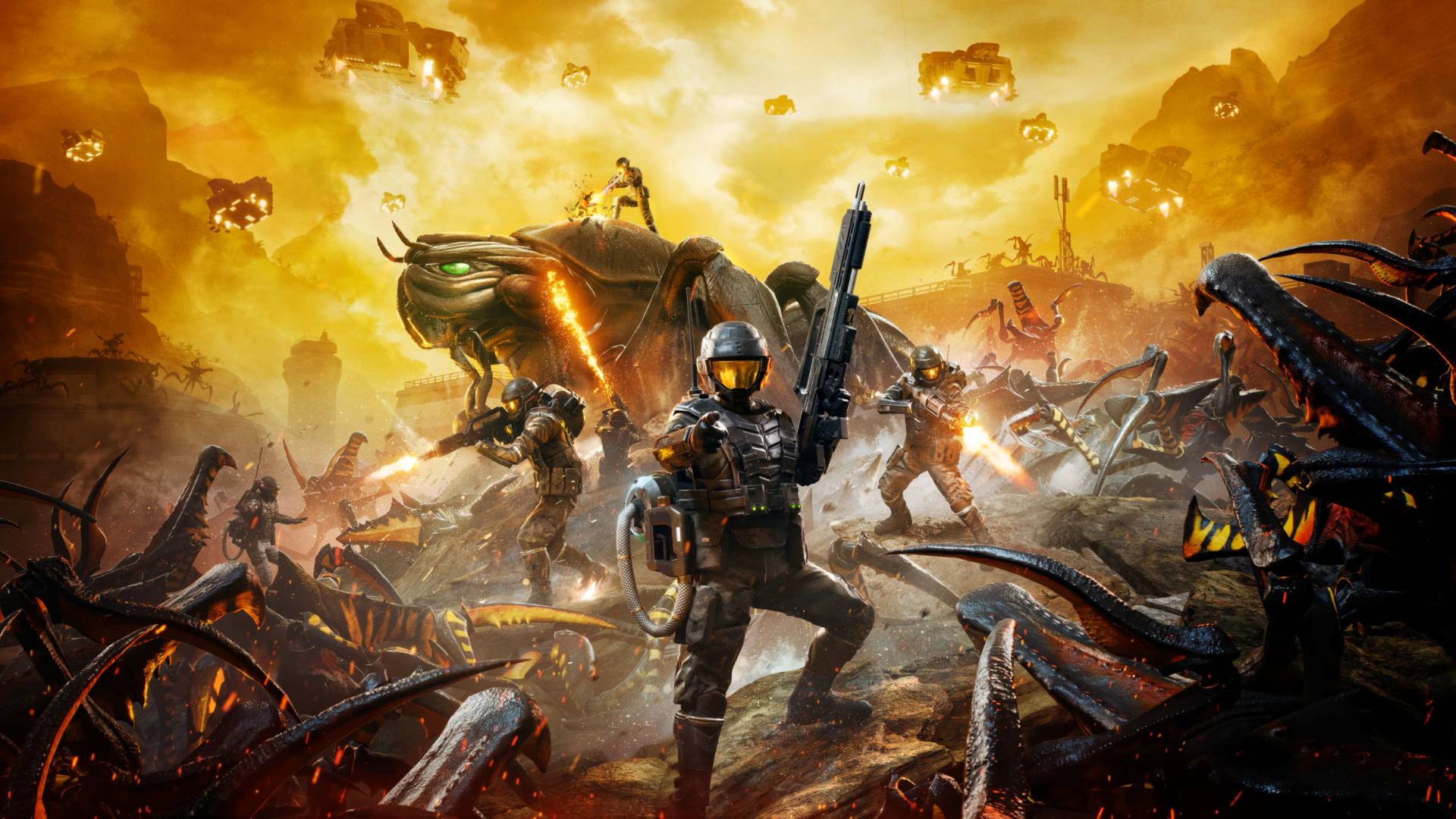
    The ongoing success of Helldivers 2 makes it easy to forget Offworld’s Starship Troopers: Extermination launched into PC early access in May 2023 seven months before it and finally arrived on consoles with the v1.0 release in October 2024, nine months late. The post-launch roadmap still promises updates – including a much-needed overhaul of the “Galactic Front” campaign structure – and the small but consistent player base has fluctuated back and forth between positive and negative sentiment.

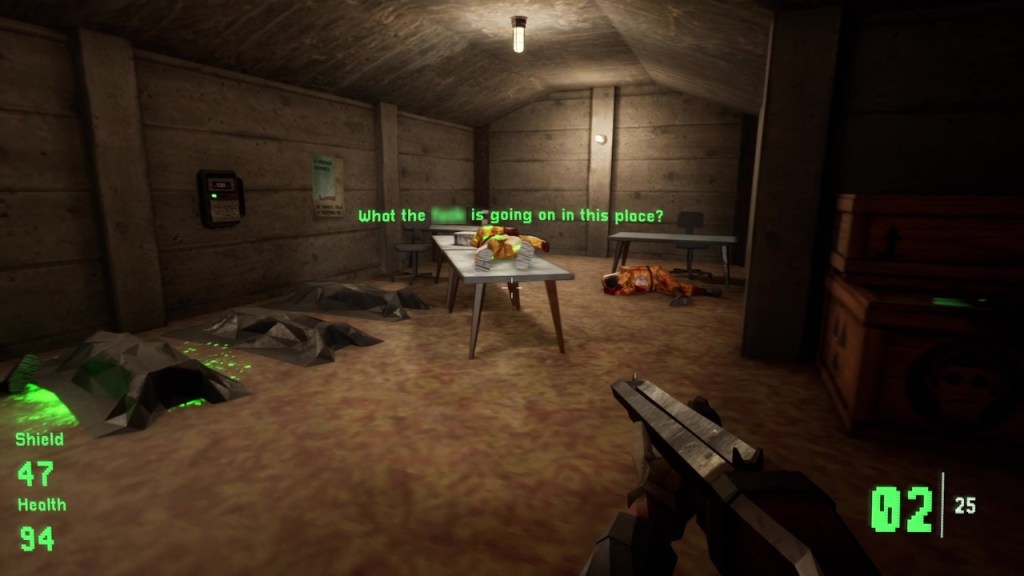
    Returning to it on console, two years after covering that early access build, it still offers chaotic cooperative fun with brisk progression mechanics and authentic Starship Troopers aesthetics. However, those looking for a daily fix will find the lack of variety becomes an issue after just a handful of missions.

    With a cooperative PvE shooter core, Starship Troopers: Extermination has always benefited from simplicity. You can (and should) drop straight into the so-called “Main Missions” and learn as you go – especially as the base building tutorial and bland “Solo” missions are not even remotely indicative of its potential.

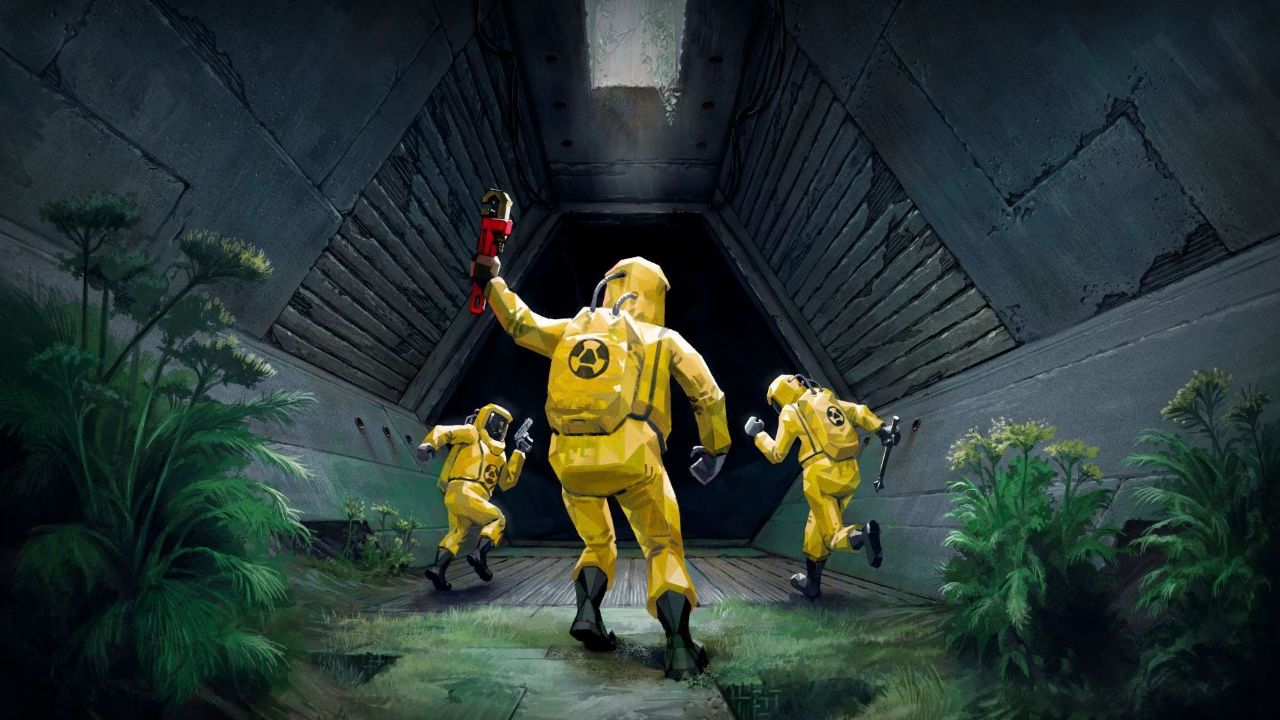
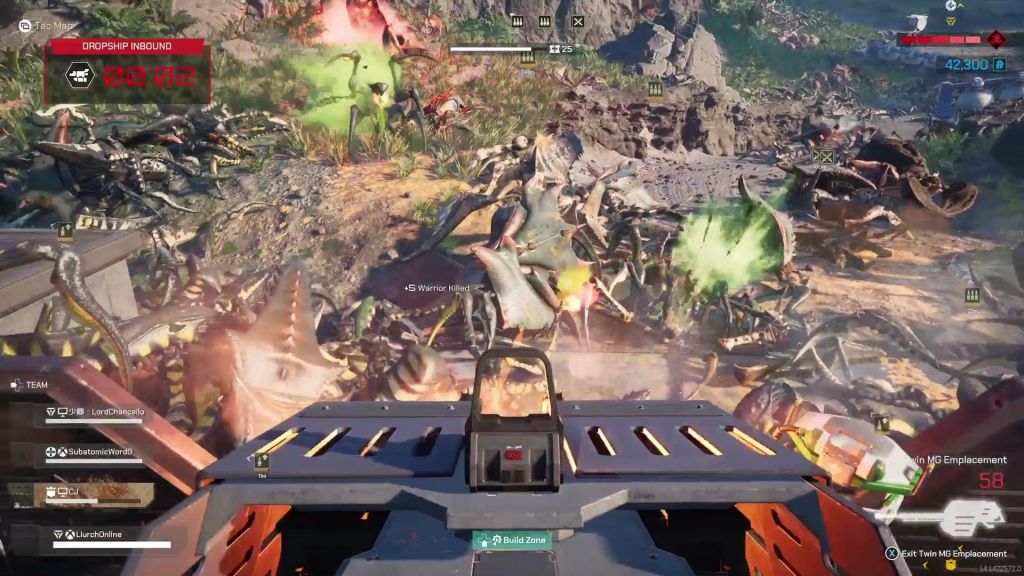
    It’s a class-based FPS with armoured Guardians and Demolishers to hold the line, mobile Rangers and Snipers to mark and prioritise targets, and Engineers and Medics to provide support for structures and infantry. You run and gun between objective points, toss grenades and lay mines, and activate class-based abilities on a cooldown to try turn the tide. There are few surprises where the shooting is concerned, but shredding a bug in a shower of gore looks and feels good.

    Starship Troopers: Extermination’s strengths and weaknesses are both tied to the evolving mission structure and base-building elements. Missions follow a similar flow: you’re dropped into the battlefield, you capture control points on the route towards a major objective, you defend refineries and gather ore, build and defend a base until a timed- or wave-based objective is fulfilled, and finally rush to extraction.

    Missions are dynamically generated across one of three large maps – with variable weather conditions, time of day, and difficulty mutators – but there’s clearly a limited number of locations objectives can spawn. As a result, you’ll soon end up taking the same routes and defending the same bases over and over again.

    For existing fans of the IP, there’s a familiar roster of Drones, Warriors, and Tigers Elites that’ll rush you; Inferno and Plasma bugs that’ll bombard fortifications at range; an infuriating “Gunner” bug that can whittle down your health from afar; and a massive Tanker Bug as a special event. Befitting the source material, their primary method of victory is overwhelming force, with each mission ramping up the threat level over time and tougher variants emerging. Surviving on foot is a challenge, even if you can coordinate all 16 players, but that is where the streamlined base-building mechanic comes into play.

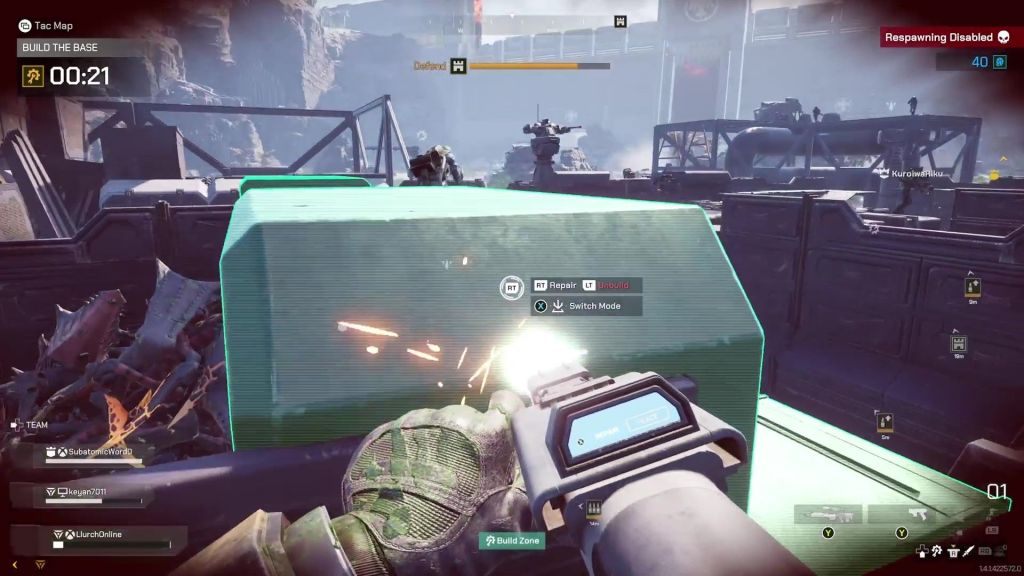
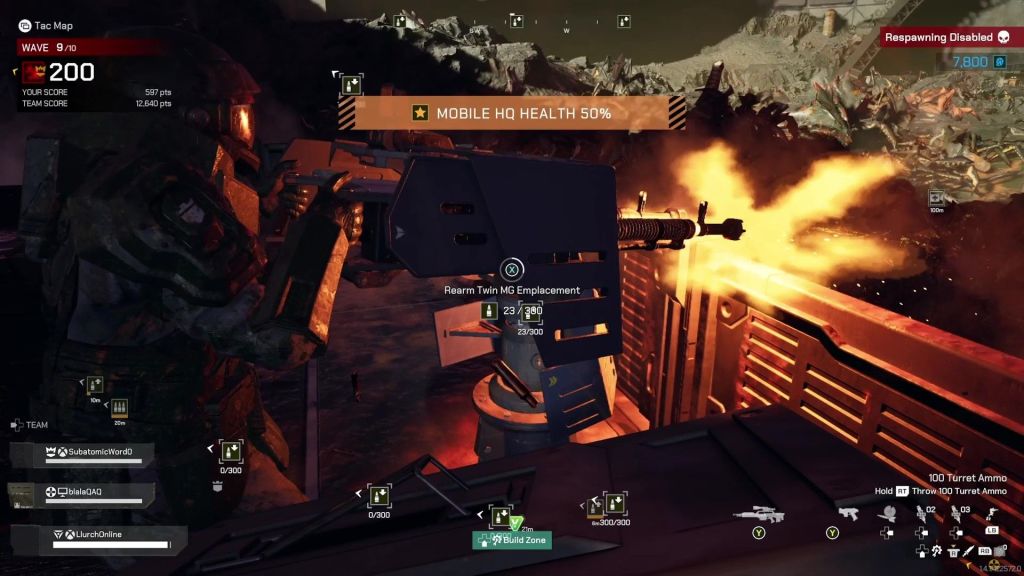
    Within designated areas, you can rapidly assemble outposts around a key structure, building layers of walls, bunkers, towers, turrets, automated sentries, and stockpiles of ammunition for infantry or turrets you’ll need to maintain. Building options all fit into a single menu, you can rotate and align structures easily, and building or repairing simply involves holding down the trigger on the repair tool. On higher difficulties and during siege events, fortifications are the only viable way to survive an onslaught that is unrelenting by the time the extraction shuttles arrive. Mounting a turret, opening fire on an advancing horde, and watching bug corpses pile up against the walls looks and feels incredible – but building bases and coordinating defence is where Starship Troopers: Extermination can also frustrate.

    Although each class has unique and powerful abilities and utility tools when used strategically – such as the Guardians personal fortification or a Medics reviving drone – expanding fortifications and assigning enough infantry to man each approach is messy. Open chat in multiplayer games is the last thing I’d recommend, but even if you’re just communicating with friends or a within a 4-player fireteam, that still leaves up to a dozen other players doing their own thing, and the incredibly limited “ping” system only marks waypoints or enemies.

    All too often, the quickest fireteams build up defences on one side of the base while leaving gaps in the other, or separate from the group to complete optional mission objectives without alerting others to cover their absence.

    More than ever, I feel Starship Troopers: Extermination still needs a more fleshed out ping system that could be coupled with class- or fireteam-specific limitations. Giving each fireteam a defined purpose might be useful, such as having one dedicated to Engineers and base-building, another for jet-pack equipped Rangers to tackle distant objectives quickly. I’d also like to see a reduction in the speed at which the threat-level escalates, if only to encourage groups pursuing optional mission objectives. It could add some much-needed variety as you’re often knee deep in bugs within 10 minutes, and there’s no viable way to break off from defending the primary objective.

    Of course, it’s a tough ask going up against a competitor with the backing of a publisher the size of PlayStation, but if Starship Troopers: Extermination could focus on polishing and diversifying what it already has, it could provide a much-needed alternative.

    Starship Troopers: Extermination was played on Xbox Series X using a code provided to gameblur by the publisher. It is also available on PC and PS5.

  • Editorial: The System Shock (2023) remake rewards the thoughtful and punishes the reckless

    Editorial: The System Shock (2023) remake rewards the thoughtful and punishes the reckless

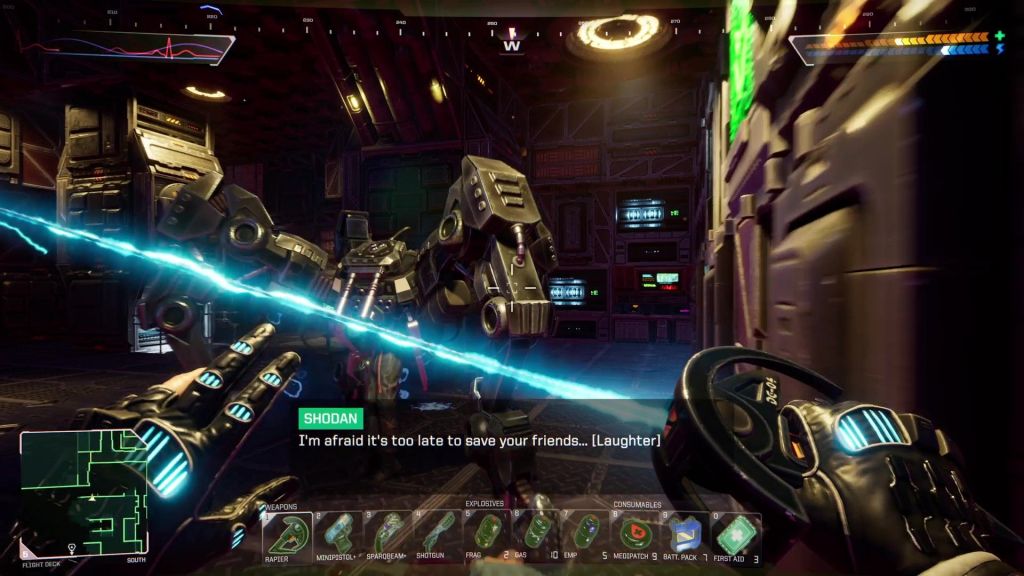
    As a fan of the immersive sim genre, it’s hard to decide which was the greater tragedy: having to wait 18 years between System Shock 2 and its closest spiritual successor, Prey (2017); or watching Prey (2017)’s developer, Arkane Texas, forced to churn out Redfall in 2023 before being unceremoniously shuttered by Xbox. At least that year Nightdive Studios’ remake of the first System Shock finally arrived on PC, after a turbulent 8-year development cycle that included IP licensing concerns, extended periods of silence, three complete restarts, and a shift from Unity to Unreal Engine 4. To their credit, the result was mostly worth the wait.

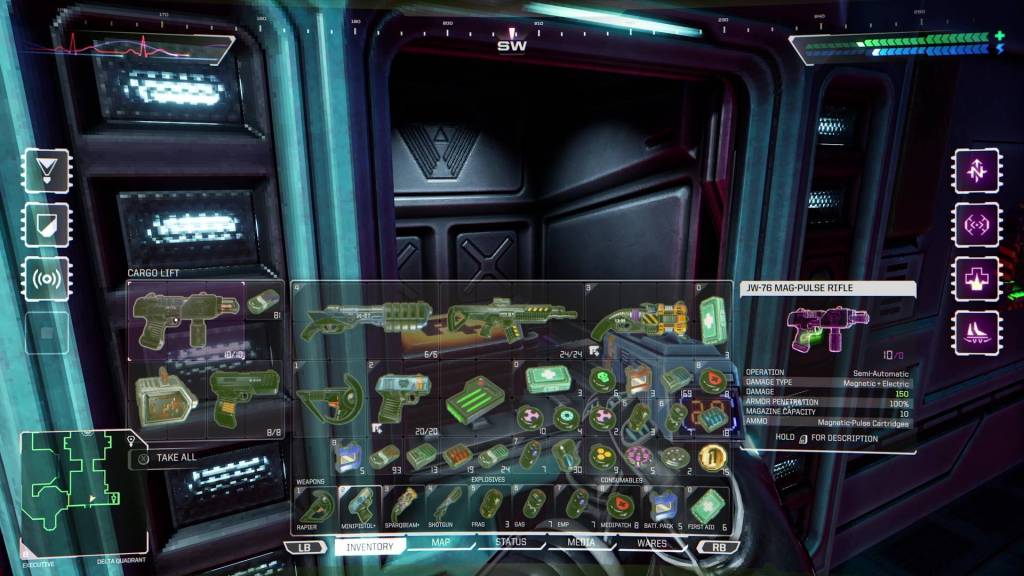
    Replaying it by way of 2024’s excellent console ports (for both current- and last-gen hardware), the System Shock remake is faithful to a fault in some regards, but still infinitely more playable without the original’s clunky FPS/point-and-click hybrid controls. System Shock (2023) is far more involved than a traditional FPS, but it controls like one and works well enough when using a controller – aside from sluggish inventory management and an awkward lean toggle.

    The updated UE4 visuals and new synth-heavy renditions of the original soundtrack generate late-‘80s/early-‘90s sci-fi vibes – think harsh lines, retro-futuristic tech, an abundance of specular reflections, and overblown neon lighting – and those fresh visuals are enhanced by a pixel filter that adds a veneer of retro-inspired chunkiness to close-range textures, character models, and 3D objects.

    While the audiovisual overhaul and updated control scheme are obvious changes up front, System Shock (2023) deserves more praise for how it manages to recreate much of the original’s level design, mission flow, and iconic encounters, despite expanding and enhancing every element.

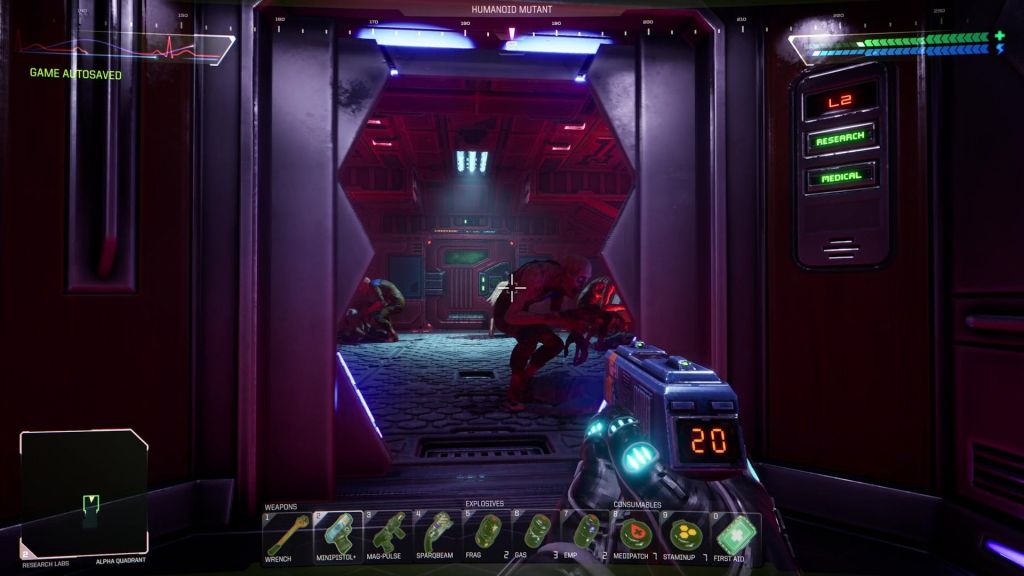
    Moving through the multi-level and often maze-like Citadel Station still feels tense and sometimes terrifying, especially given how little handholding there is and the high level of challenge. In stark contrast to the “follow-the-icon” mentality of most modern games, you need to pay attention to your map and signposting to navigate. You also need to parse radio transmissions and audio-logs for clues on how to progress, slowly piecing together the desperate plans of the former crew.

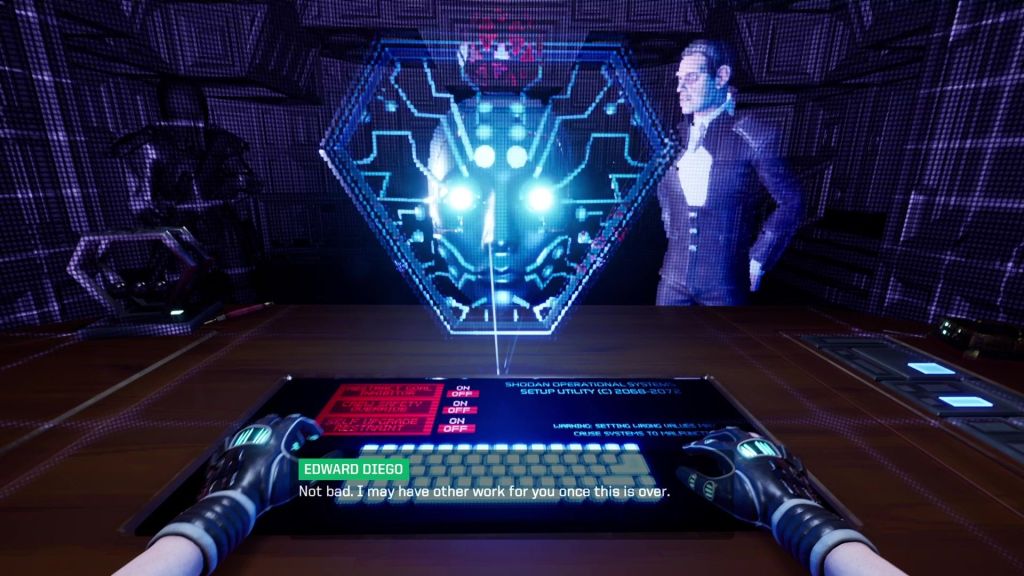
    It helps that System Shock has a cliched but compelling “AI gone rogue” plot. After being arrested for attempting to steal designs for a Tri-Optimum neuro-mod, your hacker protagonist finds themselves transported to Citadel Station and confronted by Vice President Edward Diego with a simple offer: become part of their dubious experiments or utilise their skills to remove the ethical constraints on the station AI, SHODAN, and receive the modification they were after as a reward. Emerging from a medical pod six months later, it turns out unshackling an AI with a god complex was a poor choice and she now wants you crushed like an insect.

    It’s a great setup, but aside from a handful of calls from survivors or Earthside Tri-Optimum staff, the bulk of storytelling is conveyed through optional audio-logs that near-perfectly correlate with environmental details. The more attention you give to the narrative elements, the more you get out of them.

    A first playthrough also nails the sensation of awakening amid a disaster, alone and out of your depth. However, the updated mechanics and returning difficulty levels allow you to tailor the experience to be more forgiving of rushed exploration, poor planning, or scrappy combat.

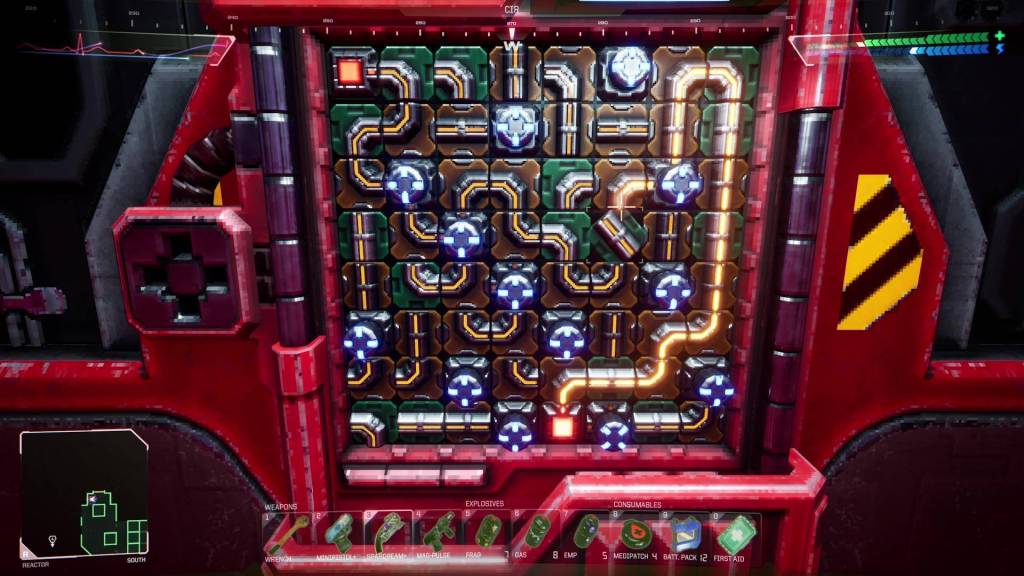
    The overhauled UI and menus better track progression, grid-based inventory management and quick slots for combat are a godsend, and you can customise the difficulty of individual systems. You get simple map markers on the easiest mission difficulty or a 10-hour time limit on hard. Combat is always challenging, but you can tweak incoming damage, mob sizes, and the respawn rate. Cyberspace battles – which play out like classic 6DOF shooters – can be colourful diversions or bullet-hell chaos. Puzzles – a mix of balancing voltages, rerouting power, and finding codes – can be brief distractions or leave you wishing you had a logic probe to simply override them.

    There are fans of the original that would suggest maxing every difficulty aside from enforcing the time-limit for a first playthrough, but I’d argue even on the easiest settings, System Shock (2023) never loses that inherently challenging immersive sim core. Running straight into a horde of cyborgs is likely to see you shredded regardless of the difficulty, while too many scrappy fights early on will leave you short on supplies and forced to adapt.

    The ability to revive at Restoration Bays is available regardless of the difficulty, so adding a few basic map markers, or simplifying cyberspace combat for those who hate that style of gameplay, is a worthwhile addition if it encourages a modern audience to stick it with it long enough to understand and appreciate the genre’s distinctive player-driven flow.

    All of which brings me to what I love most about System Shock (2023) and the genre as a whole. A good immersive sim punishes a player for a thoughtless approach and sloppy execution, but rewards preparation, planning, and the smart or unconventional use of the tools provided. It’s a genre that facilitates save-scumming, but not to encourage a trial-and-error approach; rather, it allows the player to iterate on a plan and master its execution. An ambush or boss fight shouldn’t require constant quick saving behind every piece of cover to manipulate the odds of being hit; you should want to reload a boss fight because you’ve thought of a way to optimise your approach and finish them off more efficiently.

    System Shock (2023) features a handful of mandatory boss fights and ambushes, but most can be subverted by finding alternate paths; engaging in some minor sequence-breaking using the upgraded jump boots; or simply burning through stockpiled ammunition and consumables to trivialise battles. An early boss encounter against a cyborg Diego can play out as a panicked firefight that has you scrambling to dodge plasma rounds and flee as he teleports in close with a laser rapier. Alternatively, you could apply a Reflex Reaction Aid to slow time, a Berserk Combat Booster to buff melee damage, charge in and finish him off with a flurry of your own laser rapier before he can even trigger his teleport.

    The same flexibility applies to conspicuously empty rooms that scream: “ambush”. You could also bolster yourself with dermal patches in preparation for a slow-mo scrap, or you could fling disc-like proximity mines at every wall panel, engage your shield mod, and rush to the middle of the room to watch your foes disintegrate in a flurry of explosions around you.

    Of course, with a limited inventory and storage options, the tools at your disposal are dependent on your willingness to explore, backtrack, and prepare. There’s almost always enough to get by – even within boss arenas if you survive long enough to find them – but cautious and systematic explorers are rewarded with early access to powerful weapons, mod and weapon upgrades, and no shortage of character-enhancing dermal patches and meds.

    Wrapping up, I’d reiterate my argument that a good immersive sim should ensure players can always progress using the tools or mechanics provided, conventionally or otherwise; it should reward them for exploration, preparation, and planning; and punish them for thoughtlessness or scrappy execution. I’ve played far too many modern games that, while often technically impressive and mechanically polished, are so reliant on familiar and effortless gameplay – the idea that player friction should be minimised – that my brain switches off and I run on autopilot until the next set-piece or elaborate cutscenes regains my attention.

    A good immersive sim may lack that scripted spectacle and controlled pacing, but I prefer games where the minute-to-minute gameplay – that essential “game” part of videogame – is consistently engaging and rewarding. If you feel the same, the immersive sim genre is well worth your attention and the System Shock (2023) remake is one of many excellent options available on console and PC.

    System Shock (2023) was played on Xbox Series S|X. It is also available on PC, Xbox One, and PS4/5.
  • Editorial: The Elder Scrolls IV: Oblivion Remastered offers new visuals layered upon old problems

    Editorial: The Elder Scrolls IV: Oblivion Remastered offers new visuals layered upon old problems

    With a wildly successfully sequel and extensive modding support for the original release, The Elder Scrolls IV: Oblivion Remastered falls in an unfortunate middle ground.

    I’m part of an audience of existing fans happy to purchase another Elder Scrolls game several times over, no doubt thanks to a heady dose of nostalgia for time when we had the time to “live another life, in another world”. However, there’s a reason they went with “remastered” in the title instead of “remake”, and I feel your history with the game – if any – could have a significant impact on your experience.

    Honestly, I’d have preferred The Elder Scrolls III: Morrowind received this level of attention, but there’s no denying Oblivion was instrumental in popularising the IP on consoles and it laid the foundations for the success of The Elder Scrolls V: Skyrim. Still, after 25 hours spent following the primary questline with a few diversions, it’s easy enough to recommend this remaster if you’re after a mostly vanilla Oblivion experience in 2025 (assuming you have the hardware to run it).

    For newcomers or those who loved Skyrim but missed Oblivion for whatever reason, it’ll scratch a lot of familiar itches – so long as you can accept its fledgling mechanics and systems can feel underdeveloped and even more janky at times. For returning fans, it’ll depend on your tolerance for Oblivion’s most notable failing.

    For newcomers, The Elder Scrolls IV: Oblivion Remastered is, unsurprisingly, set during the “Oblivion Crisis” – an event often mentioned in Skyrim as the catalyst for the rise of the Third Aldmeri Dominion that would go on to fracture the Empire unified under the Septims.

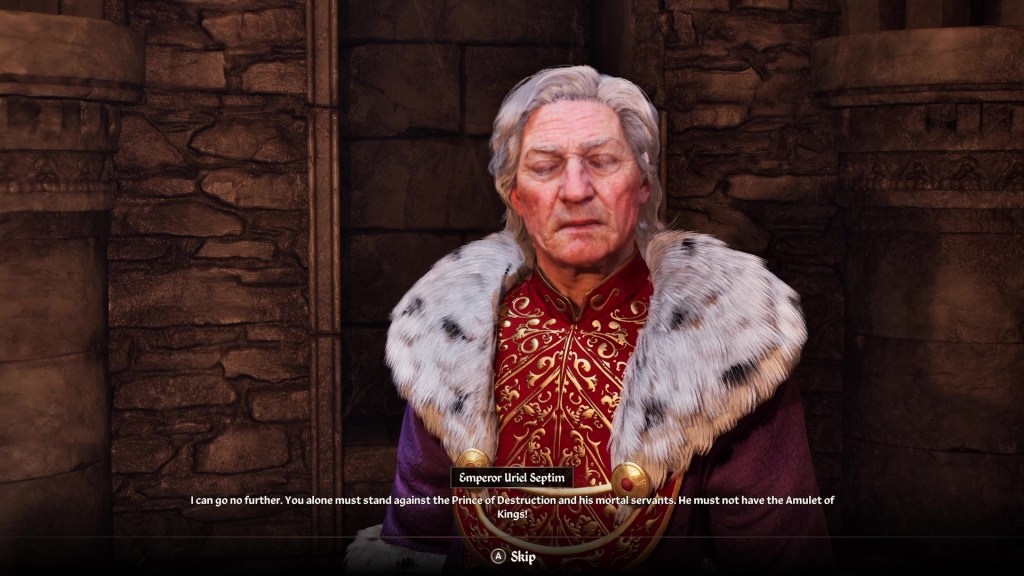
    Your protagonist is another prisoner who finds themselves swept up in events and during a bland cave- and sewer-based tutorial, they witness the assassination of the emperor; they’re tasked with finding a hidden heir to the throne; and told to help him “close shut the jaws of Oblivion”.

    Of course, this is an Elder Scrolls game so you can pursue those instructions with vigour or just ignore them for hundreds of hours if you wish. Almost two decades on, Oblivion still excels at what Bethesda Game Studios have always done well: presenting the player with a massive world to explore, packed with things to see and do, and the flexibility to tackle it in any way you choose – in theory.

    You craft your would-be hero using a horrific selection of cosmetic options somehow worse than the original; you wade through innumerable tutorial screens; pick your starting class, major skills, and star sign; and finally emerge into the high fantasy-inspired heartland of the Empire, Cyrodill.

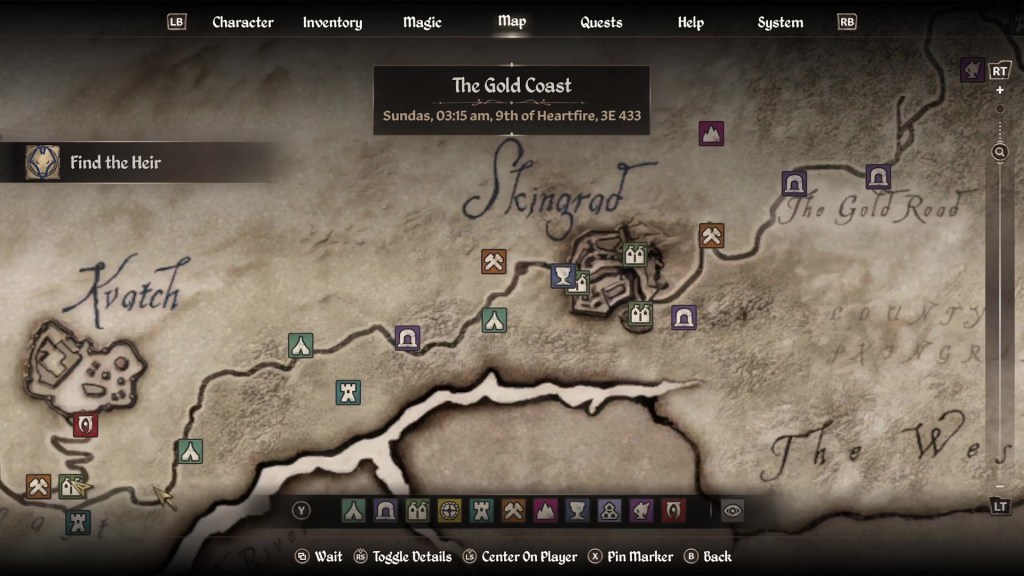
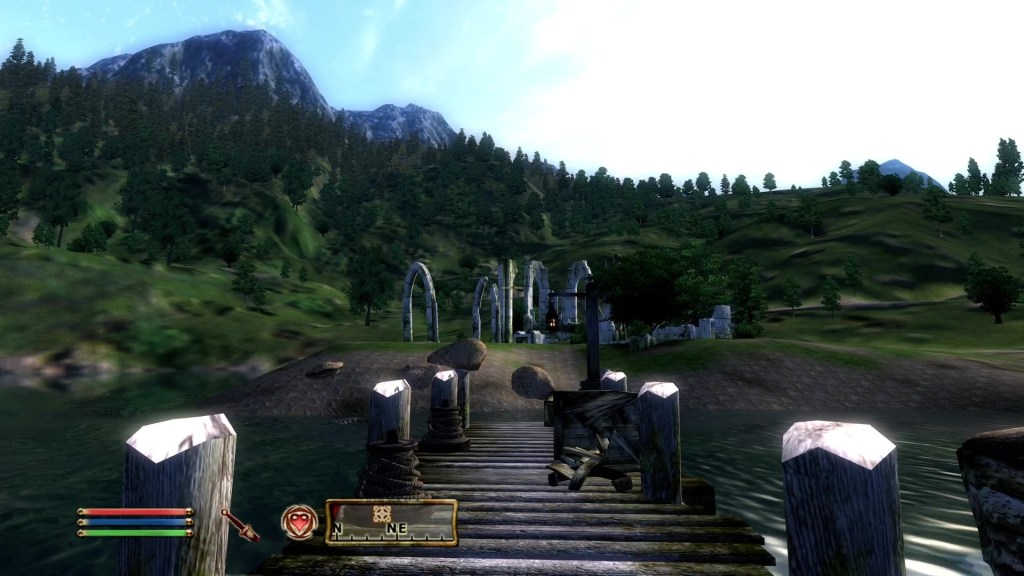
    The primary quest points to a small priory to the north-west; the Imperial City looms over you; there’s a dank cave entrance or beautiful Ayleid ruin near at hand; and the map screen provides a half-dozen other cities you can instantly fast-travel to. It’s still a sensation as overwhelming as it is exhilarating even in 2025.

    If you prioritise the primary quest, you’ll be knee-deep in cultists, Oblivion portals, and Daedra as you seek the last Septim heir and fight back against the schemes of Daedric Prince, Mehrunes Dagon. Alternatively, you can join and climb the ranks of the fighters, mage, or thieves guild – each dealing with nefarious plots to destabilise them from within and without.

    You can seek out Daedric shrines to complete a mix of questionable and often hilarious quests to gain their favour and unique gear, or you can just travel from city to city, solving local problems that are sometimes exactly what they seem but often come with unexpected twists.

    On paper, and for a dozen or so hours, Oblivion really sells that “live another life, in another world” premise. It’s also at its best when tackled organically. I’d neither recommend mainlining the primary quest, nor systematically clearing every location on the map. The end-of-the-world threat will happily wait on you and, attempting to do everything, everywhere, all at once, just highlights the AI routine limitations and dialogue inconsistencies.

    If you just go with the flow – mixing up exploration and combat with persuasion challenges, thievery, and alchemy – it’s easy to get pleasantly side-tracked for hours at a time and better immerse yourself in a game world that, when studied too closely, is bizarrely dense yet underpopulated.

    Of course, all open-world games face the same challenge: how do you keep players engaged while maintaining some semblance of pacing when you’re offering up a hundred hours’ worth of questing and dungeon-delving?

    Oblivion’s answer was level-scaling. The idea being no matter what path you took, you’d face off against increasingly tough enemies with your upgraded skills, while looting higher-tier gear from their corpses or chests (with increasingly tough locks).

    It was a noble but inherently flawed effort, and it remains an issue the remaster has lightly tweaked but not resolved. The obvious problem with this design is that level-scaling robs the player of any sense of meaningful progression for much of their playtime.

    The need to balance player progression and the difficulty curve is always an issue in RPGs, but the modern approach is to reward over-levelled players with an easier time on the critical path, while still providing optional challenging content and the promise of greater rewards to keep them engaged.

    In Oblivion, you’re constantly improving your skills through use, boosting attributes each time you level-up, and you’ll be looting or purchasing better gear and spells as you go; however, every combat encounter and dungeon-delve plays out much the same way for several dozen hours.

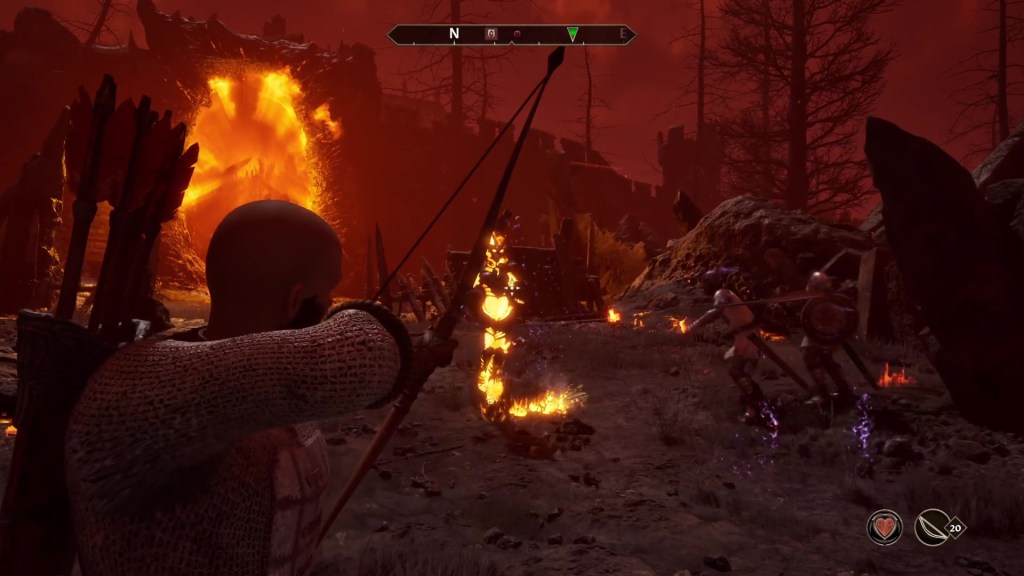
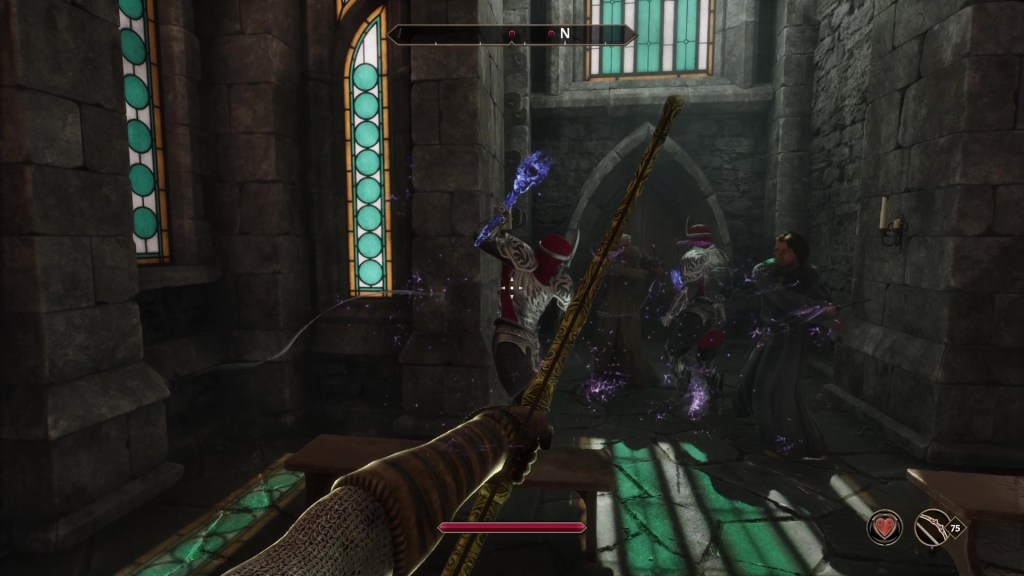
    It’s a sensation compounded by the fact Oblivion is still more RPG than action game. You can stay mobile and block or dodge but combat ultimately boils down to hitting things with blades, arrows, or spells until they die. Progression is measured by how few hits it takes to kill something.

    It’s only when you unlock the highest skill perks and access game-breaking enchantments – such as Chameleon-enchanted armour and paralysis-enchanted weapons – that it’ll satisfy the typical RPG power fantasy.

    It should also come as no surprise that level-scaling can play hell with quest design and what passes for rudimentary set-pieces.

    Skyrim had its moments, but I feel most fans would agree the sense of exploration and the prospect of discovering something unique-ish was the main draw, not the quest design. Oblivion nails the first part, but you’ve got even simpler quest scripting, clunky set-pieces, and no traditional companions to liven things up

    Quests are typically a variant of “go here”, “fetch this”, or “kill that”, with the most memorable boing those that offer multiple or unexpected outcomes. However, those are almost always standalone quests that will, at most, result in a different reward item or trigger a new generic line from townsfolk when you bring up the topic.

    Oblivion is notable for introducing the “Radiant AI” system to give NPCs a simple daily routine that is significant to some quests, but it doesn’t take long to realise the bulk of scripting boils down to whether an NPC is in possession of an item, at a location, or flagged as dead.

    Many of these basic quests are elevated by hilarious writing, goofy voice work, and plenty of animation jank, but the bulk of your time is spent away from settlements, scouring overlong, multi-zoned dungeons or Oblivion planes on your own.

    Expendable NPC companions that feature if a handful of quests don’t benefit from level-scaling and die almost instantly if you’ve out-levelled them – either in battle or through sheer stupidity – leaving you alone once again to slog through hordes of enemies.

    The only way to circumvent this is to exploit invulnerable plot-critical NPCs, dragging them along as silent but useful damage sponges without completing their respective quests.

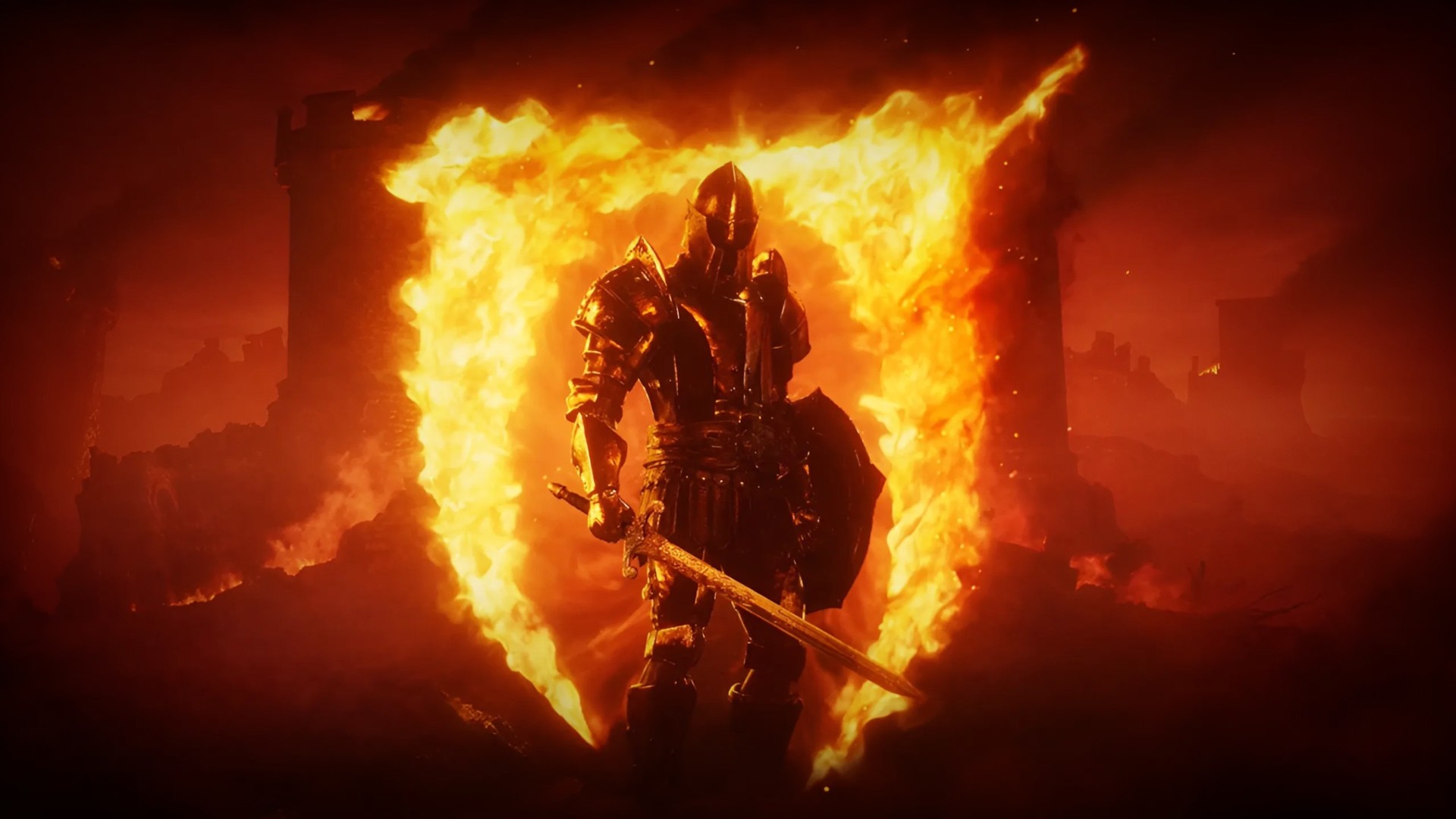
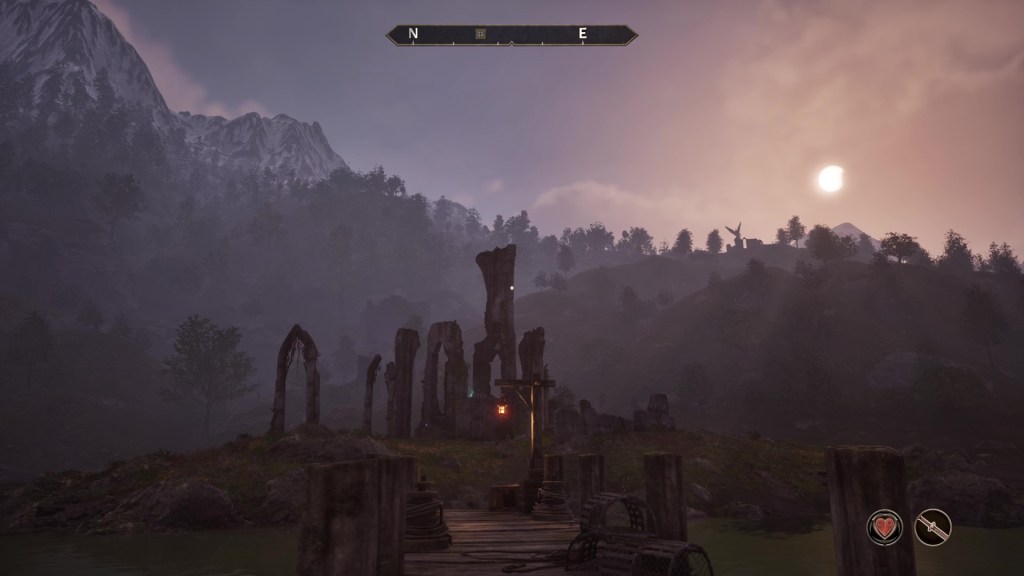
    Although The Elder Scrolls IV: Oblivion Remastered does little to address the game’s fundamental flaw, it does include some significant gameplay tweaks to go along with the gorgeous Unreal Engine 5-powered visual overlay.

    The most impactful changes are how both major and minor skill gains now contribute towards the player level, and which skills you improve no longer influence how many points you can boost attributes. You simply earn 12 “virtue points” each level, which you can invest across three attributes of your choice. You can still make your own bad levelling decisions, but as you retroactively gain health for strength and endurance boosts, it removes the likelihood of non-combat classes being one-shot at higher levels.

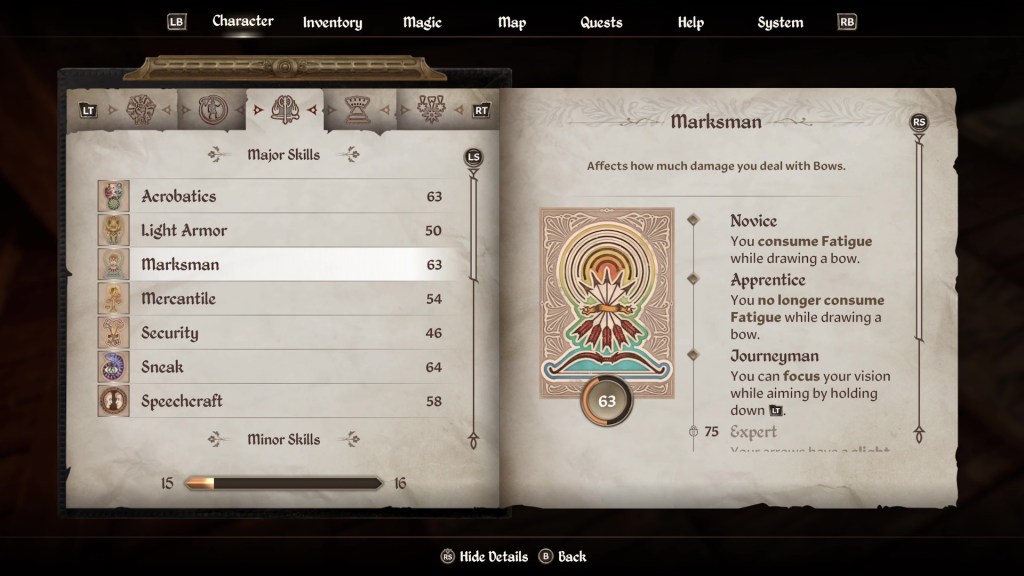
    There is also a range of smaller but welcome changes, like more responsive menu-ing, increased movement speed and sprinting, health regeneration outside of combat, more reliable stagger animations based on where you aim, no fatigue penalty to attack damage, reliably recoverable arrows that both fly faster and hit harder, and tweaks to skill perk tiers – some new, some adjusted, and some just rearranged so you gain access to more useful ones earlier.

    Despite these changes, old problems return when trying to boost combat-related skills if you realise you need a melee/ranged fallback, or maybe some elemental damage spells for resistant enemy types. The only sensible approach is to find and pay trainers, as low-level weapon skills and damage-dealing spells become laughably ineffective against higher level foes.

    I’ve got this far without praising the audiovisual enhancements and, for returning players, it’s an impressive overhaul that turns Oblivion’s distinctive but barren landscapes and interiors into something akin to a modern release.

    Geometric complexity, textures, vegetation, water, weather, environmental details, character models, movement and attack animations, lip-syncing and facial expressions – they all take a generational leap in quality, albeit not always a consistent leap.

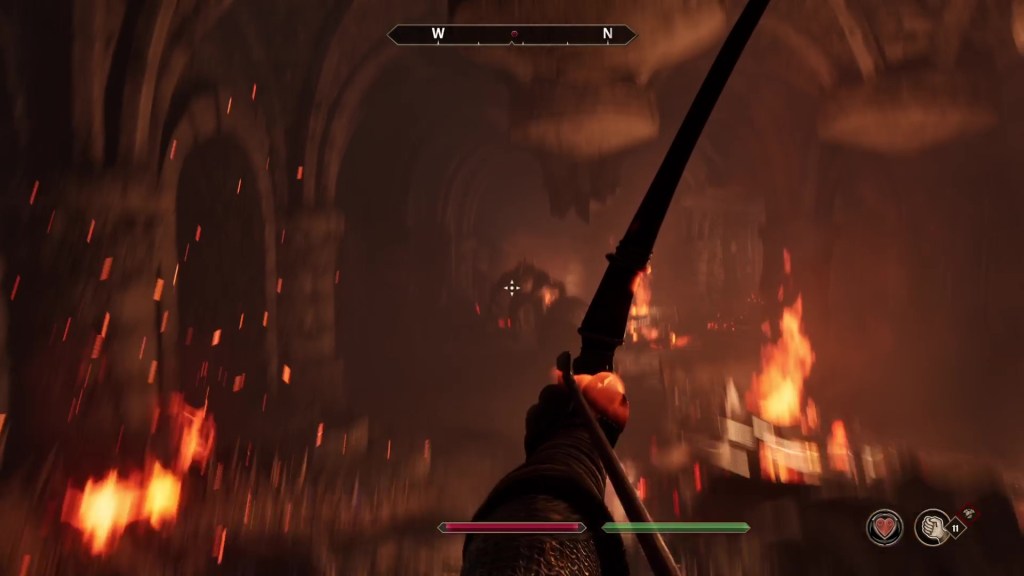
    I’d argue the global illumination system for the sun, moon, and other light sources feels most transformative, bathing the world in more realistic and atmospheric shades of light and dark. Oblivion always did creepy interiors well, and they feel even more terrifying this time round.

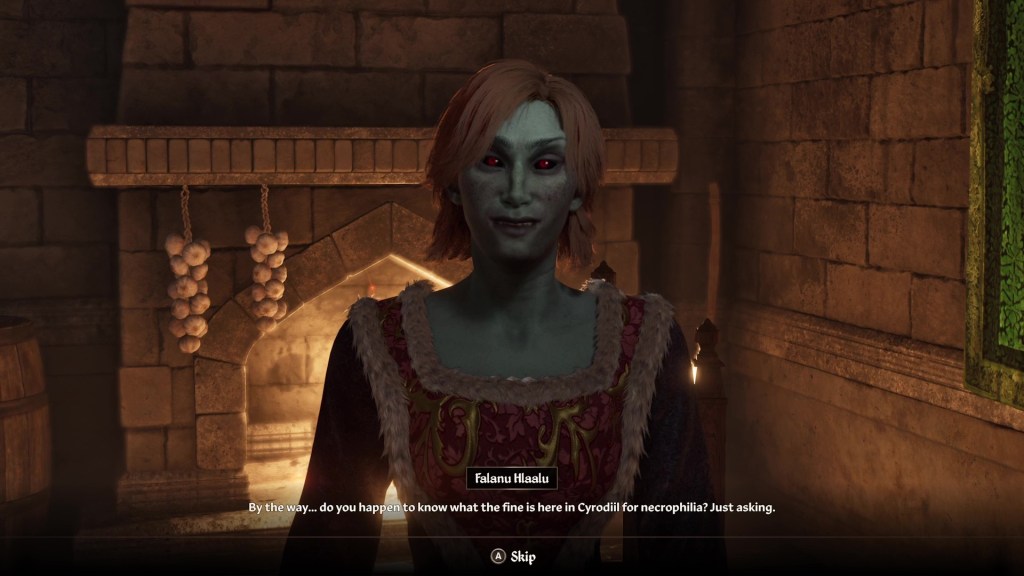
    The Elder Scrolls IV: Oblivion Remastered touches up the voice work without changing the weird, wild, and openly prejudiced (in-universe) dialogue, something most notable during hilarious NPC interactions driven by the Radiant AI system. These exchanges rarely have logical replies or a consistent tone, yet the system excels at antagonistic conversations between NPCs of difference races and class (in the socioeconomic sense). There’s also limited new voice acting to better differentiate Tamriel’s many races, while some NPCs that previously had multiple voice actor lines assigned to them have been fixed.

    Combat audio effects and ambience have been added to improve combat and exploration respectively, though volume levels can feel off compared to the original. In contrast, the soundtrack needed no tweaking as it still holds up brilliantly, providing memorable orchestral themes for any scenario.

    All that said, the gameplay tweaks and audiovisual updates can only do so much when the aged Gamebryo engine is presumably chugging away just below the surface.

    The increasingly repetitive nature of Cyrodiil’s overworld and dungeons is hardest to disguise, particularly when maybe two dozen quest-related locations feel truly unique in appearance or design (and The Shivering Isles expansion accounts for much of this).

    Every asset used to build the world has clearly been overhauled in The Elder Scrolls IV: Oblivion Remastered, but it’s not clear if any new assets were created. The bulk of Cyrodiil is still rolling, forested hills, while the “dungeons” are crafted using just a handful of tile-sets – think cave, mine, ruin, fort, city, and Oblivion plane – each with a limited number of building blocks. The world also retains its segmented nature, with dungeons, cities, the structures within them, and even each floor of some structures connected by loading screens.

    You could argue Oblivion’s dungeons are typically larger and more elaborate than Skyrim’s convenient loops, but very few have memorable puzzle rooms, unique vistas, or anything close to the epic scope of the Blackreach Cavern. It becomes a serious problem when there are well over 200 dungeons to explore and, depending on your approach to the tackling the main quest, up to 50 Oblivion portals that can spawn.

    Is all this content mandatory? No, but even sticking to the primary questline left me frustrated with the degree of repetition in this replay.

    Returning to my opening line, it leaves The Elder Scrolls IV: Oblivion Remastered in a weird place. Given the response, it feels like a project targeting fans of the original – yet it retains many flaws that’ll quickly frustrate those fans. The visual overhaul and gameplay tweaks are an improvement – and there’s no denying the power of nostalgia – but it’s unlikely these remastering efforts would push me to complete it again over a modded version of the original.

    With that said, I feel it’s newcomers to the IP or curious Skyrim fans that might benefit the most from this release, as they’ll find it easier to look past Oblivion’s flaws as they experience the wonder of simply exploring Cyrodiil’s cities, countryside, and dungeons for the first time.

    The Elder Scrolls IV: Oblivion Remastered was played on Xbox Series S|X using an Xbox Game Pass subscription. It is also available on PC and PS5.

  • Review: Amerzone – The Explorer’s Legacy (2025)

    Review: Amerzone – The Explorer’s Legacy (2025)

    It’s depressing how many remade or remastered games I can now claim to have originally played over three decades ago. Many retro-inspired games have moved on from pixel art to target the look and feel of early 3D games from the late ‘90s on PC or 32-bit consoles – the era that cemented my love of gaming as a lifetime hobby. Amerzone – The Explorer’s Legacy (2025) is one such remake; an updated, expanded, and lavish overhaul of a 1999 point-and-click adventure, known primarily for its association with Belgian artist Benoît Sokal who created many of the creature designs and backdrops before going on to work on the more recognisable Syberia games.

    This remake takes the classic first-person point-and-click structure and converts those weirdly proportioned 360-degree panoramas into beautiful and detailed 3D environments. There’s no free movement, but abrupt screen transitions and an overreliance on short cutscenes are replaced with slick in-game animations for set-pieces, transitions, interactions, and puzzle devices.

    You could argue the updated visuals don’t always capture the bleak atmosphere of the original, but when combined with an expanded soundtrack, new voice work, and more narration, it makes for a cohesive and cinematic adventure with production values closer to what you’d expect from a modern release.

    It’s not just the audiovisual experience that’s been overhauled. A lot of work has gone into expanding and enhancing every location while still retaining the basic layout, significant landmarks, artistic designs, and all the original notebook sketches. The unnamed protagonist also gains more agency and personality through their many journal entries that, in turn, flesh out secondary narratives only briefly touched upon in the original.

    That said, the point-and-click core remains unchanged, and almost all the original puzzles return in some form – albeit often just one part of an expanded design that now requires a few more steps and some QTE-like inputs.

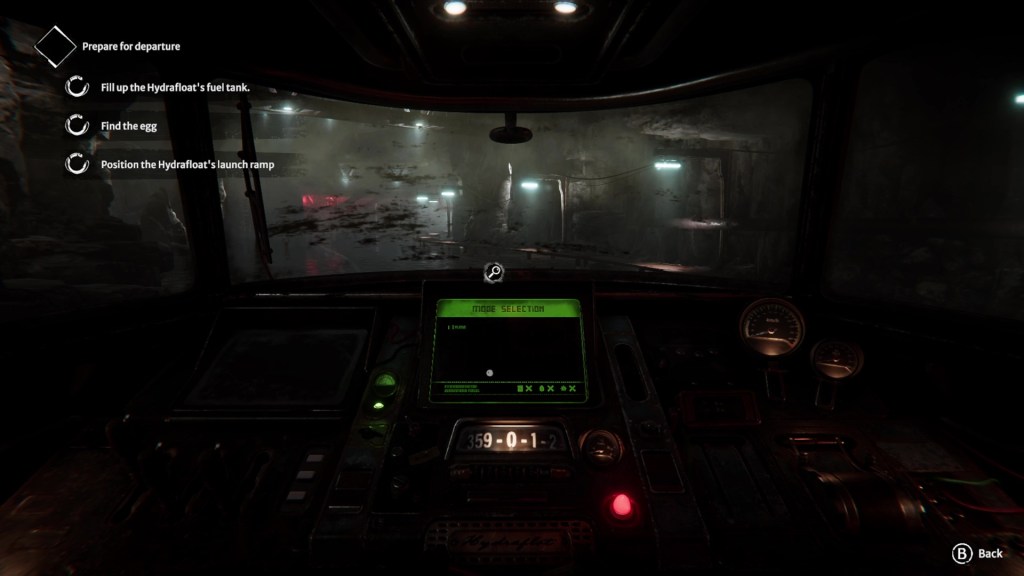
    You’re still exploring compact but detailed locations on the hunt for documents, puzzles, key items, and clues, typically to find fuel or data discs to power the incredible transforming Hydrofloat craft. Puzzles are still designed around using key items on puzzles objects or the environment, but you must often figure out the correct sequence of actions even if you have all the items on hand.

    It retains that classic and increasingly niche design, in which more involved and convoluted puzzles are your reward for making progress. No matter how dangerous or desperate the scenario may seem, Amerzone – The Explorer’s Legacy (2025) has no time-limits, and the world might as well be frozen as you plod around each area and figure out the route forward.

    For those who’ve grown up with games that hold your hand to the point of feeling patronising, Amerzone – The Explorer’s Legacy (2025) can feel too unguided at first, dropping you into dense environments with no HUD or quest log in the corner. Some purists might argue that was integral to immersing yourself in the game world, but the remake expands the journal feature considerably. It offers an improved interface for collected items and notes; you can fast-travel between significant locations once you’ve found a map of the area; and you can enable several player assists.

    By default, the journal tracks core tasks and highlights secondary stories if you’ve found any associated documents or environmental clues, but you can also enable hotspot highlights at the press of a button and a tiered hint system.

    All of which make it much easier to maintain pacing and ensure you reach the end of Amerzone – The Explorer’s Legacy (2025) without hitting roadblocks; essential in an age of diminished attention spans, especially for a niche genre, with dated gameplay that only holds up when paired with a strong narrative hook.

    You need to be invested in the fate of the young reporter, looking to make a name for themselves by undoing the shameful legacy of the dying explorer Valembois. You need to be curious about the fate of his former companions and the dark history of the now isolationist Amerzone nation. You need to understand the reporter’s drive to push ever further upriver, consequences be damned, to see if Valembois’ descriptions of bizarre creatures and ecosystems are accurate or deserving of the ridicule that drove him into seclusion.

    The updated journal in the remake improves the storytelling while also allowing the game to dig deeper into themes of traditional societies living in harmony with nature, the impact of colonialism on native cultures, and the rise of post-colonial autocracies with leaders that twist foreign governance concepts to their own needs. Having a transparent list of notes and chapter locations assigned to each side story could be a double-edge sword for completionists that won’t move on before they’ve found everything, but your reward for finding them all is a short summary of events from the protagonist, befitting their profession. It’s a smart way to literally gather the player’s thoughts and deliver exposition before they set off to the next act.

    The best thing I can say about Amerzone – The Explorer’s Legacy (2025) is that I never expected to enjoy it so much. It’s longer and more complex than the original, but it’s still a brisk experience by modern standards and doesn’t ask more of you than it gives back.

    It provided plenty of exciting spectacle but moved at my own pace, making for a pleasant change from the high-stress, action-oriented titles that make up the bulk of my gaming diet. The gameplay is classic and inherently dated – even with a few updated mechanics and assists – but the audiovisual overhaul makes it feel like a grand adventure the original creators could only dream of. It’s a niche genre now, but for fans, this is about as good as it gets if you’re looking for a remake that respects the original but expands and enhances every aspect of it.

    Pros:

    • An updated, expanded, and lavish overhaul of a lesser-known classic
    • Slick animations and interactions make for a more cinematic adventure
    • An improved journal, more exposition, and frequent narration enhance the storytelling
    • Optional player assists to prevent puzzle roadblocks from killing narrative pacing

    Cons:

    • The updated mechanics and assists won’t change your mind if you’re not a fan of the genre
    • Some noticeable framerate drops when using the performance mode on consoles

    Score: 9/10

    Amerzone – The Explorer’s Legacy (2025) was reviewed on Xbox Series X using a code provided to gameblur by the publisher. It is also available on PC and PS5.

  • Review: Sorry We’re Closed (Xbox Series)

    Review: Sorry We’re Closed (Xbox Series)

    Sorry We’re Closed is a smart and stylish hybrid of character-driven visual novel, first-person shooting, Silent Hill’s dual-reality horror, Resident Evil’s survival-horror formula, and a bit of that tragicomic weirdness of Deadly Premonition in some of the writing and cutscene direction. It’s not as singularly good as those classics, but it has a satisfying survival-horror framework, visual style, and fantastic original soundtrack that complement a strong narrative thread.

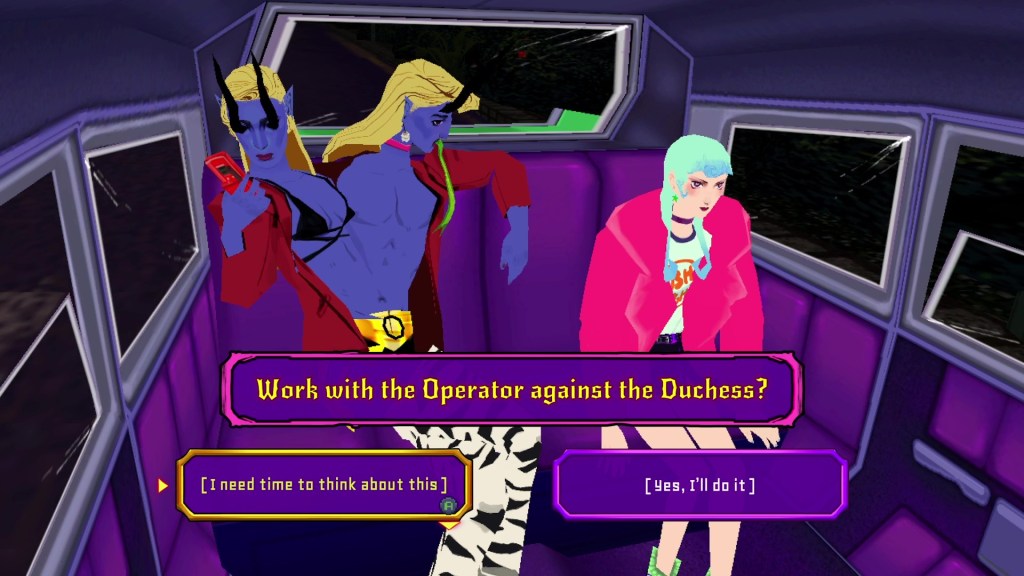
    I found the classic gameplay mechanics engaging enough, but Sorry We’re Closed is primarily caried by the well-paced, choice-heavy story that repurposes a familiar tale of angels and demons as a not-so-subtle allegory for the inherent dangers of falling in love and navigating dysfunctional relationships. As such, half your time is spent simply exploring a small neighbourhood and a demonic hotel, chatting to significant NPCs, and making decisions that affect other relationships and protagonist Michelle’s fate.

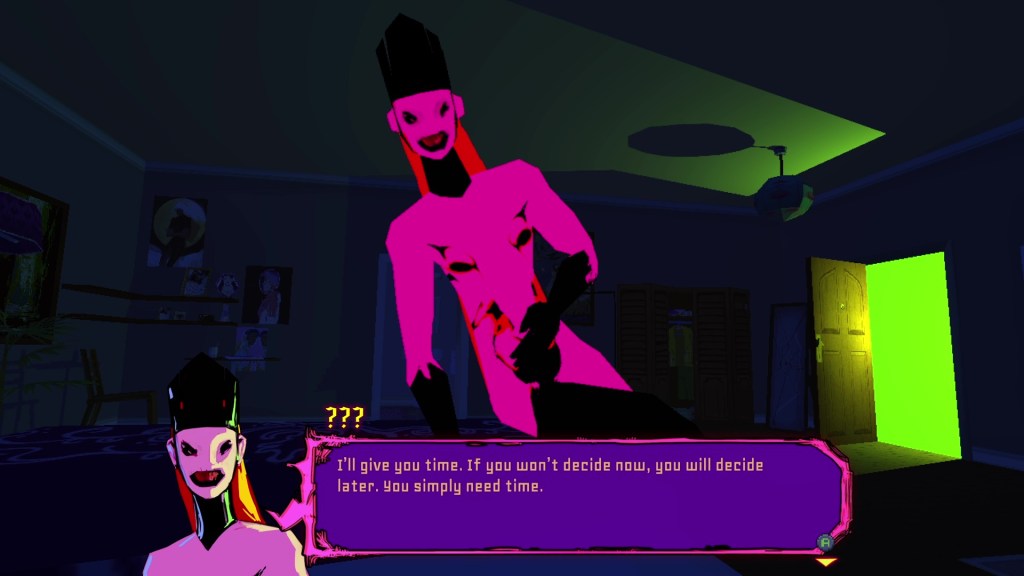
    The story begins as Michelle, coasting along in limbo since breaking up with her girlfriend three years prior, finds herself cursed by “The Duchess”: an arch-demon that’s been kidnapping mortals in the hope of finding “love” to fill a void created when she was cast down from the heavens. Several confusing and horrifying encounters later, Michelle finds herself gifted with a literal third eye that allows her peer between realms with a satisfying snap of her fingers.

    This ability brings with it the realisation her neighbourhood sits on the edge of the underworld and is home to an assortment of celestials – angels and demons – who masquerade as mortals to socialise with or manipulate those around them.

    Events escalate over the course of four days as the curse takes hold, giving Michelle an opportunity to engage with the small cast repeatedly, get advice, give advice, complete small side quests that usually boil down to finding and delivering items, and face a dozen or so major choices that influence the end-game sequence and available endings. As the narrative is a highlight, I don’t want to spoil too much, but what Sorry We’re Closed does best is present you with characters that seem like classic good or evil archetypes, before delving deeper into their motivations and leaving you conflicted.

    Is it possible to find love without making yourself vulnerable? Can you sustain a relationship without change and sacrifice? Does someone deserve a second chance if their intentions are pure? Do those who’ve done terrible things out of fear still deserve a chance at redemption? Familiar themes that have been tackled in other media, but despite its quirky premise, Sorry We’re Closed’s great writing and relatable cast made it one the best explorations of love and relationships I’ve seen in video game form.

    Of course, as a video game, you expect gameplay. Sorry We’re Closed is no slouch so long as you can accept the back-and-forth flow between dialogue-heavy interludes and traditional survival-horror “dungeons”.

    Each day has Michelle exploring a new location to find a victim of The Duchess – all mortals that refused her advances, descending into madness and monstrous forms that reflect some of the most damaging elements of transactional love or one-sided relationships. Although I enjoyed seeing the consequences of my early choices influence the end-game, these early dungeons were the highlight as a fan of the survival-horror genre.

    Each location is visually distinct and creepy; packed with weird encounters, combat, key hunts, and puzzles; and they culminate in an epic boss fight that reinforces the narrative themes through creature design and the accompanying original soundtrack. It often felt like a mix of classic Resident Evil absurdity with a Silent Hill twist thanks to Michelle’s third eye vision.

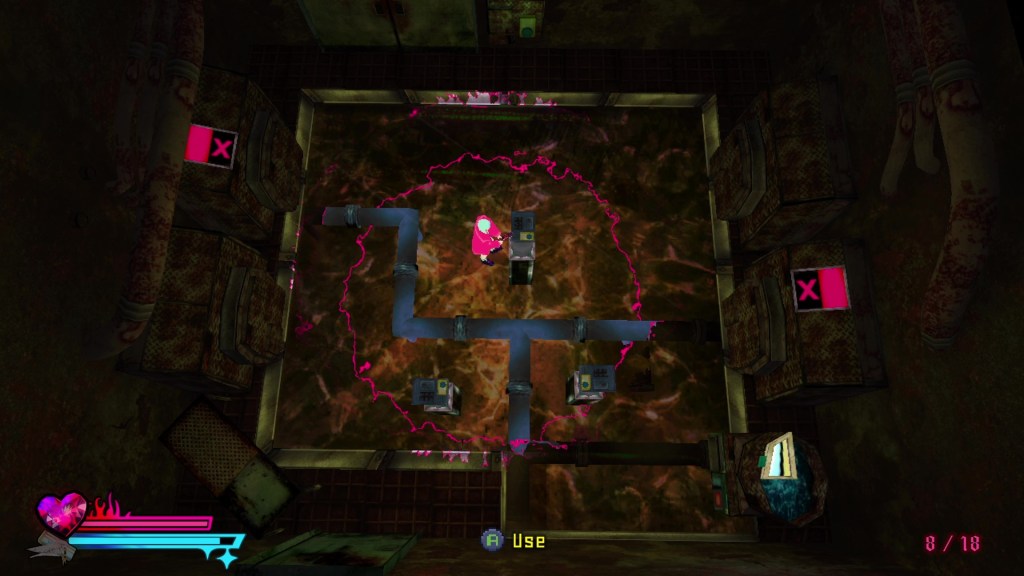
    You explore a grungy underground station, a delipidated aquarium, a surreal crypt, a twisted dream realm, and ascend a corrupted hotel – each new location bringing with it tougher foes, more interesting puzzles, and more lethal traps. You’ll often backtrack through an area once or twice, and the more thoroughly you explore, the more ammunition you’ll have to clear out paths, and the more artefacts you’ll find to fund a small selection of upgrades.

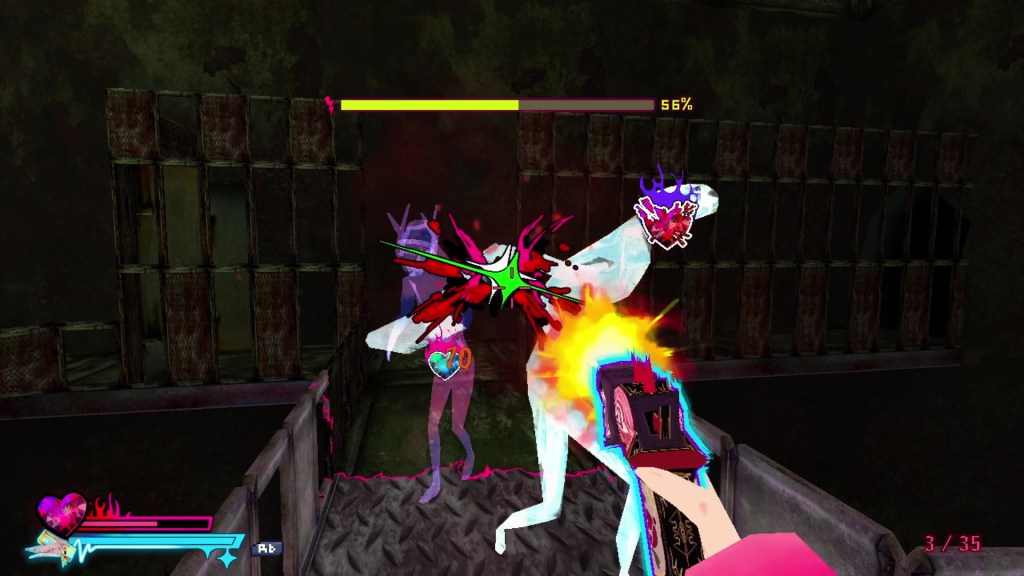
    Sorry We’re Closed switches to a first-person view when aiming, as the focus is on hitting exposed weak points to conserve ammunition, quickly defeat lesser foes, and charge up a “Heartbreaker” shot to deal with tougher demons, bosses, and even a few puzzles. The axe, pistol, and shotgun can fell most enemies at range, but you’ll need to master hitting weak points when Michelle triggers her third eye vision. This grants a second or two of stun to line up a shot, with each successful hit granting another brief stun to line up the next weak point.

    It’s an intense but fun system that rewards racking up combos, especially while dodging the blows from massive boss creatures, but both lining up Michelle before aiming and quickly switching between weak points can feel a little sluggish using a controller.

    Minor combat gripes aside, Sorry We’re Closed is easy to recommend to survival-horror fans looking to intersperse the action with a thoughtful player-driven narrative that alters later encounters. If you’re comfortable with the gameplay style or happy to drop the difficulty, I’d also say it might be worth a look for traditional visual novel fans that want a quirky but no less thoughtful exploration of love and relationships.

    Pros:

    • A thoughtful exploration of love and relationships by way of demons and angels
    • A day-by-day narrative structure with plenty of player choice moments
    • Satisfying survival-horror “dungeon” sections and intense boss fights
    • Stylish 32-bit era visuals and a great original soundtrack
    • A new game+ mode to streamline replays for different endings

    Cons:

    • The storytelling would have benefited from voice work
    • Pulling off weak-spot shots can feel inconsistent using a controller

    Score: 8/10

    Sorry We’re Closed was reviewed on Xbox Series S|X using a code provided to gameblur by the publisher. It is also available on PC, Xbox One, PS4/5, and Nintendo Switch.

  • Preview: Gothic 1 Remake – PC Demo (Nyras Prologue)

    Preview: Gothic 1 Remake – PC Demo (Nyras Prologue)

    Arriving almost 24 years after the original release – and 5 years after a divisive “Playable Teaser” was used to assess interest – the “Nyras Prologue” demo of the full-blown Gothic 1 Remake shows serious potential. Albeit probably only for existing Gothic fans or the increasingly niche audience that enjoyed Piranha Byte’s later work like Risen and ELEX. In stark contrast to the Playable Teaser’s action-focussed gameplay and wise-cracking protagonist, the Nyras Prologue aims for a degree of authenticity despite the smoother mechanics and modern game engine powering it.

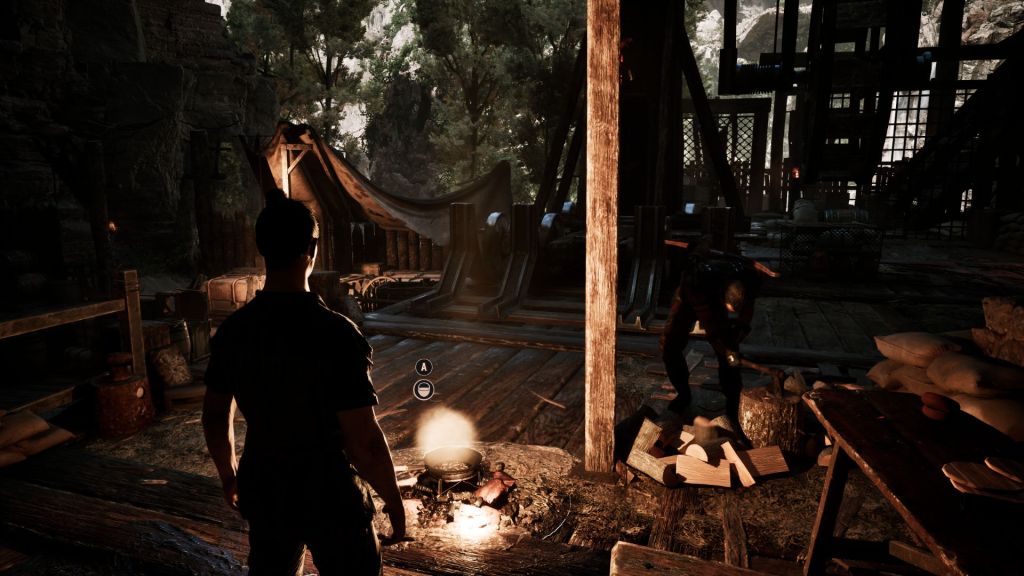
    Using a rockslide as an excuse, the self-contained demo traps the titular Nyras in the impressively recreated “Exchange Camp” canyon from the opening of the original game. The human Kingdom of Myrtana is slowly losing a war against orcs, essential ore for the war effort comes from the Valley of Mines, but a magical barrier cast to contain the prisoner workforce went awry trapping the entire region under a magical shield that kills anything attempting to leave. Fresh prisoners and goods are sent in by the king in exchange for ore, but the humans trapped inside the valley have split into three factions with their own ideas on how to thrive or escape.

    All the basics are covered as Nyras encounters members of the Old Camp – former prisoners intent on maintaining the flow of ore for goods; members of the New Camp – outcasts and bandits that grow their own food and plan to escape; and he hears of the Sect Camp – swamp-dwelling, weed-smoking mystics intent on reviving an old god. You’ll also encounter and hear rumours of the dangerous beasts that stalk the wilds between settlements. If nothing else, those interested in the Gothic 1 Remake with no prior knowledge of the originals could find this demo a useful primer.

    The limited scope of this demo means there’s only so much to see and do, but it feels much as I’d expect from a “AA” style remake targeting an existing audience rather than the masses. A lot could obviously change, but there’s a clear trade-off between playability and authenticity that should thrill Piranha Bytes fans but might frustrate anyone expecting a modern action-RPG experience. Gothic was never an RPG in which you start competent and end up overpowered; it’s a game about starting on the bottom rung, climbing up while being kicked in the face repeatedly, and eventually coming out on top.

    The demo suggests that design philosophy is intact, but traversal, combat, and menu-ing feels way less clunky – especially on a gamepad if you’ve ever experienced the Nintendo Switch ports. It remains to be seen if the remake tweaks progression, but Gothic was a traditional RPG in the sense you could go far by mastering the stiff combat system but improving your character level, skills, and gear were essential (that or breaking the AI). Also familiar is how dense and hand-crafted the world feels, with plenty of fine details, NPCs going about daily tasks, and items secreted away to reward exploration – assuming you don’t run into something that kills you first.

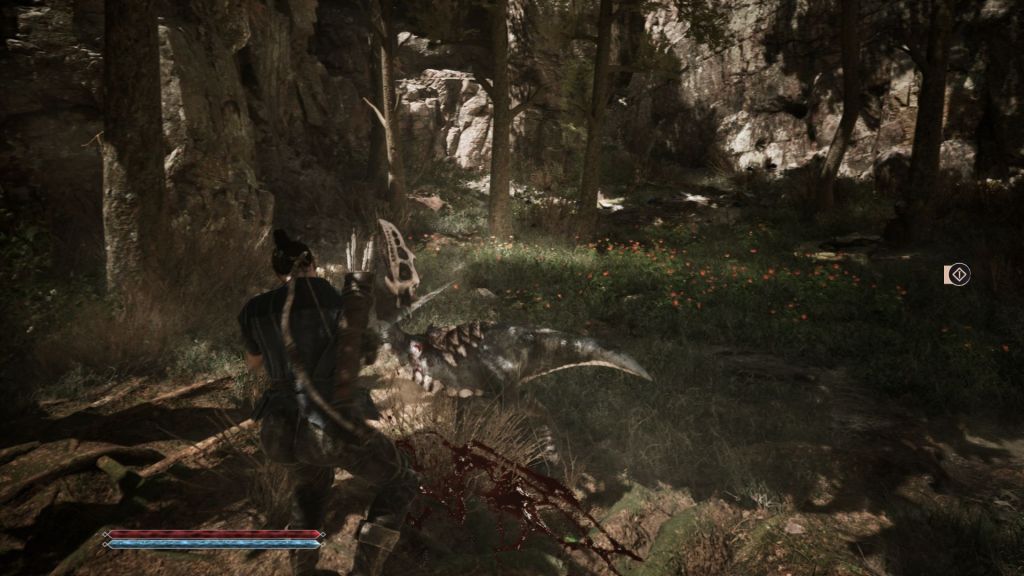
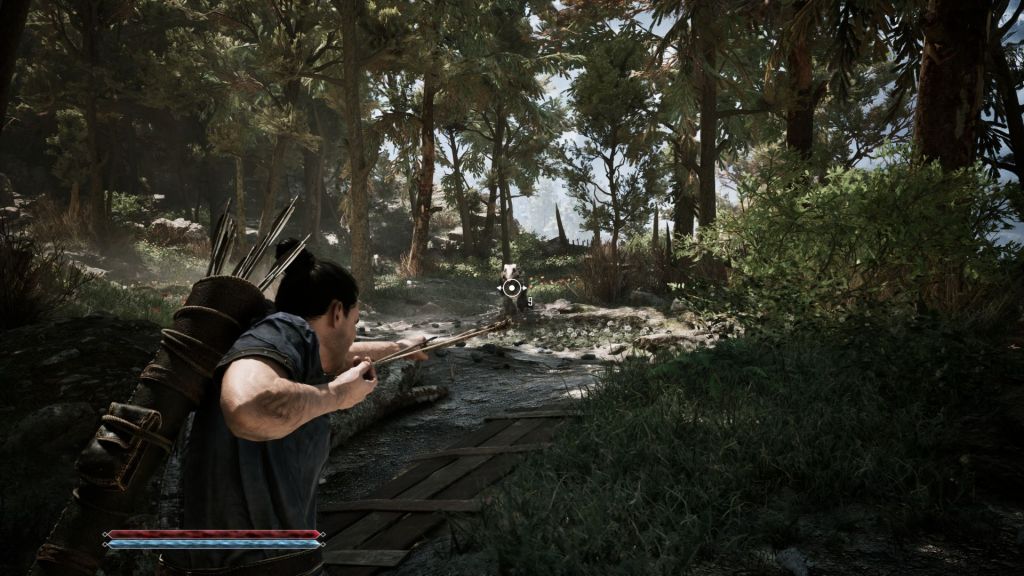
    The Nyras Prologue demo provides a few opportunities to die by scavenger beak or goblin club if you’re reckless, but the combat feels far more fluid and manageable when facing one or even two opponents. You can swing a sword, pick, or flaming torch; parry or dash back and to the sides to avoid damage; and draw back a bow to full extension for maximum damage at range. While it might not be an intentional nod to the original, I could even cheese a few enemies by awkwardly climbing onto high ground and leaving them sitting around helplessly. I don’t doubt the Gothic 1 Remake will be rife with enemies that’ll one-shot you early on, but the smoother combat is perhaps the most significant takeaway from this demo.

    The last thing to touch on is the Unreal Engine 5 powered visuals and lighting. Despite the archaic engine, the Gothic games generate an impressive atmosphere when the visuals are coupled with ambience and music. The Nyras Prologue demo might not push boundaries, but it still looks good in this early build and recreates that original atmosphere by using the classic soundtrack. On my ageing gaming laptop – with an Intel i7 4C/8T CPU, 8GB RTX3070, 16GB DDR5 RAM, NVMe SSD (components running at lower power draw/clock speeds than their desktop counterparts) – 1440p/30 on the high “Gothic” settings was surprisingly doable, albeit with some momentary chugging after reloading a save.

    Wrapping up my thoughts, the Gothic 1 Remake – Nyras Prologue Demo shows a lot of potential for those craving an authentic Gothic experience, but it’s ultimately a tiny chunk of a much larger game, with limited mechanics and only one environment on show for now. While playing the demo, I kept thinking of 2024’s Alone in the Dark – a game I really enjoyed and felt was underappreciated, but one that commercially underperformed and spelt the end of the developer. I just hope Alkimia Interactive and THQ Nordic are looking at the budget and sales of a game like ELEX II and planning appropriately so we actually have a chance of seeing this become a success and maybe fund a remake of the sequel too.

    Gothic 1 Remake – Nyras Prologue Demo was played on PC (GOG or Steam). The final release will be coming to PC, Xbox Series S|X, and PS5.

  • Impressions: GRAVELORD (PC) Early Access

    Impressions: GRAVELORD (PC) Early Access

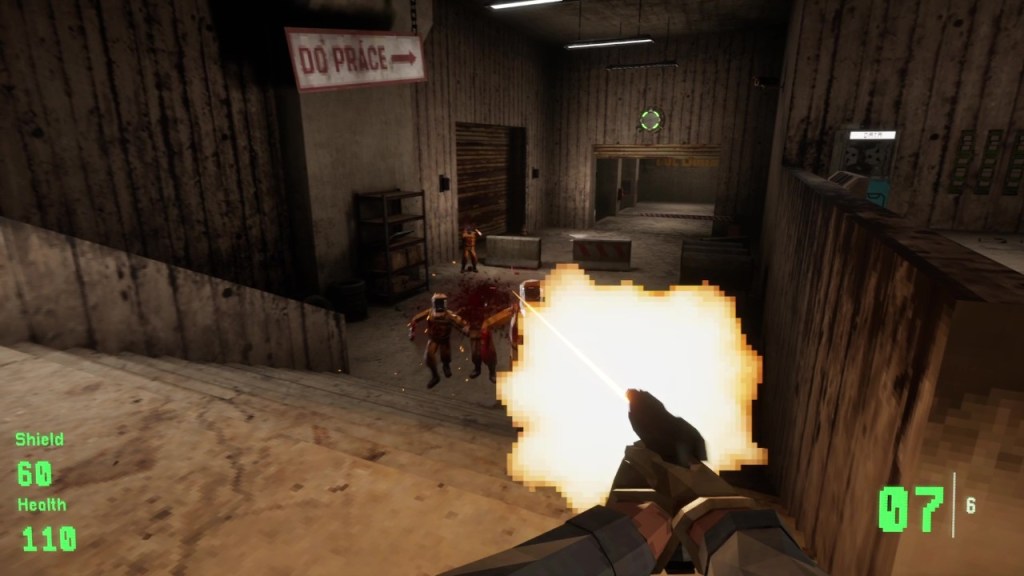
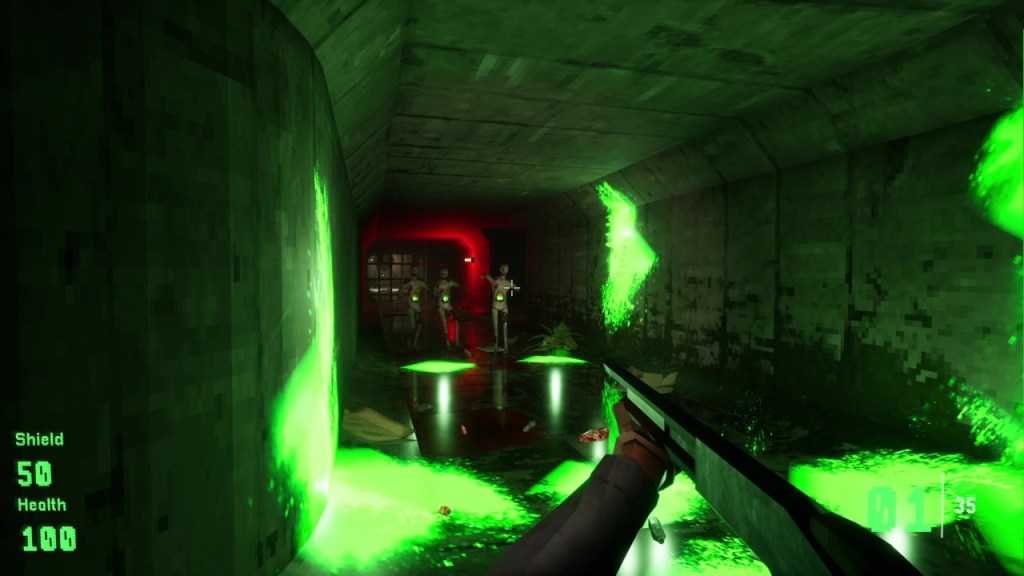
    GRAVELORD was not the trajectory I expected Fatbot Games to take, having discovered their Vaporum games after playing through Almost Human’s Legend of Grimrock 1 and 2 – all of them grid-based, first-person, real-time, dungeon-crawlers. Vaporum offered a more streamlined and polished take on the now niche genre – replacing multiple party members with an expanded gear and ability system – but they stuck to the creatively blocky world design, abundant puzzles, hundreds of secrets, and real-time combat that I’d best describe as a deadly grid-dance. In contrast, GRAVELORD is a retro-inspired first-person shooter competing in a saturated market – but between their knack for level design and the unexpectedly great shooting, it might have a chance of standing out.

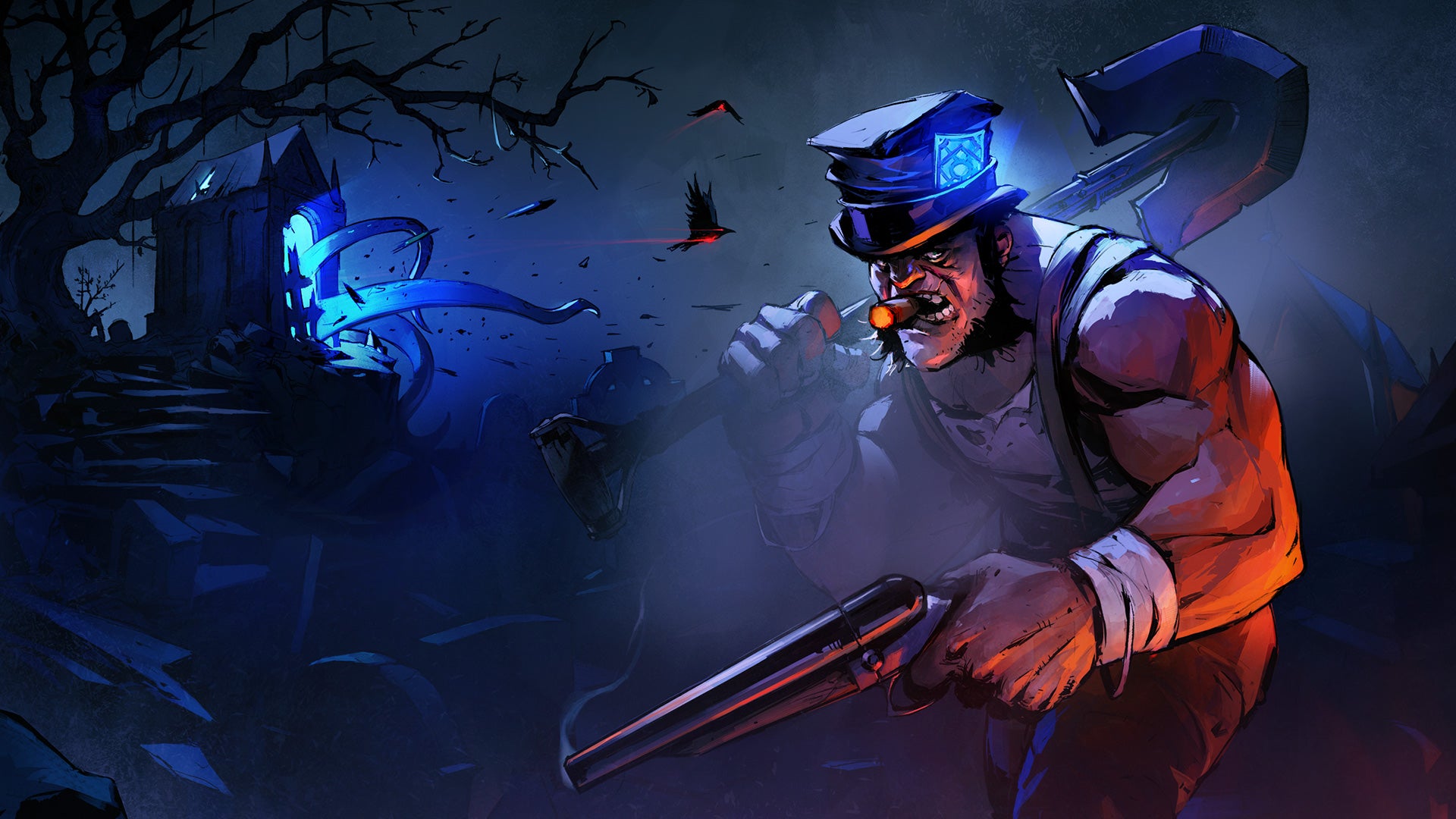
    Befitting the genre, GRAVELORD is light on story elements. The intro reveals the hulking, square-jawed, top hat-wearing gravedigger Queedo, who works in the employ of Death as his ancestors always have. The problem that you’re running and gunning towards is an alchemist by the name of Keron Husk – murderer of Queedo’s father and manufacturer of supposedly life-extending potions that have instead created an undead scourge. Unless you read through the short comic-style collectibles found in each map, that’s all the context you’ll get. Queedo’s personality boils down to barely controlled rage and a string of bad jokes in a Cockney accent that grew tiring by the end of the first map, so it’s probably for the best that narrative elements don’t interrupt the flow of gameplay too often.

    Based on this first episode – with 8 maps and a boss at the end – GRAVELORD is remarkably traditional in structure and, to its benefit, distinctly Quake-like when it comes to movement, gunplay, and the visual design language. You traverse Gothic-themed maps on the hunt for coloured keys or switches, following visual cues like coloured lighting; you acquire traversal-based abilities like a spectral grapple and double-jump to reach new areas and secrets; every time you collect said key item, you can expect monster spawns; and most maps culminate in a chaotic charge to the exit or a boss fight, typically under the influence of “rage” runes that briefly buff resilience and weapon fire rate.

    Despite footsteps that suggest he weighs half a ton, Queedo hurtles around the map like he’s sprinting on an ice-rink. The movement mechanics are perfect for surviving firefights in a game with no hit-scan enemies and a high default difficulty (I spent a lot of time on low health and save-scumming) but it does force you to slow down when tackling platforming sections or avoiding environmental hazards that litter many arenas.

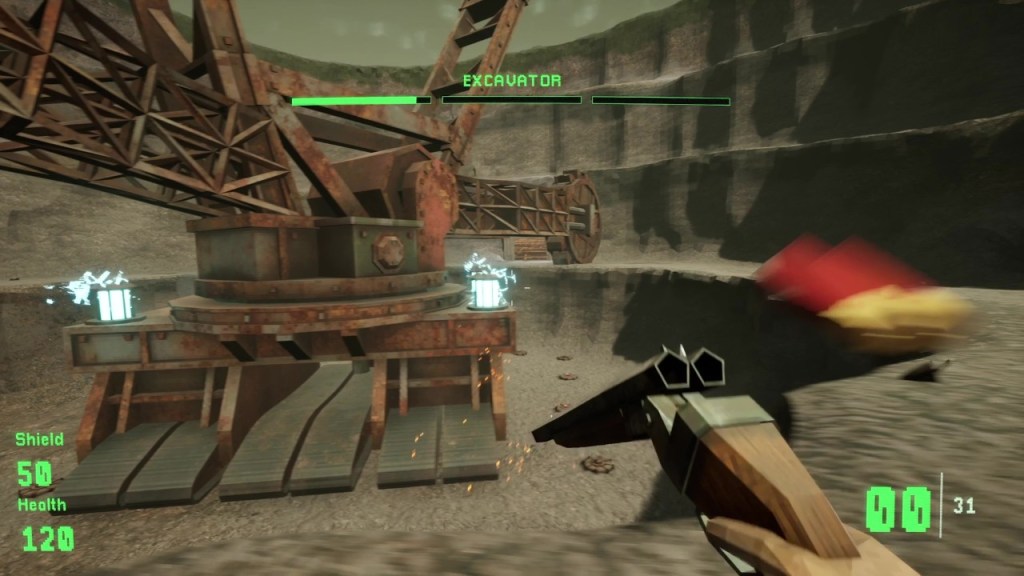
    Given their prior games, the shooting was an unexpected highlight, with a familiar but powerful arsenal ranging from a shovel to a pistol, double-barrelled shotgun, chain-gun, grenade-launcher, and, in a nod to their prior games, an arcing Fumium rifle as the special. Every weapon remained useful throughout for specific enemy types – think melee rushers, nimble flying spitters, tanky explosive users, and magic wielding sorcerers – and they both sound and feel powerful in use. Enemies react to hits with staggering animations, blood splatter, or a gory demise, and when you throw in a dynamic soundtrack that shifts between creepy ambience and thumping combat loops, GRAVELORD ensures simply shooting at something feels good, no matter what you have in hand – a feat that shouldn’t be taken for granted despite the genre.

    The other highlight was Fatbot Games’ dense, intricate, and secret-packed level design. The maps can feel sprawling and maze-like, yet they’re incredibly compact and often loop back past, over, or under themselves. In addition to typical key hunts, there is no shortage of consumables tucked away, or secret buttons and rotating statues (with riddle-like clues) that lead to mega-health boosts, early access to powerful weapons, and a range of character and weapon upgrades.

    Regardless of whether you’re purging graveyards, riding conveyer belts through crypts, avoiding magma pools in crematoriums, swimming through sewers, or navigating a gothic town, each map feels hand-crafted with a ton of thought going into their layout and enemy composition. I’ve no doubt most maps could be blitzed through by speed-runners in a few minutes once you know what you need to do, but compulsive secret hunters could spend upwards of half an hour scouring them fully.

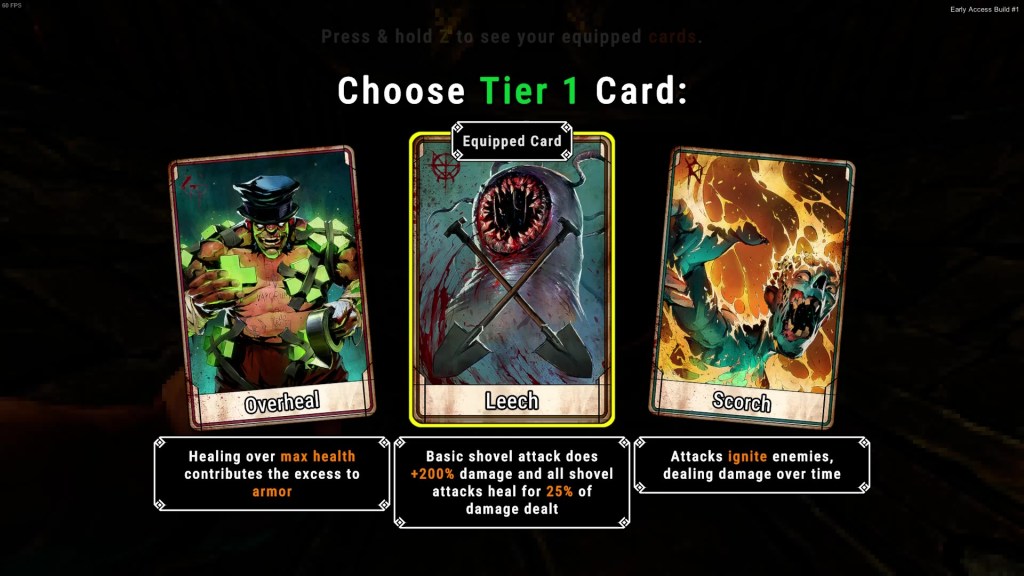
    The last mechanics to touch on feel like an attempt to include rogue-like elements in a traditional save-anywhere FPS, to varying degrees of success. Collecting weapon alt-fire modes on each map feels pointlessly irritating, though I’ll accept resetting movement abilities due to the map design and gating progression. The 3-tier card system, which allows you to pick one from a random draw, feels more thoughtful and impactful as you can choose to favour an aggressive or defensive build. As an example, I could massively boost my survivability by combining a card that regenerates 30 health points with cards that let me deal more damage and receive less damage at or below 30 health.

    As it stands, GRAVELORD might not offer much novelty, but it looks to be a solid entry into the retro-FPS market with legitimately great shooting that emulates the classics, and fantastic level design that draws on Fatbot Games’ heritage.

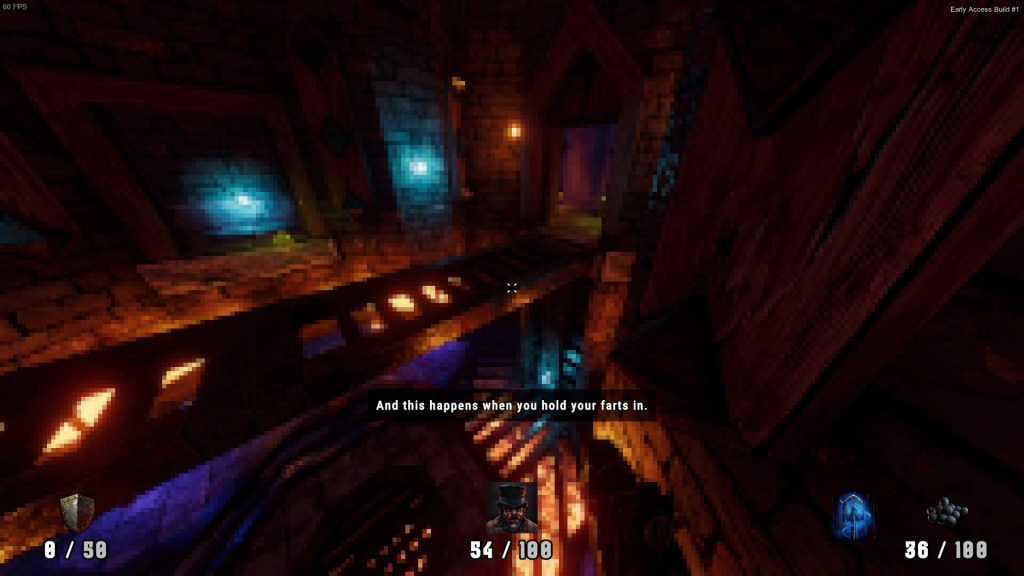
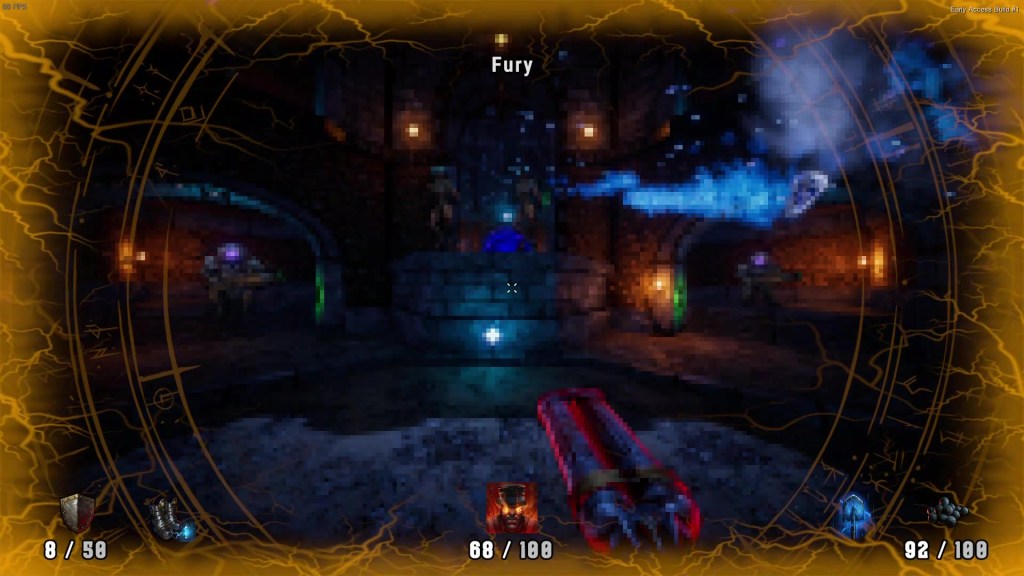
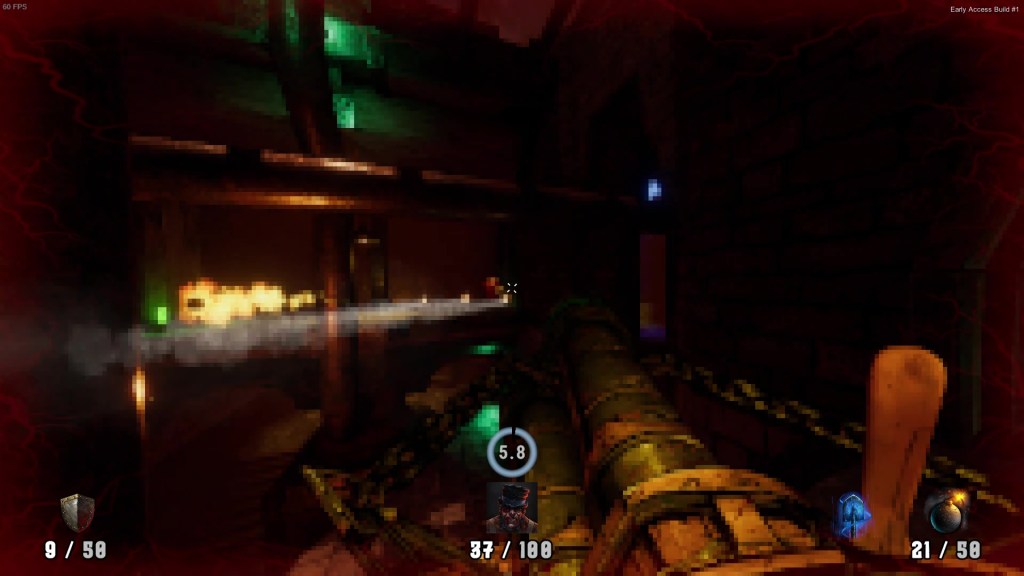
    That said, there is one element that might prove divisive. GRAVELORD currently has a strong visual filter enabled, far more aggressive than the marketing materials suggest, that ensures everything more than a meter from the player becomes heavily pixellated and increasingly indistinct at range. It feels similar in function to the filter seen in Prodeus, but it’s ramped up to 11 and I doubt it’s working as intended. It grew on me over time, but there seems to be no option to tone it down in this early access build, and I’m wondering if a degree of auto-aim might be due to the fact distant enemies are often reduced to a handful of moving pixels difficult to track against the background?

    GRAVELORD was previewed on PC using a code provided to gameblur by the publisher.

  • Tech Review: PowerA OPS v1 Wireless Controller for PC and Cloud Gaming

    Tech Review: PowerA OPS v1 Wireless Controller for PC and Cloud Gaming

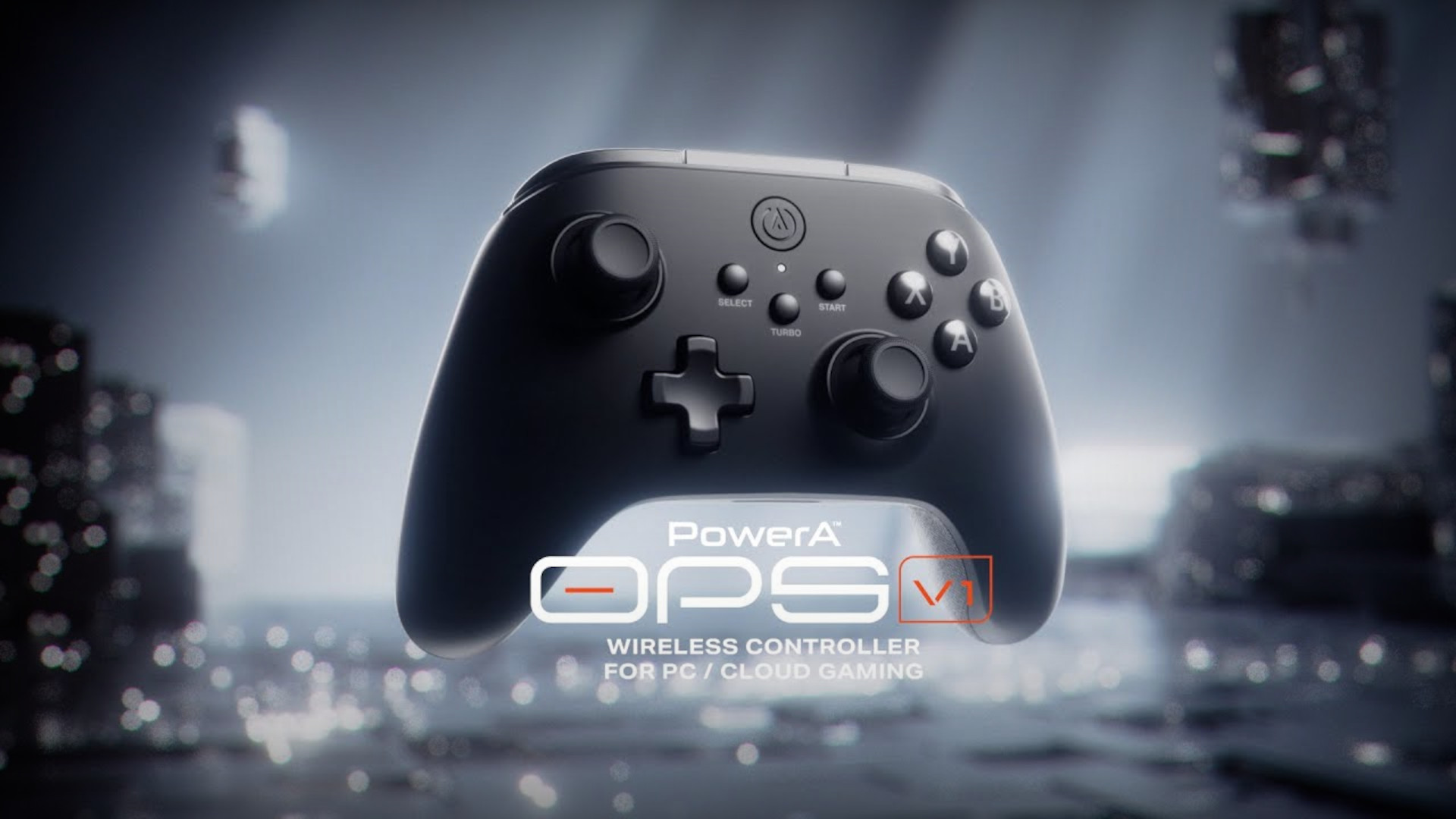
    The PowerA OPS v1 Wireless Controller for PC and Cloud Gaming is a great choice for if you’re looking for budget wireless controller with several features normally available on more premium gamepads. I’ve enjoyed using it over the last two weeks, gaming on both my PC and testing it with game streaming apps on my Smart TV, but like most third-party controllers there are a caveat or two to consider.

    Design and features

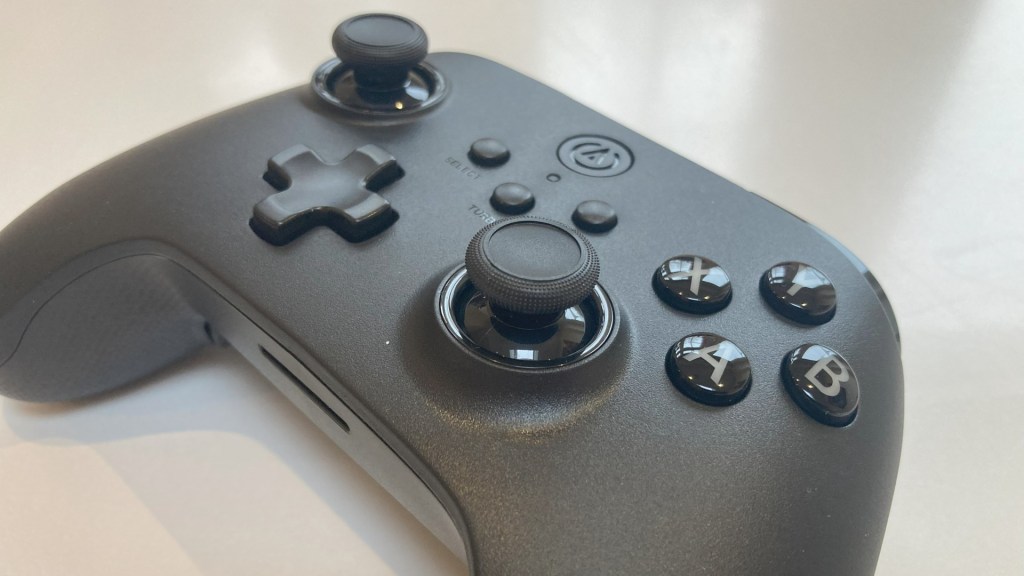
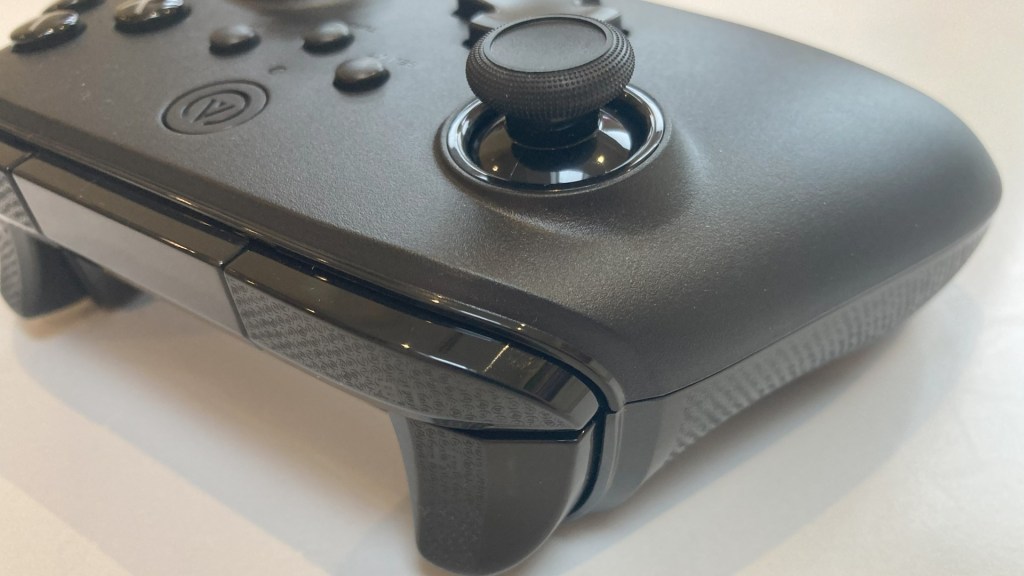
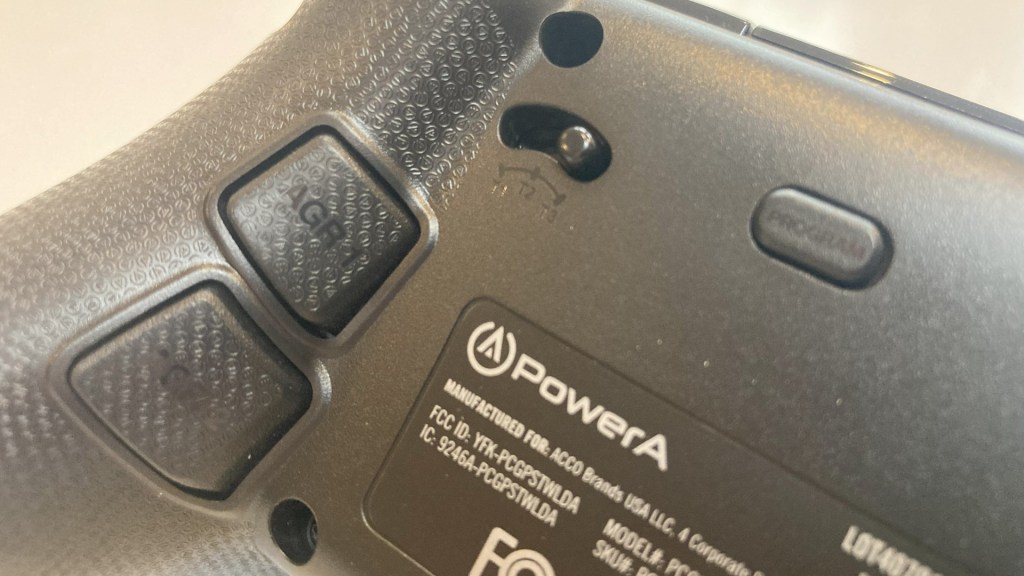
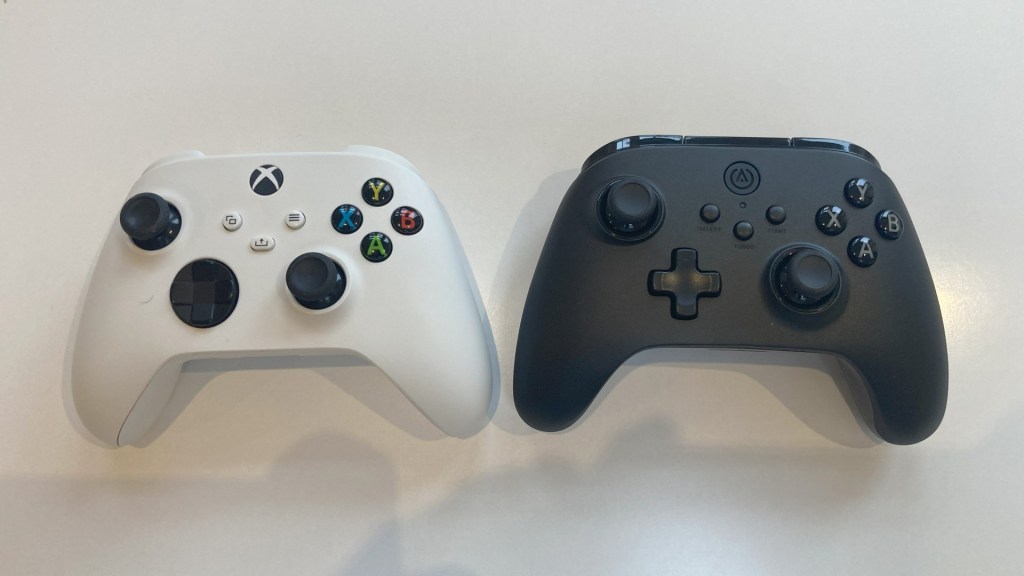
    Befitting its purpose, the Power OPS v1 Wireless Controller feels very familiar to a modern Xbox Series S|X gamepad. Not just the layout but also in form factor. It has a similar overall size, profile, grip curvature, and even feel, with a smooth plastic front and textured plastic grips. Flip it over, however, and you’ll find an internal battery, four programmable buttons, and several toggle switches for on-the-fly tweaking. Most significantly, it features Hall Effect thumbsticks and triggers – position sensors that use magnetic field interactions – which minimise the potential wear and tear you see in traditional potentiometers that leads to stick drift.

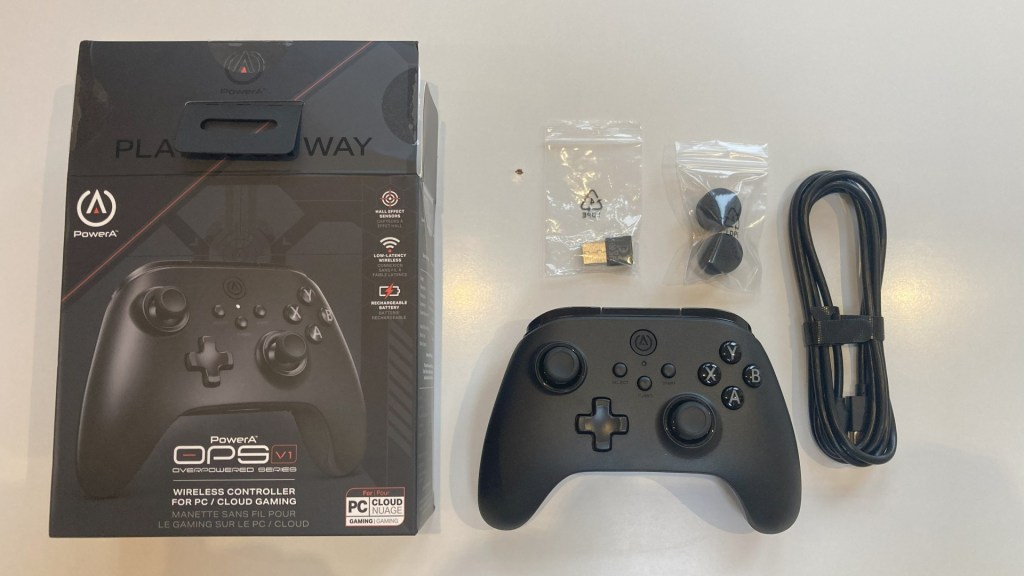
    I spent most of my time alternating between slow survival-horror with the Silent Hill 2 remake and the chaotic action of Helldivers 2, finding the Power OPS v1 Wireless Controller satisfying to use, even in comparison to my ageing Xbox Elite V1 and my favourite third-party wired gamepad, the Razer Wolverine V2. The thumbsticks feel responsive, accurate, and sit at a comfortable height with concave tops; the triggers are broad but have a decent range of motion; the bumpers and face buttons are suitably clicky; though the classic D-pad shape might disappoint some who prefer the Xbox Series circular design. It also comes with some seriously chunky thumbstick extensions that I never found a use for, but they might work as mini joysticks for a fighting games or flight sims.

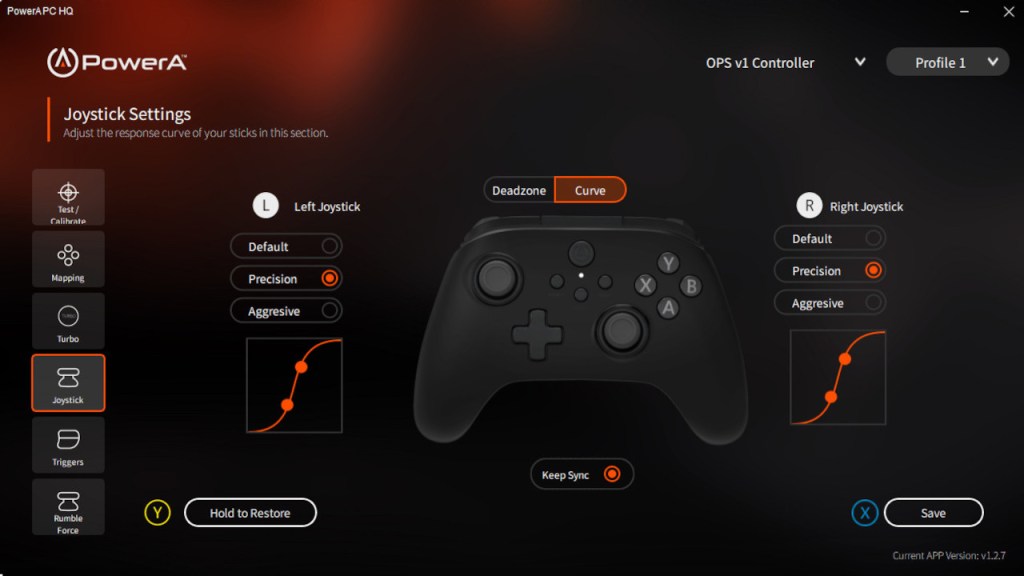
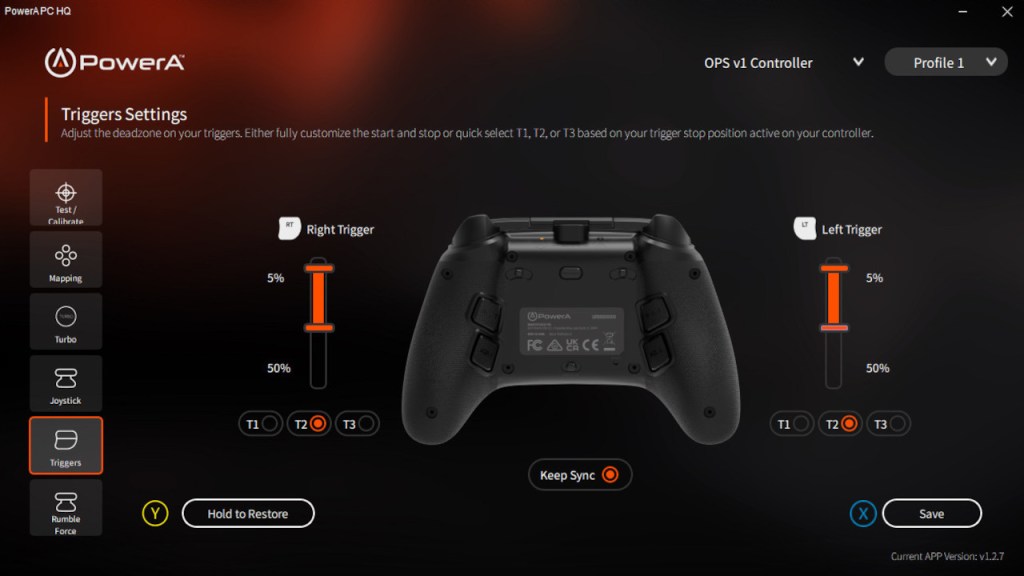
    When it comes to additional features, you’re going to get the most out of the Power OPS v1 Wireless Controller if you download the standalone PowerA PC HQ app (not the PowerA Gamer HQ app you can install and update through the Microsoft Store). You can define individual thumbstick inner/outer deadzones and adjust the response curve; you can tweak the activation range of each trigger for one of three toggle positions; you can tone down the rumble motor intensity if that irritates you as much as it does me; you reassign and enable turbo modes for the face buttons; and you can assign the four rear buttons that sit towards the middle of the grips where my middle fingertips rested comfortably.

    The Power OPS v1 Wireless Controller felt great out the box using default settings, but it’s a solid mix essential, nice-to-have, and more situational features that are not an option if you get a basic Xbox Series or Dualsense controller. I found myself making most use of the two lower rear buttons to keep my thumb on the sticks and forefingers on the triggers in Helldivers 2, while playing around with the right thumbstick response curve gave me a little more control when dealing with the inherently sluggish aiming in the Silent Hill 2 remake.

    Good compatibility with one minor caveat

    The problem with all third-party controllers – and I’m guessing this down to a mix of patents and driver support – is general compatibility and weird limitations you’d expect to be standardised.

    In that regard, the Power OPS v1 Wireless Controller does better than most and gets bonus points for not messing with the layout for no good reason; offering three ways to connect – wired by USB-C, Bluetooth, or using a 2.4 GHz USB-A adapter; and including an internal battery that got me close to their 20-hour claim. If you’re partial to lighter controllers (I prefer a bit of heft), it weighs about as much as an Xbox Series S|X controller without batteries.

    Using the 2.4 GHz adapter, my LG Smart TV recognised it as an Xbox style gamepad, but I did have sporadic issues with Steam and the Xbox PC App if I powered up the controller after starting the app, or if it went into standby and I had to power it back up. As an example, I took a break after playing a few missions in Deep Rock Galactic, then powered it back on to use Xbox PC App Cloud Gaming to test out some other titles only to find it would no longer recognised the controller until I restarted the app. Not the end of the world but it’s something that doesn’t happen with official Xbox controllers (or when it’s connected over a USB-C cable). I should also note it has some weird default button assignments in Windows, so don’t go mashing buttons when you’re not in a game.

    Final thoughts

    PowerA have been making accessories, for better and sometimes worse, for about 15-years at this point. In an increasingly crowded budget market, the $50-equivalent PowerA OPS v1 Wireless Controller for PC and Cloud Gaming is one of the better choices if you want a decent Xbox Series S|X alternative that also sports programmable features usually found on more expensive devices. Even for those uninterested in tweaking settings within an app, the build quality is good, the connectivity options are great, and the Hall Effect thumbsticks and triggers feel excellent.

    Pros:

    • Solid build quality and a similar form factor to an Xbox Series S|X controller
    • Three connectivity options cover a range of devices
    • The Hall Effect thumbsticks and triggers feel great by default
    • Additional customisation features you rarely find at a budget price

    Cons:

    • You’ll need to use the PowerA PC HQ standalone app for full functionality
    • Potential connection issues if powering on after a gaming app is already open

    Score: 8/10

    The PowerA OPS v1 Wireless Controller for PC and Cloud Gaming was reviewed using a sample provided to gameblur by the manufacturer.

  • Review: Broken Sword – Shadow of the Templars: Reforged (Nintendo Switch)

    Review: Broken Sword – Shadow of the Templars: Reforged (Nintendo Switch)

    Remastering and re-releasing a ‘90s point-and-click adventure game must be a tough ask in a modern market, where the genre is increasingly niche and survives only in the indie- or AA-space. Arriving on the Nintendo Switch a month after other platforms, Broken Sword – Shadow of the Templars: Reforged is a curious mix of compelling and frustrating, as it tries to make 28-year-old game more accessible and playable.

    As someone with a nostalgic hook and tolerance for dated gameplay, I feel Revolution Software have done an excellent job revitalising the audiovisual elements, while adding some much-needed control- and puzzle-assists. However, for fans of modern games in the genre, or those simply curious about this influential slice of history, they’re additions that can only do so much to smooth over the laborious gameplay.

    Shadow of the Templars: Reforged opening manhole cover
    That said, most point-and-click games from the mid ‘80s to early 2000s – what I’d guess was their “golden age” – relied on the narrative, cast, setting, and atmosphere more so than the gameplay mechanics to hold your attention. The typical gameplay loop, considered in isolation, is a tough sell as there’s a lot of down time, deliberate or otherwise. Moments between puzzle solving and story beats are often spent trudging across the environment at a glacial pace, watching canned animations play out repeatedly, listening to lengthy dialogue sequences, working through conversation topics hoping to discover a significant clue, and trying to use every item in your inventory during conversations, on each other, or on puzzle objects. Most locations are only a handful of screens big, but you can spend literal hours shuffling back and forth between them on your first playthrough.

    That might sound awful in a modern context, but the mechanics and controls were simple and intuitive, increasingly mouse-driven from the ‘90s onwards, and I can understand why the genre was so popular on PC – especially when you consider the lavish artwork, voice acting, and music they were known for. The problem was no matter how great a story these classics may tell, the quality of puzzles was often inconsistent. To its credit, Broken Sword – Shadow of the Templars was never that cryptic and kept most puzzles limited to the immediate area, with the final chapters feeling more linear and focused as it rushed towards a conclusion. Most puzzles reward logical choices or creative thinking, and will leave you laughing at the outcome and sometimes feeling smart. However, there are still puzzles will see you just exhausting all available interactions until something significant happens – and sometimes they’ll have a fail-state that’ll mean sitting through unskippable cutscenes before you can reload and try again.

    Shadow of the Templars: Reforged hiding manuscript
    To be fair, all point-and-click games have the same flaw: any significant roadblock can grind the narrative pacing to a halt and quickly frustrate the player. Thankfully, Broken Sword – Shadow of the Templars Reforged includes much-needed control and hint features to keep you moving forward. It still uses an emulated cursor for exploration – or even the touch screen on Nintendo Switch in handheld mode – but menu and inventory interactions use the d-pad and make it much quicker to discuss, examine, or combine items. The “Director’s Cut” hint system returns, providing a succession of increasingly detailed advice, but you can now enable in-game highlights. At first, you’ll see a faint sparkling effect over screen transitions, characters, interactible objects, or inventory items, but it’ll eventually changes to blue icons that spell out the correct course of action. You can, of course, disable them if you want, but I’d consider them essential for a smooth journey.

    I’ve already mentioned the narrative, characters, and setting were often the most crucial elements of these games and that still holds true. For better or worse, depending on your perspective, Broken Sword – Shadow of the Templars: Reforged is a product of its time. There are plenty of absurd situations, awkward conversations, witty observations, and slapstick humour that’ll make you chuckle, but there’s also a reliance on some outdated references and stereotype-driven humour that writers tend to avoid these days. Look past that though, and you’ll also find an incredibly well-written and compelling historical mystery-thriller, which features plenty of real-world events re-worked into a modern-day conspiracy involving the remnants of the Knights Templar and an order of Middle Eastern assassins.

    You play as George Stobbart, a seemingly stereotypical brash American tourist, who narrowly escapes injury during a café explosion assassination. Having seen the killer dressed as clown, and having been brushed off by the French detective who arrives suspiciously quickly, he befriends French photojournalist Nico to investigate further. What begins as a quest to identify the assassin for the police quickly evolves into a continent-spanning adventure to uncover clues hidden in an ancient manuscript that might lead to the site of a Templar treasure. You’ll frequently return to Paris, but also explore towns and ruins in Ireland, Syria, Spain, and Scotland, meeting new people, solving puzzles, and avoiding both Templar goons and a Syrian assassin attempting to thwart their plans. Nico plays a limited love-interest role on the first game, but both her and George grow over the adventure into a tough and likeable pair of protagonists.

    The core story is fantastic, full of interesting snippets of history, nefarious schemes, satisfying revelations, and a few stylish cutscenes, but the highlight and source of much of its humour is the excellent writing for every character and possible interaction – regardless of whether they’re necessary to push the story forward or not. George is inherently likeable given his enthusiastic approach to everything, from the mundane to the remarkable, gleefully tackling dangerous investigations, exploring ancient ruins, or simply irritating locals to distract them from their duties and steal their tools. He has plenty of great observations about the environment and the people he sees, and will discuss just about any inventory item with anyone. The sewer key he finds in the opening scene must have a hundred lines of dialogue dedicated to it, and it was always worth showing the tools you’ve stolen to their owners for added hilarity.

    Shadow of the Templars: Reforged excavation key puzzle
    In wrapping up, it’s worth highlighting that Broken Sword – Shadow of the Templars: Reforged looks great and runs well on the Nintendo Switch despite that one-month delay. The remastered artwork retains much of the environmental geometry and distinctive character features, but everything has been massively embellished at a much higher resolution, and with a ton of added detail that enhances but rarely changes the original designs. It has a more vibrant, stylised look (similar to Broken Sword 5: The Serpent’s Curse) that sometimes alters the original atmosphere, but you can always switch back to the classic visuals if you want. The cutscenes also look impressively sharp and enhanced, and most of the audio has been cleaned up – though the odd line sounded distorted and out of place.

    Overall, it’s an excellent remaster of an influential classic, and fans of the original won’t be disappointed. For newcomers, just go in with your expectations in check and make full use of the hint system the moment you find yourself stuck. There’s a great story with endearing characters that still holds up, but no amount of audiovisual or control enhancements can hide the fact the gameplay is rooted in the past.

    Pros:

    • A likeable cast of heroes and villains
    • A well-written and compelling historical mystery-thriller
    • Plenty of absurd situations, awkward conversations, witty observations, and slapstick humour
    • An excellent audiovisual remastering with updated controls and assists
    • Telling everyone about your sewer key

    Cons:

    • The point-and-click gameplay still feels laborious despite the new assists
    • Some humour revolves around dated stereotypes and 30-year-old cultural references

    Score: 8/10

    Broken Sword – Shadow of the Templars: Reforged was reviewed on Nintendo Switch using a code provided to gameblur by the publisher. It is also available on PC, Xbox One/Series S|X, and PS4/5.
  • Editorial: Crow Country might be the cosiest survival-horror game (and perfect for the Nintendo Switch)

    Editorial: Crow Country might be the cosiest survival-horror game (and perfect for the Nintendo Switch)

    Crow Country is an incredible homage to classic survival-horror from the 32-bit era – think Resident Evil and Silent Hill – but it’s also one of the most charming games I can think of in the genre, and a near-perfect fit for the Nintendo Switch as a result. It’s suitably creepy and tense at times, but also accessible, humorous, and often heartfelt. It’s got resource management elements and revels in the illogical puzzle design so prevalent in the genre, but it could easily serve as an entry point into classic survival-horror for new or younger players.
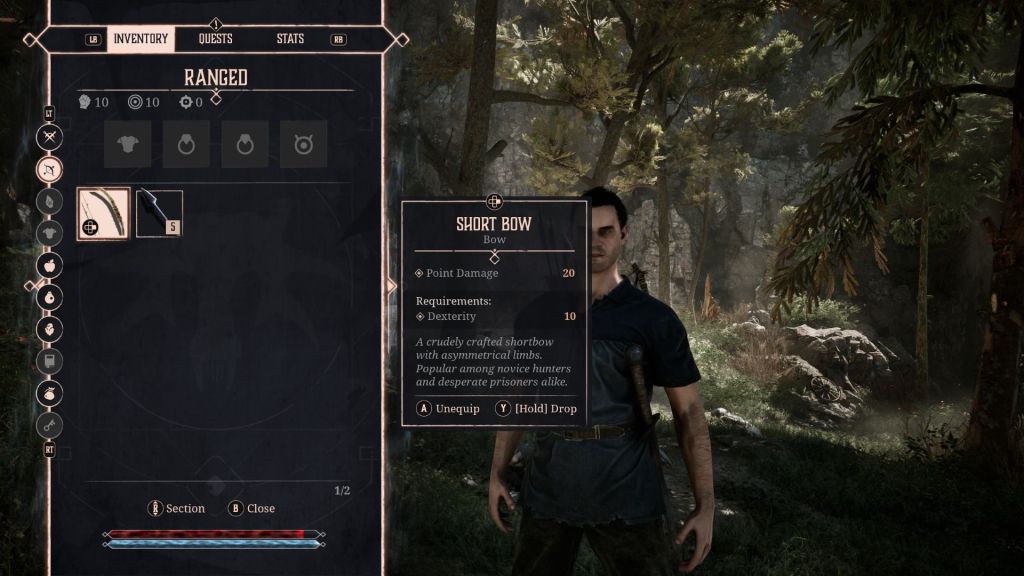
    The highlight for me is the fantastic air of mystery about it. The protagonist – supposedly “Special Agent Mara Forest” – clearly knows far more then she’s willing reveal to others, and constantly slips up in conversation with others or when making observations about what she sees around her.

    She arrives at the shuttered Crow Country amusement park, two years after an incident led to its closure, only to find its rundown attractions still occupied by shambling, vaguely humanoid creatures, several evasive former staff members, and other interested parties, all converging on the same evening.

    Like any good horror game, Crow Country leaves the player feeling confused and vulnerable at first, but as Mara solves more puzzles, opens up new areas, interacts with survivors, and night falls, she slowly unravels an admittedly weird sci-fi-ish conspiracy and discovers the motivations of the former staff and the owner she’s desperate to find – Edward Crow.

    As Mara uncovers the truth, observant players can also piece together clues from several notes and Mara’s conversations to figure out who she really is and why she’s there long before the story tells you outright. It’s not then most surprising reveal, sure, but the narrative moves at a brisk pace and never feels secondary to the gameplay.

    How you traverse the small but dense environments, solve puzzles, and survive will feel comfortingly familiar to survival-horror fans. You’ll explore an expanding and evolving map room-by-room; you’re locked in place to shoot using a laser pointer; you can run past shambling foes; hoover up ammunition, grenades, med-kits, and antidotes; solve puzzles and complete mini-games to find key items or secrets (like powerful weapons and upgrades for them); and soak in the wonderfully detailed, retro-styled environments complemented by creepy ambience and music. My only real criticism of Crow Country is that the gameplay offers few surprises to veterans of the genre.

    Crow Country’s 5-ish hour playtime works in its favour here, as the combat is limited but never frustrating, the puzzles and mini-games always entertaining, and secrets are abundant. If you dislike the sluggish combat, you can avoid everything but the final boss if you’re nimble. Crow Country has a curious twist on the traditional survival-horror formula, as despite new “guests”, traps, and even boobytrapped items appearing as the night progresses, the horror elements diminish over time.

    There are some dark and tragic moments, but it was hard not to get behind Mara’s dogged determination, fearlessness, and fondness for awkward jokes. I soon found myself less interested in hoarding resources and purging every room, and instead fixated on unravelling the true nature of the park and Mara’s connection to it.

    For those who value an entertaining story and good narrative pacing above survival mechanics, Crow Country also offers a ton of smart assists to avoid aimless backtracking. The map highlights unsolved puzzle locations or points of interest, and fortune teller machine can offer hints. Shortcuts and save rooms (with soothing music, of course) are smartly placed, and there’s no inventory limit or item boxes – just a maximum amount of ammunition and healing items you can carry at any given time. If you run low on supplies, returning to Mara’s car, rumaging through a trash can, or kicking a vending machine will likely spit out a box of handgun bullets or small med-kit.

    Even the ranking system rewards playing it safe as it doesn’t consider total playtime or number of saves. There’s also an “Exploration” mode that disable enemies completely, or a “Murder of Crows” mode for those who want a tougher challenge with most assists disabled or limited.

    Better still, irrespective of whether you’re playing it docked or in handheld mode, Crow Country looks great (especially on an OLED display), sounds great, and runs smoothly on the Nintendo Switch. The only notable difference from the next-gen console versions is that larger rooms can take a few more seconds longer to load.

    I called it a homage, but perhaps the most novel thing about Crow Country is that it’s a rare example of “cosy” survival horror. The sort of game perfect for playing cozied up under blanket – on the couch or in bed – despite the horror-focused nature of the genre.

    Crow Country was played on Nintendo Switch using a code provided to gameblur by the publisher. It is also available on PC, Xbox One/Series S|X, and PS4/5.