Author: Andrew Logue

  • Impressions: The Riftbreaker: Heart of the Swamp (Xbox Series)

    Impressions: The Riftbreaker: Heart of the Swamp (Xbox Series)

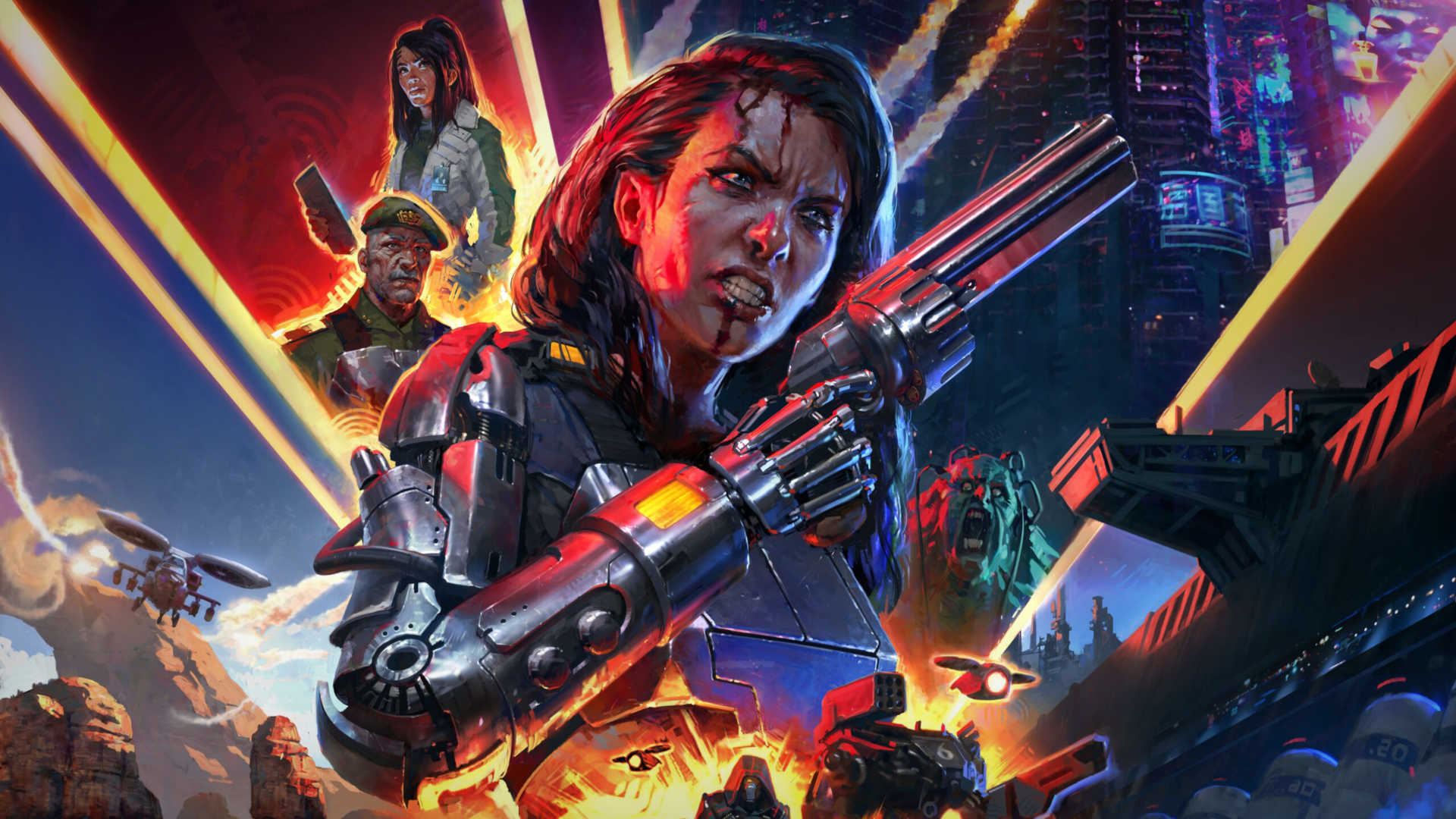
    Returning to the The Riftbreaker for the fourth time, I’m forever impressed at how EXOR Studios has continued to expand and refine its hybrid base-building, supply-line managing, research- and loot-driven, isometric hack-and-slash, twin-stick shooter. If you critique each element in isolation, they’re not as developed or balanced as the games they draw inspiration from, but The Riftbreaker’s priority is always giving you the tools you need to have fun – something far too many developers seem to actively discourage these days.

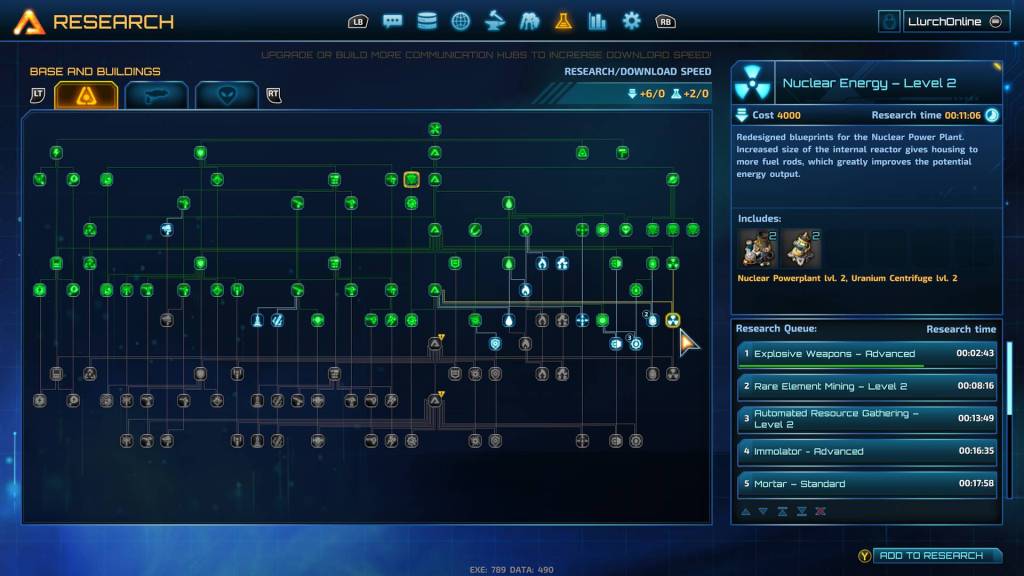
    My excuse for investing another 20 hours into The Riftbreaker was the recently released Heart of the Swamp expansion (which arrived on console at few months after PC), with a ton of free content for the base game including a new swamp biome, new creatures, new research options, new structures to manage waterlogged environments, and massive new defensive towers and base-shields that’ll be put to good use before the end of the new story campaign. That said, The Riftbreaker is nothing if not formulaic when it comes to mission design and progression, so you’re primarily getting more tools to overcome a few new challenges, to complete a familiar job – assess and defeat a new threat to the Galatea 37 mission.

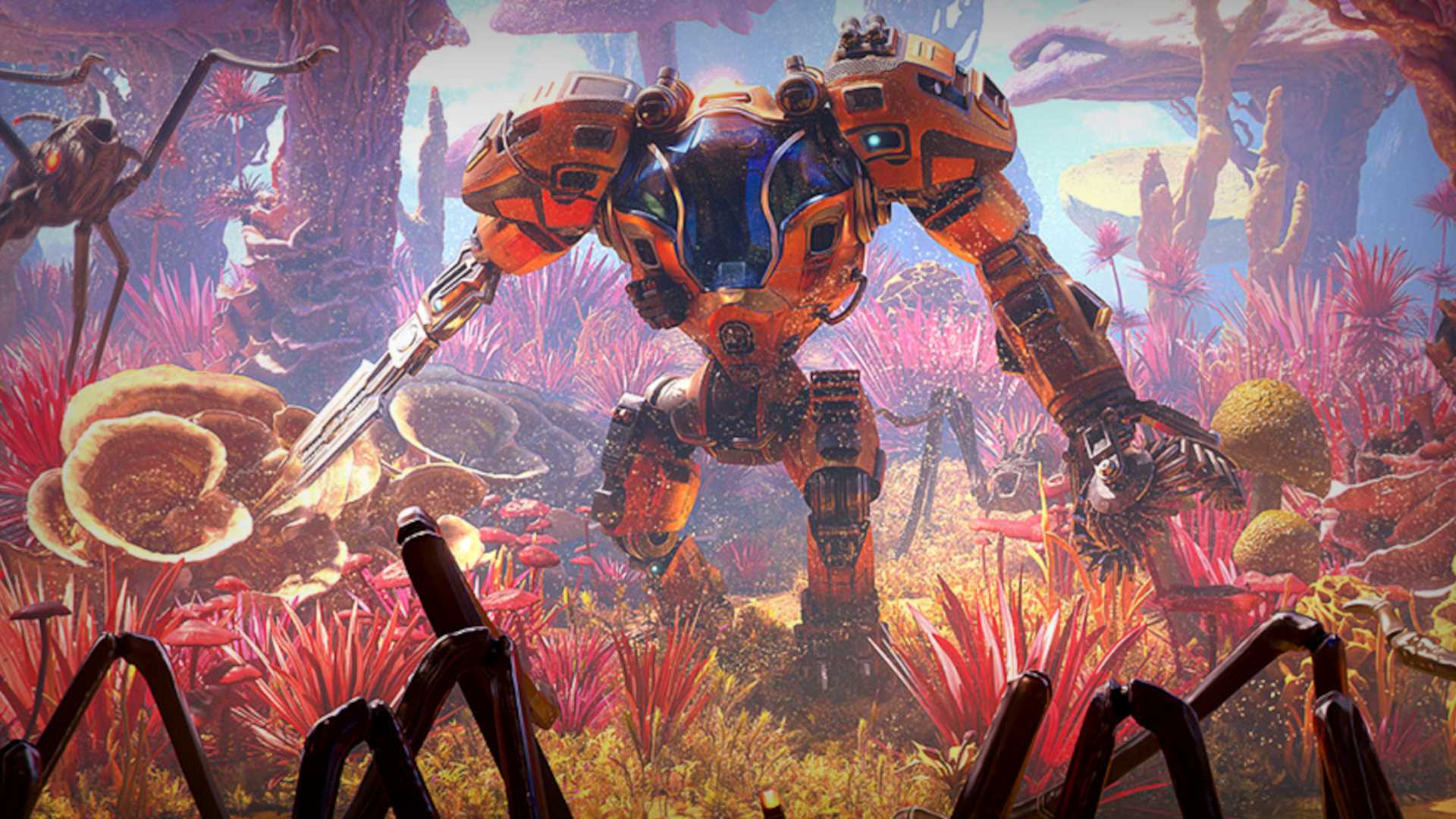
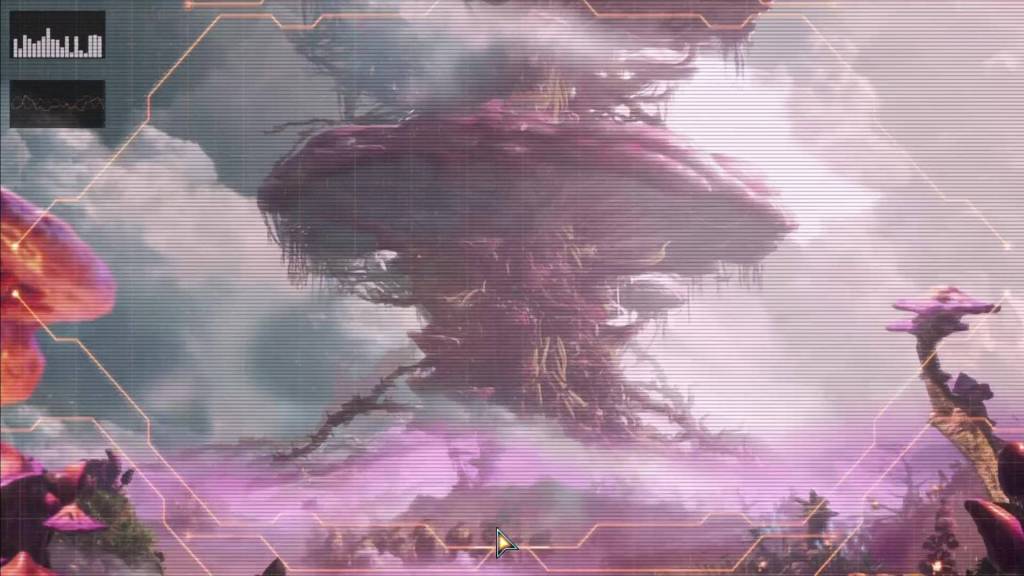
    The Heart of the Swamp expansion kicks off only once you’ve investigated potential Titanium, Uranium, and Palladium deposits to begin constructing the Rift Station back to Earth, with yet another mysterious meteorite crashing in the headquarter region. This time it’s giant mushroom spores, which leads Ashley and Mr Riggs to a massive flowering mushroom “tree”, invaded by a myriad of parasitic creatures and thorn vines draining its remarkable sap. Despite the new setting, events follow a familiar rhythm: investigate the organism while defending your outposts from waves of enemies, travel to the source of the threat to try wipe it out, then engage in a chaotic hold-out finale.

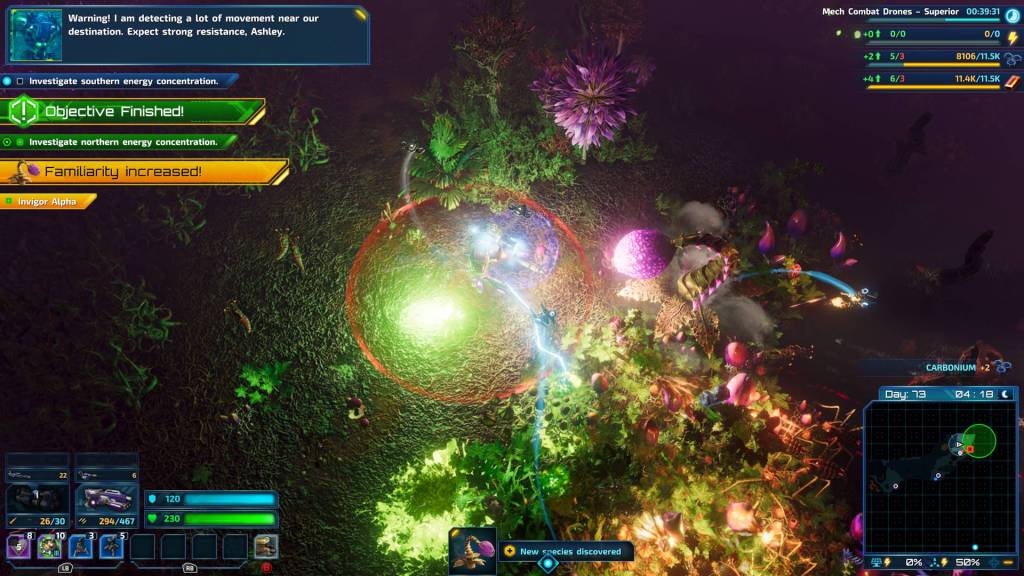
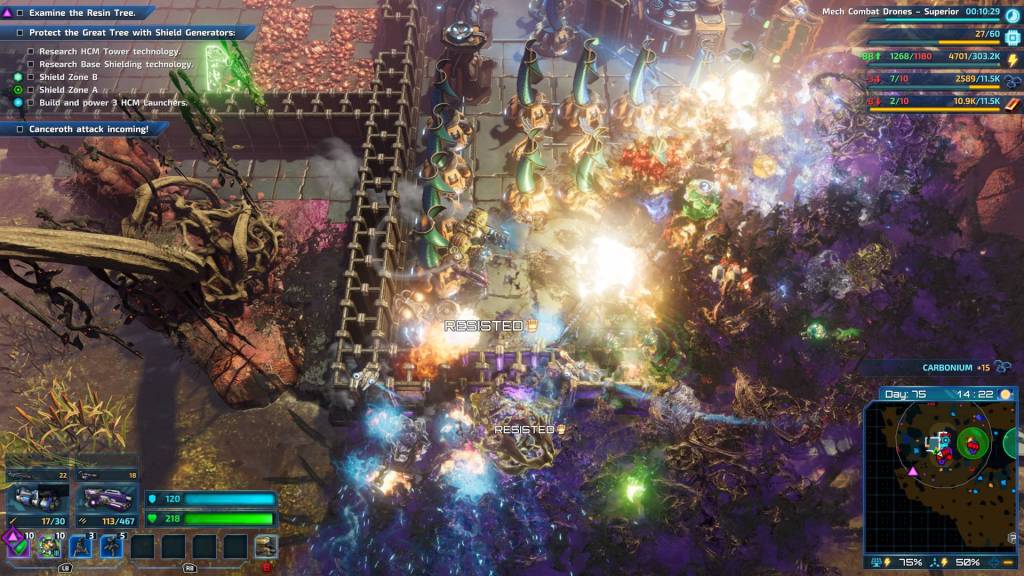
    The biggest challenge introduced in the Heart of the Swamp expansion – if you accept insanely hostile plant life and rapidly regrowing thorn thickets are typical of Galatea 37 – is establishing and sustaining several outposts on isolated patches of solid ground around the base of the giant mushroom. The saturated air makes renewable power generation difficult, while natural gas vents, Carbonium, and Ironium deposits are also scattered across small islands. The swarms of parasites you fend off come in waves, with self-replicating horrors emerging later, and that lack of space is a serious impediment to a solid defence. Of course, The Riftbreaker excels at giving you a myriad of tools for the job and, even if some are clearly optimal, you can hack together your own solution to just about any problem – be that through quantity or quality.

    I’d recommend anyone starting this expansion ensure they have large Carbonium and Ironium outposts set up to cover basic construction costs remotely, but you can establish mines alongside research outposts with some planning. In addition to utilising existing structures like Energy Pylons to transmit power between outposts, there’s a fresh selection of land-based, floating, and pipe-mounted defensive towers – including massive piercing towers and cluster munition towers – that allow you to build defensive lines in the swampy water. If you explore thoroughly early on, you’ll also discover a source of sap that can be converted in plasma; a novel solution to construct advanced buildings and base shields, buying you much needed time to destroy the massive swarms in the finale that shredded my base and framerate in equal measure.

    It’s admittedly familiar fare at this point, three years and two expansions since launch, but Heart of the Swamp is another solid addition to The Riftbreaker. It offers another excuse to explore more of Galatea 37’s hostile biomes; expand and upgrade my existing outposts; research more of the sprawling tech tree for new buildings and higher-tier gear crafting; and engage in more visually spectacular base-defence events. It’s a fantastic hybrid of genres that deserves to be more successful than it is, and I strongly recommend you pick it up if any of this looks exciting. With the “Complete Edition” on storefronts, this looks to be the last paid expansion, but there’ still the promise of online co-op in the future that could make a great game an incredible one.

    The Riftbreaker: Heart of the Swamp was played on Xbox Series S|X using a code provided to gameblur by the publisher. It is also available on PC and PS5.

  • Review: Frostpunk 2 (PC)

    Review: Frostpunk 2 (PC)

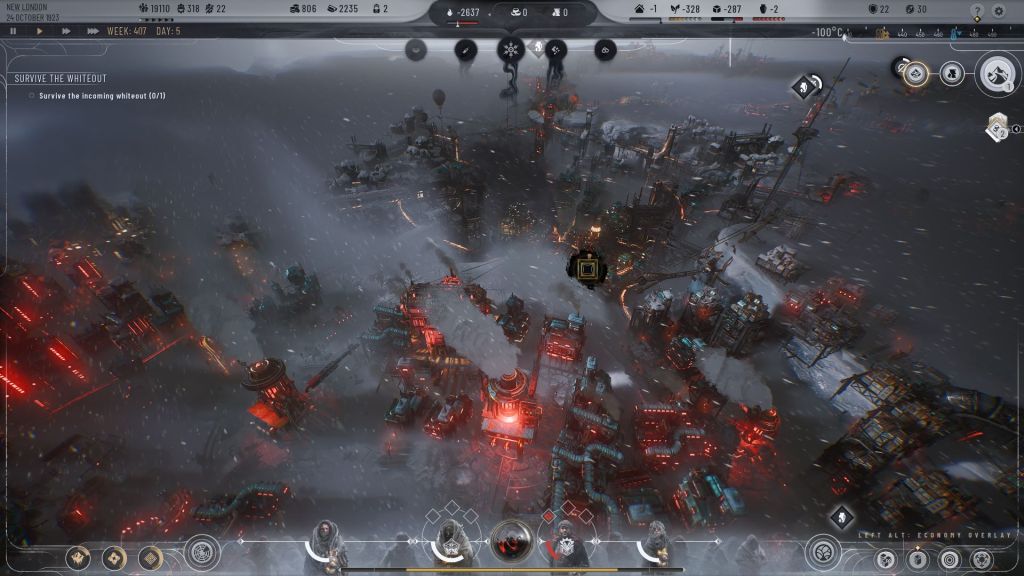
    Frostpunk 2 is not exactly what I expected from a sequel, but it didn’t take long for me to appreciate the shift in gameplay focus. The first game was a gruelling city-builder with choice-driven narrative elements, in which you cautiously expanded your city outwards from the warmth of a central generator, trying to balance resource production, resource consumption, research goals, and survivor demands as temperatures plunged. The basics remain unchanged in Frostpunk 2, but the increased scale and longer timespans result in gameplay that can feel more hands-off, as you juggle supply lines and appease political factions through menus, toggles, and map screens – with less of a focus on traditional city-building optimisations.

    As a result, Frostpunk 2 can feel like a pure management game at times – the kind you play from a detached perspective with many basic functions automated. A game in which entertainment comes from analysing numbers, weighing up choices, trying to balance said numbers, watching the consequences play out, and then adapting or iterating upon your plans. It can feel a little underwhelming in the opening hour or two when you’re focussed exclusively on establishing your first generator city, but it starts to make sense once you begin exploring the Frostlands, creating new settlements and supply lines, and dealing with several factions that have divergent ideas about the future of humanity in the frigid post-apocalypse.

    This gameplay shift makes a lot of sense when you consider the substantial campaign mode that tackles the fate of the New London survivors from the first game – the “A New Home” scenario –and serves as a lengthy tutorial for the free-form Utopia mode. Thirty years have passed since the city survived the first whiteout and the Steward has recently died (or was possibly murdered by one of the emerging factions). After a brief prologue reveals the presence of other survivors in the Frostlands, a civilian council consisting of centrist New Londoners, traditionalist Stalwarts, and adaptable Frostlanders elects the player as the new Steward and tasks them with both re-establishing coal supply lines for the generator and discovering new fuel sources.

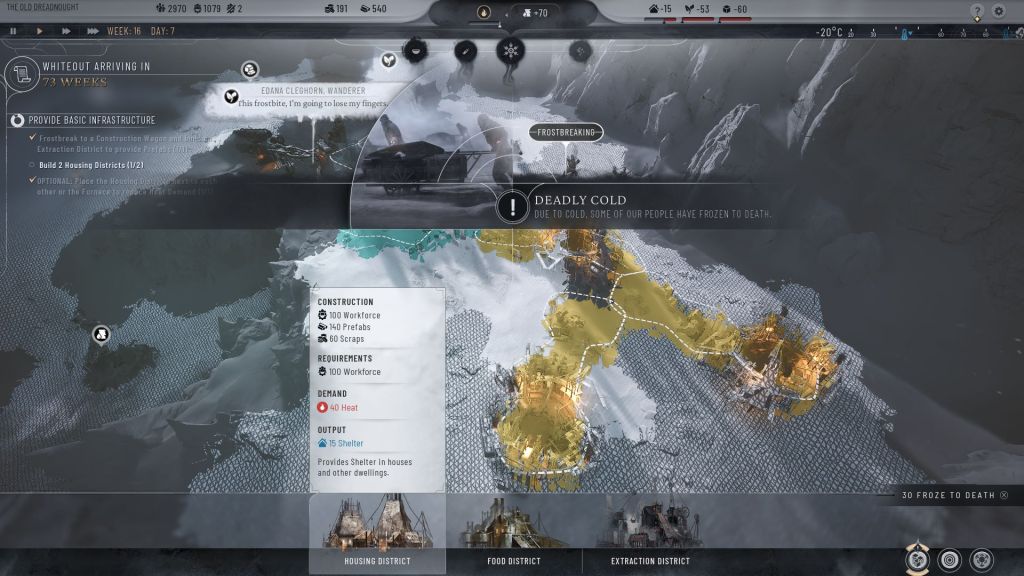
    The five-chapter campaign swiftly expands in scope to encompass vast swathes of the Frostland, with events playing out over hundreds of weeks, rather than days, and several locations from the first games scenarios returning – albeit now with canon outcomes. The impact of this expanded scope is that building out your generator city, or other large settlements, feels less hands-on. The core districts of your city – think housing, food production, or resource extraction – are built in a cluster of several titles and provide a supply of resources like the population you draw a workforce and heatstamps from, fuel for the generator, prefab materials for construction, or scouting teams to explore the Frostlands.

    A thoughtful, compact city, with carefully placed stockpiles and specialised district buildings, does offer benefits like improving productivity or reducing heat and workforce demands, but you can now deploy frost-breaking teams to clear a linear path to distant coal seams, oil deposits, fertile ground, or frozen lumber, and still build an extraction or farming district far from the generator. Certain sheltered areas also offer heat benefits, so you can even place housing districts further out. Once placed, you sit back and watch roads and heating pipes materialise, while the districts build up dynamically based on the terrain, shape, and any specialised buildings you’ve placed within them. It’s all wonderfully animated and your expansive city can look incredible, but it is a significant change from managing individual worker teams and slowly expanding into radial zones around a generator.

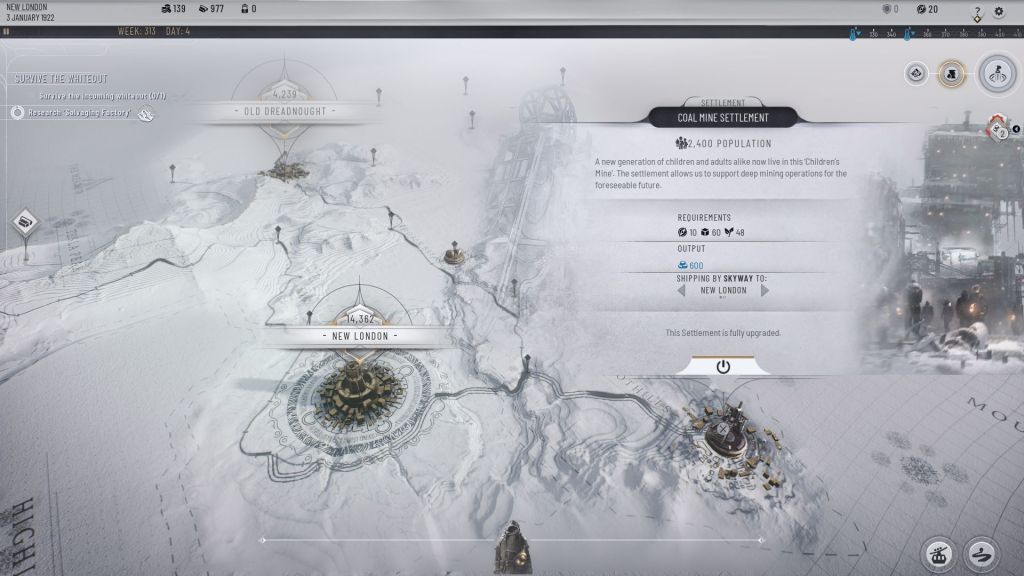
    On the upside, it pushes you to engage with the expanded mechanics faster, as your focus shifts from ensuring the survival of a single city and small population, to re-establishing a new society with all the challenges that entails. Cities or settlements become visually spectacular representations of tables and graphs; swelling population numbers are only of interest for the workforce and heatstamps they generate; and the sprawling Frostlands map evolves into an interconnected network of trails and skyways between resource-generating and resource-consuming markers. Coupled with the accelerated passage of time, Frostpunk 2 feels satisfying but less intimate, as you spend more time in menus adjusting the flow of goods between settlements or shifting your workforce between districts based on current demands.

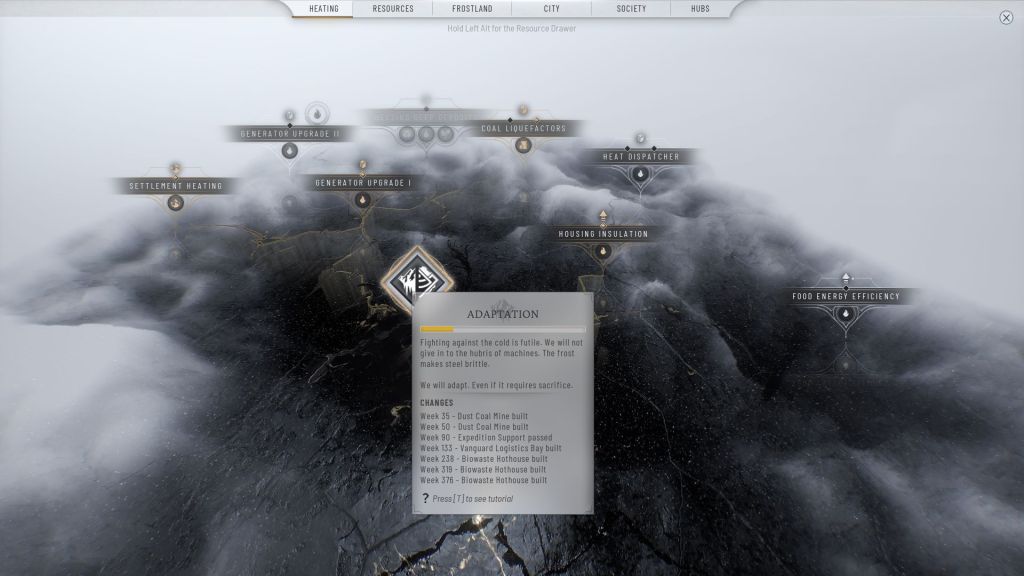
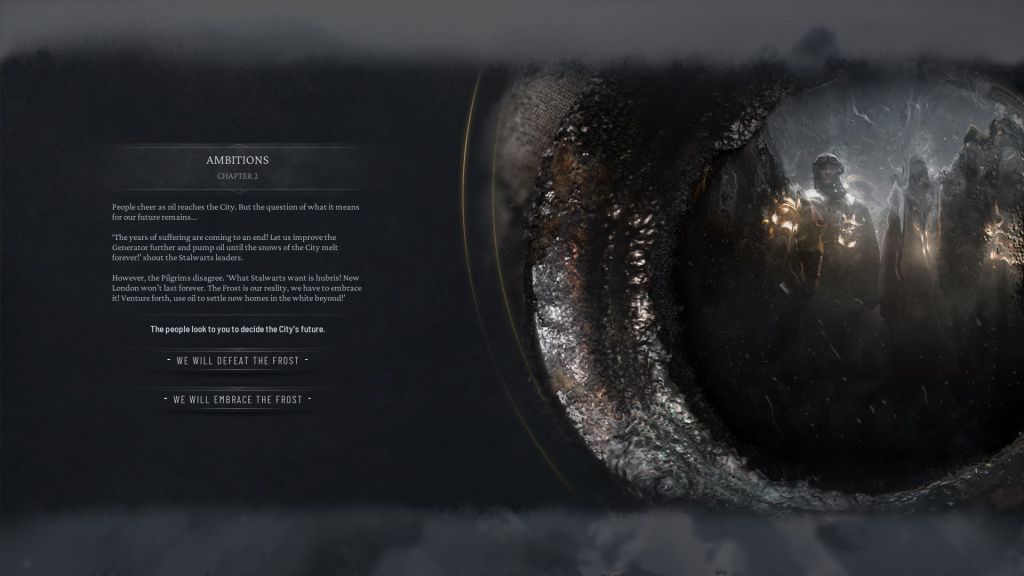
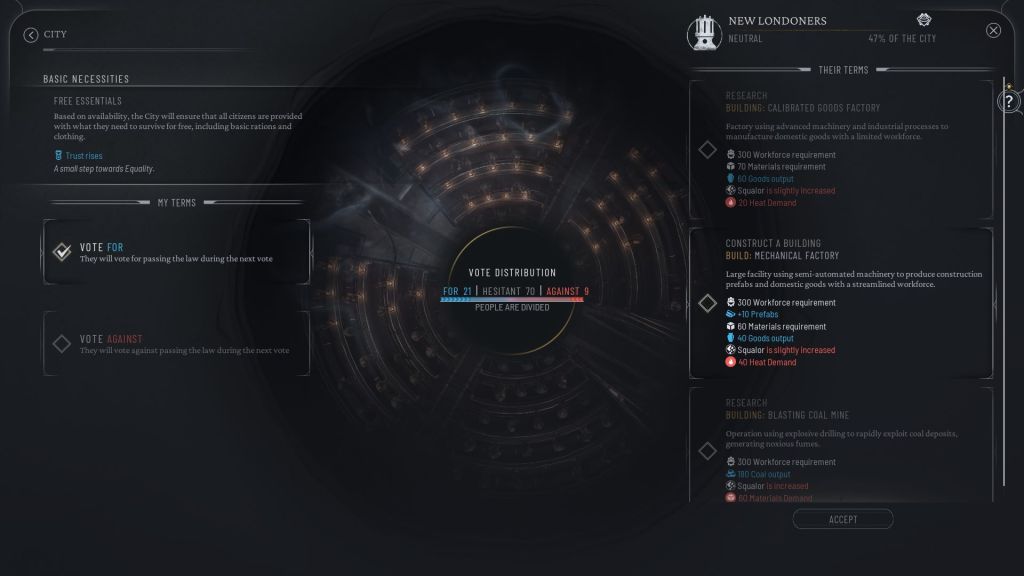
    Naturally, the remnants of humanity quickly fall back into old habits, pursuing their favourite excuse to commit savagery when resource scarcity is no longer their primary concern: ideology. Frostpunk 2 has an expansive selection of potential laws that cover everything from heating and housing to immigration, crime, healthcare, and research opportunities – but enforcing a law is no longer your mandate alone, and it needs to pass a vote in the council. This system complicates everything and introduces a divergent path through the campaign. Each faction has an idea on what the future of humanity should look like, but they’re broadly split between adapting to life in the Frostlands or turning the generator cities and settlements into self-sustaining bastions against the cold.

    Several choices in the campaign force you to choose a direction, and striking a middle ground is difficult if you’re unwilling to forfeit technological advancements that can generate near-infinite resources. To get a vote passed in the council means assessing the mood of each faction, considering the percentage of the council they hold, and engaging in negotiations; a promise to vote for or against a motion that always comes with conditions attached. Those conditions are often passing a law or research goal that aligns with their ideology, with a bonus to trust gained if you fulfil your promise, and potential backlash if you don’t. Obviously, you can’t please everyone; some factions are more aligned with one another than others; and gaining fervour with any of them – for or against you – can generate instability.

    Dominant factions whose laws and traditions you permit might offer to support the city during a crisis, while others might sabotage it to undermine you. It could mean increased productivity in certain sectors, or protests that disrupt output. It’s a constant balancing act, but while finding some degree of balance is ideal, going all in with one faction will unlock more extreme laws and experimental technology to cement their rule. Each of the four difficulty levels adjusts how much trust you gain or lose based on resource scarcity and ideological conflicts, and if the council turns against you, your campaign run is over. It’s worth highlighting at this point there are some arbitrary limitations that feel designed to make life artificially difficult when faced with unexpected campaign choices and political turmoil, such as being unable to mandate a minimum stockpile level of a commodity, or to modify the fuel mix being consumed for the generator.

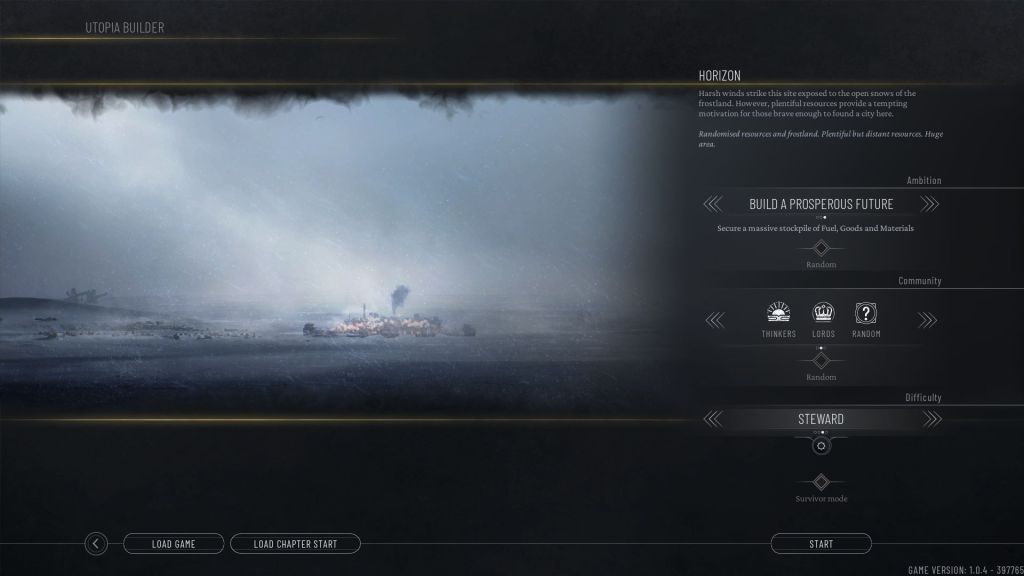
    There’s enough mechanical depth to talk for ages, but to bring this to some sort of conclusion, I’d argue Frostpunk 2 is a fascinating sequel that retains the basic foundations of the original but has a much grander scope. You could dive into the Utopia mode, pick a challenging starting settlement, set your own survival-based victory condition, and crank up the difficulty to better emulate the first game – but Frostpunk 2’s expansive campaign is the highlight. If the first game was about making tough decisions that involved trading a dozen lives for the survival of several hundred, Frostpunk 2 does this on an uncomfortably detached scale as populations swell into the thousands, spread across multiple settlements. It might not be the sequel everyone was expecting, but it feels like a terrifyingly accurate reflection of leadership in a time of crisis, in which your population is no longer a collective of individuals with needs but an ideologically fractious resource you need to maintain.

    Pros:

    • It’s easier to establish interconnected cities and settlements
    • Managing political factions is as stressful as managing resource scarcity
    • The choice-driven campaign changes up how later chapters play out
    • The Utopia mode offers highly customisable scenarios
    • Generator cities, settlements, and the Frostlands look and sound more beautiful than ever

    Cons:

    • Some arbitrary limitations can make life artificially difficult
    • It can feel like a pure management game at times navigating menus and maps
    • The district-based, city-building mechanics feel less significant

    Score: 8/10

    Frostpunk 2 was reviewed on PC using a code provided to gameblur by the publisher. It is now also available on Xbox Series S|X and PS5.

  • Review: Edge of Sanity (Nintendo Switch)

    Review: Edge of Sanity (Nintendo Switch)

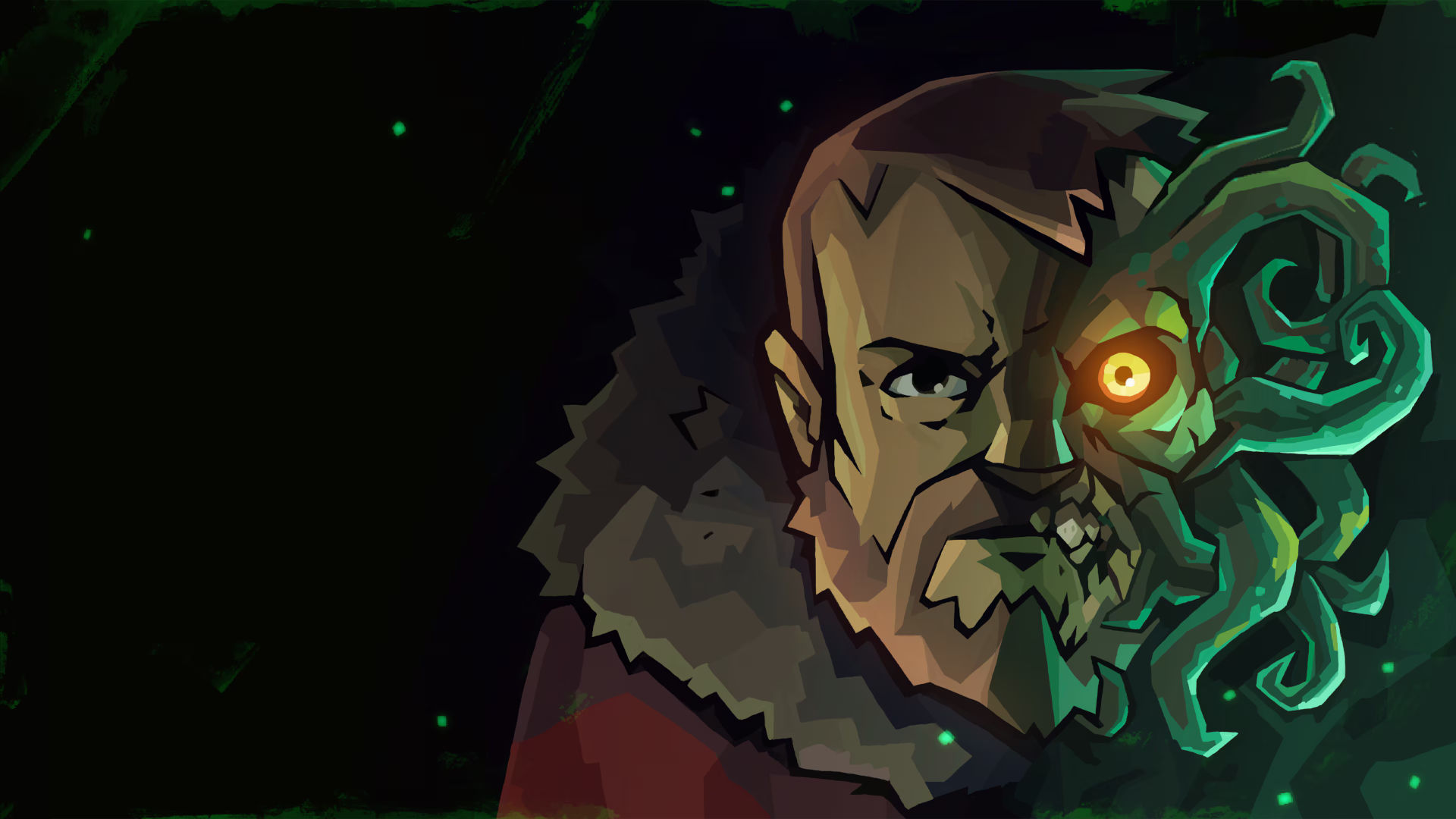
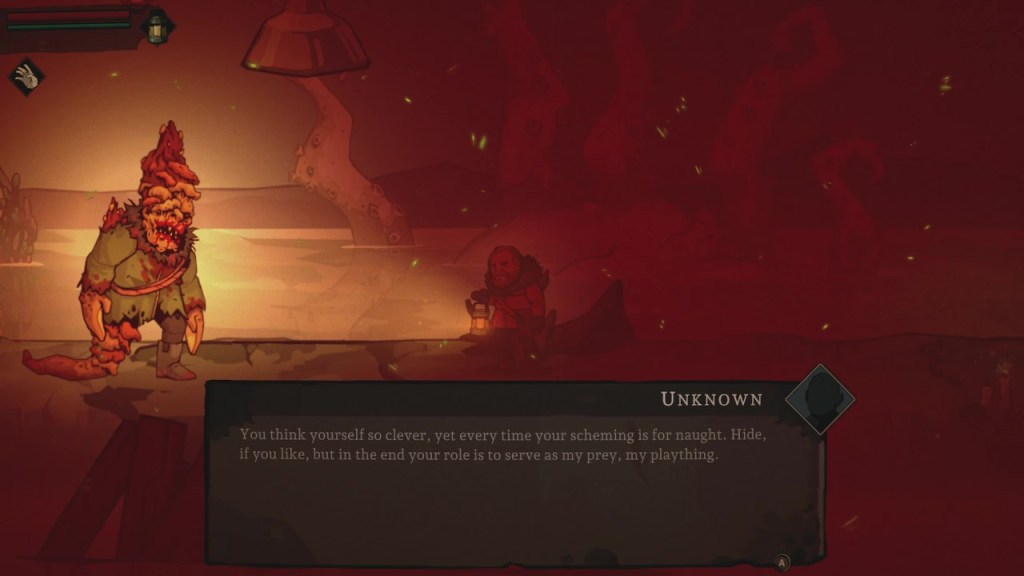
    Edge of Sanity as a concept is great but less so in execution. It’s a narrative-driven cosmic-horror survival game, set in the Alaskan wilderness circa 1970, in which protagonist Carter attempts to rescue and sustain a motley band of survivors, fleeing an industrial accident that may have released otherworldly creatures. It’s got detailed and atmospheric pixel art environments; well-animated and gruesome sprites; and a strong focus on stealth and puzzle-like combat that rewards caution and preparation – a combination of designs I enjoy. However, the further I played, the more often scripting and dialogue bugs would ruin the experience.

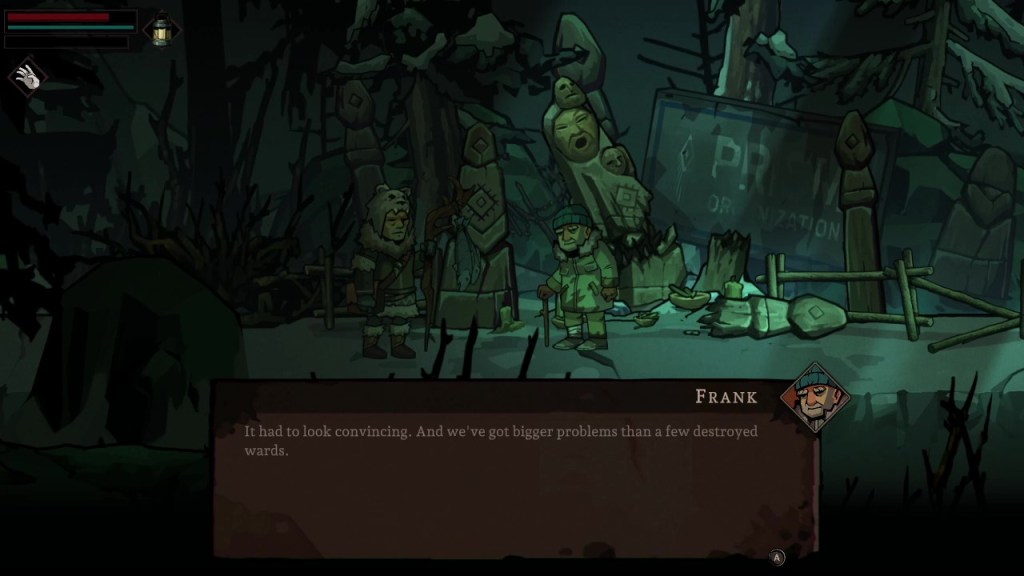
    Edge of Sanity’s premise – corporate greed and unethical science triggering the apocalypse – is hardly novel, but it still offers a strong narrative, troubled cast, taunting antagonist, and several story missions to keep you engaged between contextless scavenging runs. Carter is your typical gruff survivalist, but it’s clear he’s already been exposed to the experiments performed by the nefarious Prism organisation. His colleague Frank seems well-meaning but has a racist streak when it comes to the native Alaskan tribes – or so it seems. He clearly has a relationship with local tribesman Fierceclaw, who offers Carter only hints as to what’s happening and the nature of his own “hunt”. On top of that, you have an unhinged environmentalist, an apologist PR officer, a calculating researcher – all of whom have their own take on events – and a dog!

    The opening act serves as a tutorial covering scavenging, stealth, combat, and crafting – gear, consumables, and camp upgrades – before it ramps up the stakes when you realise the protagonist may not entirely be themself. Rather than leave this as some late game reveal, it opens up some intriguing dialogue choices and complicates the usual flee-from-unknowable-horror premise. It reduces the fear factor but raises the mystery factor. Despite the otherworldly monstrosities, I was less interested in finding a way to flee, and more interested in finding out the nature of the forces at play. Most survival-style games have a narrative that feels secondary to the mechanics, whereas Edge of Sanity gives them equal weighting.

    Talking mechanics, Edge of Sanity is a mix of 2D traversal and puzzle-like combat through multi-layered environments, with day-by-day management elements that force you to upgrade your camp and sustain your team of survivors. Unless you’re playing on the die-once-and-you’re-done “Ironman” mode, both the hands-on missions and management elements are forgiving and reward caution and planning – a design that satisfies me no end, even if some might argue the lack of surprises makes it too predictable. Play cautiously and smart, you’ll always stay ahead of the difficulty curve. Play fast and reckless, you’ll be left with few allies and less responsibilities, but also less crafting resources and less understanding of events. It’s a smart design that lets you play however you want, with no hard barriers to progress beyond your main character dying, and it makes replays more tempting.

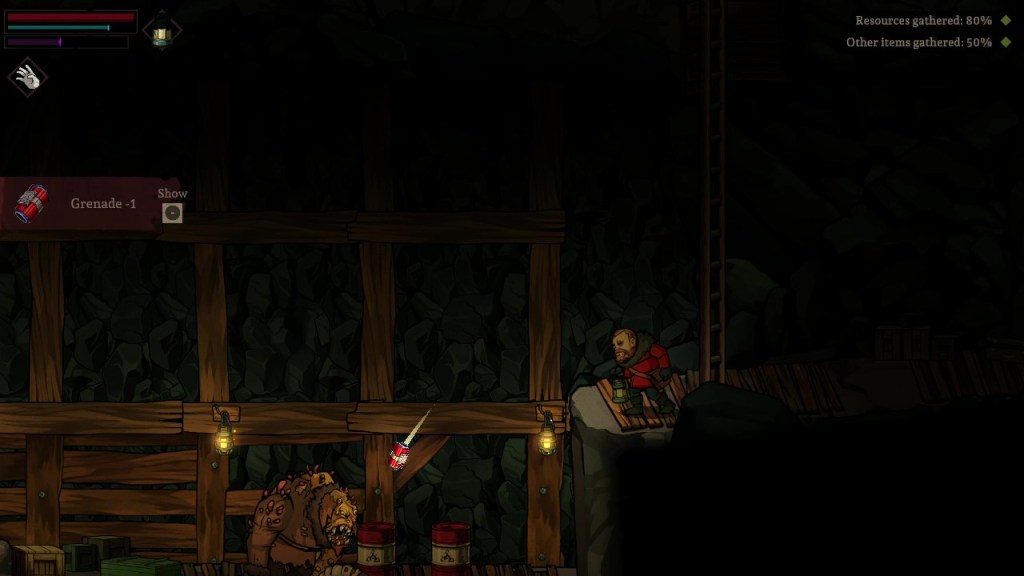
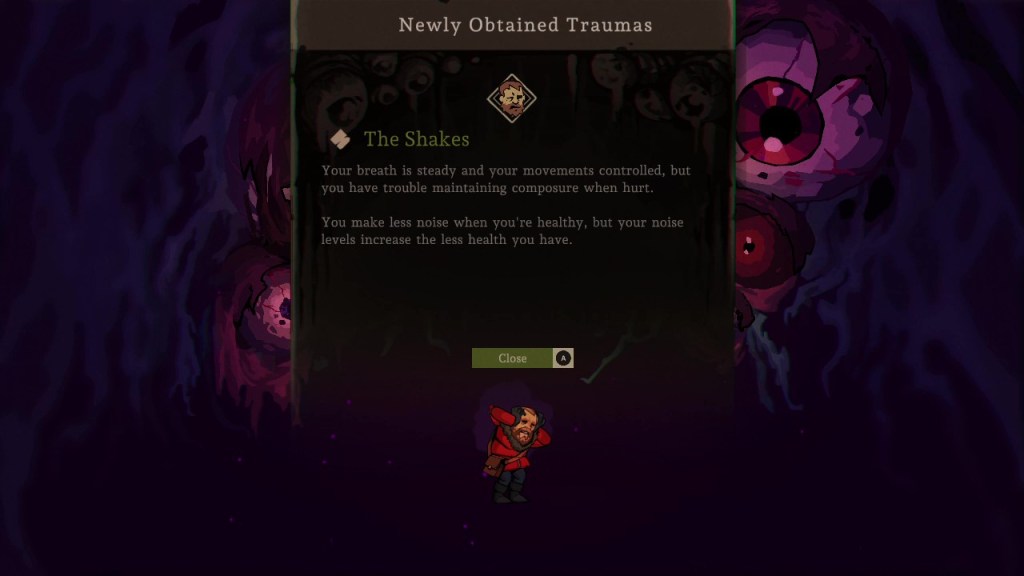
    During hand-crafted story missions or brief procedural scavenging runs, Carter can sneak, run, climb, interact with containers or switches, all within a 2D environment – often shifting to adjacent corridors that loop back or contain hidden resources, while sometimes you’ll need to solve code-based puzzles. The lack of a third dimension and limited mobility ensure all enemies are roadblocks, but you can often find alternate paths, use environmental hazards to your advantage instead of wasting consumables, or resort to simple melee combat. Resorting to melee with limited-durability weapons is rarely a good choice though, as taking damage accumulates stress – along with interacting with otherworldly elements – and that needs to be managed to avoid increasingly crippling trauma effects, think visual hallucinations and panicked footsteps, eventually leading to a run-ending death. With no ability to save outside of the camp, the stakes feel appropriately high, but no mission is long enough to make a replay feel particularly frustrating.

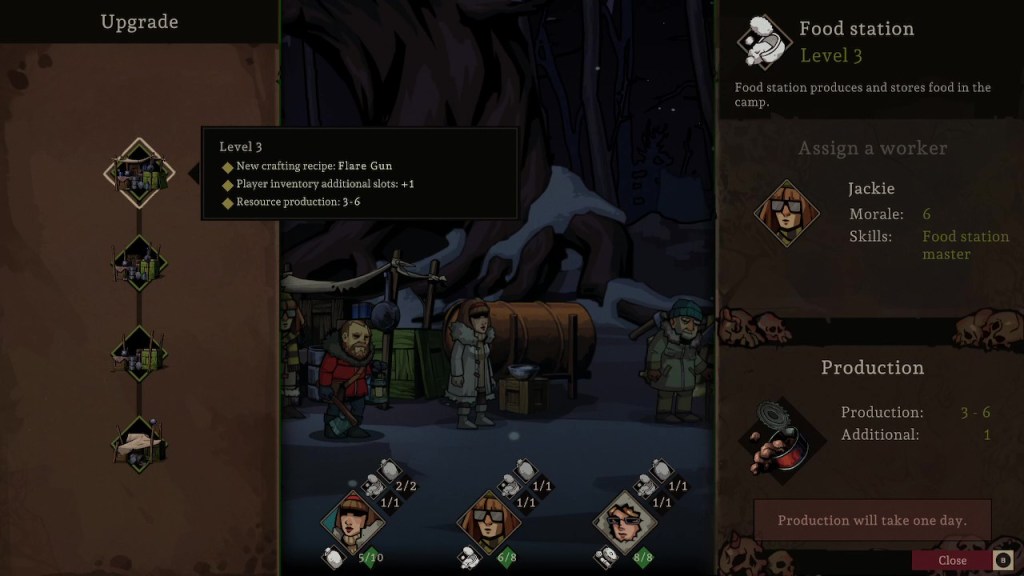
    I enjoyed the survival and management elements more than I expected, possibly because they’re easy to get on top of. In theory, there’s a lot to juggle. Survivors need food, water, rest to sustain morale, and sometimes a consumable to overcome injury or illness. In practice, prioritising early scavenging runs to upgrade your food and water stations to the maximum level allows you to quickly achieve a self-sustaining cycle, so you can focus on other upgrades, story missions, and crafting both offensive and defensive items. All of this is handled in your evolving camp, in which you can save anytime, assign workers to resource production and scouting, while missions are accessed from a simple map screen. Even if you’re not a fan of the survival elements, progress between chapters usually means gathering enough supplies or fixing something, so there’s no avoiding scavenging runs completely.

    In theory, the bite-size missions, accessible mechanics, and a brisk day-by-day structure make Edge of Sanity good fun and a great fit for the Nintendo Switch in handheld mode (or a Steam Deck/handheld PC). Sadly, even with the 1.10 patch installed at the time of writing this up, it feels increasingly buggy from the second chapters onwards, with weird dialogue bugs – think looping conversations or switching to another character’s lines – and there were progress-blocking scripting issues during story missions that forced me to restart them and reroute them on occasion. If Edge of Sanity can get patched into shape, I’d add a point or two to the score and happily recommend it to those looking for a narrative-driven survival game that finds a nice balance between pushing the plot forward while still stressing you out over survival needs. For now, though, technical issues start derailing the experience just as it gets into a satisfying groove.

    Pros:

    • An intriguing and well-paced narrative for a survival game
    • 2D exploration with stealth and puzzle-like combat
    • Simple but satisfying base management you can quickly get on top of

    Cons:

    • Some grind for resources is inevitable
    • Dialogue and mission scripting bugs need patching

    Score: 6/10

    Edge of Sanity was reviewed on Nintendo Switch using a code provided to gameblur by the publisher. It is also available on PC, Xbox One/Series S|X, and PS4/5.
  • Editorial: Alone in the Dark (2024) is yet another game that committed the unforgivable crime of being good rather than critically acclaimed

    Editorial: Alone in the Dark (2024) is yet another game that committed the unforgivable crime of being good rather than critically acclaimed

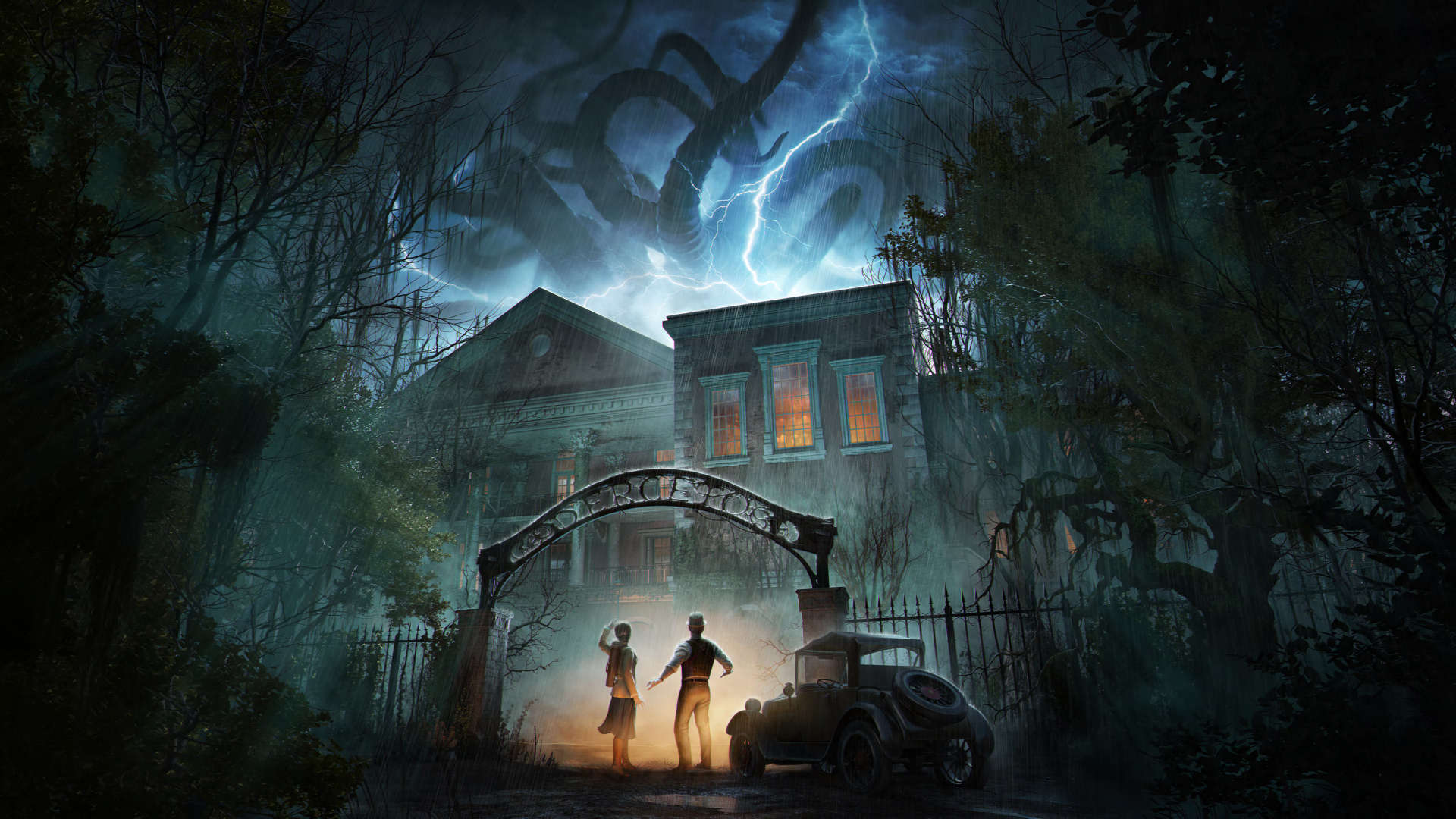
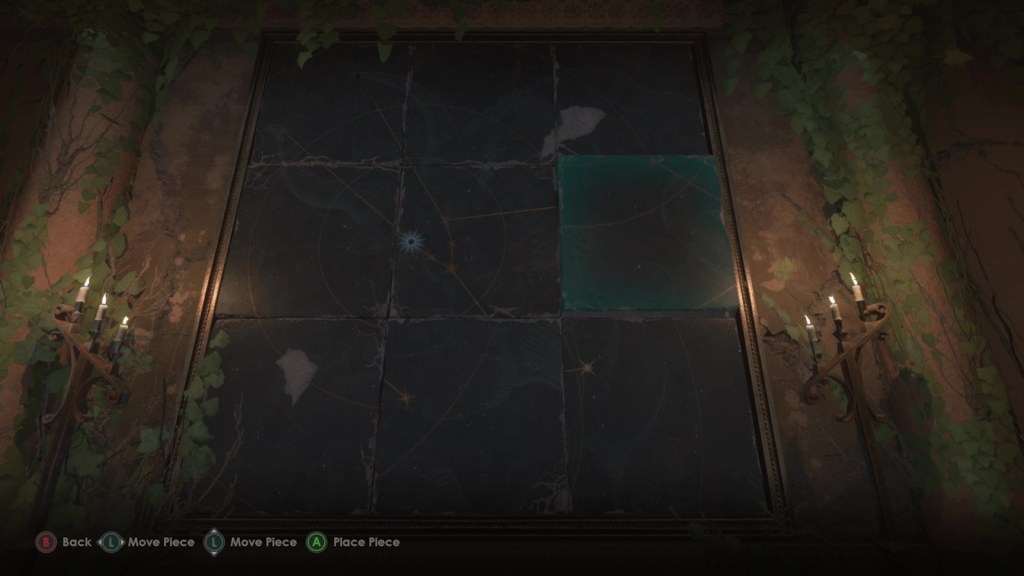
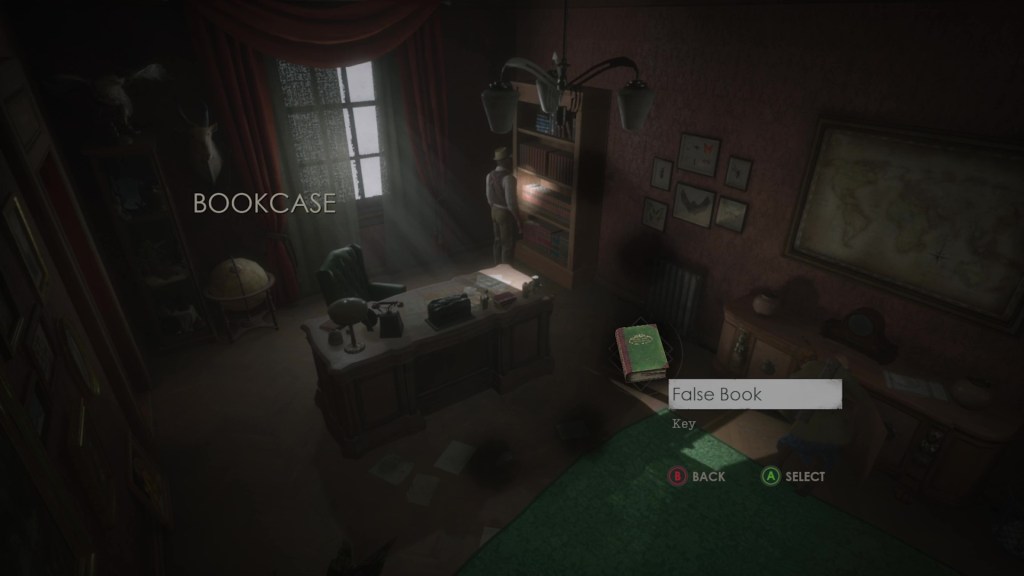
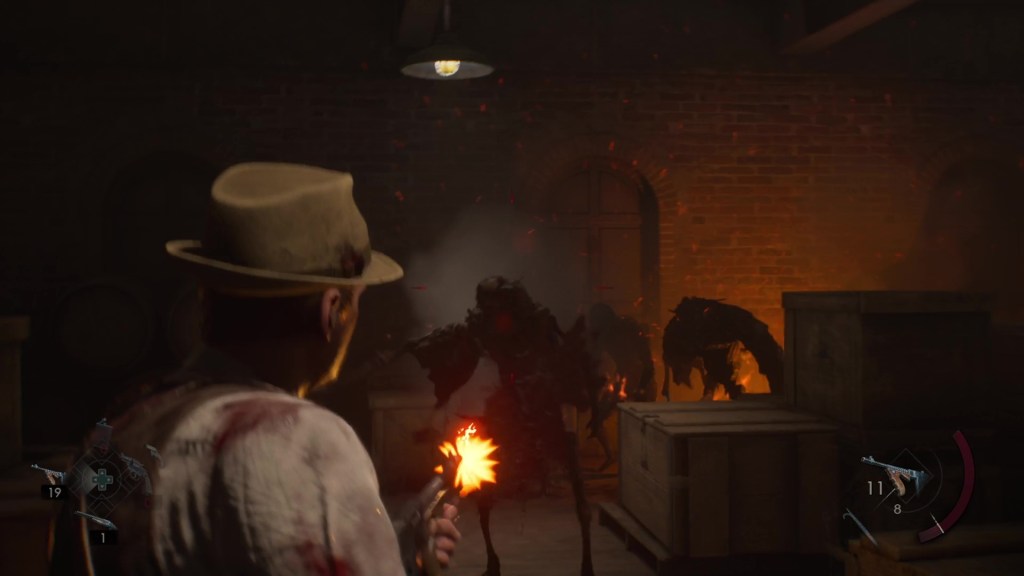
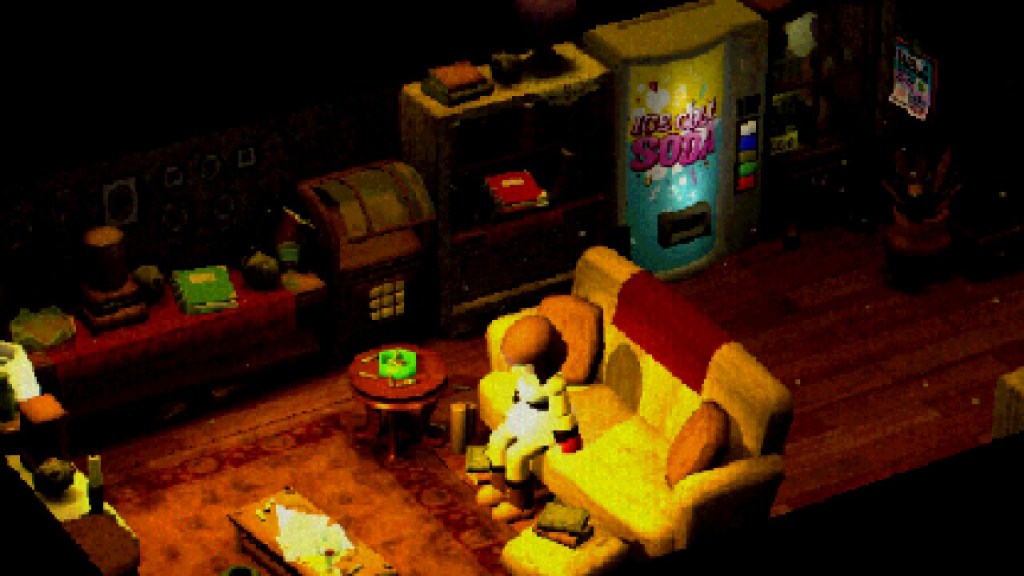
    Alone in the Dark (2024) is not some underappreciated masterpiece, but it is a smart and competently designed reimagining of the influential 1993 original. It plays as a third-person adventure – taking the same approach as Capcom’s Resident Evil 2 and 3 remakes – and transforms a terribly-aged classic into something that straddles the line between narrative-driven, puzzle-oriented “walking sim” and traditional survival-horror: think limited resources, weapon durability, gruesome monsters, and puzzling your through a sprawling mansion full of unorthodox locks.

    Entering a market dominated by recognisable IP it once inspired, replicating the success of recent titles like the Resident Evil 4 remake or Alan Wake 2 was unlikely; however, as a “AA”-style game priced accordingly, it sure as hell didn’t deserve to do so badly the developer Pieces Interactive was shut down a month after its launch.

    Like so many mid-tier and high-profile indie games released over the last decade, Alone in the Dark (2024) committed the unforgivable crime of just being good, rather than critically acclaimed; more often than not a death sentence for IP and sometimes developers in a modern video game market seemingly desperate to gorge itself to death on a never-changing buffet. Yes, the combat is clunky, but I’d argue every other element is good to great.

    The storytelling, the cast, the puzzles, and the thick atmosphere generated by the impressive visuals, ambience, and period-appropriate soundtrack; these are all essential components of a narrative-heavy horror game that takes you far beyond the walls of the Decerto manor. Even the voice work – criticised by those I’ll wager have not played beyond the opening chapter – is a great fit for the protagonists as they begin to question their own sanity and struggle with past trauma. When you throw in accessible gameplay mechanics, brisk narrative pacing, two playable characters with unique encounters, and multiple endings, Alone in the Dark (2024) gets far more right than wrong.

    Unfortunately, that means little in 2024, when talent and quality seem less important than the cosmic alignment of effective marketing, a quiet release period, and luck if a game wants to stand out in a marketplace that’s saturated, risk-averse, and increasingly dominated by the same established IP we’ve seen for decades.

    It’s a shame too that so many reviewers and commentators casually dismiss games like Alone in the Dark (2024) as “not good enough” in contrast to its “AAA” peers, as survival-horror fans are going to deprive themselves of one of the more interesting and stylishly told narratives in the genre. As a remake of sorts, Alone in the Dark (2024) obviously draws on concepts from the original, with ideas from Lovecraft novels and cliches you’d expect from a 1920’s period piece, but it weaves them into a briskly paced narrative with plenty of reveals, red herrings, twists, scares, and cinematic flair.

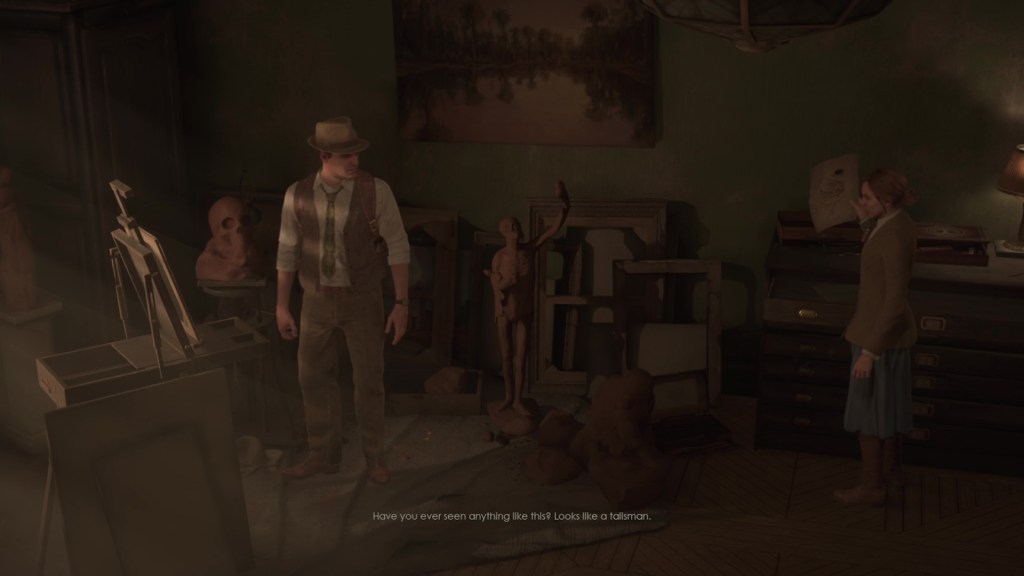
    Aristocrat Emily Hartwood and grizzled PI Edward Carnby arrive at Decerto Manor looking for her eccentric uncle, who sent a confused letter about a “Dark Man” haunting him and staff engaged in occult rituals. Unlike the original – in which he’s already dead and the abandoned manor is filled with an assortment of creatures and spirits – the remake is set in a dilapidated mental health retreat run by the condescending Dr. Grey and his evasive staff.

    Jeremy Hartwood has gone missing, some of the patients and staff have died or disappeared under mysterious circumstances, and yet those who remain only seem interested in preparing for a yearly ritual that supposedly has Louisiana Voodoo roots. After skulking through the creepy manor and encountering a few callbacks to the original, a search of Jeremy’s room reveals the designs for a mysterious talisman, before the protagonist you chose is pulled into a nightmarish version of the New Orleans French Quarter based on Jeremy’s twisted memories and wild imagination.

    It’s a slow but unsettling opening that suddenly changes pace and throws you in the deep end, setting the stage for how subsequent chapters will play out as you explore every inch of the manor and increasingly fantastical and often beautiful dreamscapes. The dual-protagonist setup is designed for replays, despite functioning more like the original Resident Evil than Resident Evil 2’s connected A/B scenarios. There is plenty of overlap when it comes to puzzles and progression, but the focus of the story changes and, until the default finale, you’re always left wondering if anything they experience is real.

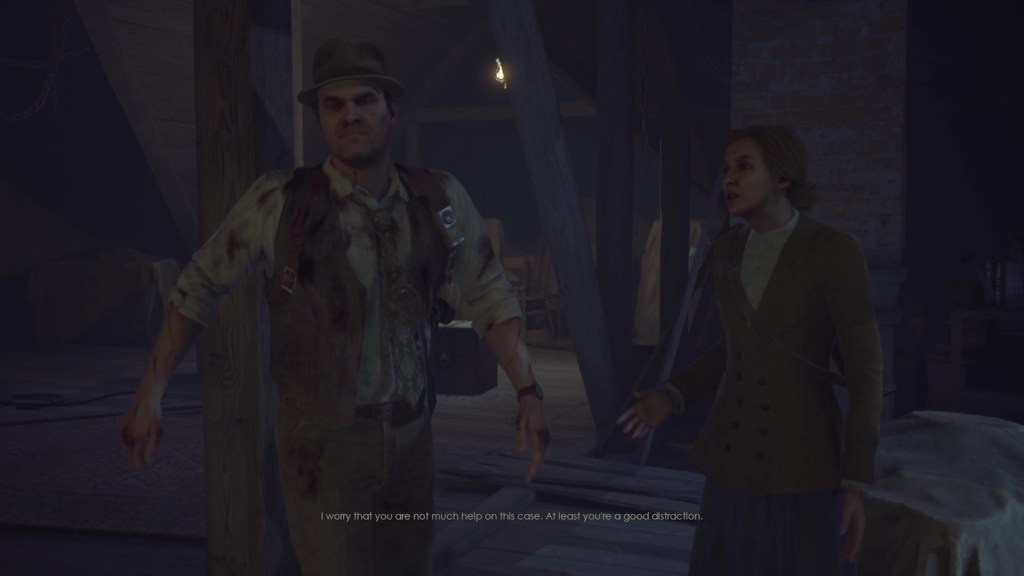
    Emily sinks into melancholy as she deals with Dr. Grey’s insinuations and tries to discover if the “Dark Man” man haunting her uncle is an actual curse, or just the manifestation of her family’s mental health history. In contrast, Carnby spends more time investigating the cult-like activities of the staff, while becoming increasingly manic in his attempt to save Jeremy from an occult contract – seemingly to make up for past failings.

    During the opening chapters, with identical puzzles and combat scenarios, the differences between the Emily and Carnby feel limited to when and where they encounter the secondary cast, and the nature of their interactions influenced by their personality, gender, and history. Whoever you’re not playing as becomes a foil for the lead, seemingly oblivious to the supernatural elements and often a source of humour when their paths converge. The second of five chapters gives you a little freedom as to the path you take through the manor, but the payoff is the lengthy fourth chapter that lets you tackle three objectives in any order and features a unique section for each protagonist that delves into their suppressed memories.

    If you want to get the full picture – or one of three secret endings based on collectibles and optional interactions – two playthroughs are essential, and all the more enjoyable thanks to a new-game-plus update that adds in new encounters and some unexpected scares.

    What I’m getting at is don’t leave games like Alone in the Dark (2024) languishing in the dark if you’re a fan of the genre – just because some circle-jerk internet chorus believes video games are worth little unless they attain a poorly-defined and often inconsistent “critically acclaimed” status. If this sort of hit-or-fail-terribly mentality continues, we’ll end up in an era of high-production value, low-risk, “AAA” homogeneity – a feat many large publishers have already attained with their remarkably expensive, polished, and heavily-marketed releases that are forgotten within a month. There’s still plenty of value in lower-budget and appropriately priced games that are just good, or hell, just interesting, especially when the quality of entertainment is so subjective anyway.

    Alone in the Dark (2024) was played on Xbox Series S|X. It’s also available on PC and PS5.

  • Review: CONSCRIPT (Nintendo Switch)

    Review: CONSCRIPT (Nintendo Switch)

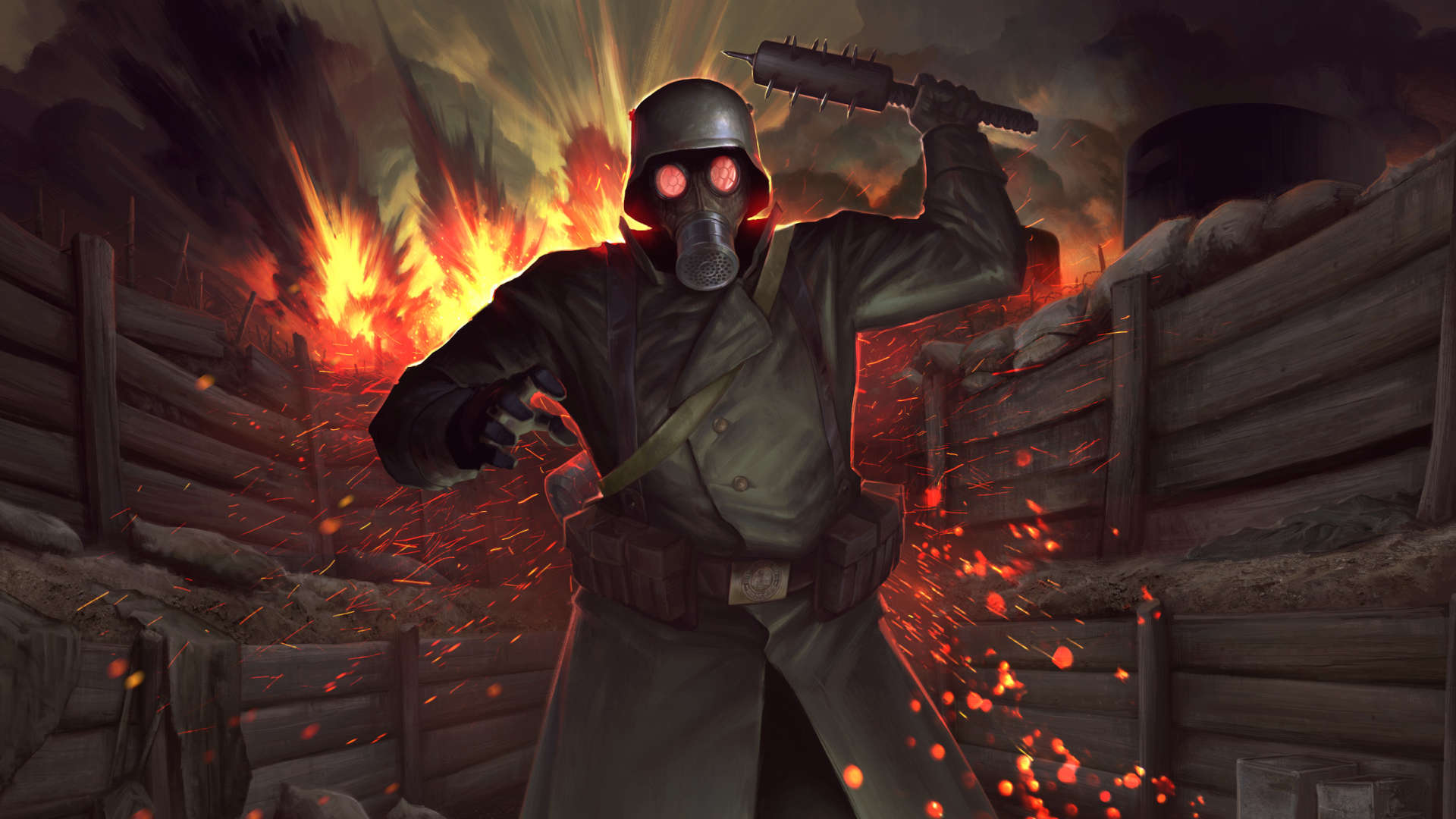
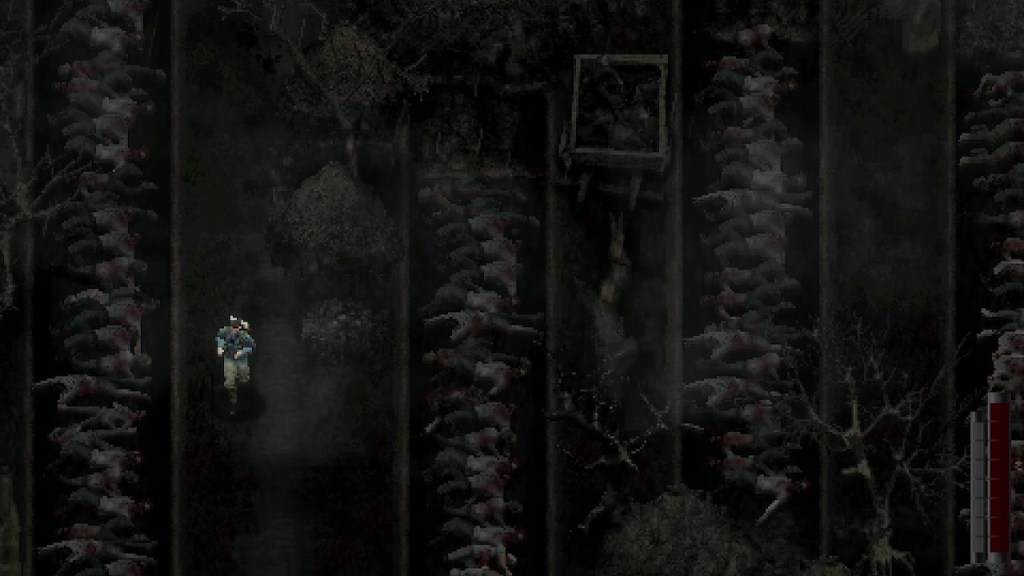
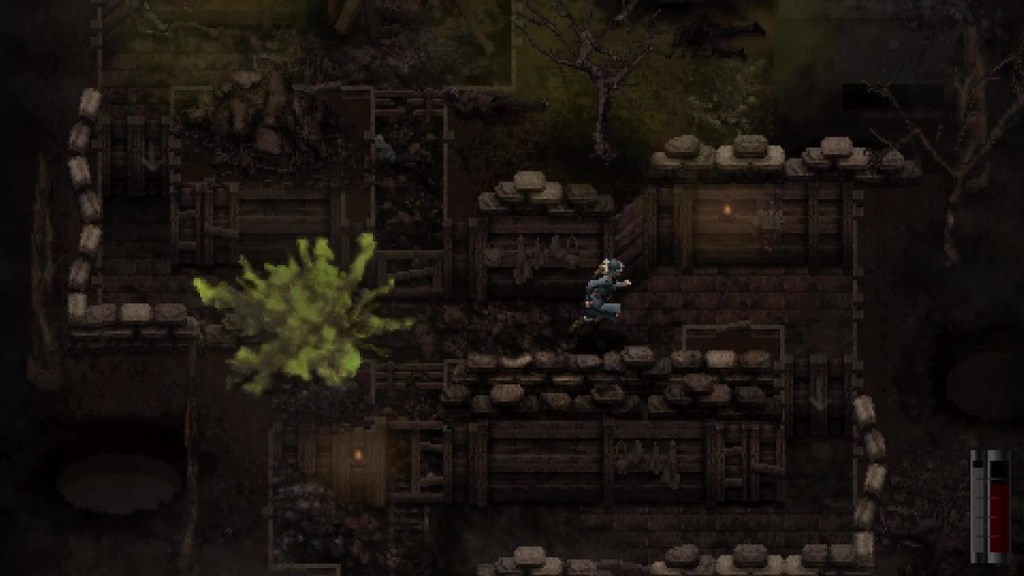
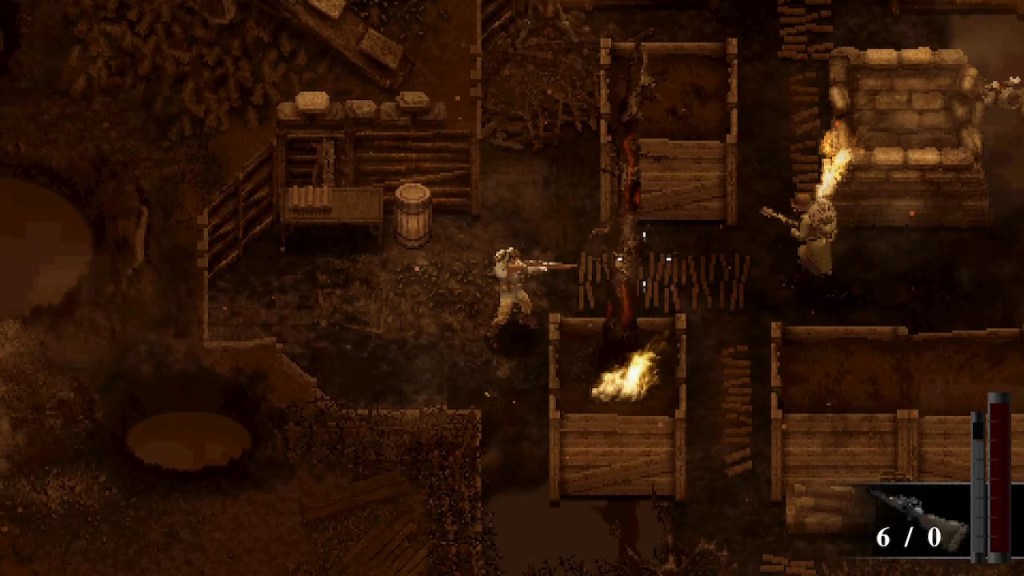
    CONSCRIPT is a gruelling reminder that war is hell and being too committed to old-school design is always a risk. Even as a fan of classic survival-horror, playing through CONSCRIPT on the default settings – the third of four difficulties, no checkpoint saves, no infinite saves – made me realise just how meticulously balanced the best games in the genre are, and how fine a line there is between challenge and frustration. That said, if you stick with it (or use the assists and abandon the unlikely prospect of an initial S-rank run), you’ll find CONSCRIPT a worthy and terrifying addition to the genre; one that combines elements of classic Resident Evil and Silent Hill with the more recent Signalis and Amnesia: The Bunker.

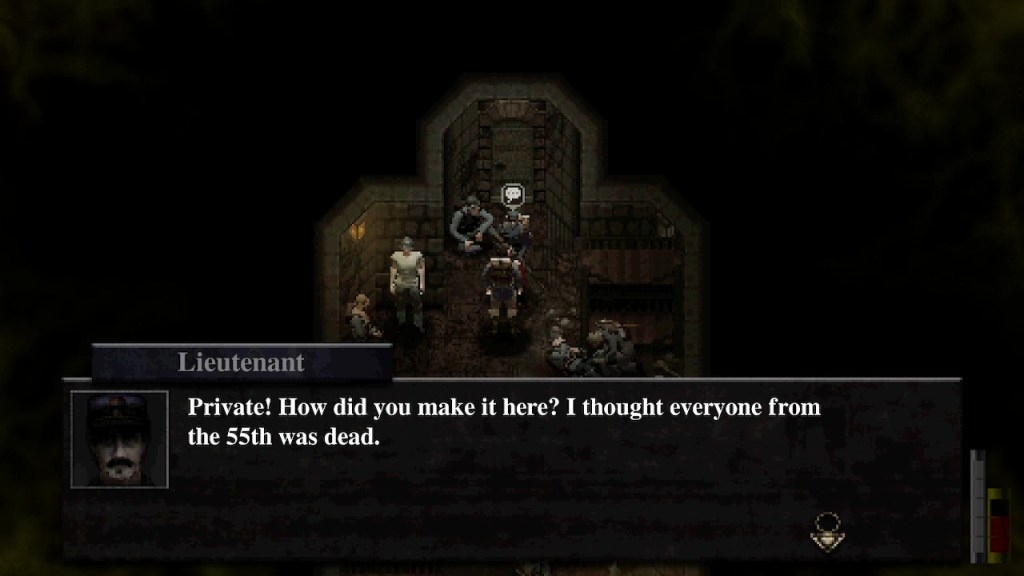
    You could be cynical and accuse CONSCRIPT of being too derivative, but it’s well-designed, polished, and almost shows reverence for games it draws inspiration from – rather than blatantly highlighting those connections to make up for the lack of a unique identity. With a lot of emphasis placed on the sombre tone, your actions when faced with a seemingly futile situation, and multiple endings, it’s a surprisingly low-key but relentless game that felt most similar to Silent Hill 2. A brooding atmosphere, gorgeously gruesome pixel art, unsettling ambience, and minimal spectacle all ensure the focus remains on a vulnerable protagonist trying to survive a hellish situation, while enduring trauma that forces them to question their own values, courage, and sanity.

    Over the course of six chapters – with brief interludes that reveal events leading up to his conscription – French soldier André finds himself part off one of the last major German offensives during the infamous Battle of Verdun; a 10-month period during which border forts, trench lines, and towns were changing hands almost daily, with staggering losses on both sides. His overarching goal is to find his injured brother Pierre, but video game logic dictates nothing can be straightforward, even less so in the survival-horror genre where every task is a succession of contrivances. Over the course of several days, he’ll witness the French frontline collapse; he’ll serve as a runner to gather reinforcements; he’ll retake a fort and storm no-man’s land to capture German lines; and explore a ruined town to try find a way into another besieged fort his brother was assigned to.

    Intentional or not, CONSCRIPT is a timely reminder of the innumerable lives destroyed through warmongering, with fallen Germans as likely to drop a family photo as they are ammunition. From a purely gameplay perspective, it’s mechanically familiar and rewarding. You explore room by room for key items and supplies, with little direct guidance, praying that you stumble upon a save room and item box to manage your limited inventory. You decide on whether to expend ammunition to clear safe routes, leg it or roll past enemies while hoping not to take too much damage, or engage in some rudimentary stealth that’ll test your patience and likely double your playtime. There’s a mysterious merchant that’ll trade cigarettes and upgrade your weapons with gun parts, and you can assist rare NPCs who reward you with consumables to boost health and stamina. Aside from the fluid twin-stick style controls and light progression elements, it all feels incredibly old-school and your first playthrough is going to be dominated by blind exploration and excessive backtracking. However, the longer you play, the easier it is to appreciate the depth of the mechanics and how they both reward and punish different playstyles.

    As an example, upgrading basic weapons and scavenging, crafting, or trading for ammunition will usually keep you ahead of the curve if you want to dispatch every German soldier you find; however, without patching damaged sections of barbed wire, more German troops can appear. More problematic is how fresh corpses results in rat swarms that can inflict a poison status that reduces your total health. For aggressive players, this makes it all but mandatory to burn bodies and toss grenades into rat nests in your most frequented areas. On the other hand, crude stealth, running like hell, and using rare opportunities to sit out battles make it easier to preserve supplies and avoid the rat threat, but it becomes a lot harder to complete several objectives and avoid taking damage – especially when dealing with firearm-wielding foes. Naturally, how you play, who you help, and how thoroughly you explore for clues and collectible items can dictate which of four endings you receive (with more hopeful and depressing variants available too).

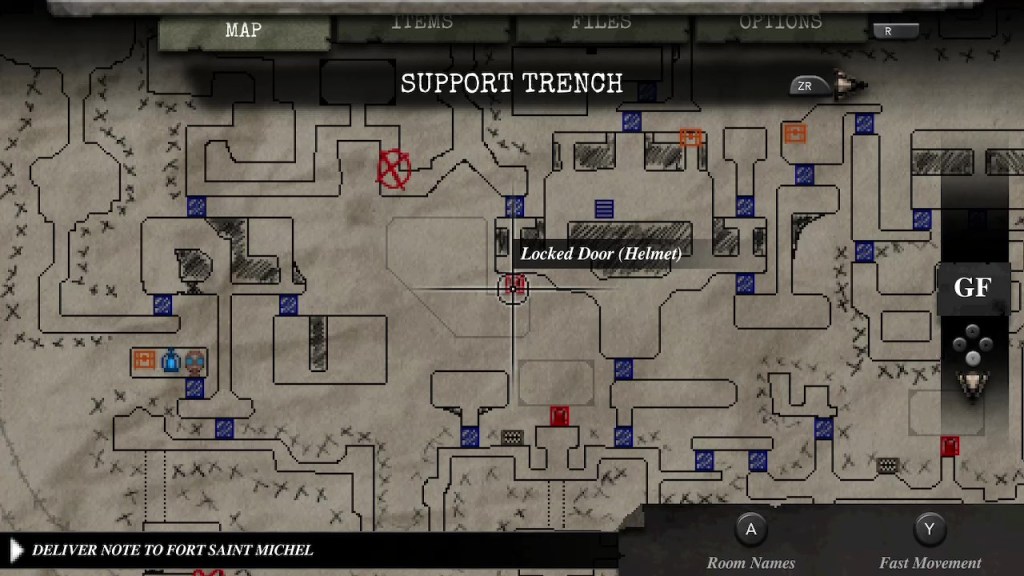
    It all makes for a familiar but satisfying take on the genre – but CONSCRIPT has one notable flaw: questionable map layouts that makes backtracking frustrating, even if you’ve cleared a safe path through them. You traverse dozens of interconnected maps that encompass the ruined outskirts of St. Michel in the south, the frontline trenches and a fort near Souville, and the besieged Fort Vaux and adjacent town to the north. Each chapter tends to focus on thoroughly exploring one area – often above and below ground – and, initially, there’s a satisfying rhythm to finding key items and opening new routes back to rare safe rooms. However, from the third chapter onwards, you encounter more maps with winding routes between exits, large areas with few shortcuts, and no obvious reason why it should be that way other than to drag out the experience.

    Of course, this has always been a potential issue in classic survival-horror games, but CONSCRIPT features larger outdoor spaces that take far longer to traverse. It makes that contrived structure of key hunts and convoluted puzzles that much more obvious, illogical, and just annoying at times. As a consequence, even fans of the genre might find parts of CONSCRIPT tedious – but I would recommend you stick with it as it gets far more right than wrong. Also, despite the serious content matter and oppressively grim tone, it’s a rare treat to play a survival horror games devoid of zombies and secret laboratories.

    Pros:

    • Classic survival-horror gameplay
    • Evocative pixel-art visuals and moody ambience
    • An unusual setting for the genre
    • A relentlessly grim but topical reminder of war’s human cost

    Cons:

    • Map layouts can make puzzling and backtracking frustrating in some chapters

    Score: 8/10

    CONSCRIPT was reviewed on Nintendo Switch using a code provided to gameblur by the publisher. It is also available on PC, Xbox One/Series S|X, and PS4/5.
  • Editorial: Phantom Fury takes too long to get good in an age when no one has patience

    Editorial: Phantom Fury takes too long to get good in an age when no one has patience

    Phantom Fury requires several hours of patience before it starts to shine – and even then, you’ll have to endure a considerable degree of jank and inconsistent quality throughout. In an era where competition is fierce and patience non-existent, it received middling reviews and predominantly negative user scores. Perhaps more annoying for the fans of the genre, Phantom Fury was yet another retro-inspired shooter published under Gearbox, which must have suffered from a turbulent development cycle. It’s got plenty of B-movie charm, solid shooting, and some standout level design, but these moments are interspersed with clunky or dull sections, often designed to highlight derivative and undercooked mechanics that ultimately dilute the experience rather than enhance it.

    Phantom Fury serves as a sequel to 2019’s Ion Fury and a prequel to 2016’s Bombshell which first introduced bomb disposal expert Shelly Harrison. It features all the cliched villainy you’d expect, with power-hungry military men, unethical scientists, no shortage of betrayals, and plenty of cringeworthy one-liners. It dips briefly into Shelly’s past to flesh out her character, and it even features a cameo from John Blade – protagonist of 1998’s Sin – who gifts you his iconic magnum for the finale. That said, it’s not a game you should play for the plot as, at best, it provides a barely coherent excuse to push you from level to level and provide some justification for Shelly’s vendetta.

    Unlike Ion Fury – which used a modified version of the Build Engine that powered its inspiration, Duke Nukem – Phantom Fury emulates classic 3D shooters, such as Quake II, Half-life, and Sin, using an Unreal Engine 4 build that’ll look and feel familiar if you’ve played Graven. Rather than blisteringly fast movement, snappy shooting, coloured key hunts, and gory sprite-work, Phantom Fury is a more grounded 3D FPS, with greater verticality, more physics objects, more complex set-pieces, and chunkier gore – but also an identity crisis.

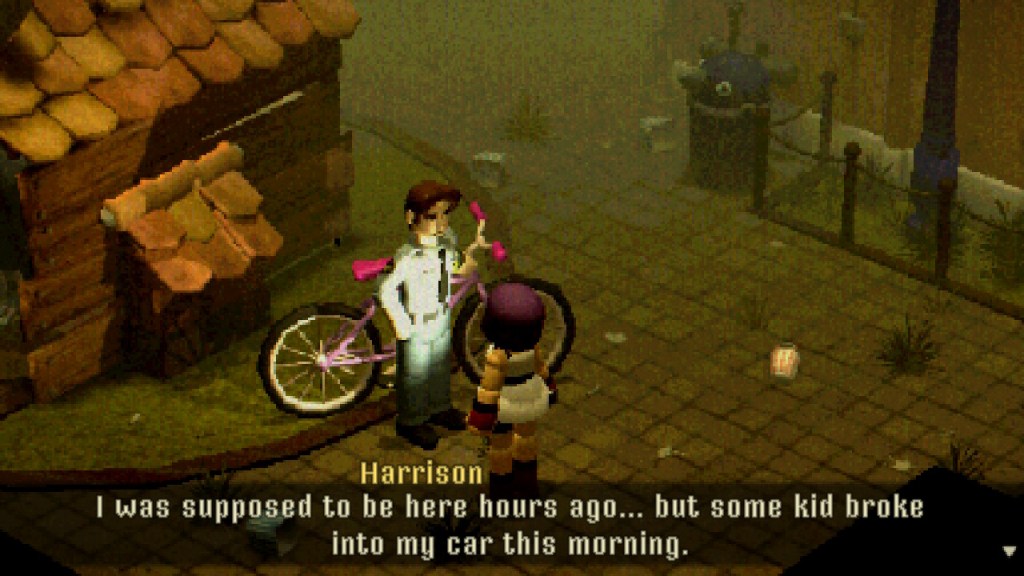
    The opening level provides a hint of what’s to come, as you’re forced to read emails for codes, manipulate devices using terminals, stack crates, sneak through vents, and enter “0451” on a keypad to progress – all while being bombarded with updates to your mission log. It’s not bad in and of itself, and I’d argue a game like Graven benefitted from exploration, puzzling, and secret-hunting that was more enjoyable than the combat ever was. My issue is that Phantom Fury could stand on its own two feet as a pure FPS. It offers a diverse and situational arsenal, and plenty of mid- to late-game encounters that’ll test your mobility, tactics, and aim.

    However, the first third seems unfocused, happy to funnel you between bland corridor firefights against a small and familiar roster of enemy archetypes, frequently interspersed with gimmicky and janky set-pieces. The early game also saddles you with just a basic pistol, a pitifully weak pump shotgun, and the iconic Loverboy revolver that is still powerful, but also less reliable at locking on to enemies for a double-tap. To rub salt in the wound, my settings would often reset when loading a save, the weapon-wheel could stop working until I paused and un-paused the game, and rare hard crashes had a nasty habit of happening right at the end of gruelling battles or boss fights.

    Yet despite those issues, by the time I entered the White Sands laboratory near the 3-hour mark, with nearly half the arsenal unlocked, Phantom Fury was starting to feel more like the iconic 3D shooters it wants to emulate. It pushed me to keep mobile, prioritise targets, constantly swap to the most effective tool for the job, and hoover up health and ammo pick-ups amidst the chaos.

    The degree of interactivity in the game world felt less like puzzle-based roadblocks, and more integral to the combat experience. Exploding barrels and steam vents sent enemies flying; the crates and walls I used for cover could crumble under fire; while in the background glass and props shattered, alarms went off showering the area in water or smoke, and soundtrack ramped up and down in sync with the action. Holding objects as shields or flinging them as weapons never felt reliable, but Shelly’s bionic arm allowed me to punch melee enemies into gibs or briefly block incoming fire as I got close with the triple-barrelled Motherflakker shotgun in hand.

    It was also around that point the level and encounter design began to feel a little more refined, consistent, and polished. Phantom Fury follows the traditional design of tight corridors leading into open arenas, but each level felt more interconnected and made better use of 3D space. You would emerge above or below areas you fought through earlier, open up smart shortcuts back after completing a sub-objective, while a greater variety of enemy archetypes would limit your ability to hunker down behind corners.

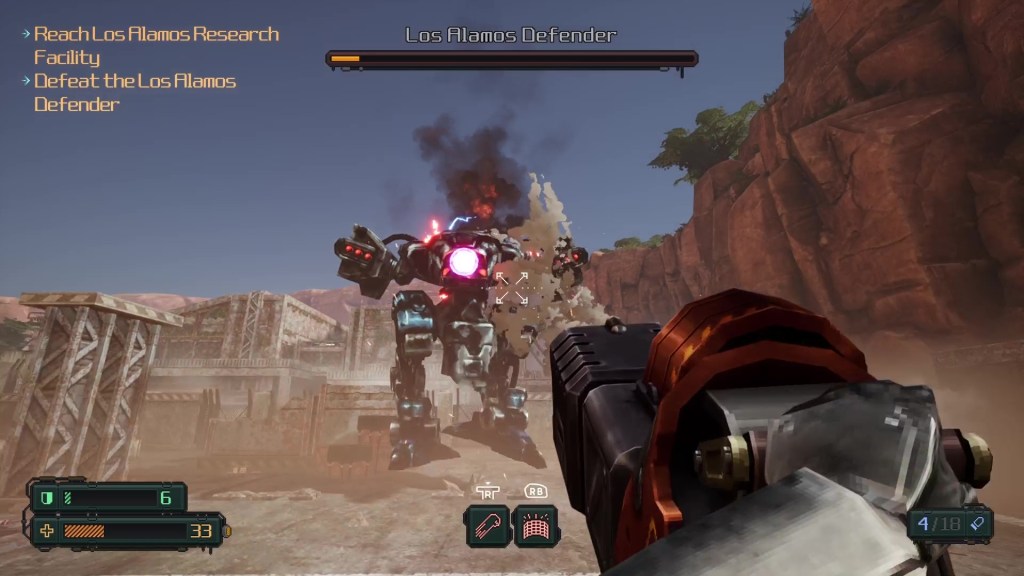
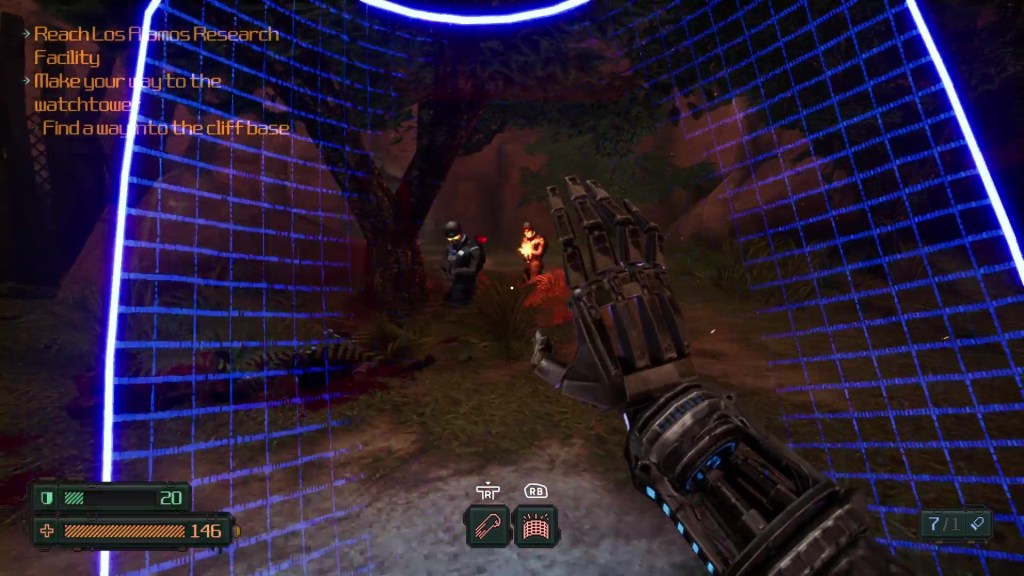
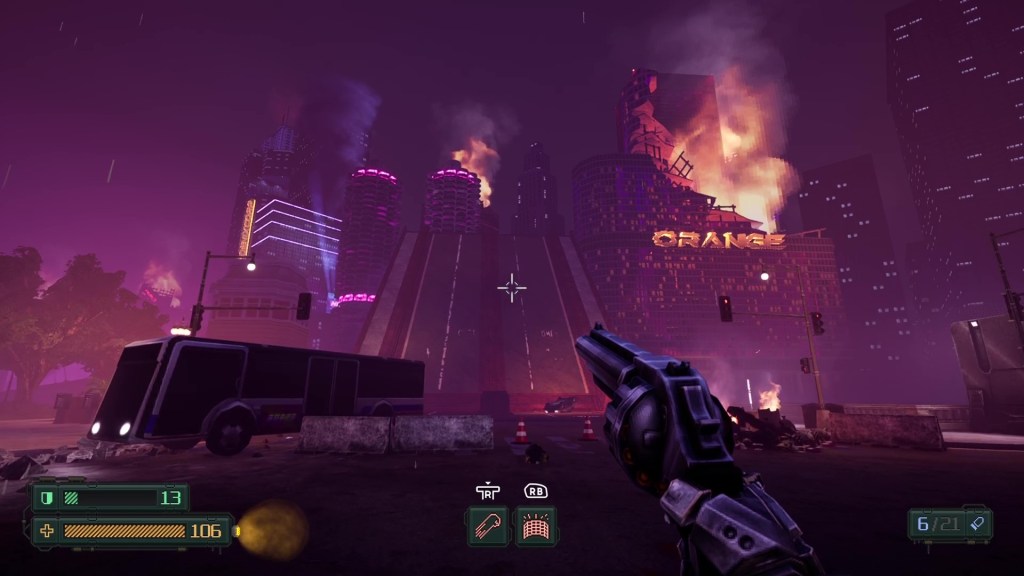
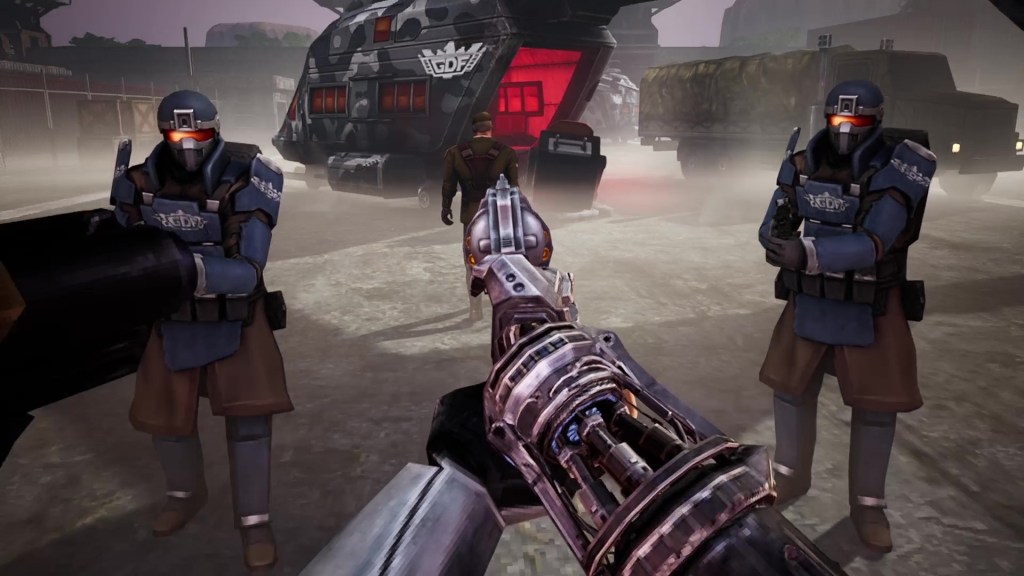
    Standout examples include the aforementioned “Buried Lab” that takes inspiration from Half-life’s “Blast Pit”, as you work your way around a central chamber reactivating a locked-down facility, dealing with rogue GDF forces and escaped mutants. After that came the “Train to Flagstaff” level, which sees you battling through claustrophobic carriages, before fighting your way back across the top of the train and fending off a helicopter. The “Grand Canyon Facility” is another interconnected laboratory level with some great vistas, while the “Los Alamos” levels begin with an outdoor rampage and giant mech battle, before completely shifting gear as you explore a creepy abandoned facility, juggling power distribution to access new areas and fending off mutants in the dark. The game culminates with running battles through the ruined streets of Chicago, a scrappy firefight up a skyscraper, and multi-phase rooftop boss battles.

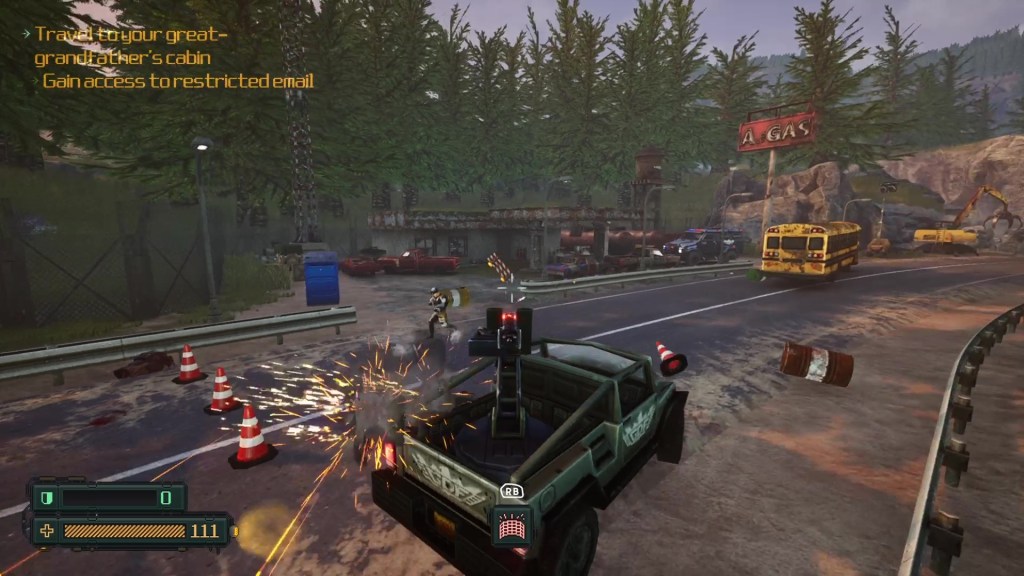
    Unfortunately, Phantom Fury’s is also described as a “road movie adventure”, which means vehicle sections that range from mediocre to frustrating. Your first encounter with a GDF jeep makes the Warthog sections in 2001’s Halo look remarkable in comparison, with clunky handling, boring terrain, and a useless machine gun that takes an age just to kill a basic grunt. A section in a stolen jet is entirely on-the-rails, leaving you to simply aim and alternate between another useless machine gun and moderately more useful missiles. A submersible section is perhaps the worst, combining imprecise movement with inaccurate torpedoes and swimming mutants that’ll insta-kill you if they get close.

    None of these sections are particularly long in the grand scheme of things, but they’re sandwiched between the good levels, felt the most janky, and always served as a downer.

    As a consequence – and even after two major patches – it’s not easy to recommend Phantom Fury without highlighting the caveats. After a plodding opening hour or two, it gets into a groove – but it’s one that’s periodically interrupted by weak vehicle sections. What’s worse is that they never feel like a core part of the gameplay loop – just gimmicky additions that would have been better left as short cutscene transitions so the devs could double-down on polishing the on-foot sections. If you’ve got this far though, I’d say fans of the genre should grab it on a sale, just temper your expectations for an hour or two, and try focus on the 80% of the game that Phantom Fury gets mostly right.

    Phantom Fury was played on Xbox Series S|X using a code provided to gameblur by the publisher. It is also available on PC and PlayStation 5.

  • Retrospective: Ryse: Son of Rome (2013)

    Retrospective: Ryse: Son of Rome (2013)

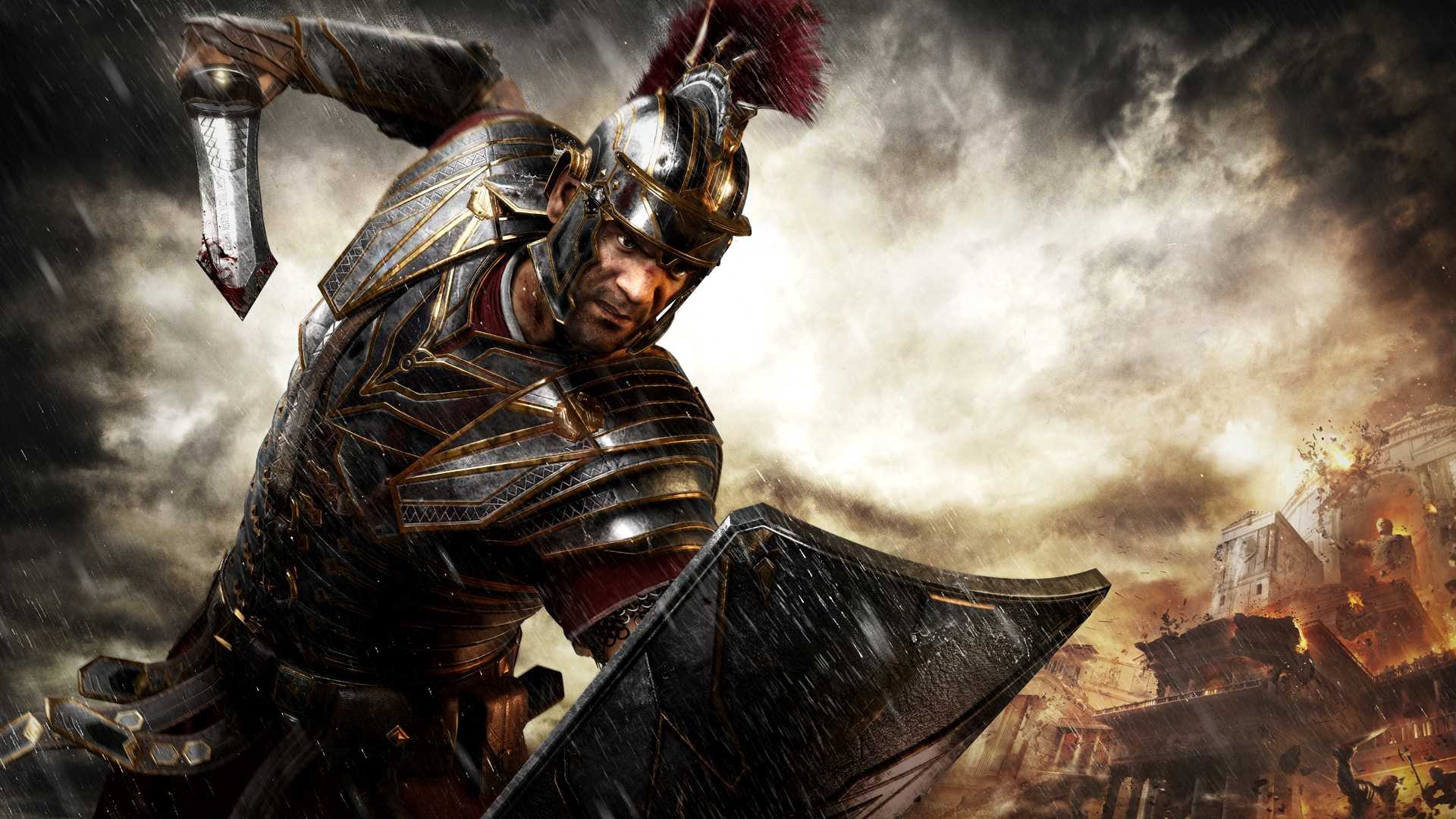
    I only picked up an Xbox One three years into the last generation, and Ryse: Son of Rome didn’t even enter my mind when I was looking for what few exclusives I’d missed. I eventually added it to my library when it was heavily discounted and promptly ignored it for another 5 years according to my transaction history. Having finally played through the campaign mode in 2024, two thoughts stood out: one, the negative sentiment towards Xbox after the botched Xbox One launch must’ve been severe if both this game and IP were swiftly forgotten; and two, I really miss big-budget games that could be completed in a dozen or less hours, and had actual endings that let me walk away with a sense of completion.

    Which is not to imply Ryse: Son of Rome is some underappreciated masterpiece. By 2013 standards, it would have felt distinctly average aside from the technical highlights. By 2024 standards, I found some of its flaws now feel like positives – so long as you go in with your expectations in check. It functions as a compact version of the formulaic action-adventure that now dominates blockbuster games: a third-person perspective with lavish character models and animations; a strong focus on the presentation with lengthy cutscenes for storytelling; and a cinematic flair to the action, with tons of canned animations and the sensation the game is sometimes playing itself for fear you interrupt the transitions into cutscenes. The only thing it’s missing is an open-world structure – which I now consider that a good thing.

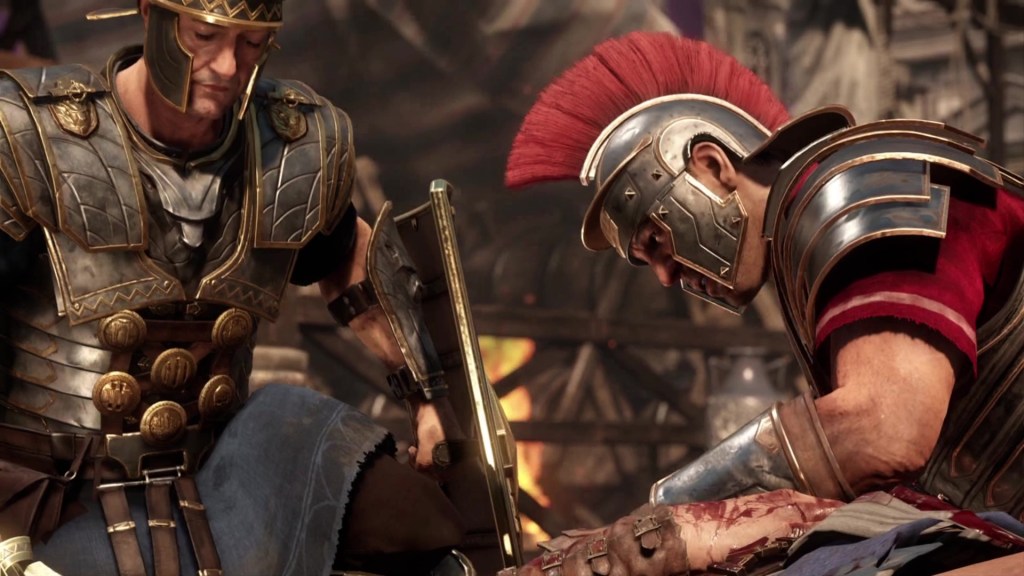
    What made it most enjoyable to me in 2024 was the pacing of its brief campaign; brevity that serves the gameplay loop well, as it probably wouldn’t hold up past the 8-hour mark, no matter how much audiovisual spectacle is thrown at you. You control Roman soldier Marius Titus, in an alternate history Rome, during the time of Emperor Nero (and yes, he has much the same physique as Demetrian Titus in Warhammer 40,000: Space Marine if that came to mind!). Political change is in the air and the vast expanse of the Empire is making it difficult to govern. After a chaotic prologue sets the stakes, Marius recounts his story to the emperor leading up to that point, beginning with a visit to his Senator father and family in Rome after completing his training. The reunion is interrupted when a barbarian war party raids the city; his mother and sister are on screen just long enough to die and provide motivation for another hyper-masculine, vengeance-driven campaign; and his father only lasts a little longer before telling him to save Rome in his dying breath.

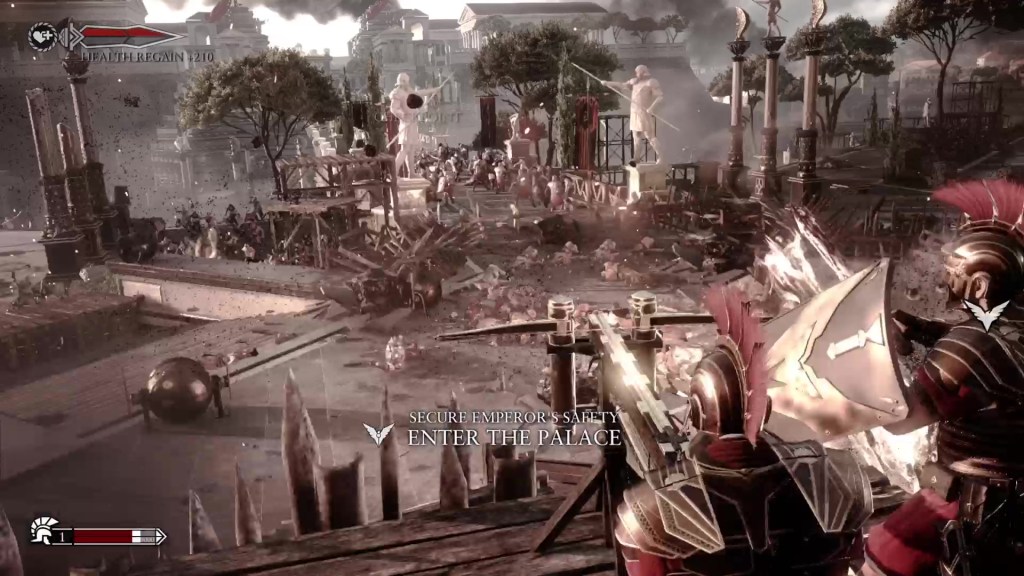
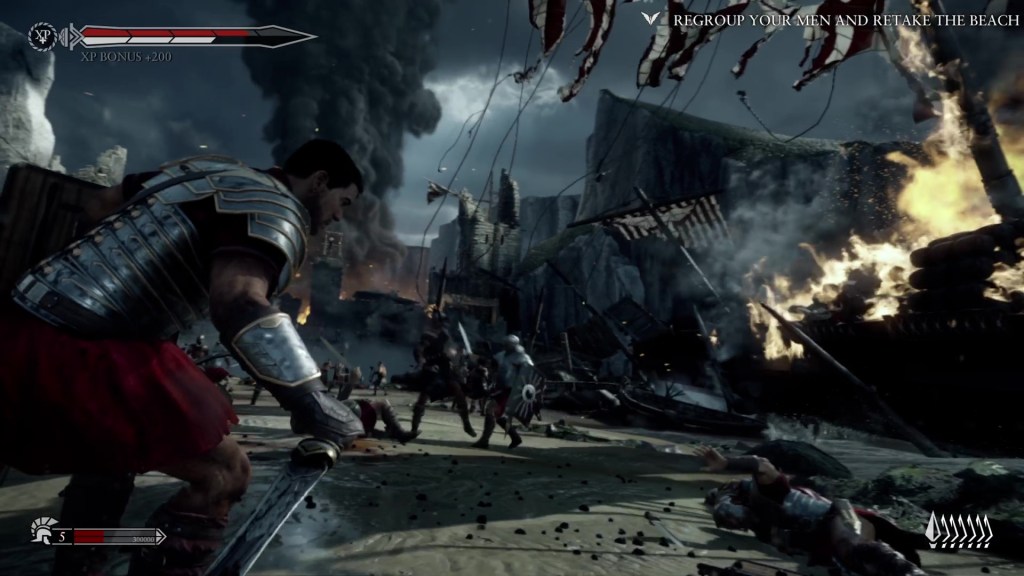
    What follows is a visually diverse and often spectacular campaign that’ll see you invade Britannia in the Roman equivalent of the D-Day Landings, battle southern rebels and wild Northmen in the fog-swathed Highlands, evacuate a fortress city under siege, and finally return to a collapsing Rome after Marius realises a cowardly emperor and his psychopathic sons might be the real problem as “barbarian” hordes rise up as a result of Roman oppression. Naturally, you’ll meet and kill several historical figures from legend in the process. On the sidelines, there’s another battle being waged by Roman gods trying manipulate mankind through prophecy and direct intervention, with Marius taking up the mantle of Damocles to enact revenge. I found the storytelling still holds up thanks to the impressive visuals and sense of scale (well, for the time), the lengthy but well-directed cutscenes, and some excellent voice work throughout.

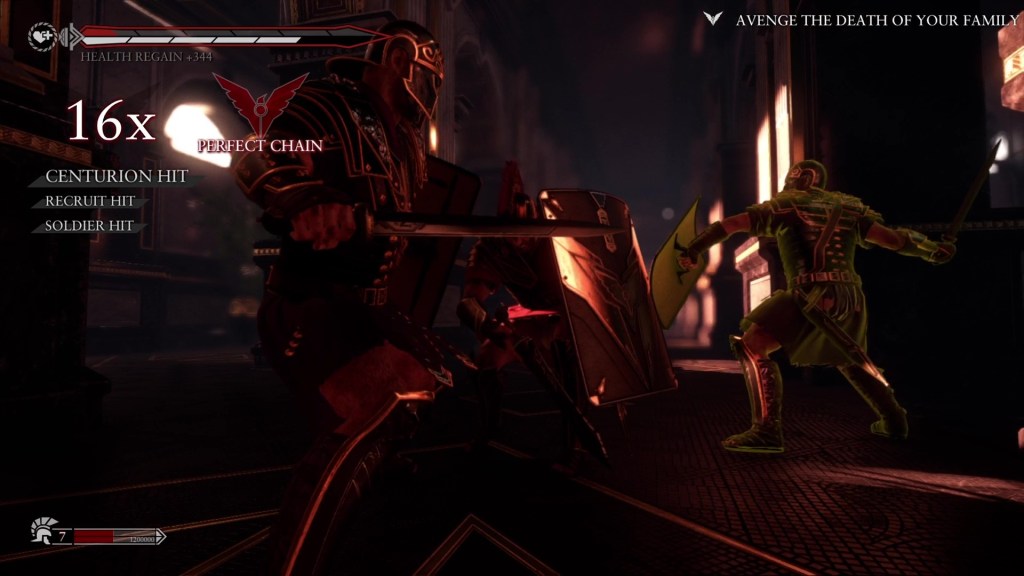
    Now I’ve got this far without discussing gameplay, as while tutorials make it sound complex, the mechanics are simple, satisfying, but increasingly repetitive by the end. Ryse: Son of Rome uses the classic attack, dodge, block, and counter rhythm that Batman: Arkham Asylum pioneered in 2009 – just with a sword-and-shield focus, less “gadgets”, and gory takedowns. You build up combos with basic strikes; you block or parry with your shield; dodge glowing attacks; kick or use charged attacks to break an enemy’s guard; use a focus ability to slow time for free hits, and trigger QTE-driven executions on a single or pair of targets. These executions never fail once started, but if you match the prompts, you get bonus points towards health and focus restoration, a temporary damage boost, or XP that goes into a perfunctory skill tree that boosts basic attributes and execution bonuses. It’s an intuitive enough system that looks and feels great when you hold off a surrounding horde and execute them all in gory fashion.

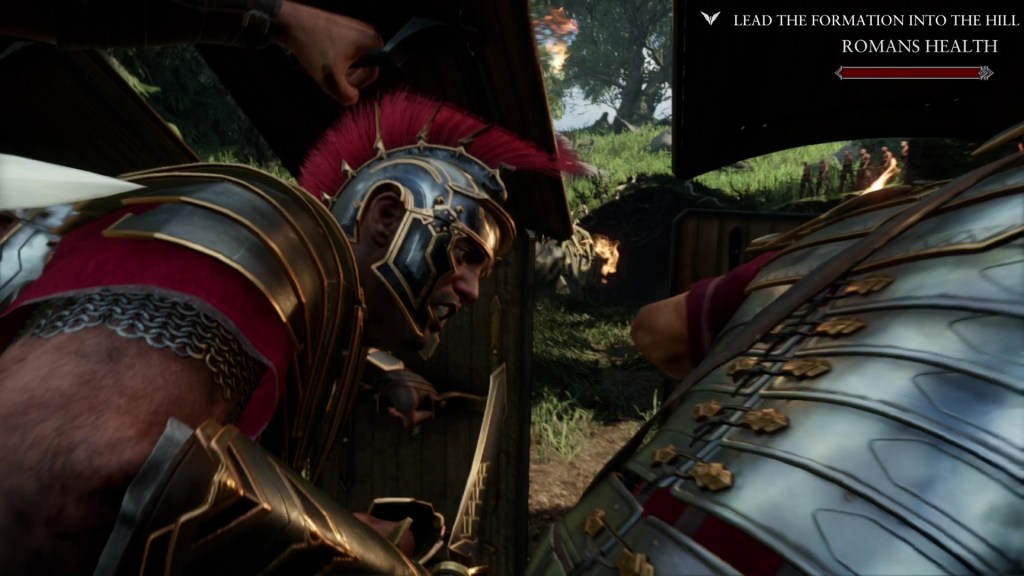
    The problem with Ryse: Son of Rome is that it barely evolves over what was a 7-ish hour campaign for me – possibly less if you just ignore the underwhelming collectibles. For the bulk of your playtime, you move down glorified corridors with beautiful and sometimes chaotic backdrops full of battling soldiers, frequently getting locked into combat arenas – sometimes literally – until you defeat all the enemies. If you’re lucky, there might be two paths you can take, or a dead-end with a collectible. To spice things up, you’ll sometimes fight alongside fellow soldiers, triggering sequences where you march in a shielded formation and fling spears at archers, defend a point by assigning shield-bearers and archers to cover paths, and even engage in turret sequences using implausibly rapid-fire crossbows. Each act also features a boss fight or two, but these are often simplistic one-vs-one battles that only ask you observe attack patterns in each phase, then trigger the right counter to chip away at their health bar. Even on higher difficulties, they’re underwhelming compared to common late-game battles that throw numerous enemy variants at you simultaneously.

    Now despite wrapping up on a negative note, most of my gameplay concerns only came to mind after I had finished the campaign and had time to mull over the experience. When you consider Sony released The Last of Us in the same year, pushing the technical limits of the PlayStation 3 and their storytelling ambitions, it’s easy to see why Ryse: Son of Rome failed to stand out. However, when you consider 2020’s The Last of Us: Part II now demands 25+ hours of trudging through misery interspersed with despair to see the end, I think there’s still good reason to return to older and shorter big-budget titles – even if they were considered unremarkable at the time. If you missed it at launch, Ryse: Son of Rome still offers a single satisfying playthough for those short on time but after a “AAA” experience.

    Ryse: Son of Rome was played on an Xbox Series S|X. It is also available on Xbox One and PC.

  • Editorial: Hammerwatch Anniversary Edition is perfect for those who love methodical dungeon delving

    Editorial: Hammerwatch Anniversary Edition is perfect for those who love methodical dungeon delving

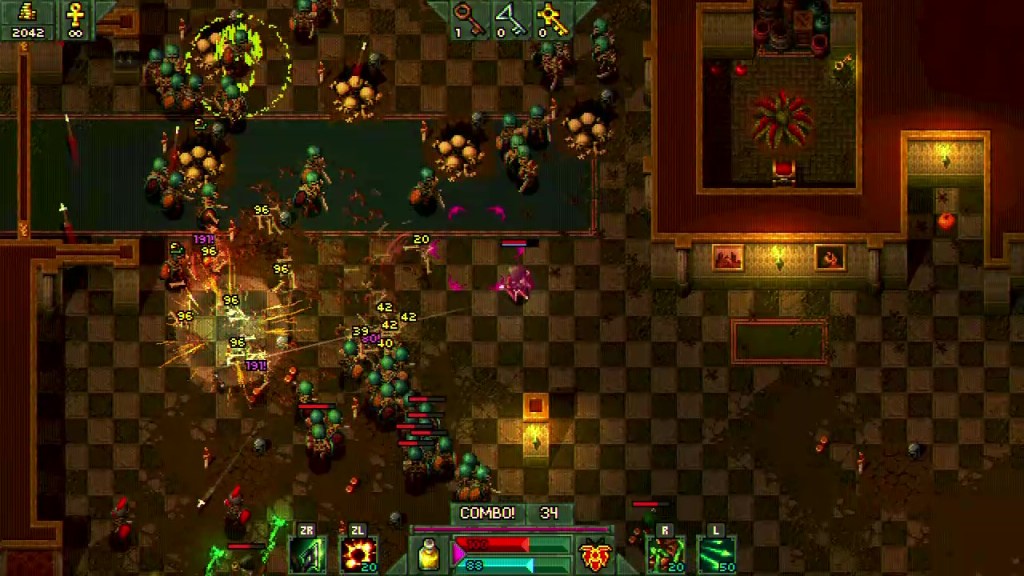
    If someone told me they thought the Hammerwatch games were boring, I’d be hard-pressed to argue despite enjoying them so much. The developers Crackshell were inspired by the early Gauntlet games from the mid- to late-’80s (something made obvious the moment you discover a secret level) so Hammerwatch offers up a mix of systematic exploration, switch and key hunts, hundreds of secrets to find, deadly traps to avoid, and chaotic combat against hordes of monsters and damage-sponge bosses – all of which feels much more exciting if you bring a friend or three along for the ride.

    The game uses a top-down perspective with gorgeous pixel-art and sprite-work, coupled with a catchy “8-bit orchestral” soundtrack from composer-duo Two Feathers that has been stuck in my head for over a decade. On paper, it sounds solid but unlike so many modern games, progression and pacing are rigidly methodical and formulaic, which won’t appeal to everyone.

    If I had to pick one argument as to why I love the Hammerwatch IP, it would be that the games feel like the antithesis of modern ARPGs like Diablo III or IV, Path of Exile, and Grim Dawn. All excellent games in their own right, but all with a focus almost entirely on character and gear progression through repetition. Even if they offer epic stories and stylish cinematics, their game worlds are designed for infinite grinding and many use procedural generation. As such, the layout of a dungeon rarely matters, there are few locations that feel unique, and it’s rare you get to make lasting change to the environment despite all your time and effort.

    In contrast, every campaign in the recently remastered Hammerwatch Anniversary Edition makes learning the level layout essential to finding exits, secret hunting, upgrading your hero, and surviving hordes of monsters and deadly traps.

    None of which makes Hammerwatch novel in the traditional sense – just pleasingly anachronistic in contrast to modern games, as it rewards systematically tackling everything on offer and there’s actually a finite amount. You push forward room by room, revealing the dungeon layout and expanding a useful auto-map; you keep an eye out for switches and traps; and you plan how best to kite enemies that’ll shred your health bar in seconds if you end up surrounded. Scattered checkpoints function as save and respawn points; food and potions keep your health and mana topped up; gold is spent on trainers to unlock or improve hero skills; while dozens of secrets range from more gold and accessories to extra lives, and there are even hidden collectibles if you want the “true” ending to some campaigns.

    Unlike many other ARPGs in which repetition equates to progression, Hammerwatch doesn’t have respawning monsters and there’s no XP or loot gained from slaying them. Instead, thorough exploration, hoovering up every last piece of gold, and secret hunting is how you improve your hero. Collectible power-ups provide an incremental but permanent buff to your core attributes; weapon upgrades, higher-tier offensive skills, and a bigger mana bar all boost your damage output; while upgrades to your armour level, defensive skills, and health bar make you more resilient.

    The more you explore and the more enemies you clear out, the easier it is to backtrack through sprawling levels on the hunt for the secrets and gold you need to become more powerful. Finding every power-up and upgrading everything is not essential but also can’t grind endless trash mobs if you’re having difficulty with a boss encounter.

    Played from a top-down perspective, with twin-stick-style controls and only a handful of abilities to consider per class, Hammerwatch is simple to pick up and the on-screen action is typically easy to follow – useful in a game where mobility and a bit of strategy also count for a lot. However, with the prospect of limited lives, the risk of stumbling into insta-kill traps, and tough boss encounters that can feel like bullet-hell shooters, it remains a challenging game irrespective of your chosen difficulty – at least if you stick to the default settings.

    Hammerwatch Anniversary Edition offers a short but useful list of modifiers, independent of difficulty, that you can pick from before starting a campaign. For new players (or those with an inexperienced co-op companion) infinite lives or bonus life pick-ups let you to focus on exploration and secret hunting with reduced risk. For wizards and warriors alike, buffs to health and mana regeneration can keep them in the fight without the need to backtrack for consumables.

    At this point, it’s worth wrapping up by discussing why I’m highlighting the more recent (and pricier) Hammerwatch Anniversary Edition, instead of the original release I first played a decade ago. Part of the that is simply to support the developer and hope profits eventually go to a console port of Serious Sam’s Bogus Detour (the best Serious Sam game since the original pair), but I also thought it would be useful given the developer’s website and storefront listings are surprisingly low on detail and initially put me off picking it up until it was suitably discounted. First up, the remastering effort is excellent – just in sense it looks like you might remember it. Go back and take a look at the original however, and the improvements to the artwork, sprites, atmospheric effects, auto-map, and control scheme are obvious and much needed.

    From a gameplay perspective, you have updated introductions and conclusions for each campaign that tie into the larger narrative introduced in Hammerwatch II; you have access to all seven classes with new customisation options and some nice situational voice lines; and there’s a simple tiered accessory system that add a little more diversity to character builds – though you can only carry one at a time.

    Most significant for returning players is the substantial “Shaftlocke Tower” campaign, which remasters assets from the rogue-like Heroes of Hammerwatch, and turns them into a traditional campaign even longer than the length of the original, packed with an expanding hub, more intricate levels, tougher combat encounters, more bosses, and more secrets. The only downside is that, if like me, you first replay the original Castle Hammerwatch and brisk Temple of the Sun campaigns back-to-back, Shaftlocke Tower can push that formulaic structure to breaking point.

    Wrapping up, despite the higher price point and the reworked “more of the same” approach to the new campaign, I’d still recommend Hammerwatch Anniversary Edition to existing fans, those that wanted a traditional campaign from Heroes of Hammerwatch, and as the best starting point for new players, whether on PC or any of the consoles – even if it took a few patches to get to the “definitive” experience. It’s not for everyone and fans of modern ARPGs might find it too dull – but if you get a kick out of systematically clearing dungeons, room by room, floor by floor, and hunting for secrets, Hammerwatch Anniversary Edition offers a lot of quality content and an indie price point.

    Hammerwatch Anniversary Edition was played on Nintendo Switch. It is also available on PC, Xbox One/Series S|X, and PS4/5.
  • Review: Crow Country (Xbox Series)

    Review: Crow Country (Xbox Series)

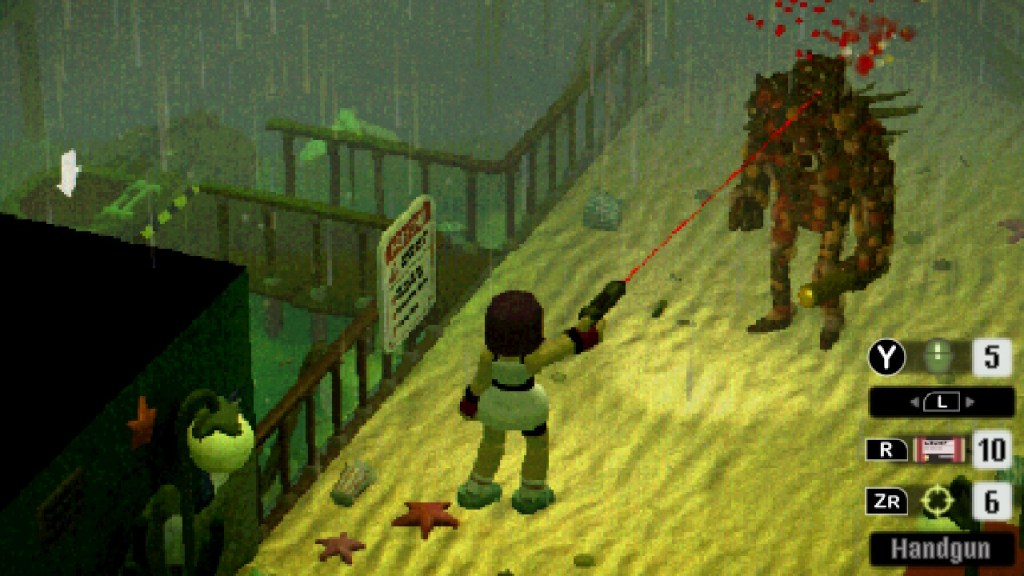
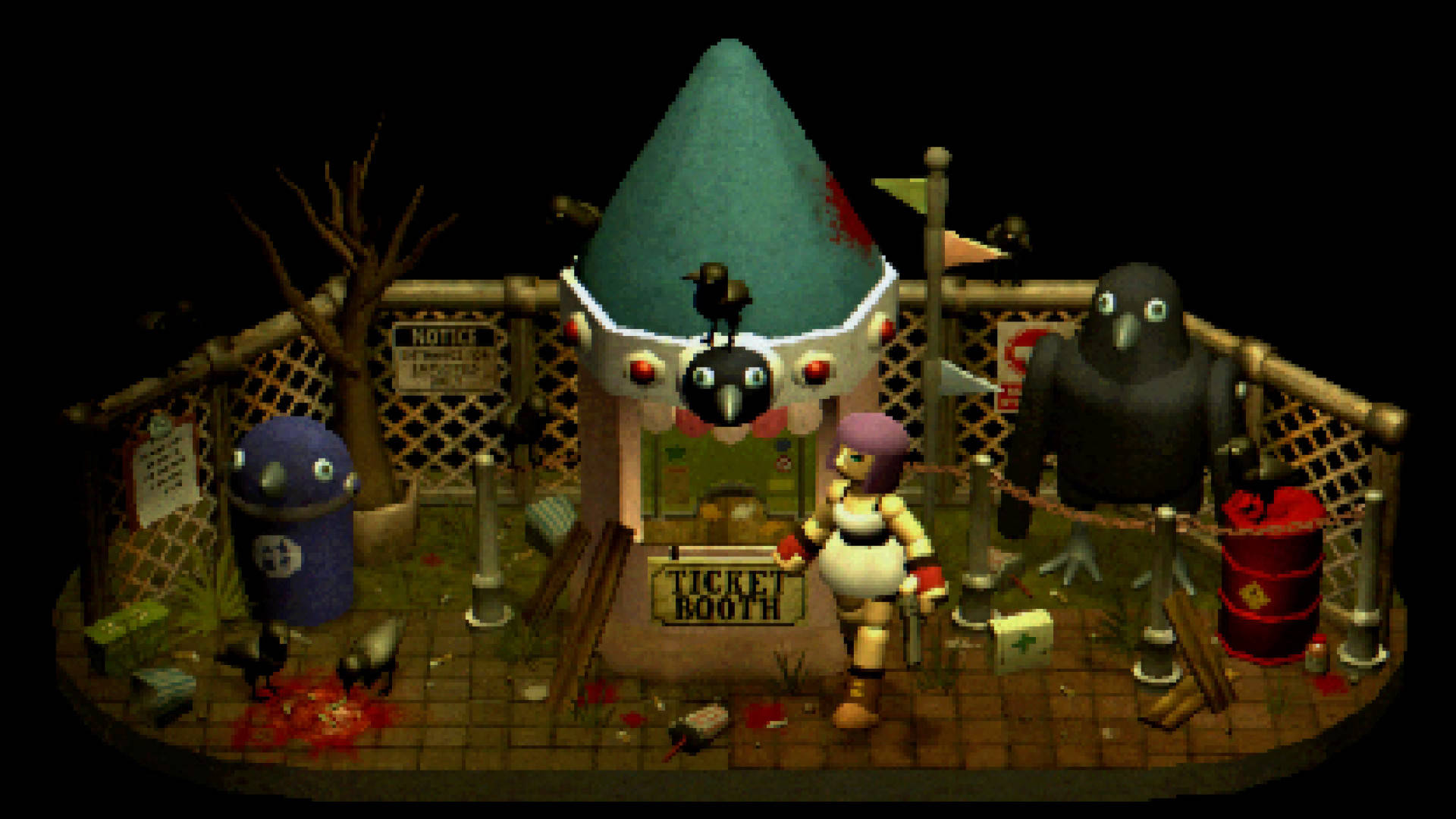
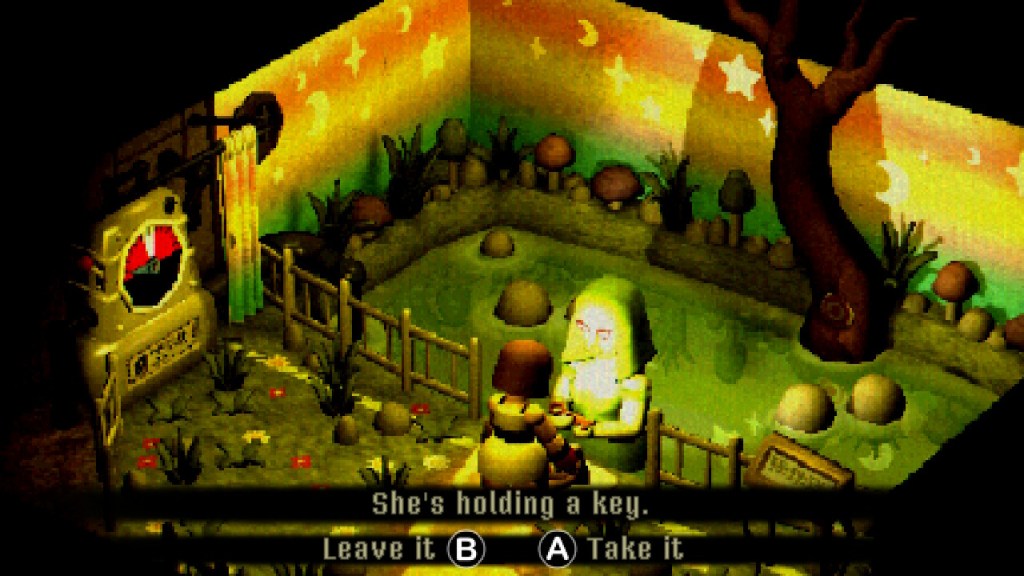
    Crow Country is an accessible retro-inspired survival-horror game that does an impressive job capturing the look and feel of early 3D isometric games that came out on the PS1 or SEGA Saturn during the late-‘90s. The structure and gameplay feel like Resident Evil with a hint of Parasite Eve II, while the environments feel like a mix of Silent Hill and any number of chunky JRPGs from that period. It’s a distinctly cute but creepy vibe. Viewed as a love letter to those classic games, it’s brilliant, but being dependent on those associations is also a mixed blessing. It’s smartly made and polished – but without that nostalgic hook, I’m not sure it has a unique identity like Lone Survivor or Signalis had.

    That said, Crow Country hits all the right notes as the opening leaves the player feeling vulnerable, unsettled, and confused. Mara – special agent Mara Forest apparently – is a capable but unreadable protagonist who is clearly keeping secrets from the player and the supporting cast. Arriving at the abandoned Crow Country amusement park, 2-years after an incident shut it down, she’s quick to shoot her way in through a padlocked gate; shrug off horrific encounters; wield a myriad of weapons; and solve convoluted puzzles that leave the other survivors stumped. Her connection to the park is unclear, and neither is the reason behind her pursuit of the missing owner, Edward Crow. She’s evasive in dialogue and even her comments on environmental details give only the slightest inkling of her personality and past.

    It’s not just Mara though, as many of cast were former staff and clearly complicit in the unfolding events. As a result, simply unravelling the mystery was a strong motivator to keep playing. What was the nature of the incident that shut down the park and drew the attention of a photojournalist and lawyer? Why have Edward Crow’s daughter, former colleagues, and a detective all arrived on this specific evening? What does an American amusement park have to do with a Brazilian gold mine? What are these bizarre creatures that the former staff refer to as “guests”? And who is Mara really? It’s a solid setup with some predictable and some unexpected twists. The environment changes over the course of the night, hinting more and more as to the nature of the threat – though the ending sequence is a bit of an exposition dump that expects you to read a note, midway through the final encounter, if you want all the details.

    After the narrative, it was the mandatory puzzles and over a dozen hidden secrets that hooked me. The amusement park setting, and an increasingly paranoid Edward Crow provide narrative context for the Resident Evil-style structure. As with that game, Crow Country gets a lot of mileage out of a small but dense location, so you’ll often know exactly where you’re trying to go – though you’ll only get there several hours later after jumping through an inordinate number of hoops. Thankfully, Crow Country has some great interconnected puzzles, rather than just hiding keys and data discs behind boss fights. They are present, I guess, but you can run away from everything (outside of the final encounter) and still make progress.

    In authentically classic fashion, you’ll be scouring the environment for key items, clues, and notes – with a handy map that marks the location of unsolved puzzles or points-of-interest to guide you. There are keypads and locks that just require the right code or key; there are logic puzzles that require entering the right sequence of events or the correct values; and there are arcade mini-games and plenty of weird use-item-on-object puzzles befitting the setting. The rest of the cast also have a role to play beyond storytelling as they sometimes provide you with clues or assist in a puzzle – though even if you completely ignore the few you aren’t forced to talk to, the ending variations are negligible.

    Of course, this is a survival-horror game and Mara is packing heat, so shooting your way through the park is a viable strategy if you’re methodical, tactical, and cautious. Sadly, while I love classic resource management, the combat is my least favourite element and goes hand-in-hand with the camera issues. The close isometric viewpoint is appropriately claustrophobic, but you’ve got to combine stand-and-aim shooting mechanics that use the left thumbstick, with camera rotation on the right thumbstick to track enemies. The system allows for precision targeting of item crates, weak-points, and environmental hazards well enough, but it snaps the camera in the direction Mara is facing, which is a real pain in the arse when you’re trying to clear some distance before turning around to shoot again. An option for classic tank controls provides a more reliable option for Mara’s movement, but my brain struggled to coordinate orienting by d-pad while simultaneously rotating the camera.

    Thankfully, Crow Country is not a particularly hard game, even if more monsters, traps, and even fake pick-ups appear as the night progresses – almost Parasite Eve II-style. There’s an “Exploration Mode” that keeps enemies passive, but even the ranked “Survival Horror” mode features an abundance of resources, easy to avoid enemies, and very few high-damage or insta-kill encounters. There are all the basics you would expect from the genre – useful shortcuts and smartly distributed safe rooms with soothing music and sources of fire that serve as manual save points – but you can also get hints from a fortune teller machine, refill pistol bullets from Mara’s car, rummage through dustbins and vending machines for supplies when you’re running low, and several secrets include overpowered weapons and upgrades. Playtime and the number of saves you make don’t affect the ranking score, so you can be super cautious and use the rewards from lower ranks to make subsequent runs much easier if you’re chasing an S+ rank or speed-running the game.

    Looping back to the start, Crow Country does a phenomenal job of emulating late-’90s survival-horror games, nailing the look, sound, and claustrophobic terror that those early 3D environments excelled at. It’s got an intriguing narrative and fantastic puzzles to keep you engaged during a brisk 5–6-hour initial run, though the wonky gunplay and camera control are more likely to frustrate than generate tension. As Crow Country can feel like a greatest hits collection of classic IP, it’ll most likely resonate with retro-gaming fans or those who grew up playing early survival-horror games – but given it’s so accessible, it might also be a good choice for those wanting just a taste of how classic survival-horror games played.

    Pros:

    • It does an great job capturing the look and feel of early 3D isometric games from the PS1 and Saturn era
    • The unravelling plot is intriguing and well-paced
    • The puzzles and secrets are smartly designed
    • It gets a lot of mileage out of a small but dense environment

    Cons:

    • The gunplay and camera are more likely to frustrate than generate tension
    • It can feel more like a homage to the classics than its own thing

    Score: 8/10

    Crow Country was played on Xbox Series S|X using a code provided to gameblur by the publisher. It is also available on PC and PS5.
  • Editorial: Warhammer Age of Sigmar: Realms of Ruin is a great case study on what does and does not work with console RTS

    Editorial: Warhammer Age of Sigmar: Realms of Ruin is a great case study on what does and does not work with console RTS

    As someone who has always enjoyed playing real-time strategy ports on console – going all the way back to Command & Conquer and Red Alert on the PS1 – Warhammer Age of Sigmar: Realms of Ruin feels like a case study on what does and doesn’t work when you have to work around the limitations of a gamepad.
    During the cinematic-heavy campaign, there were times I was reminded of the methodical, scripted approach Blizzard pioneered with the StarCraft and WarCraft III – a design that works well enough on console when the player has more control over the pacing. The rest of the time – by which I mean a third of the campaign missions and every other mode: AI skirmishes, Conquest, or multiplayer – it often felt like trying to play a fast-paced, lane- and territory-control-focussed MOBA with a severe handicap.

    Starting with the positives, there’s a cinematic 18-mission campaign, with four difficulty settings and optional mission challenges, complemented by AI skirmish maps and a Conquest mode – think a succession of increasingly tough skirmish maps with modifiers. With beautiful environments, detailed character models, and intricate unit animation, Warhammer Age of Sigmar: Realms of Ruin’s in-engine cutscenes do an impressive job presenting another grim, violent, yet often amusing and absurd Warhammer story. It’s full of contrived scenarios, improbable attrition rates, one-note faction leaders making poor decisions, and – more so than any recent RTS I can think of – it shamelessly functions as a glorified tutorial for basic commands, faction abilities, and game modes.

    The Stormcast Eternals seek an artefact of power that may help them reclaim the Region of Ghur; the Ork Kruleboyz are in pursuit of the same prize to elevate the status of their Warboss; and a few flashback missions reveal how The Disciples of Tzeentch originally battled the undead Nighthaunt faction for possession of the artefact. It’s all stylishly presented and – if you can get to grips with the gamepad controls and gameplay basics – the campaign is decent fun and moves at a brisk pace, switching up factions, objective types, and introducing a few novel scenarios. There are times you’re just battling from point-A to point-B down branching corridors, claiming Arcane Conduits to build outposts and generate resources as you go, but there are a few missions that rely almost exclusively on heroes; one that functions as an unforgiving tower defence; one that features clunky stealth; several that have you battle over control points, and even gimmicky boss battles that add some twist to chipping away at a giant HP bar.

    The campaign also serves to highlight what the control scheme and game design gets right. Much like the underappreciated Halo Wars 1 and 2, Warhammer Age of Sigmar: Realms of Ruin focuses on streamlined base-building, managing only two resources, and smaller skirmishes influenced by unit composition, positioning, and the strategic use of abilities – more so than sheer numbers. You can upgrade you primary building to recruit new unit types and unlock three-tiers of unit and outpost upgrades – many of which are mutually exclusive abilities or passive buffs to specialise units. Each faction also has two defence-oriented structures – a tower that deals minor damage but buys you time to muster your army, and a healing bastion to support defensive groups.

    The controls are what you’d expect from a modern console RTS with one situationally useful addition – “DirectStep” control. The camera latches to your selected unit or group, it’s easier to aim and trigger abilities, and you assign movement or attack-move waypoints to individual units. It’s a smart option for managing small skirmishes but it decreases situational awareness, and I found myself falling back on the emulated reticule controls. In the introduction, I mentioned Warhammer Age of Sigmar: Realms of Ruin could feel like a MOBA, and that’s because it adheres to the rule-of-three design and forces you to multi-task. There are three unit types in the combat triangle (shields vs. bows, bows vs. swords, and swords vs, shields); often three objectives to clear out or three control points to hold; and there are typically three paths you need to defend around any Arcane Conduit. It should come as no surprise the d-pad is used to manage 3 control groups, pad with the last input used to quickly cycle through units within a group.

    On paper and in practice, the controls and streamlined gameplay loop work well enough in the campaign – even on tougher missions that feel like skirmish maps with the AI playing by a general ruleset, rather than custom scripting. The problem is how quickly they buckle when you’re under pressure. In addition to juggling multiple control groups spread across a map, you’ve got to cycle units to access their abilities, deal with barely coherent formations, and interrupt dubious automated decisions. The challenge feels greater still when you realise how quickly the balance of combat shifts when something goes wrong – allowing other players or the AI to push you into a losing spiral. In Warhammer Age of Sigmar: Realms of Ruin, the less of the map you control, the less you can upgrade or reinforce your troops, and the less multitasking your opponent requires to contain and destroy you.

    The most persistent issue is micro-managing your way around the combat-lock mechanic. Units engaged at melee range can’t disengage – unless they’re sent retreating back to your main structure before you can regain control. With no obvious formation behaviour and ranged units prone to outrunning melee units, you need to constantly assign individual attack orders based on type, then utilise abilities to further modify the flow of battle – usually by buffing your troops or inflicting an area-of-affect attack. You can alternate between move and attack-move commands, and you can define the firing-arc of ranged units, but to effectively micromanage just one army, you need to use all three available control groups. On top of that challenge, you’ve still got pathfinding issues and, despite several upgrades allowing you to focus on ranged damage, hybrid units are prone to engaging in melee once they get close – even if their target is combat-locked with another unit.

    As a result, Warhammer Age of Sigmar: Realms of Ruin sits in a weird middle ground, demonstrating both smart design decisions that make a lot of sense in a console RTS – but it also demands a degree of manic multitasking simply not suited to a gamepad. Most campaign missions are either scripted enough or offer maps defensible enough that you can push out cautiously and regroup if things go wrong. However, that’s simply not an option on AI skirmish or Conquest maps, where even the low-difficulty AI can simultaneously contest all control points, harass your outposts, and spam abilities in battle against your primary force. It had me wishing for a pause-and-command option even if it was antithetical to the developer’s intent. An inadvertent positive is that a few multiplayer matches against other human players felt more balanced, as my opponents stuck to managing a single but mobile army I could frantically counter with my own.

    Warhammer Age of Sigmar: Realms of Ruin was played on Xbox Series S|X using a code provided to gameblur by the publisher. It is also available on PC and PS5.