Tag: Review

  • Editorial: Total Chaos offers a rough but compelling psychological horror experience on the Nintendo Switch 2.

    Editorial: Total Chaos offers a rough but compelling psychological horror experience on the Nintendo Switch 2.

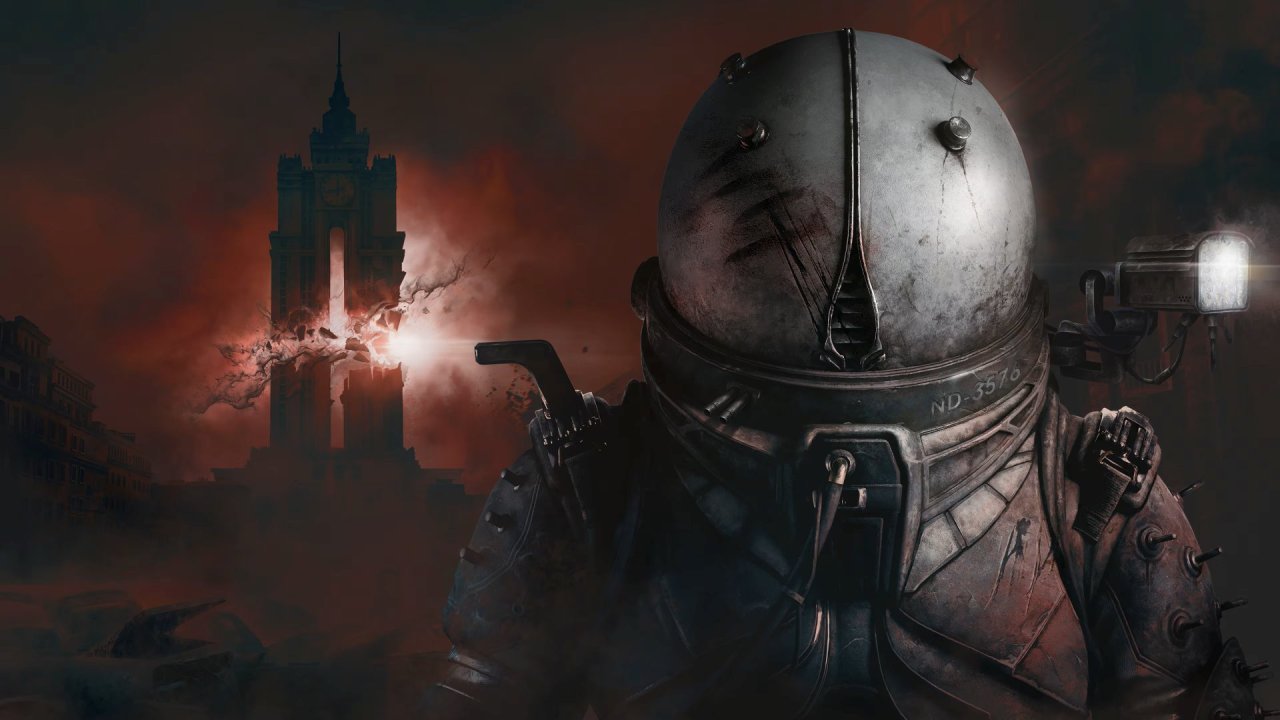
    Like so many third-party ports for the Nintendo Switch 2, it’s impossible to recommend Total Chaos without mentioning some caveats – unless, of course, portability is essential or you have no other console under the TV. That said, while Total Chaos has noticeable framerate dips and degraded visuals in the performance mode, it offers a rough but compelling psychological horror experience that is rare on Nintendo hardware. It’s also easier to appreciate if you consider it started life as an ambitious DOOM II conversion using GZDoom, before transitioning to the now ubiquitous Unreal Engine as a standlone game.

    Through nine lengthy chapters, the slow-burn opening sees Total Chaos evolve from a run-and-hide puzzler into a more traditional Silent Hill-inspired psychological horror – albeit entirely in first-person.

    The tense and appropriately chaotic opening chapter might leave you confused about the genre, but you’ll quickly settle into a rhythm of inventory management, scavenging and crafting supplies, juggling melee weapons with limited durability, and rationing the use of firearms with severely limited ammunition. If nothing else, Total Chaos nails edge-of-your-seat combat design. It’s a game in which you only ever have enough resources to scrape through the next encounter before desperately scavenging for more.

    It can be a brutal game so there are difficulty settings and a “Tourist” mode that starts you off with gear. However, if you’re a fan of the genre, I would suggest sticking to the original experience in which you’re only ever just ahead of the difficulty curve. There are puzzles and switch hunts under pressure, stalker sequences, and a few run-like-hell set-pieces, but most of the game is about managing consumables and picking the right sharpened tools for the job.

    Basic enemies fall with a well-timed dodge or shove, followed by a flurry of attacks, but more complex encounters are gradually introduced. Skulking spider-like creatures blind you with web spit before rushing in; lumbering split-headed creatures grab you if you don’t first choke them with a thrown item; teleporting electrified creatures are set aflame with a well-aimed bottle of alcohol; and a screeching enemy forces you to look away to minimise damage mid-attack. Stalker encounters and boss fights might force you to stay mobile, sprint between crawl spaces, keep your eyes on a creature to avoid one-hit-kills, or use environmental hazards to damage them.

    There are also survival elements like stamina, health, bleeding, hunger, and madness to manage, so crafting is not just about taping blades or nails to sticks. You need to find healing sources (some of which might be less than sanitary), scrounge food to manage hunger and boost stamina, combine alcohol and rags for bandages, and there are even mysterious coloured compounds you can blend, Resident Evil-style, in your old syringes. Even with a generous weight limit, you eventually need to make choices about what to take with you and what drop near a save point to collect later.

    As an indie title and former mod, I am not going to pretend the gameplay mechanics are the most polished, but they are engaging and involved. What I didn’t expect was that the unravelling narrative would be the biggest hook; that and a morbid curiosity about just how much more challenging it could get.

    The nameless protagonist – possibly a member of the coastguard – arrives at the derelict Port Oasis after surviving a bizarre storm. Entering the looming port structure through a sewer drain, a scrawled note on the wall indicates there is no turning back – your last chance to backtrack to the boat and leave. Push forward and you’ve committed to a lengthy gauntlet through increasingly twisted environments and the creatures that haunt them.

    To Total Chaos’ credit, it plays its cards openly and it’s clear from the start on that whatever the protagonist is experiencing must have something to do with their past on the island.

    Games can ruin the experience by revealing too much too soon, but Total Chaos drip-feeds its narrative beats and scattered documents with just the right pacing so that I was always left wanting to know more. What was the nature of the community at Port Oasis? Who does the voice on the radio represent and should you follow their advice? What happened during his last relationship that it left him literally haunted by manifestations of the trauma?

    Like all good psychological horror games, there’s a link between the narrative themes, the environments, and some of the creatures you encounter. Much of the basic gameplay loop involves monster ambushes and key hunts, but those moments are interspersed with set-pieces and boss-like encounters that clearly represent elements of trauma through the distorted visuals, creepy audio, tortured dialogue, and sparse but excellent music.

    Even numerous underground sequences that ran on too long for my tastes proved effective at generating an incredibly oppressive atmosphere (often due to a lack of light sources) which triggered moments of relief when I finally emerged back above ground into the dim grey light and increasingly stormy weather.

    Of course, as with the gameplay mechanics, the indie nature of Total Chaos means you can’t go in expecting cinematic production values, just really effective use of the resources it had. My one critique is that some actions needed to get the alternate ending are obvious while others are so random you might want to use a guide if you only play through games once.

    On the whole, Total Chaos is an impressive conversion of a well-regarded mod into a standalone indie game – something I’d love to see more off given the long and often impressive history of total conversions mods. On Nintendo Switch 2, I’d recommend it to survival- and psychological horror fans but just be cognisant of its limitations and the compromised performance mode going in.

    Total Chaos was played on Nintendo Switch 2 using a code provided by the publisher. It is also available on PC, Xbox Series S|X, and PS5/Pro.

  • Review: Regions of Ruin: Runegate (Steam Deck)

    Review: Regions of Ruin: Runegate (Steam Deck)

    Regions of Ruin was a compelling mash-up of genres when it released on PC in 2018. It offered Kingdoms-style settlement-building with gorgeous pixel-art; bite-sized, side-scrolling action paired with surprisingly dense RPG mechanics; and indomitable dwarves fighting back against an overwhelming horde of savage goblins and orcs. It also had a great soundtrack (suspiciously similar to that of The Elder Scrolls V: Skyrim) that perfectly complemented the action as you carved a bloody path across the continent on a barely signposted quest to uncover a path to an ancient Dwarven sanctuary beneath the surface.

    Eight years on, it now feels like an experimental, early-access version of Regions of Ruin: Runegate; a fully-fledged sequel that builds upon the scant narrative the first game offered, while delivering improved visuals, more varied combat with better balancing, quests with extensive narrative, expanded settlement-building, and refined RPG mechanics. You may prefer the classic visual style, but every other element of the game is hugely improved.

    That said, the fundamentals stay the same. Regions of Ruin: Runegate is designed for short but more-ish play sessions that have you bouncing between diverse but compact 2D zones – very few of which will take more than five minutes to battle, puzzle, or platform through. You take on quests to aid locals and rescue dwarves; you cull greenskins and other threats that plague each realm; you smash through creates and loot chests for resources and gear; and you frequently return to Rivenbrook – a long-abandoned settlement connected to other realms by the titular Runegate. Unlike the first game, you have a more functional journal to track quests and there is a ton of narrative and world-building for those who want to know more about each realm and the history of the Dwarves.

    It offers a satisfying gameplay loop in which you briefly visit settlements or outposts to chat to the diverse inhabitants and pick up quests, travel across a stylish world map as the day-night cycle rolls on, and enter hostile areas populated by man or beast – all waiting to taste your axe (or sword, spear, knife, crossbow, and firearm) in chaotic battles full of pixelated gore and gruesome sprite death animations. Unlike the first game, combat feels challenging but better balanced to support all weapon types. Going stealthy and flinging throwing axes at unaware enemies is no longer the only viable option when dealing with endgame hordes.

    Battles on a 2D plane are inherently limited in complexity, but each weapon type – think one hand, two handed, knife, and ranged – has an ideal range, attack speed, crowd-control potential, and varied effectiveness against armoured foes. There’s a focus on managing a stamina bar that depletes as you accumulate wounds in battle, and you’ll want to rack up bonus damage by either hitting enemies from stealth, from behind, while they’re stunned, or knocked down. There is still plenty of jumping, dashing, and slashing during busy battles, but it feels more tactical once you’ve recruited and trained up some companions to draw attention away from you.

    As an RPG, there’s still a strong of focus on character levelling, equipping powerful gear, and rebuilding the Rivenbrook settlement to generate resources and gold, attract shopkeepers and companions, and open up crafting and enchanting stations. Unlike the first game, in which survival in larger battles could feel random, Regions of Ruin: Runegate does a better job of balancing escalating difficulty with character progression. By default, those who don’t rush the main quest will have ample opportunity to fill out an expansive skill tree with essential perks and incremental upgrades, while also looting, buying, or crafting powerful gear to tailor their build. It is a game in which you always feel like you’re on a trajectory towards becoming overpowered and self-sufficient.

    By the midpoint of my journey, tearing a path through the arid second realm, I had invested in restoring Rivenbrook’s fishing dock, lumber mill, and mine to ensure an infinite supply of basic materials for further upgrades, crafting, and enchanting. I invested broadly across the skill tree rather than hyperspecializing, with my focus on stacking every damage-over-time perk – poison and bleeding – with weapons that had a high chance to inflict burning status. I also spent a considerable amount of gold and a few skill points to level up my companions – ensuring they could tank some blows and even slowly self-revive while I led away enemies.

    Those who tackle everything on offer will find the challenge gradually diminishes, but at least Regions of Ruin: Runegate never feels like it is wasting your time. Restoring and upgrading resource-generating buildings in Rivenbrook means less time spent juggling workers. Merchant stalls, an armoury, and forges means less reliance on loot drops. Companions draw aggro and allow you to tackle encounters with more aggression or creativity. It’s an adventure the feels like starting as a minor rockfall before escalating into an avalanche of Dwarven rage.

    I played it exclusively on a Steam Deck and it was a fantastic fit for both the gameplay loop and visual style. The pixel-art looks great, especially when sunlight or moonlight filters through trees and rocky outcrops, and it hit 60fps most of the time (a fully upgraded Rivenbrook and battles with abundant fire effects dragging it down somewhat). It should run well on any more recent handheld PC and I hope a Nintendo Switch 2 port is next in line.

    The only two caveats I can think of is there is a little too much text to read through at times (especially on a small screen), and binging Regions of Ruin: Runegate is the quickest way to highlight it’s limited depth and repetitive nature. So long as you’re treating it as a pick-up-and-play game when short on time or between other games, Regions of Ruin: Runegate offers a fantastic 2D action-RPG with few flaws. It moves at a brisk pace, never wastes your time, and turn you into an unstoppable force of Dwarven vengeance leaving bloodied chunks of your enemies scattered across the realms.

    Pros:

    • An actual narrative and better-defined quests.
    • A brisk and immensely satisfying gameplay loop of escalating carnage.
    • Settlement building is even more satisfying and allows you to become self-reliant.
    • Improved pixel-art visuals, sprite animations, and another great soundtrack.
    • A perfect fit for the Steam Deck and other handheld PCs.

    Cons:

    • Longer play sessions highlight its repetitive nature.

    Score: 9/10

    Regions of Ruin: Runegate was reviewed on PC (Steam Deck) using a code provided by the publisher.

  • Editorial: Dread Delusion offers console players a weird and wonderful mini-RPG with Morrowind vibes.

    Editorial: Dread Delusion offers console players a weird and wonderful mini-RPG with Morrowind vibes.

    Dread Delusion is both a compact nostalgia-trip for time-constrained older gamers, and a means for younger gamers to get a taste of early, first-person, fully-3D RPGs like The Elder Scrolls III: Morrowind.

    Despite its obvious retro inspirations, it’s smartly designed and “fun enough” by modern standards but what is does best is evoke classic vibes and encourage exploration. Like Morrowind, Dread Delusion’s best attribute is not the gameplay but the distinctly otherworldly setting, the intriguing lore, and the striking aesthetics. It has a unique atmosphere that elevates the experience, even if the storytelling is simple and the gameplay loop straddles the line between charmingly dated and perfunctory.

    Not high praise for those who exclusively play “AAA” games and value cinematic storytelling or ultra-polished gameplay, but Dread Delusion knows what it wants to be and does so with confidence. It has a compact structure, varied but streamlined mechanics, and frugal dialogue trees that ensure it avoids making the mistake so many modern games do – wasting the player’s time and dragging out the experience to the point even the best qualities are rendered repetitive and tiresome.

    Dread Delusion doesn’t offer huge depth in the moment-to-moment gameplay, so you only spend only a minute customising your prisoner-protagonist before being introduced to the primary quest by way of an Inquisitor agent, trapped within an iron maiden-style cage, bleeding between raspy breaths. You’re then tossed out onto the floating Oneiric Isles to begin your adventure with minimal fanfare. It feels brisk, a little messy, but the opening sequence is devoid of exposition dumps or the overlong cutscenes so common these days I’ve had to change my TVs power-saving settings.

    A massive fort looms above of you. Inquisition machines clank and groan around you. Jagged islands of rock, strung together by precarious bridges, float above a ruined and charred planet below. Tree-sized mushrooms and bizarre fungal shrubs – typically in shades of vibrant green, blue, and pink – stand in stark contrast against the reddish-purple sky with its pulsing “neuron star” connected to others by glowing threads of energy. The excellent music kicks in and it all felt incredibly weird and wondrous in a way I’ve not experienced in a big budget sci-fi or fantasy games for ages.

    When you factor in the lack screen-filling tutorials and condescending secondary character to sprout advice, the opening sequence also places the onus firmly on the player to push forward, explore, and experiment if they want to know more.

    Of course, Dread Delusion offers up a lengthy quest involving the hunt for a Navy-captain-turned-sky-pirate Vela Callose that will take you across the Isles and to the ruined world below. You’ll learn about the “God Wars” and the rise of Apostolic Union, the ancient Emberian civilisation and the devastating “World Rend” event, and you’ll meet the factions contesting the Oneiric Isles – but there’s so much more depth for those who explore, talk to every NPC, and read the stylish book extracts scattered around.

    The gameplay that ties everything together is fun, familiar, and streamlined – like a “best of” rewatch your favourite series where you have to foresight to skip the inessential episodes. You have light and heavy attacks paired with block and parries, all governed by stamina and strength. Offensive and defensive cypher spells require mana and high lore. You can charm NPCs in dialogue, pick locks and disarm traps, or manipulate magical objects to open alternate paths and secrets. There’s even a stealth system with bonus damage for thief-types that enjoy spending half their playtime crouching with a bow.

    Armour, clothing, and weapon variants are limited but offer impactful upgrades that consume increasingly rare materials. Rings and accessories are unique and buff specific attributes or skills. Alchemy allows you to brew useful and situational potions. You can purchase and upgrade housing in each island kingdom, unlocking temporary skill boosts, crafting stations, and gardens with alchemical ingredients. You eventually unlock an airship of your own to access new areas.

    Dread Delusion offers a little bit of every RPG staple for you to dabble in as you explore, just never with enough depth to derail your momentum and the narrative pacing.

    Despite these streamlined mechanics, Dread Delusion still prioritises role-playing and provides quest solutions that can shift your standing with different factions and affect the outcome of regions. Your dialogue choices have the most impact, but you can also avoid harming faction relations by simply sneaking through an area or unlocking alternate paths to bypass combat. The levelling system – in which you “embrace delusions” to increase attributes – consumes “glimmers of delusions” that are awarded on quest completion or found in secret areas. There’s rarely a good reason to choose a violent outcome if you don’t want to.

    There’s a fair argument that the minute-to-minute gameplay feels a little underdeveloped, but the impact on the experience is limited by Dread Delusion’s relative brevity for an RPG – maybe 20 or so hours to explore everywhere and do everything on your first playthrough. The focus remains on constant forward momentum and exploration while you resolve quests the way you want to. Dread Delusion never feels like it’s wasting your time getting bogged down by grindy gameplay systems or cinematic aspirations that impact the pacing.

    Going back to the Morrowind comparison, the Oneiric Isles are simply a joy to explore as every new region means new sights to see, new biomes and creatures, new people and quests, and more lore to discover. For console players, it offers a rare mini-RPG with incredible vibes and, as a bonus, runs well on every platform including the Nintendo Switch 2.

    Dread Delusion was played on a Nintendo Switch 2 using a code provided by the publisher. It is also available on PC, Xbox Series S|X, and PS5.

  • Don’t skip Sovereign Syndicate on console if you’re a fan of expressive writing and intricate worldbuilding.

    Don’t skip Sovereign Syndicate on console if you’re a fan of expressive writing and intricate worldbuilding.

    The first thing that comes to mind when thinking about Sovereign Syndicate is how excellent writing can carry mechanically and visually underwhelming games – so long as you have an audience willing to read. At first glance, Sovereign Syndicate looks to chase the Disco Elysium formula, turning your protagonists’ internal dialogue and resultant personalities into the equivalent of traditional RPG classes. However, the longer you play, the more you’ll realise their starting attributes and evolving personality add flavour to the journey rather than function as hard skill-checks.

    Sovereign Syndicate is still a role-playing game in the sense that you shape the decisions the protagonists make, unlock new response types as a result of their experiences, and influence their outlook on the world. The more effort you put into tackling the secondary content, the more dialogue options you give yourself down the line. However, the initial character class and stylish Tarot card system are just another form of dice roll modifiers, and you can always save-scum your way through any skill-check if you really wanted to.

    That flexible structure and a focus on lengthy dialogue sequences can make Sovereign Syndicate feel closer to a visual novel with light RPG elements, but that’s no bad thing for those that enjoy reading and using their imagination fill out details that the inconsistent visuals and artwork cannot provide. Set in a Victorian-era London, where steampunk technology and low-fantasy magic coexist, Sovereign Syndicate takes you on a lengthy journey that switches back and forth between three characters, with plenty of minor details and interactions to embellish the narrative.

    Atticus Daley is a minotaur trying to drink away his troubled orphan past, before a mysterious stranger with gun and a new nagging voice in his head set him on a quest to discover the fate of his mother. Clara Reed is a human courtesan tired of entertaining London’s elite and looking for a way to raise enough money to smuggle herself across the Atlantic. Teddy Redgrave is a dwarf and war veteran, who now spends time tweaking his automaton “Otto” and taking contracts to hunt down mythical beasts and common vermin plaguing London. It is an eclectic cast with different views on the world and characters around them, and each takes the lead on investigating secondary plot lines that run throughout the adventure.

    That structure ties into the verbose writing that, while not always consistent in delivery, is wonderfully intricate and expressive. Dialogue with key NPCs, internal monologues, and observations of the world around them are unique for each character. This allows the developers to flesh out every character and dole out heaps of worldbuilding; it provides the player much better insight into the motivations of each protagonist; and simply makes exploring the world incredibly satisfying – albeit only if you’re willing to read.

    In contrast, the gameplay mechanics feel perfunctory and drawn out as you traverse several areas of London repeatedly, talking to everyone you can in each chapter to ensure you don’t miss important interactions or clues that update quest entries. Tarot card draws for dialogue challenges and environmental interactions are just dice rolls. You have an inventory but there’s little reason to ever open it as key items are flagged in conversations or during interactions when needed. It can grow increasingly tiresome and left me wondering if Sovereign Syndicate would have had better pacing if it gone for map- and menu-driven exploration systems similar to visual novels or point-and-click adventure games.

    That said, Sovereign Syndicate still feels unique and there is little like it on consoles aside from the aforementioned Disco Elysium. It feels like a fantasy-steampunk adventure novel recreated in video game form, and it’ll be a treat for those who enjoy visual novels or those who pore over lore documents in games. You could accuse the writers of overcomplicating or embellishing elements, but I loved the detailed internal monologues, frequent exposition, rich flavour text, and the minor changes to my options as each character evolved. If a visual novel/RPG hybrid with great writing is your idea of a good time, don’t pass up on Sovereign Syndicate (and I hope there’s a Nintendo Switch port at some point).

    Sovereign Syndicate was played on Xbox Series S|X using a code provided to gameblur by the publisher. It is also available on PC and PS5.

  • Escape from Ever After is a slick and fun homage that stretches itself too thin.

    Escape from Ever After is a slick and fun homage that stretches itself too thin.

    My first thought when putting fingers to keyboard was just how much better Escape from Ever After could have been if it had spent time with a merciless editor. Coming from a two-person indie team, it has a strong start, solid writing, thoughtful gameplay, and is far from a bad game. The problem is the longer I played, the staler the gameplay loop felt, and the more I noticed the impact of limited assets.

    For all vocal fans of the Paper Mario games, there have been surprisingly few attempts to copy that formula – think paper-craft sprites in 3D environments, serving a streamlined RPG that focuses on platforming and puzzles during exploration, and mini-games during the turn-based combat. 2019’s Bug Fables: The Everlasting Sapling is the most successful example that came to mind but Escape from Ever After now offers another indie alternative if you’re looking for more of same or don’t have Nintendo hardware.

    Escape from Ever After benefits from a great promise befitting the aesthetics. Fairytale protagonist Flynn and his arch nemesis, the dragon Tinder, are captured by Ever After Inc – a “real-world” corporation that has figured out how to extend their operations into storybooks, reduce iconic characters to white-collar workers, and exploit their fantasy worlds for profit. Deciding that they could do more damage from the inside, Flynn and Tinder begrudgingly team up and accept an employment contract from the unhinged middle-manager Mr Moon.

    The setup provides an excuse to move between the office hub in Tinder’s castle – full of office worker archetypes doling out side-quests – and a half-dozen worlds based (very loosely) on classic fairytales and other literature. There are subverted classics like The Three Little Pigs and Little Red Riding Hood, but also unexpected choices like an amusing, age-appropriate take on Lovecraft’s The Shadow Over Innsmouth. Each world has its own problems, usually exacerbated by Ever After Inc.’s rampant capitalism, and each introduces a companion that’ll join Flynn and Tinder on their adventure. Like the Paper Mario games, it is closer in style to a JRPG, so the few dialogue choices you get don’t have any real impact on how the story plays out.

    The writing still managed to impress and tug on the heartstrings at times, despite no voice work and the player controlling the dialogue flow, but gameplay dominates the experience. It revolves around exploration, some light platforming and time-based challenges, and also some light puzzling that use your companion’s abilities: think hitting distant objects with Flynn’s buckler, setting things on fire with Tinder, or manipulating plant growth and wind using Wolfgang’s melodies. It makes exploration far more interesting than simply running between set-piece battles and, naturally, you can return to worlds with new companions to use their abilities to unlock new gear, trinkets, or discover ink bottles that upgrade attacks.

    The combat is fun as it’s a low-numbers game, in which most enemies have health points in the single digits, and new gear or skills feel significant rather than incremental. Gaining XP and levelling boosts the party’s max HP, MP, or trinket slots – items that offer interesting buffs and potential trade-offs. More important is which party member abilities you use to deal with enemies that are flying, shielded, armoured, or buffing one another. You need to time button presses for blocks and attacks; complete mini-games to maximise the impact of special abilities; and simply spamming the basic attack will get you nowhere.

    Returning to my opening statement, the biggest problem Escape from Ever After faces is the 20-ish hours it takes to roll the credits. Aside from multi-phase boss encounters, there are too few enemy variants; the charming visuals slowly give way to that “made-in-Unity” look; and even the brilliant soundtrack becomes grating once you’ve heard it enough times. As someone who would always take a shorter game with a satisfying conclusion that leaves me on a high, rather than a longer one that simply leaves me relieved to see the credits roll, I can’t help but wonder why so many developers don’t follow the less is more principle?

    Escape from Ever After was played on Nintendo Switch 2 using a code provided to gameblur by the publisher. It is also available on PC, Xbox Series S|X, PS5, and Nintendo Switch 1.

  • Editorial: Warhammer 40,000: Rogue Trader on Nintendo Switch 2 crams a massive CPRG onto tiny hardware to varying degrees of success.

    Editorial: Warhammer 40,000: Rogue Trader on Nintendo Switch 2 crams a massive CPRG onto tiny hardware to varying degrees of success.

    As a fan of classic CRPGs who grew up playing Baldur’s Gate, Icewind Dale, and Neverwinter Nights, I can’t help but love Owlcat’s isometric CRPGs. Just how much I love them, however, depends on the amount of free time I have. Their prior CRPGs based in the Pathfinder universe – Kingmaker and Wrath of the Righteous – have their flaws, but their epic scope and ambition made them easy to forgive once I was hooked. Warhammer 40,000: Rogue Trader continues that time-devouring trend, albeit this time within a distinctly gothic, grimdark, sci-fi universe.

    For that reason, the prospect of a Nintendo Switch 2 version, which I could pick up and put down whenever I had the time, was incredibly tempting – despite having sunk 60 hours exploring the Koronus Expanse in the Xbox Series port already. Like all good CRPGs, there is scope for replayability by rolling a different character class, experiencing the impact of tackling missions in a different order, adventuring with a different group of companions, making different major decisions at the end of each act, and role-playing a more ruthless or evil character (not that I ever do).

    Having now sunk another two-dozen hours into Warhammer 40,000: Rogue Trader on the Nintendo Switch 2, the results are predictably hit-and-miss given the size of this game and some hardware limitations. Portability always requires sacrifice – especially when dealing with a small screen in a menu- and text-heavy game. On the upside, the outcome is mostly positive if affordable and optimised portable play is your goal. If, however, you intend to make use of the Switch 2’s hybrid nature and occasionally play it on a 4K TV, the results are less impressive.

    Starting with the good, Warhammer 40,000: Rogue Trader on the Nintendo Switch 2 is feature-complete with no gameplay compromises (and it’s cheap). It is every bit as massive and engaging as the PC version or the other current-gen console ports (and the DLC expansions are arriving soon). The platform has no shortage of lengthy Nintendo first-party adventures and third-party JRPGs, but this is a rare western-styled CRPG for fans of the genre (the other options being literal classics, like Beamdog’s and Aspyr’s remastered D&D IP: Baldur’s Gate, Icewind Dale, and Neverwinter Nights). Isometric exploration, tactical turn-based based battles, dialogue choices with abundant skills checks, more exposition than anyone needs, and major choices that alter the later acts – it’s all accounted for.

    It took a post-launch patch or two, but Warhammer 40,000: Rogue Trader on the Nintendo Switch 2 runs as well, if not better than the PC version on the Steam Deck and original ROG Ally (my only other points of handheld comparison). On the handheld screen, enabling TAA produces a slightly softer but less noisy image, while the framerate sticks to the 30fps target outside of a few rapidly panning cutscenes with alpha effects. Coupled with a UI and controller scheme developed and refined for the current-gen consoles, it feels more than responsive enough for general exploration and the turn-based combat. Even the load times are respectable, albeit a little longer than on the other consoles.

    The are, however, three issues of note – one subjective and two with gameplay implications. When docking the Nintendo Switch 2 and connecting to a 4K TV, you are getting a better experience than the Steam Deck or ROG Ally is capable of. However, the image is notably blurrier than when playing on even the budget Xbox Series S (especially when dynamic resolution scaling kicks in), and it appears to lack some post-processing effects that leave environments looking too bright and lacking depth. Of course, visual quality is subjective and the ability to easily suspend, resume, or continue your game away from the TV is a major perk.

    More problematic are the awkwardly overlapping menus, tooltip boxes, and tiny text when playing in handheld mode. Navigating exposition-heavy dialogue menus, cycling between environmental text descriptions, and comparing items in the inventory is a core part of any CRPG and incredibly frustrating on a small display. One potential solution is using a Joy-Con 2 as a mouse, but the implementation is an all or nothing approach. The gamepad UI is replaced by icons around the screen and almost every aspect of the game is controlled by the mouse, slowing down the pace by making actions like simple camera control frustrating.

    Ultimately, you’ll need to consider how plan to play Warhammer 40,000: Rogue Trader on the Nintendo Switch 2. If you play mostly in portable mode, it is an impressive version that looks and performs better than all but the most high-powered handheld PCs. The text size and limited screen space is an issue, but the rest of the port is solid and it looks good on a small screen. If, on the other hand, you alternate between portable and docked play (or if your Nintendo Switch 2 lives under the TV most of the time), Warhammer 40,000: Rogue Trader looks rough in comparison to other current-gen console ports, and the mouse controls need more refining. All that said, if the Nintendo Switch 2 is your only console, CRPG fans should jump on the opportunity regardless.

    Warhammer 40,000: Rogue Trader was reviewed on Nintendo Switch 2 using a code provided to gameblur by the publisher. It is also available on PC, Xbox Series S|X, and PS5.

  • Review: The System Shock remake on Nintendo Switch 2 is an (almost) perfect way to explore Citadel Station on the go

    Review: The System Shock remake on Nintendo Switch 2 is an (almost) perfect way to explore Citadel Station on the go

    For those thinking of picking up System Shock for the first time on Nintendo Switch 2, Nightdive Studios’ 2023 remake transforms an iconic but dated immersive sim into a first-person survival/shooter hybrid that doesn’t feel out of place alongside modern games. What started as an unwieldy point-and-click/FPS hybrid now plays as a more traditional FPS and it works well enough with a controller. Given combat is so prevalent the change makes sense, and the shooting feels solid; however, navigating menus, inventory management, and interacting with switches or items in the environment can be finicky.

    It is for this reason I would discourage anyone playing System Shock (2023) using a standard pair of Joy-Cons. Unless you’re a natural with gyro aiming, they feel far too imprecise in a game that offers no auto-aim assist that I can discern. That lack of precision can still frustrate when using a Pro controller, but the game plays smoothly enough (after patches) so that precision aiming and picking up objects in the environment is manageable. If you are stuck with a pair of Joy-Con 2s, you could try using one as a mouse on a lapboard or something serving the same purpose – though I could not find a sensitivity setting that ever felt as good as a proper PC mouse.  

    I’m highlighting this caveat early as System Shock (2023) has survival elements with resource and inventory management. Precision aiming is essential for conserving limited ammunition and minimising the damage you take. It’s only during cyberspace sequences and the end-game – when you have your hands on powerful weapons, weapon mods, and upgraded player augmentations – that System Shock (2023) can be played as a run-and-gun FPS with less concern for accuracy.

    With a Pro controller and the Nintendo Switch 2 docked or propped up in tabletop mode, System Shock (2023) becomes every bit as compelling and immersive as on the other platforms – especially when you combine the stylised visuals with campy voice acting, creepy ambient audio, and an incredible synth-heavy soundtrack. It targets a high resolution with all visual features intact, and it sustains 60fps enough of the time that I rarely noticed any impact on responsiveness. It’s not perfect, however, and given the extensive post-processing effects and pixelation filter on objects near to the player, Nightdive Studios could drop the resolution further to focus on stable performance.

    Considering just the game and not the hardware you play it on, System Shock (2023) is essential for those who enjoy more action-oriented immersive sims like Eidos Montreal’s recent Deus Ex games, or Arkane Studios’ Dishonored series and Prey (2017). It has little interest in providing the typical frictionless, heavily-guide experience of most modern games – even if you set each difficulty sliders to the lowest value. Thorough exploration, reading and listening to notes, and then following clues to key items is a core part of the experience. Even on the lowest mission difficulty, the objective icon only gives you a direction of travel, but getting anywhere in the labyrinthine Citadel Station is still a challenge.

    System Shock (2023) is a game that rewards or punishes player agency as it should. If you explore cautiously, pick off isolated enemies, hack every door panel, hunt for secret stashes, and conserve resources, you’ll rarely be caught off guard; you’ll be able to minimise the effect of environmental hazards; and you’ll always have heavy firepower in reserve to trivialise a boss encounter or ambush. If you ignore your surroundings, charge into groups of enemies, and waste powerful ammunition, you’ll soon hit difficulty spikes that force you back to the last regeneration bay (or you’ll have to remember to make frequent manual saves).

    Despite the focus on player agency and freedom, the System Shock remake is still far more playable than its predecessor and closer in design to its well-regarded and equally influential sequel. There are mid-game requirements that might take you back and forth between levels of the station, but it opens up gradually and escalates smoothly towards the finale. For those who listen to audio logs, read notes, and pay attention to environmental details, it also has a wonderfully fleshed out setting and backstory you can piece together. If an audio log or note hints at an event, you can find evidence of it in the environment. Citadel Station provides a cohesive and believable sense of place despite the sci-fi trappings.

    Wrapping up, I have now explored the remade Citadel Station across four different platforms. After early teething problems that a patch mostly resolved, the Nintendo Switch 2 port is yet another option easy to recommend to fans of the immersive sim genre looking for a portable option (especially important when you consider how few im-sim options there are on Nintendo hardware). The only caveat is that my recommendation only applies if you have a Pro controller, as the standard Joy-Con experience is predictably awful and the Joy-Con 2 mouse option is not as responsive as it should be.

    Pros:

    • Yet another opportunity to play the excellent System Shock remake
    • It’s a rare immersive sim on Nintendo hardware
    • Great visuals, campy voice work, and synth-heavy soundtrack
    • Performance issues mostly resolved with post-launch patches

    Cons:

    • Nintendo Joy-Cons and first-person games are a terrible match
    • Those who need a guided experience beware

    Score: 8/10

    System Shock (2023) was reviewed on Nintendo Switch 2 using a code provided to gameblur by the publisher. It is also available on PC, Xbox One/Series S|X, PS4/5, and Nintendo Switch 1.

  • Review: Blood: Refreshed Supply on Switch offers a gore-soaked battle against the controls, cheap ambushes, and splash damage

    Review: Blood: Refreshed Supply on Switch offers a gore-soaked battle against the controls, cheap ambushes, and splash damage

    Nightdive Studios have spent an incredible decade remastering classic ‘90s and early ’00s PC titles and releasing them on consoles too. The relative simplicity of early first-person shooters like Powerslave Exhumed and STRIFE: Veteran Edition lend themselves to controller support, with no true Y-axis and limited verticality. Remasters of true 3D titles, think Quake and Turok, typically benefit from a slick auto-aim implementation that makes you feel skilful while still clearly nudging your shots towards the target. In contrast, Blood: Refreshed Supply doesn’t gel very well with a controller – a problem that exacerbates other dated designs.

    Starting with the good, Blood: Refreshed Supply looks authentic yet wonderfully crisp on both Switch handheld screens and a 4K TV. It also runs great on both the Nintendo Switch 1 and 2. There are plenty of options to tweak the visuals, audio, and controls, and there’s more content in the form of two old expansion campaigns and a new one. It’s a comprehensive and content-rich remastering effort that preserves a game known for both its vocal, snarky protagonist Caleb, and the early introduction of several FPS mechanics that would become commonplace in time.  

    Unlike so many late ‘90s FPS, Blood put more effort into the storytelling beyond simple text-based interludes. A dated but no less entertaining intro video reveals Caleb and other former cult leaders were banished by a demon they once served. With no explanation given, it sets up a revenge story that kicks off with Caleb emerging from a tomb and uttering the iconic line, “I live… AGAIN!”. From that point on, you’re tackling traditional, sequential, classic FPS levels, but they include some unique lines between all the quips to better flesh out the setting and guide the player.

    As a result, Blood has more narrative glue holding together it’s diverse and loosely connected levels. However, it is first and foremost a classic FPS with 99% of the focus on level design, weapons, enemies to use them on, and a boss capping off each act. To its credit, and despite so many commonalities between FPS from that era, the gunplay feels fast and impactful thanks to destructible environments (where scripted, of course); the diverse arsenal; and a focus on over-the-top gore. Earlier games may have offered spectacular death animations for sprites, but Blood offered dismembered limbs and heads bouncing around, and uncomfortably funny burning deaths.

    From a pitchfork, flare gun, and classic double-barrelled shotgun, to an aerosol can and lighter combo, Tesla Cannon, and voodoo doll, Blood: Refreshed Supply offers an entertaining toolset to dispose of the cultists, undead, and demons that impede Caleb’s pursuit of his former master. Better still, most weapons offer an alternate fire mode that gives them greater versatility (on top of the usual FPS pick-ups like temporary mega-health, invisibility, and dual-wielding). The double-barrel shotgun offers the now-ubiquitous one or two-barrel blast, while the Tesla Cannon’s alternate fire chews through ammo to create a BFG-like projectile. Dynamite – which I’ll return to shortly – can be flung to explode on impact or bounced around corners with a timed fuse.

    A great arsenal, a diverse roster of enemies, and a ton of gore – what could go wrong? With a mouse, keyboard, and easy-to-reach quick-save and quick-load keys, not much. On either Nintendo Switch console, regardless of whether you’re using a pro controller or the latest iteration of crappy Joy-Cons, the experience is far less fun and fluid. There is clearly auto-aim of some form, but it can’t compensate for twitchy and imprecise controller inputs that make it far too easy to miss targets in an FPS that can be surprisingly stingy when it comes to ammunition and healing items.

    It’s not just the controls though. No matter how hard I tried tweaking the sensitivity and using gyro-aiming, Blood: Refreshed Supply still hails from an era that relished in labyrinthine levels, packed with keys, secrets, and monster ambushes. Exploration and secret-hunting are a highlight, but this means a lot of the time you’ll be trying to react to enemies that suddenly appear all around you; often a mix of melee rushers and ranged enemies that can shred your health bar quickly (even on the lower difficulties). You might think weapon alternate fire modes and area-of-effect explosives could see you through… but that brings me to another criticism.

    Blood: Refreshed Supply has brutal splash damage irrespective of the source – environmental hazards, enemy attacks, or Calab’s arsenal. When you combine splash damage with cheap ambushes, just as many of my deaths were self-inflicted as a dynamite bundle bounced back at me or hit an enemy that in front of me that appeared as I was tossing it. If you’re someone who dislikes the concept of save-scrumming to optimise every encounter, Blood: Refreshed Supply will brutalise you into compliance.

    Wrapping up, Blood: Refreshed Supply is another great Nightdive Studios remaster, with an unusual setting, dark humour, and satisfyingly gory gunplay. It is, however, cheap when it comes to enemy placement and unforgiving when it comes to splash damage. If you’re a PC player and no stranger to hammering quick-save/quick-load to get through classic FPS, it is easy enough to recommend. On console, however, it might be worth waiting for a few patches to tweak the auto-aim as the imprecise controls can turn challenge into frustration.

    Pros:

    • An unusual setting, dark humour, and snarky protagonist
    • A diverse arsenal and satisfyingly gory gunplay
    • Labyrinthine levels will satisfy those who love exploration and secret-hunting
    • Smart visual enhancements without impacting authenticity

    Cons:

    • A fondness for cheap ambushes that encourage save-scumming
    • Twitchy controller aiming and brutal splash damage are a recipe for self-inflicted deaths

    Score: 7/10

    Blood: Refreshed Supply was reviewed on Nintendo Switch 1/2 using a code provided by the publisher. It is also available on PC, Xbox One/Series S|X, and PS4/PS5.

  • Editorial: The Tormented Souls games are for those who like a spot of survival-horror in their puzzle games

    Editorial: The Tormented Souls games are for those who like a spot of survival-horror in their puzzle games

    I regret sitting on the Tormented Souls games until a few months after the sequel arrived in 2025. As a long-time fan of classic survival-horror – going back to fixed camera angles and tank controls – both games are slightly uneven but impressive indie alternatives from Chilean developer Dual Effect.

    They have all the trappings of the classic Resident Evil and Silent Hill games: think fixed camera angles, inventory management, save rooms with soothing music, a mix of logical and absurd puzzles, and combat that is more about conserving supplies and using the right tools, rather than skilful movement and aiming (though that certainly helps).

    The setup for Tormented Souls is simple but effective, with limited exposition and lingering questions that benefit the narrative flow. Protagonist Caroline Walker receives a photograph of two girls – the sight of which causes her extreme pain. Following the address on the back of the photo, she travels to the remote Wildberger Hospital, sneaks inside, and ends up clubbed from behind.

    She wakes up naked in a bathtub, missing an eye, and with no clue as to what’s going on or why twisted monsters now stalk the halls. Like the best horror games, this leaves the player and protagonist on the same journey of discovery, without being burdened by too much prior knowledge that could ruin the sense of mystery or take the edge off the horror.

    That said, the storytelling is somewhat limited outside of a few key cutscenes towards the end of the game.

    She meets a priest seemingly oblivious to the monsters; encounters the little girl seen in the photograph; and discovers plenty of notes and audio recordings that recount the tragic story of the Wildberger family and the horrors that took place. Taking a few optional steps to save Anna is canonical, but it’s not too hard to get the “true” ending if you’re paying attention.

    Without wanting to spoil too much too soon, the sequel picks up right after the first game, as the Caroline and Anna seek solitude and healing at an old monastery. The same forces that consumed the Wildberger hospital reemerge in this new setting with an equally dark past. Many of those who offered salvation have become twisted by their own desires, shame, and guilt, which leaves Caroline on a quest to save Anna again in another monster-ridden setting.

    Once again, there’s a secondary cast that may or may not be trustworthy, and your actions towards the end of the game – primarily based on your willingness to backtrack – are important to save a key character and unlock the true ending.

    All that said, the Tormented Souls games are more body-horror than psychological-horror. The setting, brisk pacing, and narrative beats kept me engaged and pushing forward through both games, but they ultimately serve as an excuse to drag Caroline through increasingly decrepit, bizarre, and blood-stained environments packed with an inordinate number of key items and puzzles.

    The original Spencer mansion in 1996’s Resident Evil felt illogical, with misplaced keys and puzzles that forced you to backtrack from one side of the mansion grounds to the other. In contrast, the Wildberger Hospital and Villa Hess veer more towards Silent Hill levels of weirdness – including unexplained time-travel and Tormented Souls’ own take on a twisted “otherworld”.

    Of course, it all boils down to locked doors and key hunts, but what counts a key item can be wildly variable and is often just one step on the path towards another key.

    There are clues to codes found in both documents and environmental details; darkness is lethal but there are times you need to disable light sources to solve puzzles; inspecting and combining items within the inventory screen is mandatory; and most puzzles involve working out the right sequence of actions (with enough variables that brute-forcing the solution is difficult).

    If you enjoy sifting through notes, jotting down notes from environmental text, and solving twisted puzzles, Tormented Souls 1 and 2 should be on your radar. The only problem, perhaps, is that the puzzles and other designs can feel derivative; an amalgamation of the best parts of other survival-horror classics. The sequel is a far more confident game and more cohesive in design, whereas the original Tormented Souls feels disconnected at times despite still offering entertaining puzzles.

    On the topic of derivative mechanics, the combat in both games is never more than fine. Unless I missed something, the DIY weapons Caroline uses don’t seem to make any sense in the context of her character, but the modified nail-gun and a pipe-based shotgun look and sound suitably powerful as you blast enemies to the floor and finish them off with a melee weapon to conserve ammunition.

    The combat always feels secondary to the puzzles and even the rare boss fights rely more on pattern recognition and using items to end the fight, not simply unloading your most powerful ammunition into them.

    This skewed focus is most notable in the first game, in which clearing out areas to run around freely and focus on puzzling is easier. Tormented Souls 2 tries to keep you on your toes by repopulating areas with monsters more frequently, but if you ever get stuck on a puzzle, it’s still not uncommon to find yourself looping through empty corridors and rooms looking for a key or clue you missed.

    Some might find that design unsatisfying but, returning to the title of this piece, the Tormented Souls games are for those who like a spot of survival-horror in their puzzle games. If you look past the dubious titillation from the opening scene of the first game, Dual Effect has consistently created environments that are mix of beautifully detailed and terrifying, thick with an atmosphere of dread, elevated by creepy ambience and music, and packed with challenging puzzles to solve.

    If solving weird, twisted, and sometimes illogical puzzles are why you love classics survival-horror games, don’t pass over the Tormented Souls games because of their indie status and budget-pricing.

    Tormented Souls 1 and 2 were reviewed on Xbox Series S|X. A code for Tormented Souls 2 was provided to gameblur by the publisher. It is also available on PC and PS5.

  • Review: Outlaws + Handful of Missions: Remaster (Nintendo Switch)

    Review: Outlaws + Handful of Missions: Remaster (Nintendo Switch)

    There has to be a point where, when considering the work done by Nightdive Studios in remastering, we should immediately acknowledge the stunning work the company is doing in updating and preserving classic games – some of which were considered lost to time – and making them playable for modern machines. Using their custom KEX Engine, they haven’t just made the games playable on modern hardware, but updated them as well with better visuals, quality of life changes, behind the scenes extras – if those production goodies are still available – and even going as far as creating new expansions, in conjunction with other developers, for certain games. Their track record is nothing short of… wait for it… legendary.

    Not ones to rest on their laurels, Nightdive are constantly jumping into forgotten gaming libraries and pulling out gems to work on; usually multiple titles at a time. Right now, we’re going to focus on one of their latest efforts: the Outlaws + Handful of Missions: Remaster.

    Outlaws might be one of those games you have heard of. Lord knows it’s flown well under my radar for many years, even though it has an illustrious pedigree behind it.

    And that pedigree? None other than LucasArts themselves.

    While most will remember LucasArts for their classic point-and-click adventure games and numerous Star Wars titles (with the enduring legacy of Monkey Island still going strong), but their FPS legacy didn’t begin and end with Star Wars: Dark Forces. Two years after LucasArts gave us one of the best Star War FPS’s, they used the same engine to power a nostalgic trip into the Wild West with Outlaws.

    Heavily inspired by Westerns, particularly of the Spaghetti kind, Outlaws was a surprisingly narrative heavy FPS that took us through Frontier towns and tumbleweed-filled gulches across a lawless land of bandits and land barons. A year later, the free expansion, Handful of Missions, was released to further extend our stay in the lawless frontier. Although Outlaws wasn’t a major commercial success, it managed to gain a cult following as well, along with community-created level packs, and is regarded as the first game to introduce a sniper zoom on weapons and reload animations.

    Like most Westerns, this is a story about revenge. When retired Marshall James Anderson’s wife is killed and his daughter kidnapped by the minions of a ruthless land baron, the good Marshall sets out to get his daughter back and deliver frontier justice to the men that took her.

    While this may be a simple story, Outlaws tells it with a surprising amount of cut scenes and dialogue, chronicling Anderson’s bloody journey across the West. LucasArts tells that story with serious cinematic flair, featuring a wonderful opening sequence heavily inspired by Spaghetti Westerns and some fantastic lingering landscape shots. It doesn’t hurt either that the surprisingly dark story is rounded out with a soundtrack that fits right up there with the best Westerns.

    The audio design is great overall, with wonderful sound effects for gunfire and reloads – though I did get a little tired of hearing the same; “You’re outnumbered Marshall!” sound byte playing throughout the campaign.

    Featuring a combination of hidden secrets, large multilayered maps, light environmental puzzles, and fun shooting, Outlaws plays like any number of FPS’s from the 1990’s. It may not feature the smartest of enemies, but they fill the role of shooting gallery goons well enough. The Wild, Wild West motif, coupled with the game stunning score, goes  a long way to giving Outlaws its own flavour. Overly complex it may not be, but it is incredibly stylish and fun.

    There are an assortment of items to pick up, from the typical key variants to open locked doors, to oil canisters and throwing knives for combat. Most weapons have an awesome alternate attack. For the double-barrel shotgun, as an example, it’s the classic ability to fire either one round at a time or both. My favourite, however, was the revolver alternate, which lets you quick fire with a fanning technique – that’s slapping the hammer back repeatedly with the palm of your hand. If you’ve watched enough Westerns, you’ll have seen that move often enough.

    If I have one nitpick about the games combat, it would be that important enemies, or bosses if you will, often aren’t all that discernible from regular enemies beyond how much damage they take to go down. More than once I had a level end as I capped someone, only to have a cut scene play showing that I’d just taken down a wanted target when I thought I was blasting just another cattle thief.

    The Handful of Missions expansion, meanwhile, is just that: a handful of missions. Only they take you back into the events that made Anderson the Marshall that he becomes. Across the Civil War battlefield, to hunting down and trying to bring in wanted felons alive, the expansion is a nice continuation of the game for those wanting more High Plains shenanigans.

    As for Outlaws + Handful of Missions: Remaster itself? Well, what is there to say? Nightdive have once again worked their magic to make this the best version of the game to play without spoiling the original vision. Most noticeable, of course, are the reworked, high-resolution visuals which gives the game a lovely, crisp look. You can switch between the original visuals and the new with the push of a button – a feature I always love – but this is one time I certainly do prefer the reworked art assets.

    There’s also cross-play multiplayer, both online and locally, and a Vault for you to take a gander at the games production artwork, script, and development documents. And if you love the soundtrack as much as I do, you can listen to each of the games tracks in the Vault as well. Rounding out the package are a set of Achievements to be earned.

    Overall, Outlaws + Handful of Missions: Remaster is an excellent remaster of a really fun Western-themed shooter long-relegated to a clunky and buggy PC version. It may not be visually or mechanically complex by today’s standards, but it’s still a great FPS featuring a strong narrative and a fantastic soundtrack, that still proves that sometimes, simplicity is the best design.

    Pros:

    • Reworked textures and higher resolution
    • Can switch between original and reworked visuals at any time
    • Excellent soundtrack
    • Fun gameplay

    Cons:

    • Some overused sound bytes

    Score: 8/10

    Outlaws + Handful of Missions Remaster was reviewed on Nintendo Switch 1/2 using a code provided by the publisher. It is also available on PC, Xbox One/Series S|X, and PS4/PS5.