
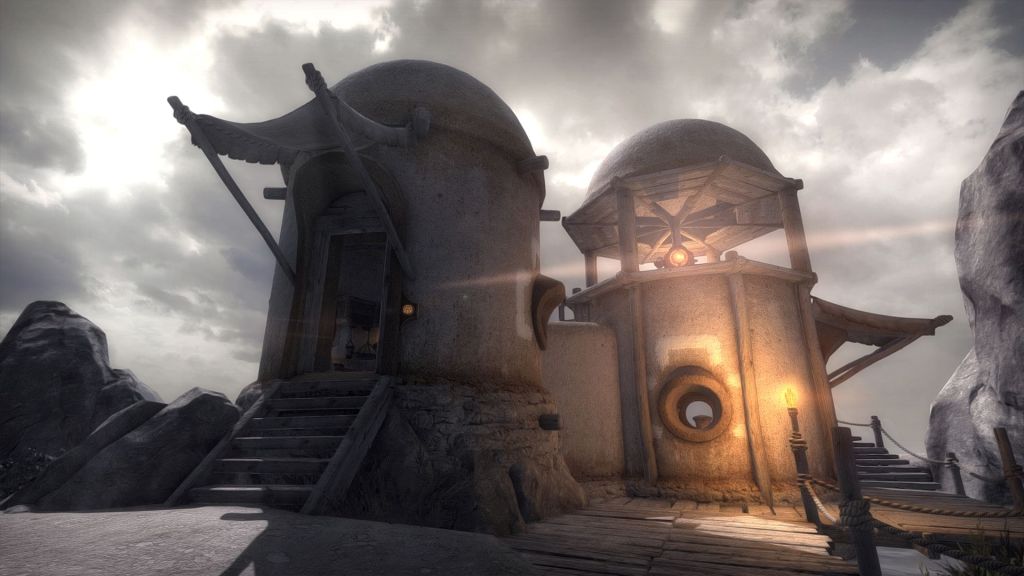
Quern – Undying Thoughts (henceforth just Quern) is an impressively designed but rough-looking first-person puzzler on Nintendo Switch. Created by the tiny Hungarian developer Zadbox Entertainment, it alternates between improving upon the classic Myst formula and mimicking the most frustrating parts of it. It has been a decade since it released on PC, but this latest port feels like a natural fit for the hardware. With threat-free exploration at your own pace, brain-straining puzzles, a serene atmosphere, and beautiful soundtrack, Quern is perfect for handheld play while lounging on the couch or tucked up in bed. That, and it looks better on a small screen.
With shared narrative themes and familiar puzzle mechanics, Quern is less Myst-like and more of a love-letter to the original Myst and Riven. There’s a nameless, voiceless protagonist trapped in another realm with no explanation given to the player at first. A universe that blends elements of sci-fi and fantasy, with portals connecting different worlds and elaborate crystal-powered technology. A plot, told mostly through discarded letters and sparse encounters, which tackles obsessive personalities and the dangers of leaving everything behind in the pursuit of knowledge. Quern is tasty and reliable comfort food for fans of the genre, not some novel dish.
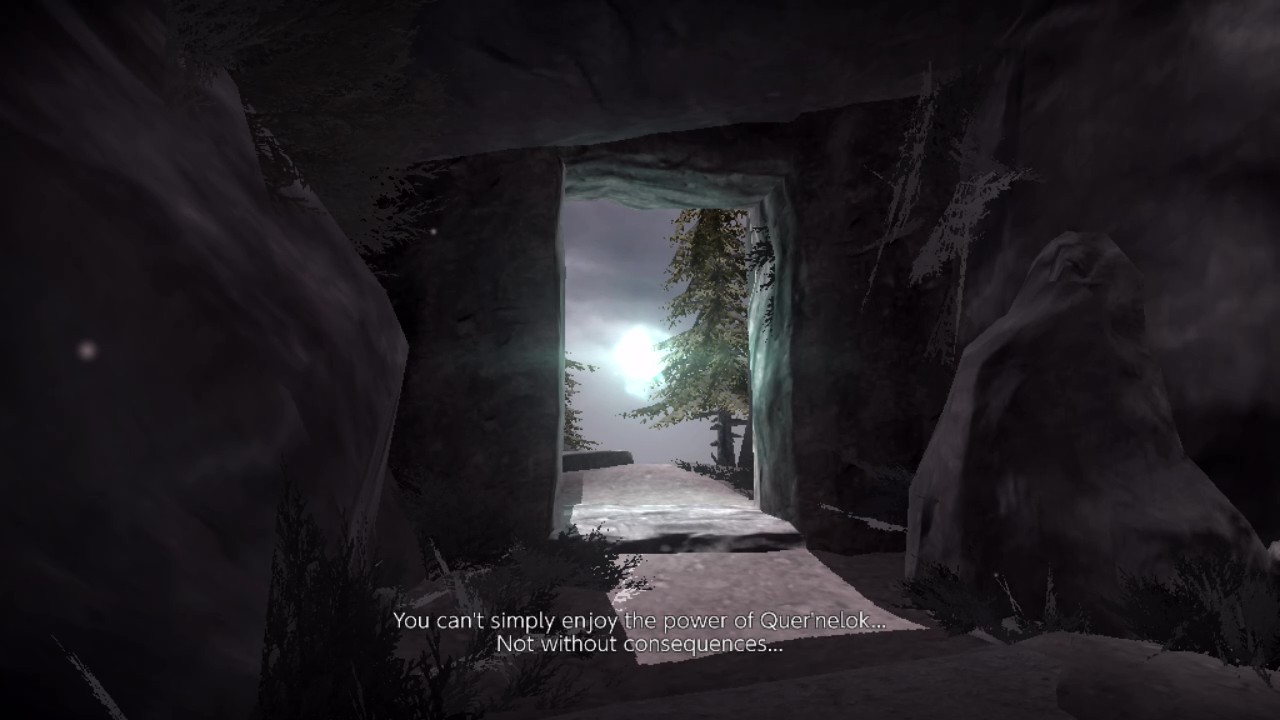
Presumably developed for the original Nintendo Switch and running backwards compatible on the Switch 2, first impressions are rough but not unexpected given Quern’s indie stature. The world looks desaturated and dull at first, with texture and lighting quality low. Glaringly obvious level-of-detail shifts and shadow cascades as you move around are the bigger eyesore. Foliage and other props clip through the environment and sometimes obscure details. Make no mistake, Quern is no looker on either Nintendo console, but it was engaging and atmospheric enough that I rarely thought about the technical elements of the game after the opening hour.
Mechanically closer to the numerous Myst and Riven remakes than the originals, Quern has you explore a compact environment from the first-person perspective, littered with both one-off and interconnected puzzles that hinder your progress. You manipulate objects and machinery through a clunky thumbstick-driven hand icon, while your inventory grows increasingly cluttered with puzzle items you can rotate and inspect. You can create sketches of notes and environmental clues for later reference (think stylised in-game screenshots); you can run, barely, to get around a little quicker; and for no other reason I could discern, you can jump to avoid getting stuck in geometry.
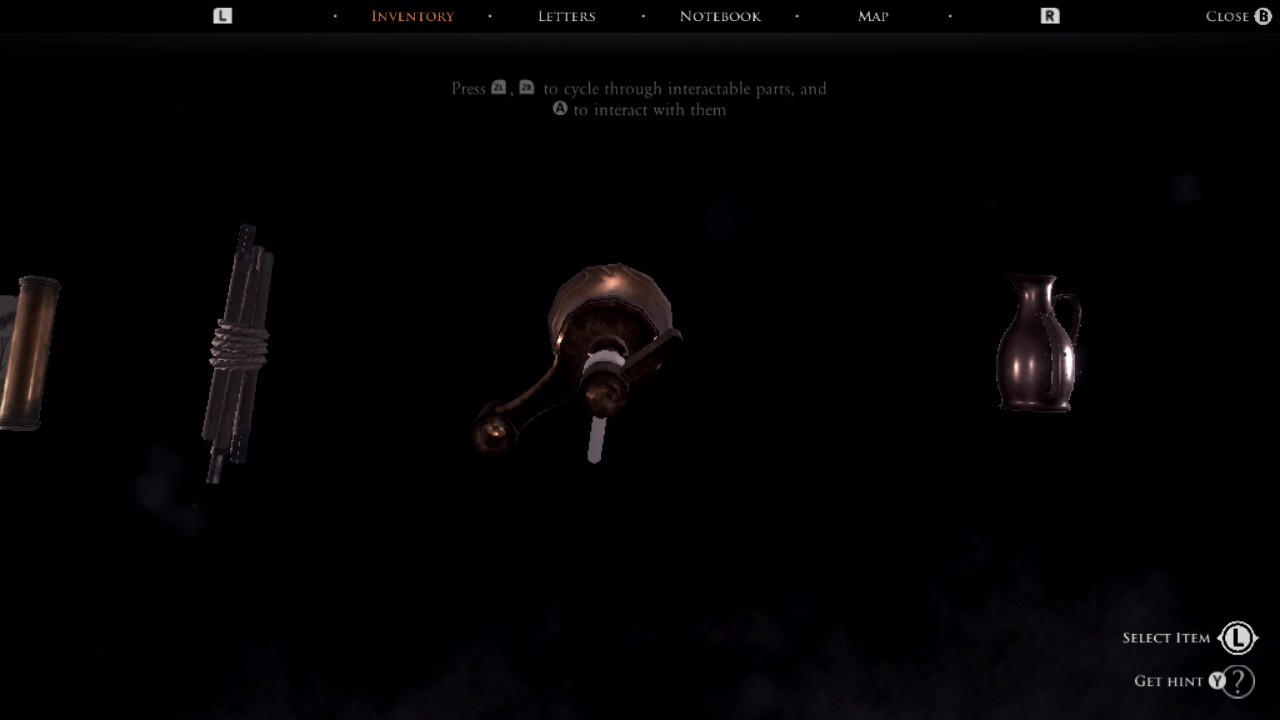
If slowly dismantling a giant puzzle-box is your idea of a great time, Quern has you catered for in abundance. Toggle the setting to highlight interactive objects (something I strongly suggest) and you will see the environment is littered with mechanisms and materials you will be using to solve both current and future puzzles. Once you’re over that initial aimless wandering sensation so common in these games, you’ll realise Quern offers puzzles that are cryptic but often confined to a small enough area that piecing together a mix of notes and environmental clues is satisfying rather than overwhelming. Puzzles are convoluted, but they are doled out in manageable chunks.
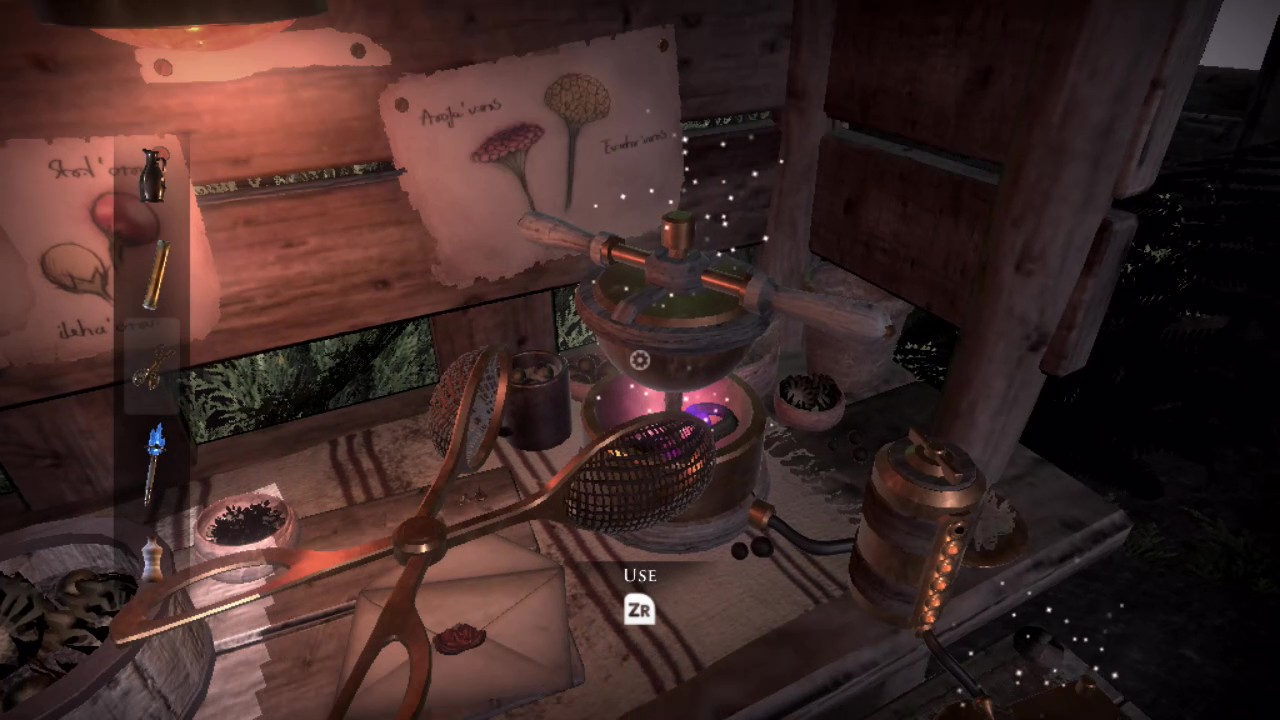
A good example is an early alchemy-focused section. First, you use a rotating table, air vent, and different shaped jars to create an alternating pitch that opens the garden door. Next, you use crude recipes to boil liquid and powered reagents into a solution to revitalise the plants. After that, you collect and press flower extracts to create a missing reagent for a solution that dissolves crystals to release a key somewhere else. A little later, you return to press coloured berry juice to create a consumable that reveals hidden codes. The sequence required observation and note-taking, careful sequential actions, and a bit of trial-and-error, yet never felt so opaque as to frustrate me.
I’d estimate 70% of puzzles are like this, complex and multi-stage, yet understandable and signposted. About 1-in-5 puzzles felt too convoluted, forcing me to reference the notebook between every step, and felt somewhat like the padding older games in the genre could afford when the market wasn’t flush with other games to play. The remaining 10% of puzzles felt poorly signposted or had solutions that never clicked until I turned to a guide and worked backwards from the solution. Like any game, your mileage will vary based on experience, but I would recommend keeping a guide on hand for Quern as brute-forcing puzzles is never fun and kills any narrative pacing.
Despite the dire visuals on Nintendo Switch and a handful of padded or confounding puzzles, there’s little to criticise about Quern if you’re after a spiritual sequel to Myst or Riven from a developer that clearly loves the source material. If you are or were a fan of the genre, you have an intriguing setting and lore, a contemplative narrative, and a surprisingly lengthy journey that is all the more impressive for a game that started as a graduate project. Quern – Undying Thoughts is also at home on portable hardware where you can save or suspend the game at any time, then pick up again once you’ve mulled over a difficult puzzle and had a breakthrough.
Pros:
- An impressive spiritual successor to Myst and Riven
- Most puzzles feel logical if you can find and connect the clues
- An excellent soundtrack makes for a surreal and serene atmosphere
Cons:
- Subpar visuals on Nintendo Switch 1/2 hardware
- A few puzzles feel needlessly convoluted or poorly signposted
Score: 8/10
Quern – Undying Thoughts was played on Nintendo Switch 2 using a code provided by the publisher. It is also available on PC, Xbox One/Series S|X, PS4/5, and Nintendo Switch 1.

