
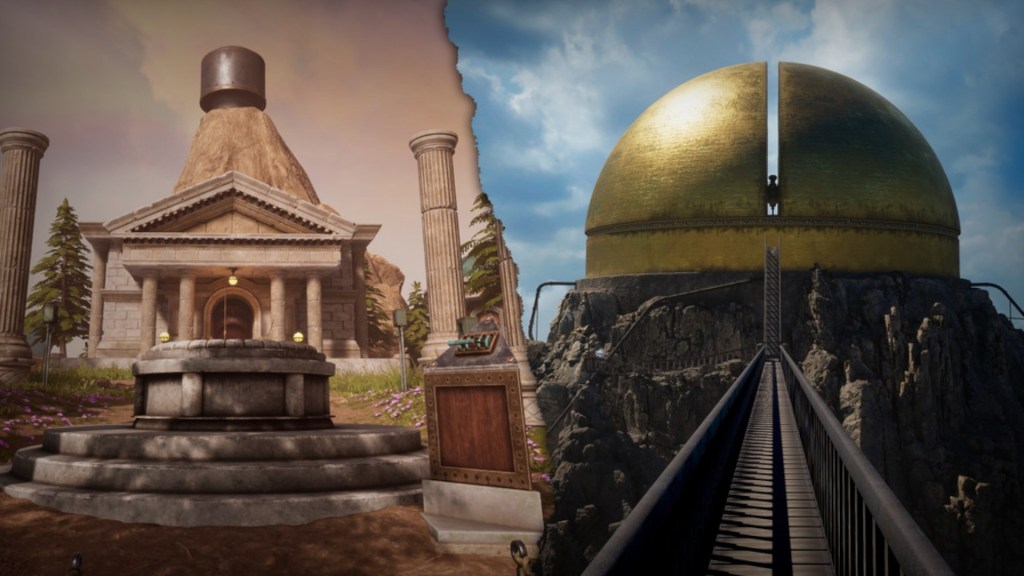
As retro-inspired games have moved on from the sumptuous pixel-art of the early ‘90s to the chunky but evocative 3D visuals of the late ’90s, I often feel better suited to critique them having played their inspirations at the time and on original hardware. In contrast, the gorgeous remakes of Myst and Riven are based on PC titles I knew about but never actually played until picking them up GOG more than a decade late. I was too busy playing PC titles like Command & Conquer, Duke Nukem, Baldur’s Gate, and Unreal Tournament to consider slower-paced puzzle games.
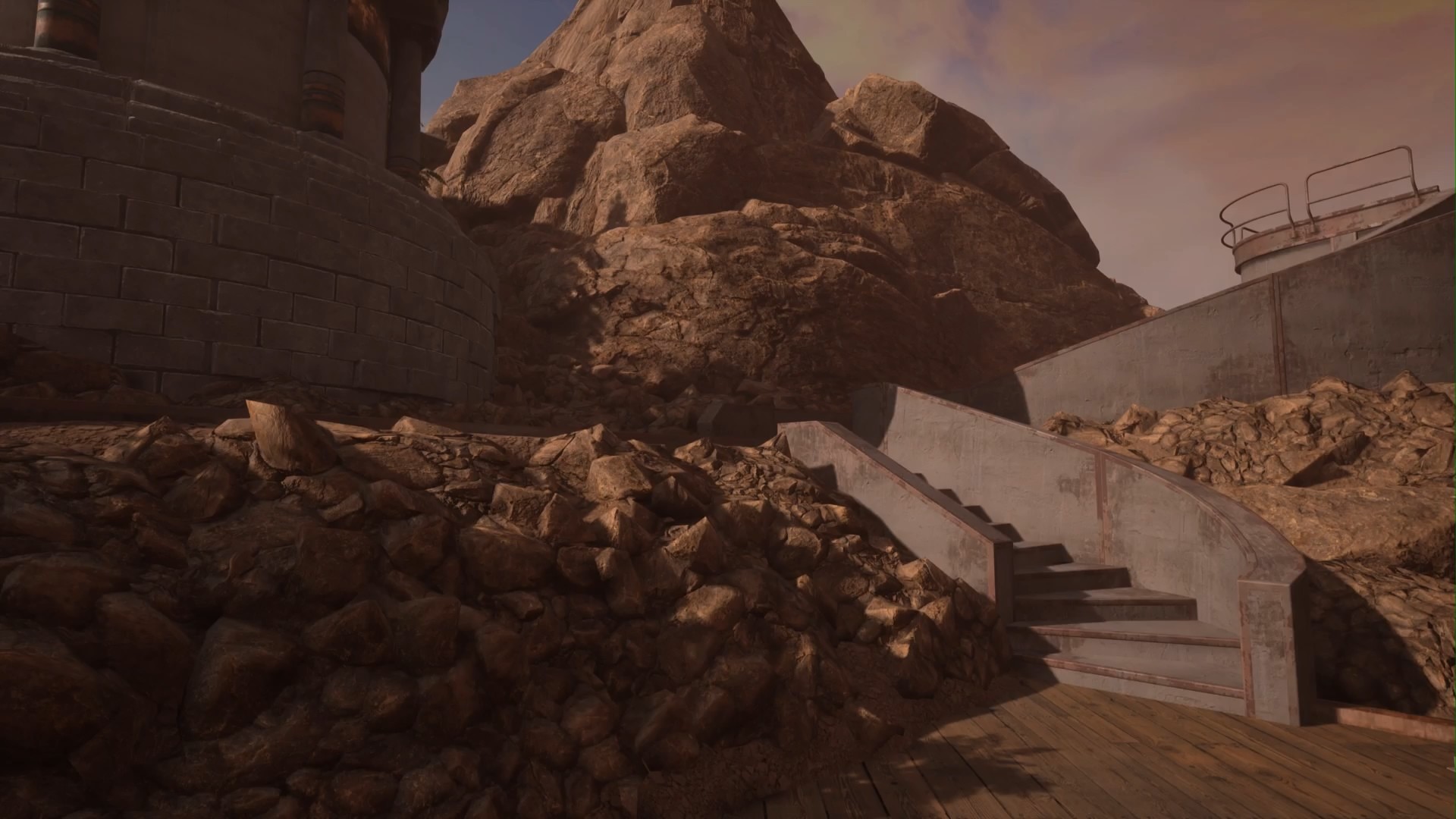
Playing the remakes of Myst (1993) and Riven (1997) in 2026 (while swapping back to the classic versions for comparison), I wish I’d never let them pass me by. Despite the updated visuals and overhauled puzzles in Riven, they remain games from a time when we weren’t bombarded with news about the next best thing the moment the previous best thing released. They are most rewarding when you explore them at a leisurely pace, notebook in hand, fully immersed in their bizarre worlds full of cryptic puzzles.
All of which is a roundabout way of saying the Myst and Riven remakes are difficult to recommend these days to those without a strong nostalgic hook, a lot of patience, or a willingness to use guides on a first playthrough.
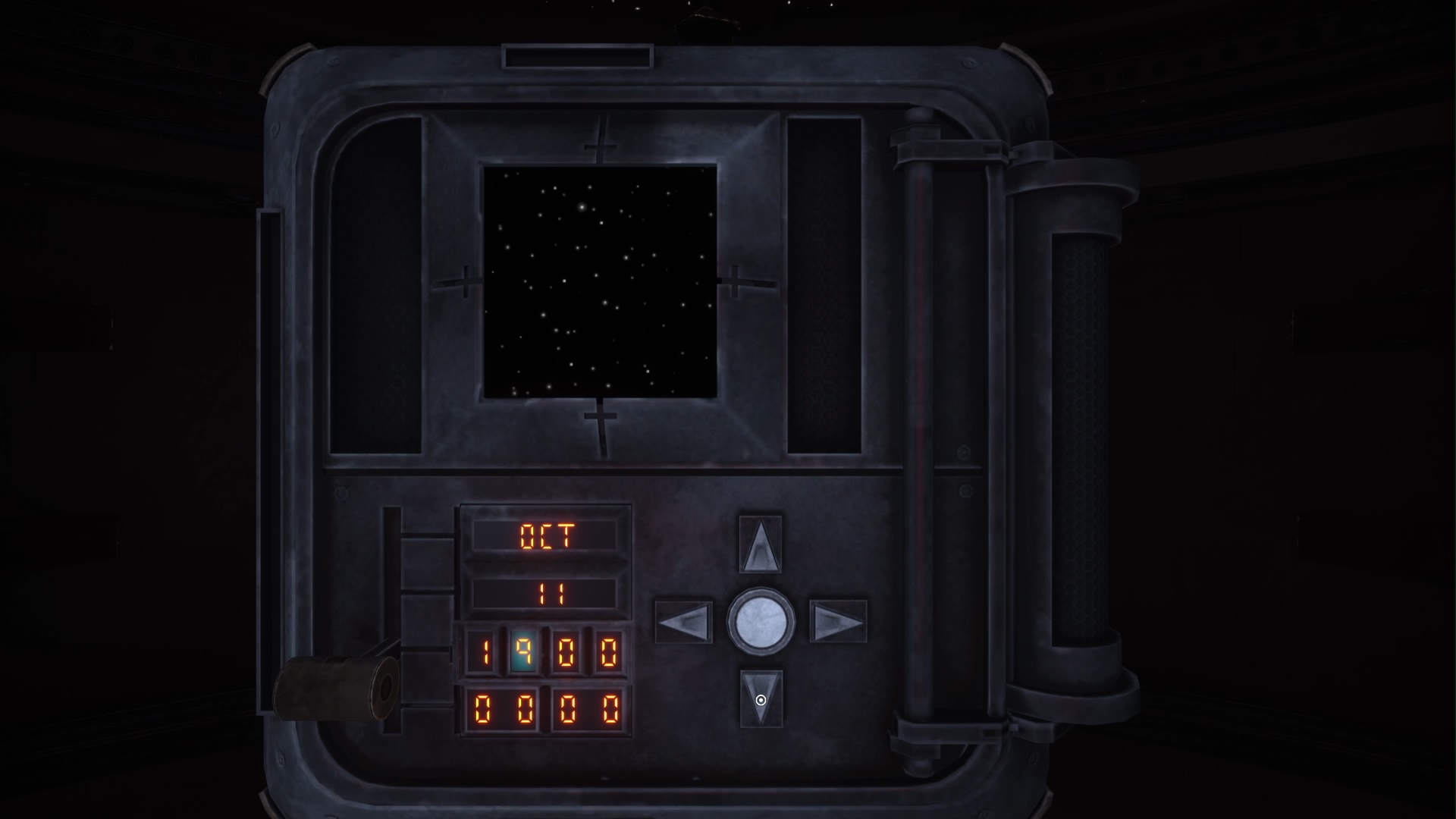
That said, if they have piqued your interest, or if you’re looking to return the series as I did, you’ll want to start with Myst. It introduces a small cast and sets up the events of Riven but, more importantly, it serves as a gentler introduction to the gameplay loop and visual design language both games rely on.
You play as a voiceless protagonist that fell into a cosmic rift only to discover a curious book titled “Myst” among the stars. Placing a hand on the page, you’re whisked way to the titular isle and the adventure begins. On a dock, with no fanfare, no HUD aside from a hand icon, and no journal with a quest log or structured list of notes and clues. If you want to know more, you need to push forward and figure it out yourself.
It is a wonderful change from modern games with cutscenes that run on so long my TVs auto-dimming feature kicks in at the 10-minute mark.
This also means that both Myst and Riven are 95% puzzle game, so direct storytelling is all but non-existent until the final minutes of the game. There are a handful of recordings and a few well-written journals that flesh out the nature of the “Ages” you explore, but both Myst and Riven are focused on a constant cycle of careful observation, noting down clues, prodding and poking mechanisms, seeing what happens, and trying to reach some “Aha!” moment as it either falls into place and brute force pays off.
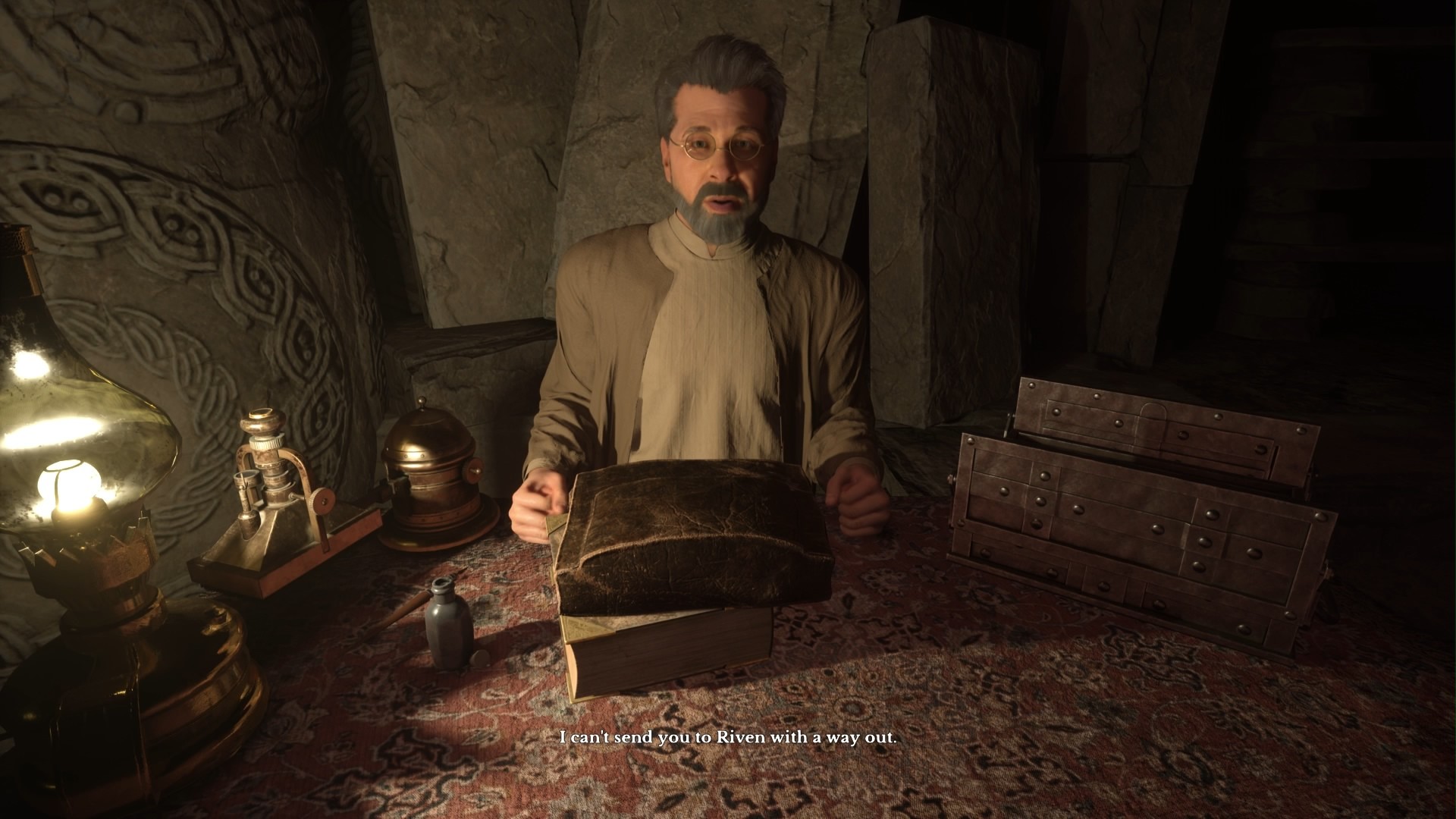
Riven is the better game but Myst feels a little better structured for newcomers and sticks closely to the original (to the point you can use a walkthrough from 1993). You stumble around the titular “Age” until you solve one or two puzzles to gain access to a new Age – realms written into existence by some initially unknown figure – in which you solve several self-contained puzzles, then return to the island with new knowledge to solve another puzzle that leads into yet another Age.
In contrast, Riven takes place almost entirely in the titular Age, but you move back and forth across several islands using monorails or dimensional rifts. For both new and returning players, most puzzles have been reworked and there is a new tool to highlight clues and bypass a few puzzles that were unforgivingly exacting.
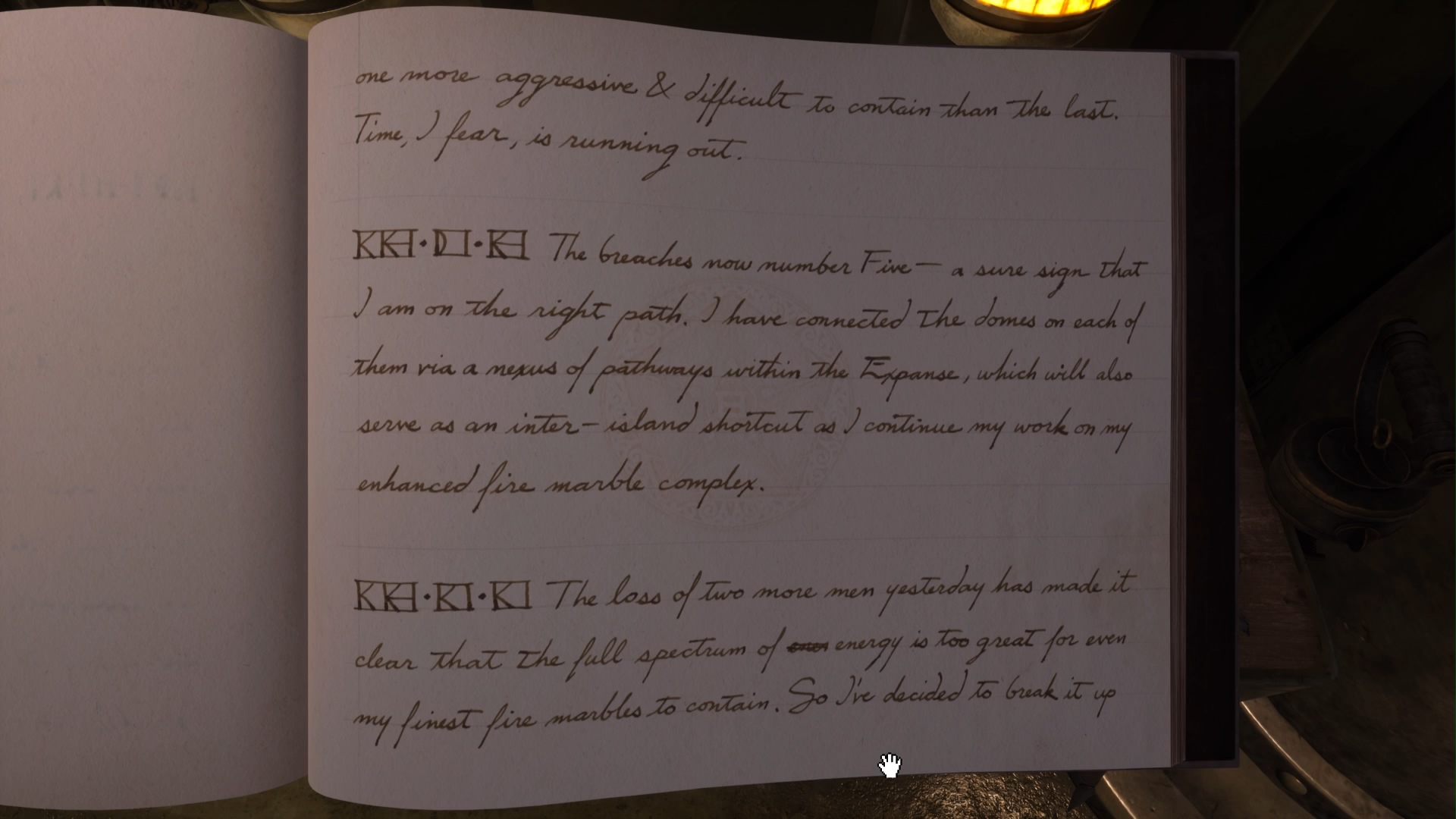
However, each island feels less self-contained and it is easier to end up wandering around aimlessly, noting down random clues and taking screenshots that you might only use much later. It blows my mind that anyone in 1997 had the patience to go through the same experience by manually clicking through screen after screen of prerendered backdrops or video transitions.
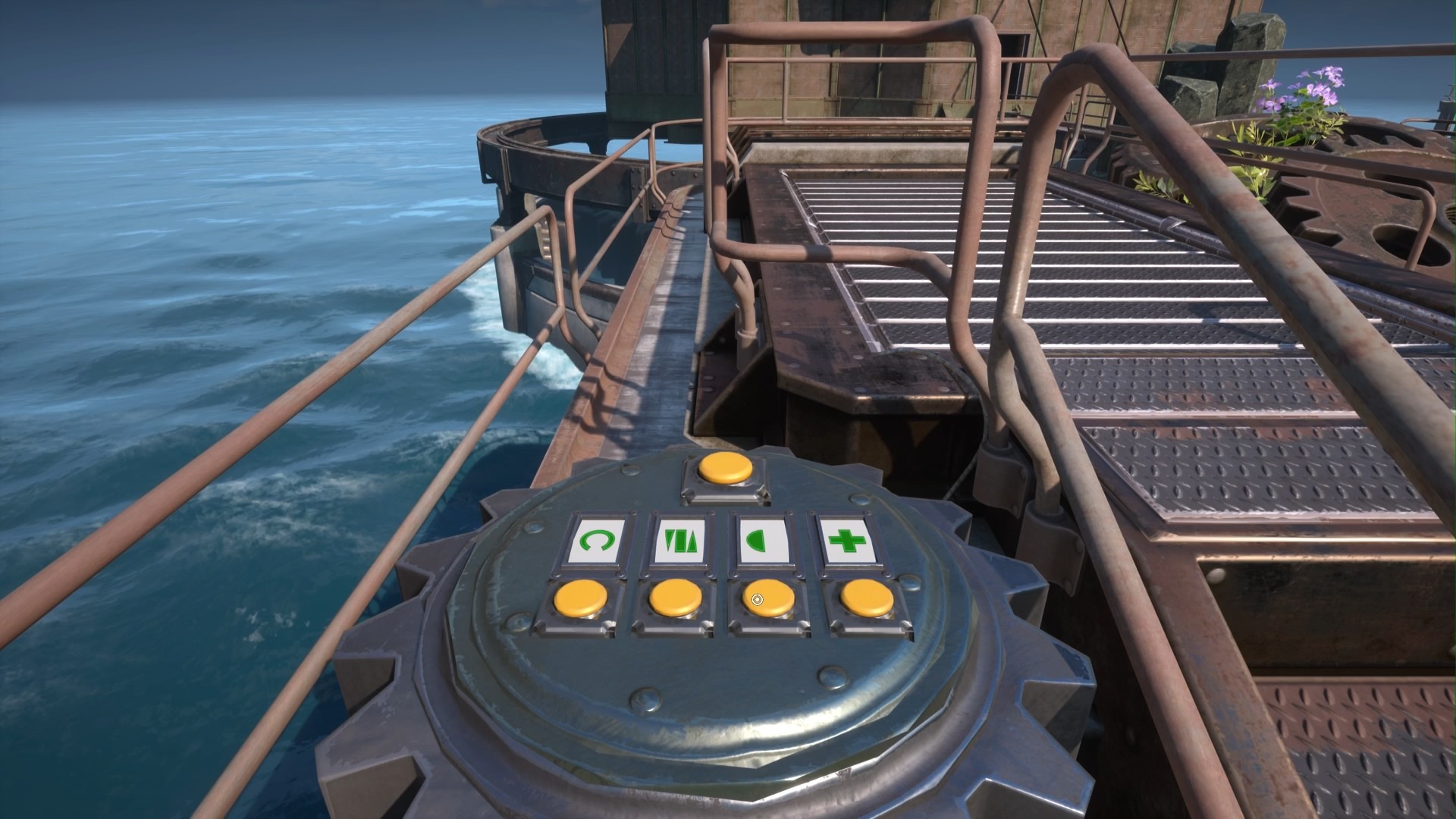
To both Myst and Riven’s credit, every puzzle feels unique even if they are seriously cryptic by modern standards. You sift through notes for clues on how to activate machinery using the correct steps, switches, symbols, or values. You link star constellations to dates in an observatory; transfer water through a convoluted piping system; link background sounds to directions to navigate a maze; tweak the colour and apertures of lenses; match symbols hidden in the environment to totems; and decipher a counting system in a fictional language.
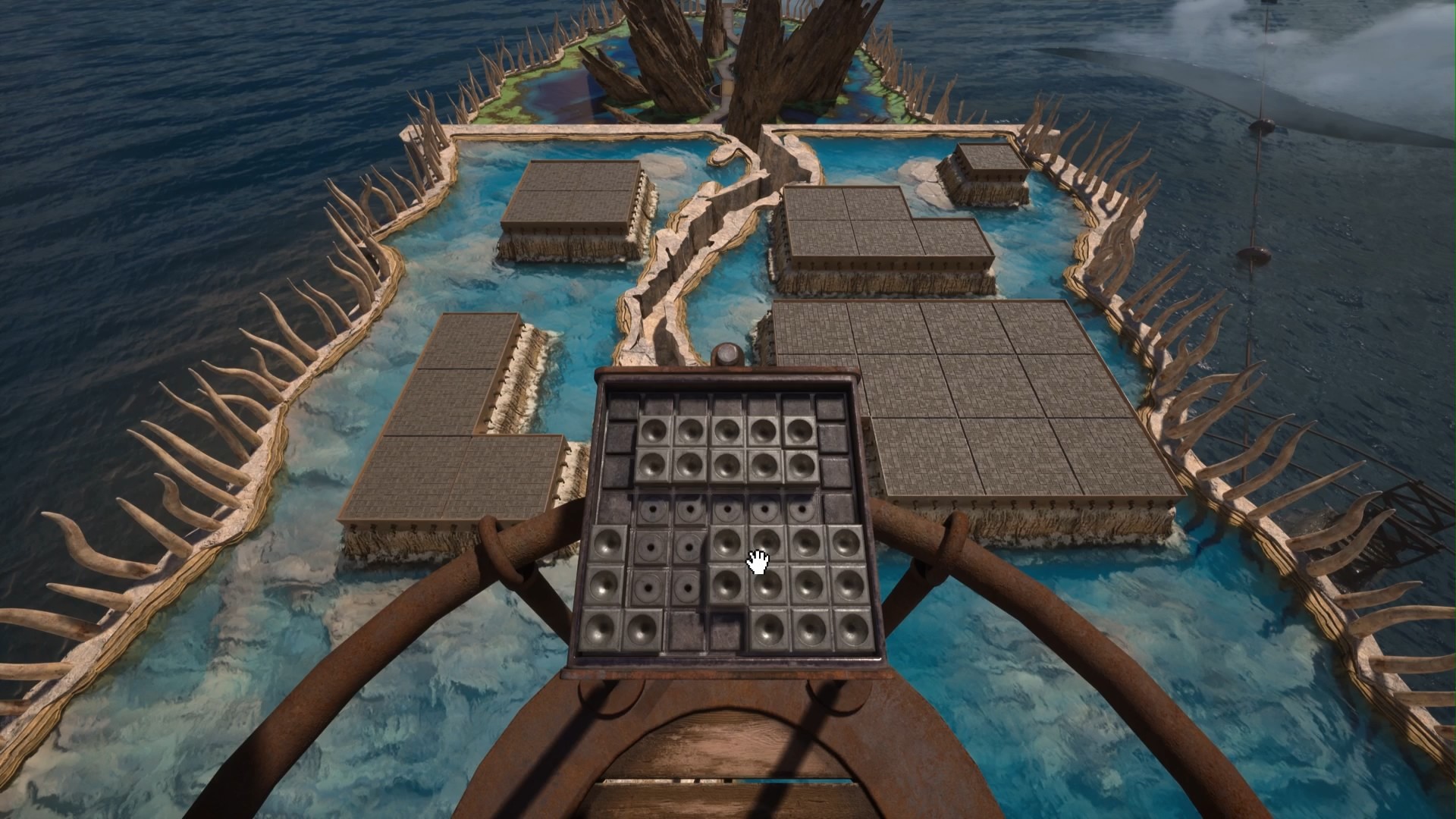
There is a lot of satisfaction to had solving puzzles compared to many modern games that seem to actively mock your intelligence. The downside is that these are not games to play if you’re tired– unless you’re actively looking to fall asleep on the couch or your desk chair.
On that note, it is worth noting the incredible effort it took to recreate prerendered backdrops perfectly in a modern 3D game engine is not complemented by modern accessibility settings. Both Myst and Riven look gorgeous, with incredible soundscapes that do just as much to create an atmosphere as the visuals. Gameplay is limited to moving around small areas, observing details, and interacting with puzzles, but it feels impressively immersive on a big screen, in the dark, with headphones on.
On the whole, I’d argue the Myst and Riven remakes are essential experiences for modern puzzle-game fans curious about where many genre staples originated from. That said, many other remakes of classic puzzle games, notably Microids’ Amerzone – The Explorer’s Legacy and Syberia – Remastered, have put a ton of effort into creating expanded journals and optional, incremental hints to guide new or returning players towards puzzle solutions. Purists might argue we have access to thousands of guides at any given moment on our phones, tablets, and PCs, but I’d argue it was disappointing to pull myself out of these incredible game worlds when I needed a hint.
The Myst and Riven remakes were played on PS5 using code provided by the publisher. They are also available on PC and Xbox Series S/X.

