Tag: Playstation 5

  • Review: Lou’s Lagoon (XBOX Series)

    Review: Lou’s Lagoon (XBOX Series)

    Lou’s Lagoon. The perfect tropical vacation destination. Scintillating sunshine, sparkling beaches, cosy cafes and slow, island living. Until a tropical storm comes along and shakes up this archipelago. That’s when your uncle Lou, the archipelago’s only air delivery pilot, decides to investigate the storm. And disappears in the process!

    Now it’s up to you, as Lou’s only family, to take on his delivery duties, fix up the storm-wrecked towns and, hopefully, find Lou in the process. Them’s some big shoes to fill, but you’ve got the go-getter spirit to fill ‘em!
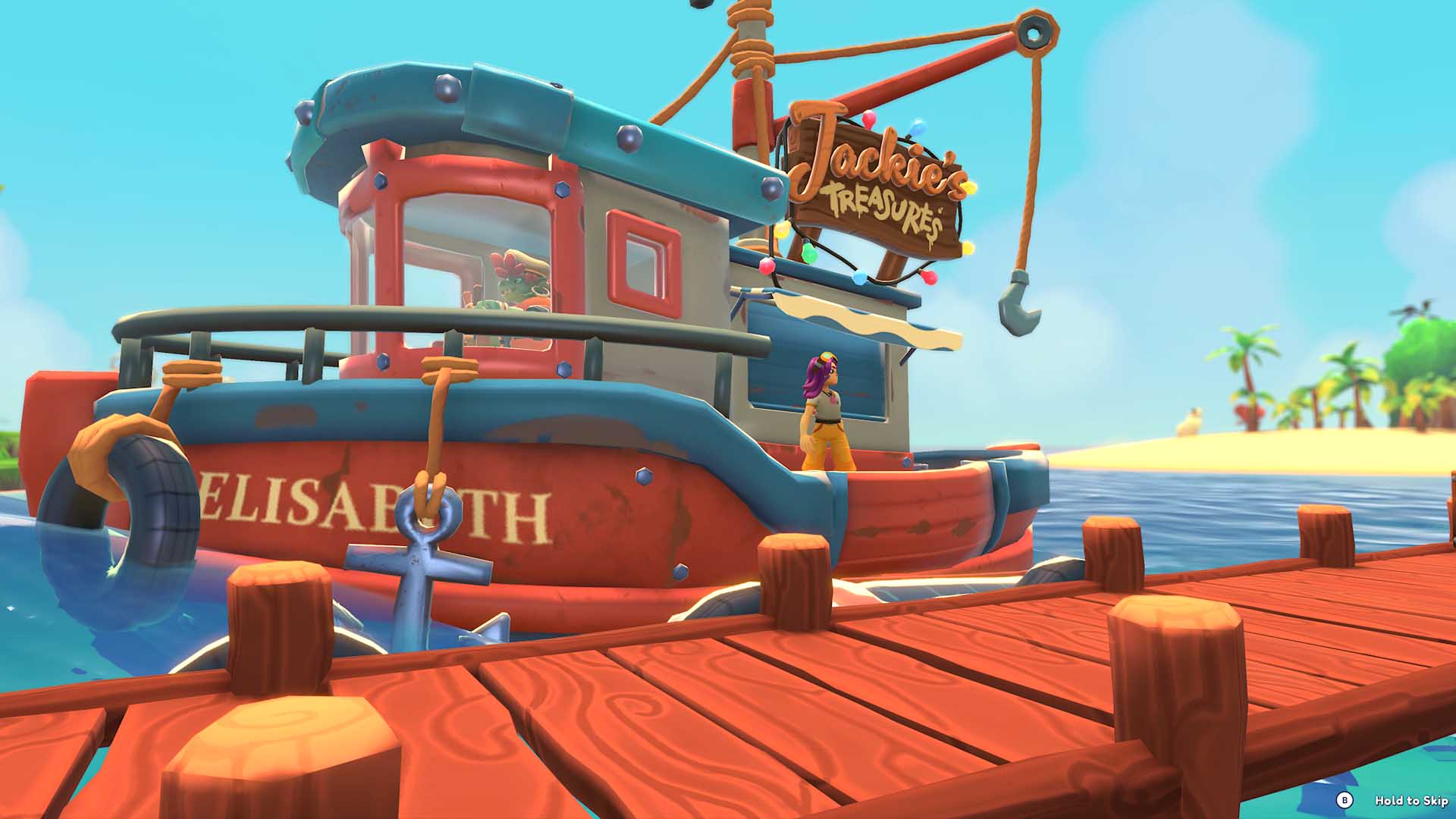
    Lou’s Lagoon is a laid back, cosy adventure game that mixes its chill vibes with the crafting genre. It sacrifices the survival aspects that are usually locked to the crafting genre in favour of a narrative-focused exploration of family and community, both natural and formed. It’s a strangely welcome melting pot of gaming mechanics that relies on our human desire to solve problems, achieve goals and build things to our hearts content. It also relies on our desire to explore, to see all that the world has to offer but to slow down while we do so and enjoy the experiences around us.

    It’s this slow approach to crafting, without the traditional time or danger limits that the genre usually entails, that makes Lou’s Lagoon such a joy to play. While it may not escape all the pitfalls of that particular genre, it does a great job of capturing the creative aspects of gameplay that makes the loop of gathering, crafting and building so enticing. That it’s at whatever pace you dictate is what makes it so relaxing. Not having to worry about something damaging my builds or endangering my every step to acquire a rare ingredient is utterly captivating.

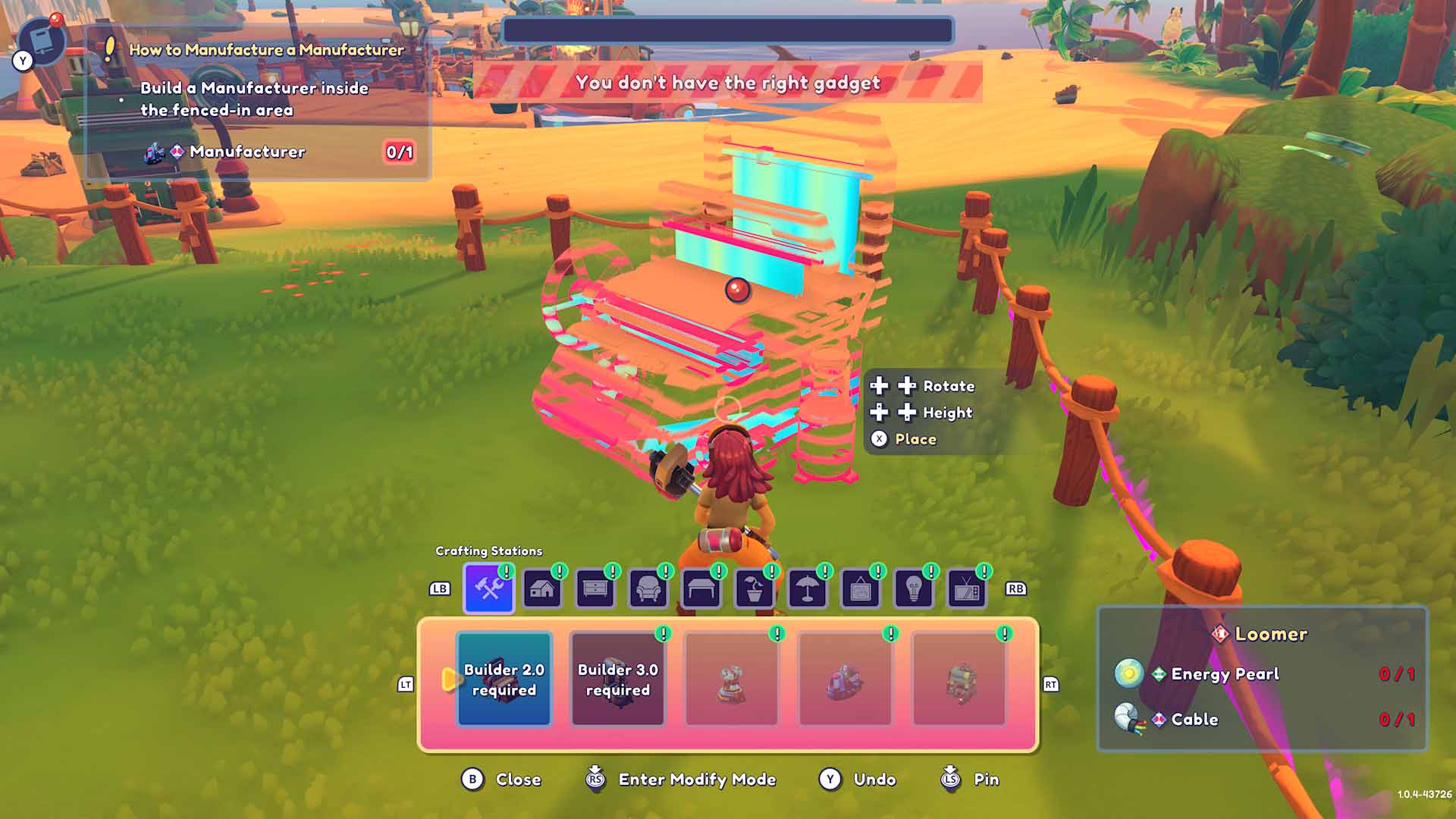
    Lou’s Lagoon does an admiral job of both stripping back much of the gathering and crafting clutter so prevalent in the genre while also streamlining as much of it as possible. You have one major tool at your disposal that can be upgraded to perform multiple functions for crafting, building and analysing the environment. A glider will help you get to those hard to reach places and there’s a stripped back pool of extra manufacturing machines to help you refine your ingredients into other forms to use.
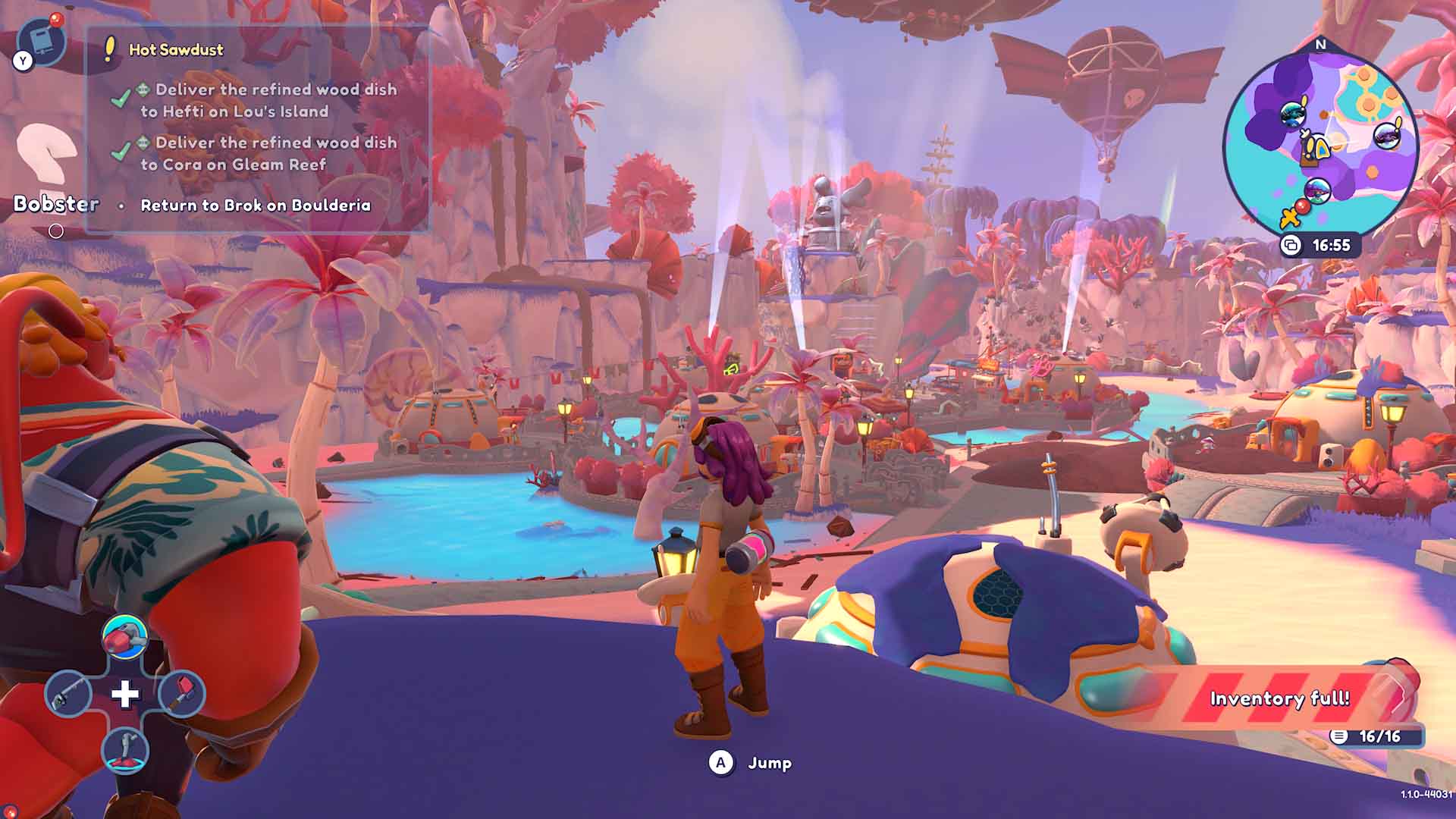
    The core crafting and gathering loop remains as compelling here as it does in the best of these games. You explore to find new materials, harvest them, combine them when needed and finally forge whatever is needed for the moment. The game does streamline many of these aspects for the better. Early on, a drone becomes available to you that you can send out to harvest more materials for you, once you’ve discovered them that is, for a small amount of shellings, this worlds money. There are also fewer amounts needed to craft what you do as compared to most other games, but this is also balanced out by how much you can harvest from any source before waiting for it to renew.

    The time for materials to be processed has also been paired back, letting you pop a whole bunch of final materials out in a relatively short amount of time while you’re busy with something else. And, finally, building and fixing structures is as easy as using your fabulous multi-tool to blow the parts into an item that needs fixing or, when you’re building your own little place to stay, as laying down the parts you need as in every other game.

    You can get more done by constructing more drones or forging machines to deal with multiple things at a time, but I really didn’t feel the need to overload my workspace with machines to speed things up. I appreciated the laid back pace that the game started me with throughout the adventure.
    To be fair, the bulk of Lou’s Lagoon activities are tied into fetch-and-give quests, fixing broken structures or crafting specific items for the archipelagos inhabitants. You’re a bit of a glorified delivery person after all, but the games charm keeps these sidequests entertaining. It doesn’t hurt either that they pay you in shellings and cores to unlock new part blueprints.

    Until you repair the game’s fast travel points, you’re going to be jetting across the titular lagoon in one of Lou’s spare delivery seaplanes. Exploration is a massive aspect of the game, charting the lagoon as you fly around, discovering new and strange locations, and dealing with the occasional giant sea beast or air pirate. The exploration areas is relatively large, but this is no true open-world adventure, which brings me to one of the game flaws in that you have to load into each location that you’ve found. You can swim around the smaller islands that populate each location, but, sadly, there’s no jumping into the ocean and swimming your way over to that island that’s just a couple hundred more feet away. Hitting invisible walls in the wide, open ocean is just weird.
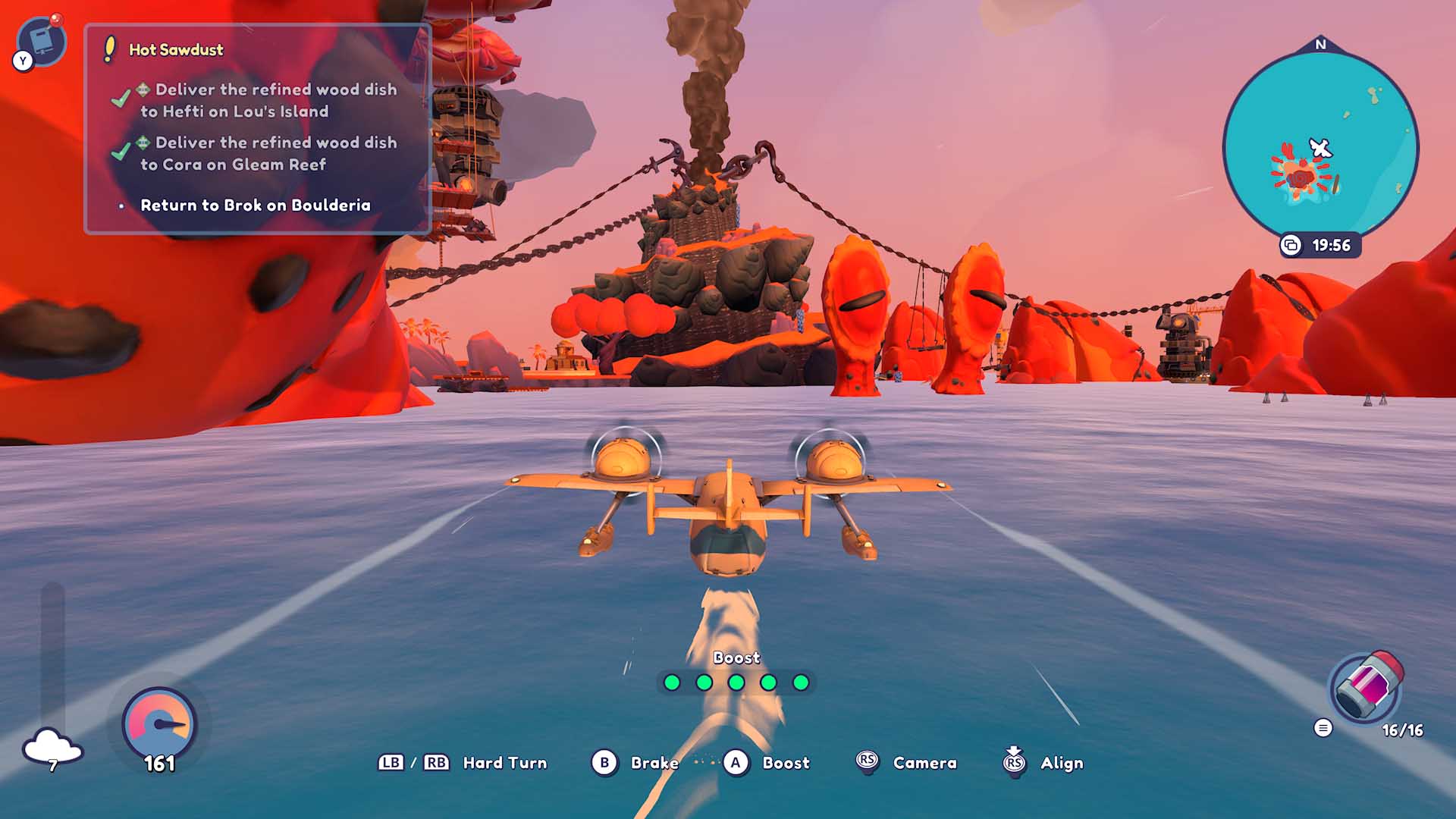
    Lou’s Lagoon also puts a big spotlight on its narrative, which is designed to keep you exploring as well. It’s a fun little quest line that introduces you to this colourful world and its mythology. Here the design stylings are similar to most third-person exploration games in that you can sprint, double-jump and deal with pirates by essentially harvesting their ill-gotten gains away. Combat is a case of using your multi-tool to suck away at their “health bar” which sends them packing. Since the idea of the game is laid back fun, there’s no real danger in combat, or in taking long dives off of cliffs. Where most survival and crafting games are reliant on emergent gameplay to keep you engaged, Lou’s Lagoon is more predictably structured in its storytelling and gameplay loops.

    One sore point for me is in the games inventory system or, rather, in how much space you don’t have. There are a lot of materials to discover but you can only hold so much in your inventory. Your seaplane has a cargo hold to store extra items and you can sell unwanted stuff, but how much you can keep on your person resulted in a lot of swopping items in and out while prioritising what to sell or just outright destroy to finish the task at hand.

    Overall, Lou’s Lagoon is a cosy little adventure that feels bigger than it actually is. There’s a fun story, nicely varied locations to sit back and take the view in, and a lovely streamlined crafting system that made the art of building a joy to do again.

    Pros:

    • Nicely streamlined crafting system
    • Varied locations to explore
    • Exploration is a lot of fun
    • No hand-holding

    Cons:

    • Not enough inventory space
    • Invisible walls in the open ocean

    Score: 7/10

    Lou’s Lagoon was played on Xbox Series X using a code provided by the publisher. It is also available on PC, Xbox Series S, PS5, and Nintendo Switch 1/2.
  • Review: Mexican Ninja (XBOX Series)

    Review: Mexican Ninja (XBOX Series)

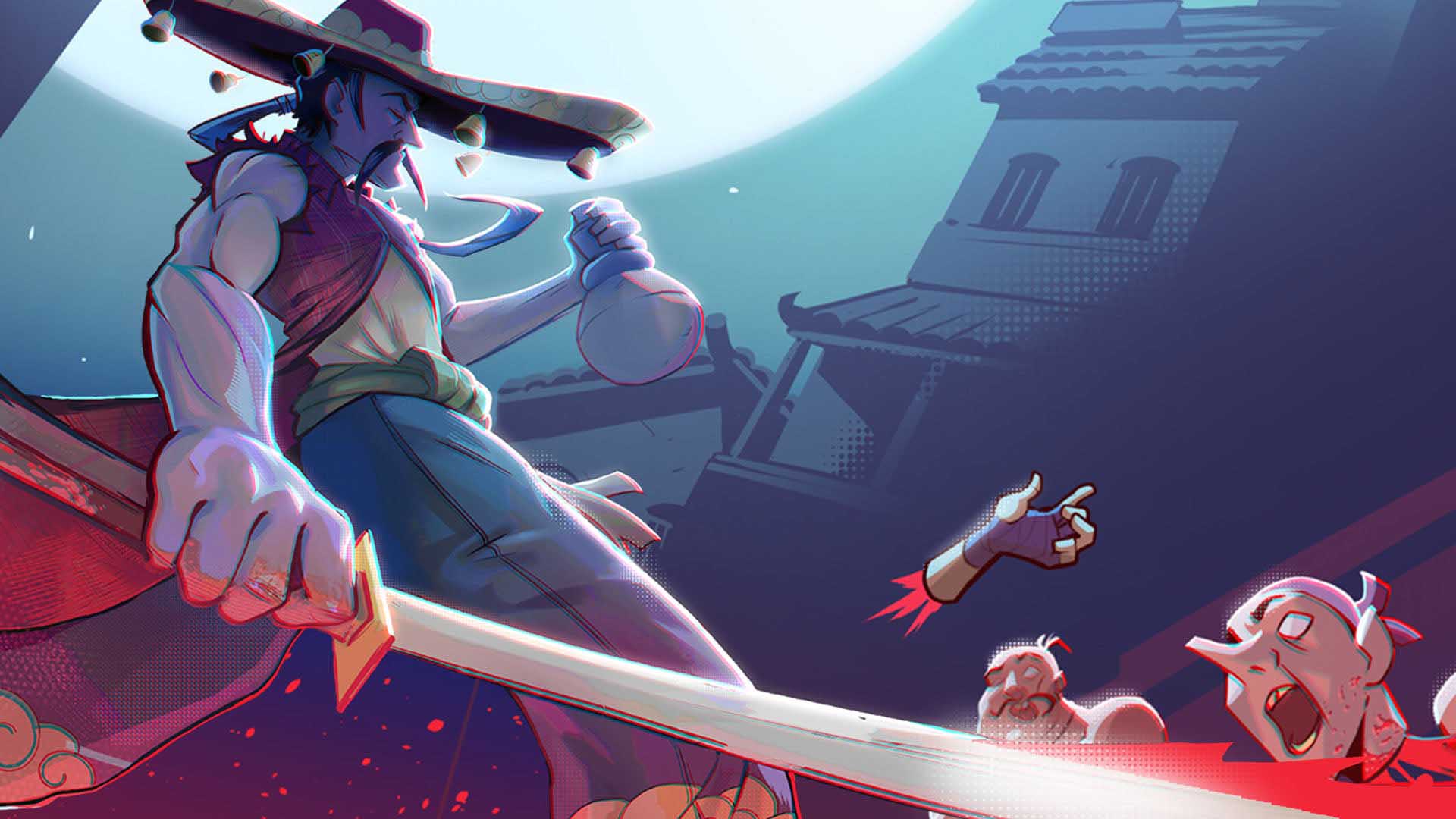
    Japan and Mexico. The Narcos and the Yakuza. Who would have thought that they’d become one, eh Hombre. Now they’re filthy Narkuzas, making life hard in your Pueblo. Aye Caramba ese, what’s a Mexican Ninja to do but go and show them whose boss.

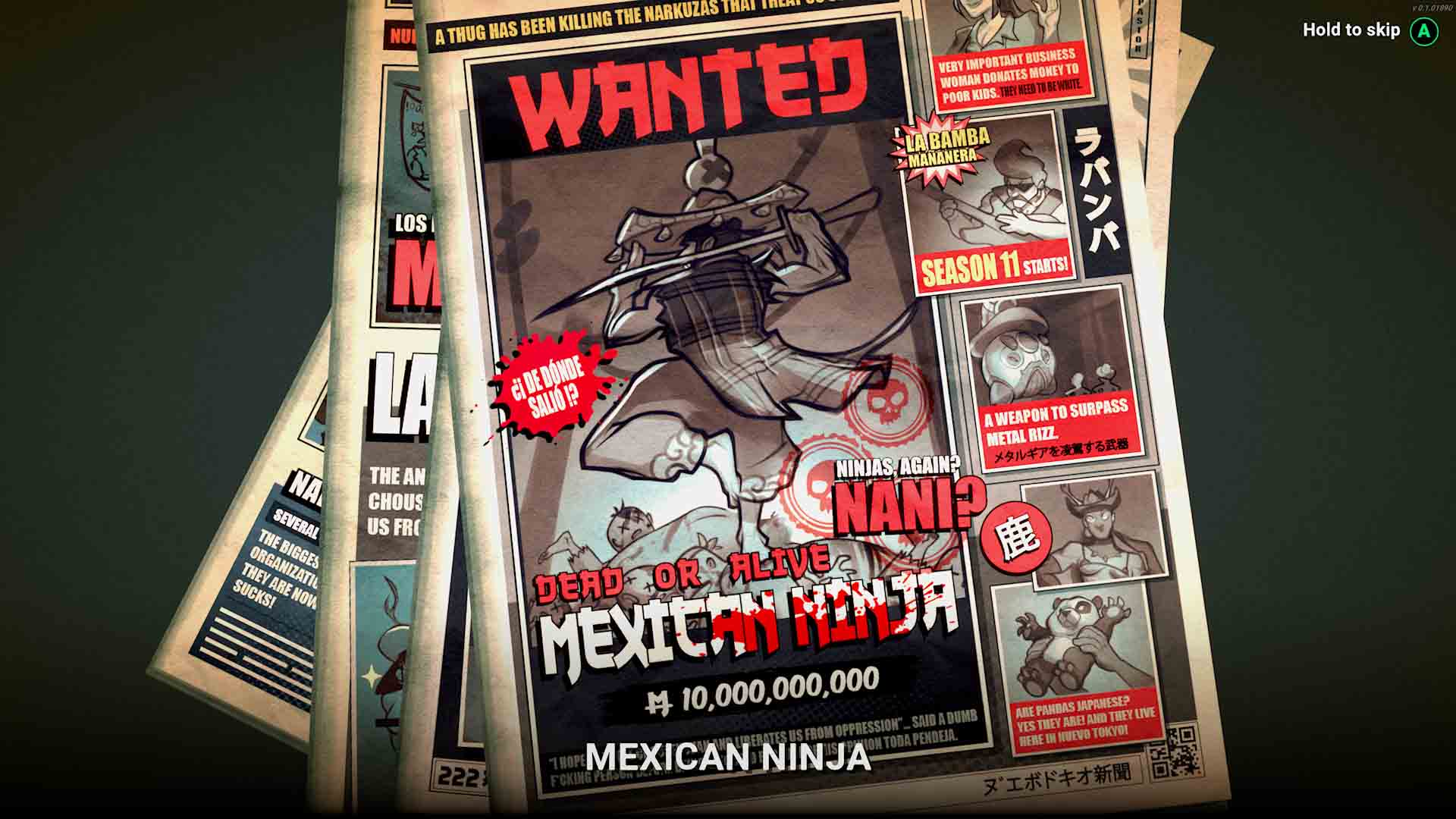
    Welcome to the wacky world of Mexican Ninja and it’s melting pot of two intersecting cultures in the crime-ridden city of Nuevo-Tokyo. Somehow, someway, the Yakuza and the Mexican Cartels have banded together to create the Narkuza – a ruthless gang of criminals making life difficult across Nuevo-Tokyo. It’s your job as that of the fabled Mexican Ninja to deliver hyper-violent street justice to the gangs and evil tech corporations flooding the city with crime and drugs. No barrio is safe from your wrath!

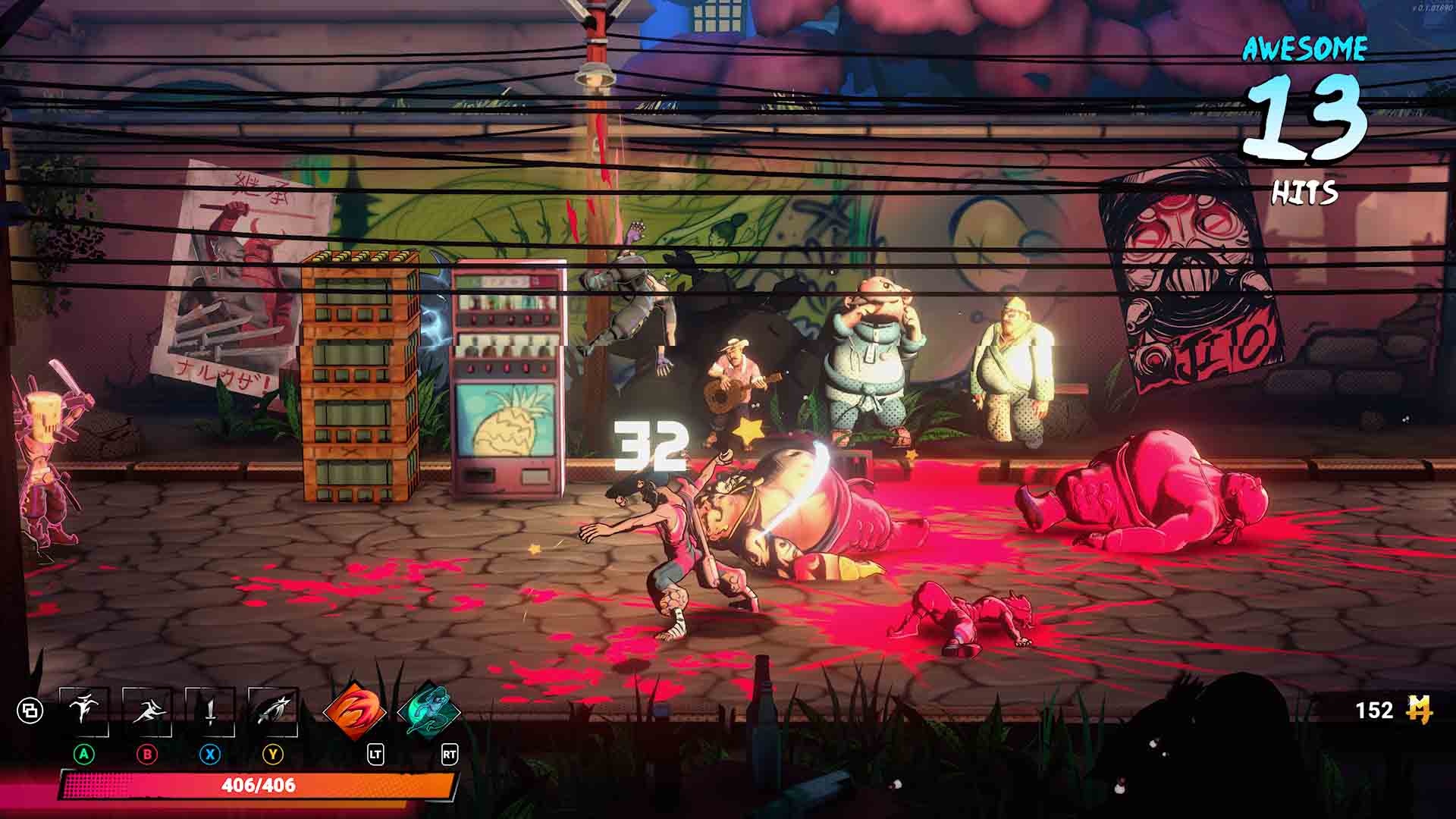
    Mexican Ninja is a brash, violent, colourful and incredibly crude return to 3D arcade brawlers and beat-em-ups. Think the original TMNT Arcade Game, Double Dragon and even Streets of Rage, if it was a dazzling explosion of colour and graffiti and more foul language than Leonardo can withstand before going into a coma. It’s a super-fast, hyper-violent barrage of melee-based combat against the lowest of the low the underworld has to throw at you. But it’s also a bit more than that. Because Mexican Ninja has a twist in the proverbial tail. And that is that it’s also a rogue-like.

    Sometimes there are pairings that you wouldn’t have considered. And mixing up a beat-em-up with rogue-like mechanics just happens to be one of those. And yet, here at least, it works incredibly well. That’s down to the fact that developers Madbricks clearly have a handle on what makes both those genres work. More importantly, they clearly understand what it is that makes both of those genres work well together. There’s a fine balancing act between mixing gameplay mechanics and styles, genres and ideas, and I daresay Madbricks have managed to do just that.

    Both genres are defined by repetition. But it’s a repetition that compliments each other rather well here. Beating arcade games back in the day, especially if you wanted to do it on one quarter, meant spending a lot of time replaying it to get good and finally carry yourself through to the end without losing a life. And rogue-likes require the same kind of dedication, just with less quarters spent in the long run. Popping them together works like a bit of a dream then, when implemented right as now your character gets stronger while you memorise the enemies and attack patterns. Unlike in traditional beat-em-ups where your character doesn’t change at all.

    This little change up in mechanics does wonders to add depth, replayability and a breath of fresh air to what is, for all intents and purposes, as traditional a multiple-stage beat-em-up as you can get.

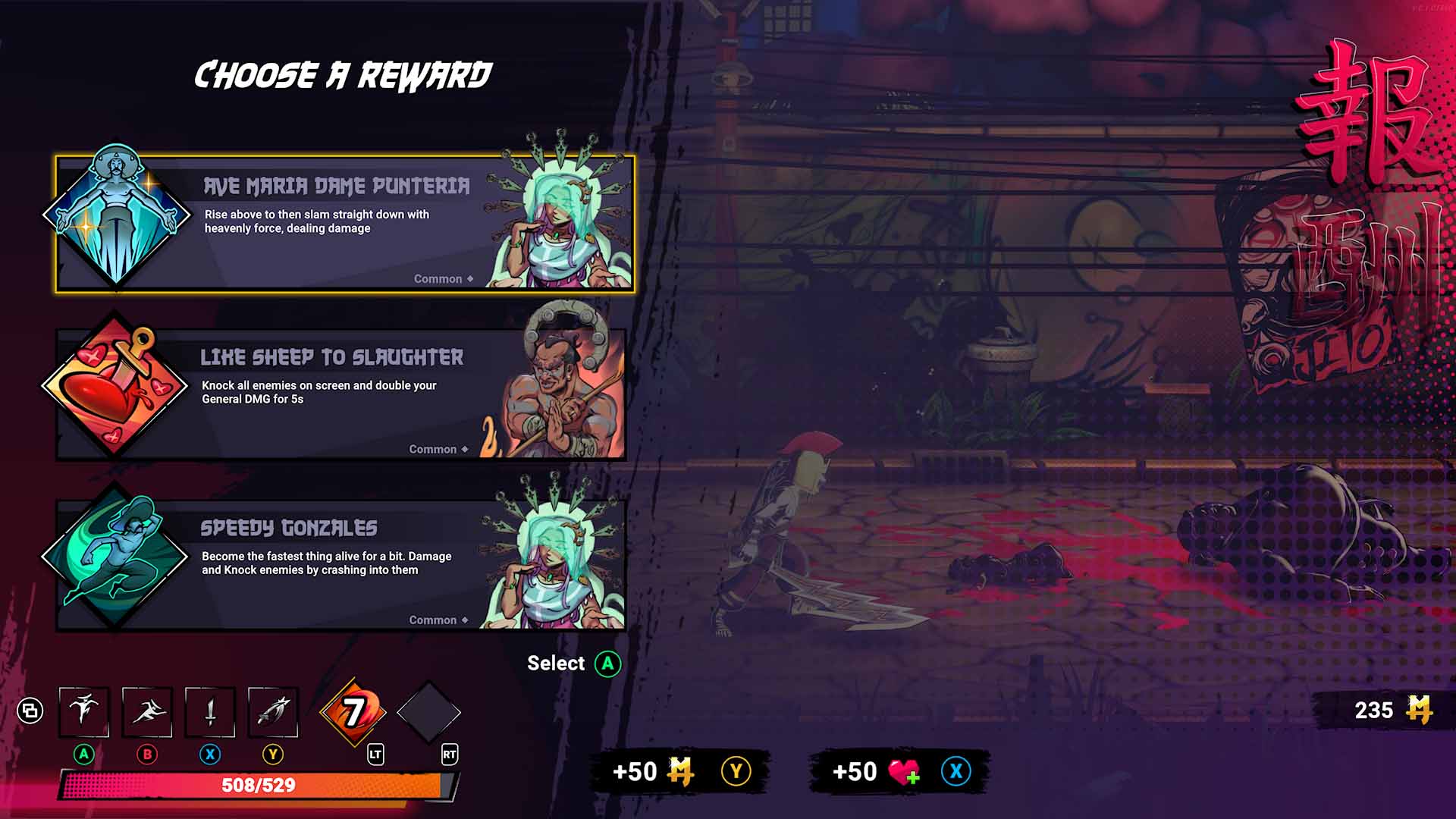
    Mexican Ninja’s focus on kinetic, high-speed action lends itself well to button-mashing gameplay. But don’t let that stop you from playing tactically either, as both styles along with fast reflexes will get you to the end. Our ornery little ninja has light and heavy attacks, a jump, a dash and a basic parry to his broke-ass name. Mixing up attacks provides some thrilling, high-octane combat as you zip across the stage, disembowelling every cabrone in your way. As an added bonus, you get two Jutsus to help you even the odds, the first of which is picked up at the start of each run. The second you can choose as a reward at any of the stages that offer it as a final one, or at some of the many shrines in each area.

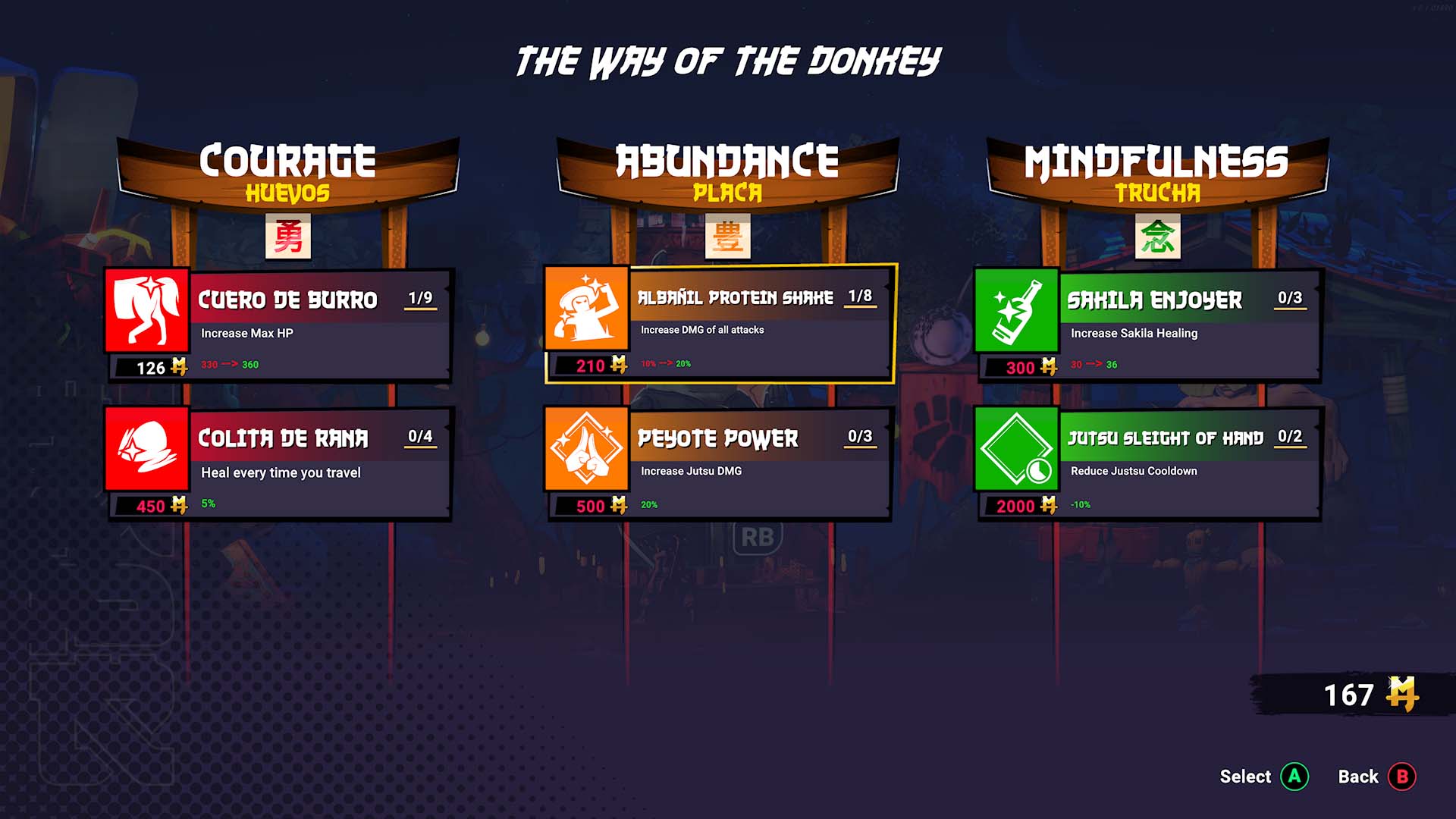
    On death, enemies drop all too valuable Yen for you to use in the games hub to upgrade the ninja. There are two skill trees to blow your cash on. One provides basic stat upgrades, such as increasing magical damage, health and base attack damage while the other tree unlocks new attacks and combo perks. Both are necessary to increasing your chances of making it through Mexican Ninja’s gauntlets.

    As much as button mashing will get you far, it’s learning those extra moves that make a difference. Not just for the games boss fights which are full of AOE’s and the occasional ad, but to chew through enemy shields faster than the basic combo will.

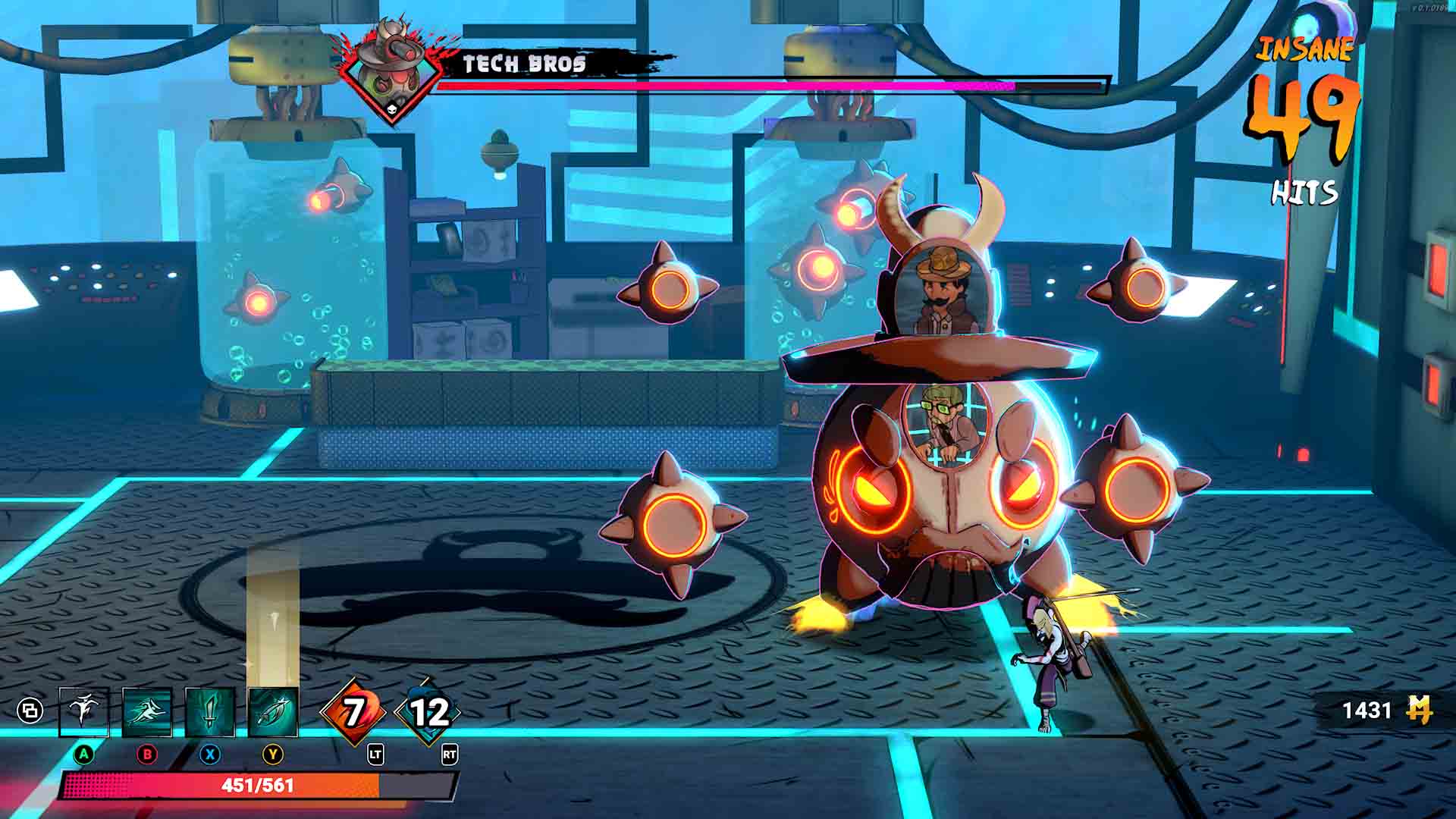
    The boss fights are also bright and colourful and as foul-mouthed as the rest of the game. From a Crack Panda to Tech Bro’s in a giant Sombrero wearing mech, Mexican Ninja goes all in on the weirdness.

    The rogue-like mechanics are exactly what you would expect. Each time you die, you start right at the beginning and lose any incremental upgrades you’ve picked up in your previous run. Money, thankfully, gets carried across with your rebirth. To make life somewhat easier, if you decide to quit the game while in a stage, the next time you resume it will be from the start of that area. But full death comes with a complete wipe and all you’ll retain is the money you had on your corpse and the permanent upgrades and moves you’ve unlocked.

    Everything from increased health and Jutsu upgrades, to enhancing all of your attacks are yours to choose from during a run. Choosing the right upgrade for your playstyle is highly important. Is a 5% damage increase worth more than a 10% health increase? That’s for you to decide. New Jutsus as well rock up throughout the campaign. Whether you want to throw out the Mexican Ninja version of a Bankai or release a deadly fart cloud around you that inflicts poison is, again, up to you. Be wary though and read the fine print on those upgrades as some come with detrimental effects to you as well.

    It wouldn’t matter though if the mechanics didn’t complement each other. And they do. Mexican Ninja is a ridiculously fast paced brawler that will keep you on your toes in fights. There’s a lot going on here and you do need some fast reflexes to keep up with it all. And that’s what makes the combat so exhilarating. The speed and ferocity is cathartic.

    Visually, Mexican Ninja is a gorgeous game. The visuals explode with colour in everything from the hectic, screen-filling attacks to the gorgeous graffiti on buildings. There’s a cel-shaded approach but Nuevo-Tokyo definitely sports its own identity in the looks department.

    The games one downside is that there’s quite a bit of noticeable screen-tearing. While Mexican Ninja’s obscenity laden dialogue and humour may not be for all, it’s gameplay is stupidly addictive and a great showcase for why rogue-likes and beat-em-ups should collaborate more often. There’s a simple joy to getting to grips with its systems and speed that makes cake-walking that fourth boss with nary a hit a pleasant high. Take a dive into Mexican Ninja‘s madness and you may just be pleasantly surprised.

    Pros:

    • Fantastic art design
    • Fast paced, fun combat
    • Weird humour

    Cons:

    • Noticeable screen-tearing

    Score: 7/10

    Mexican Ninja was reviewed on Xbox Series S/X using a code provided by the publisher. It is also available on Xbox One, PS4/5, and PC.

  • Editorial: Caput Mortum is a short, sweet, and satisfying ride that’s all too rare these days.

    Editorial: Caput Mortum is a short, sweet, and satisfying ride that’s all too rare these days.

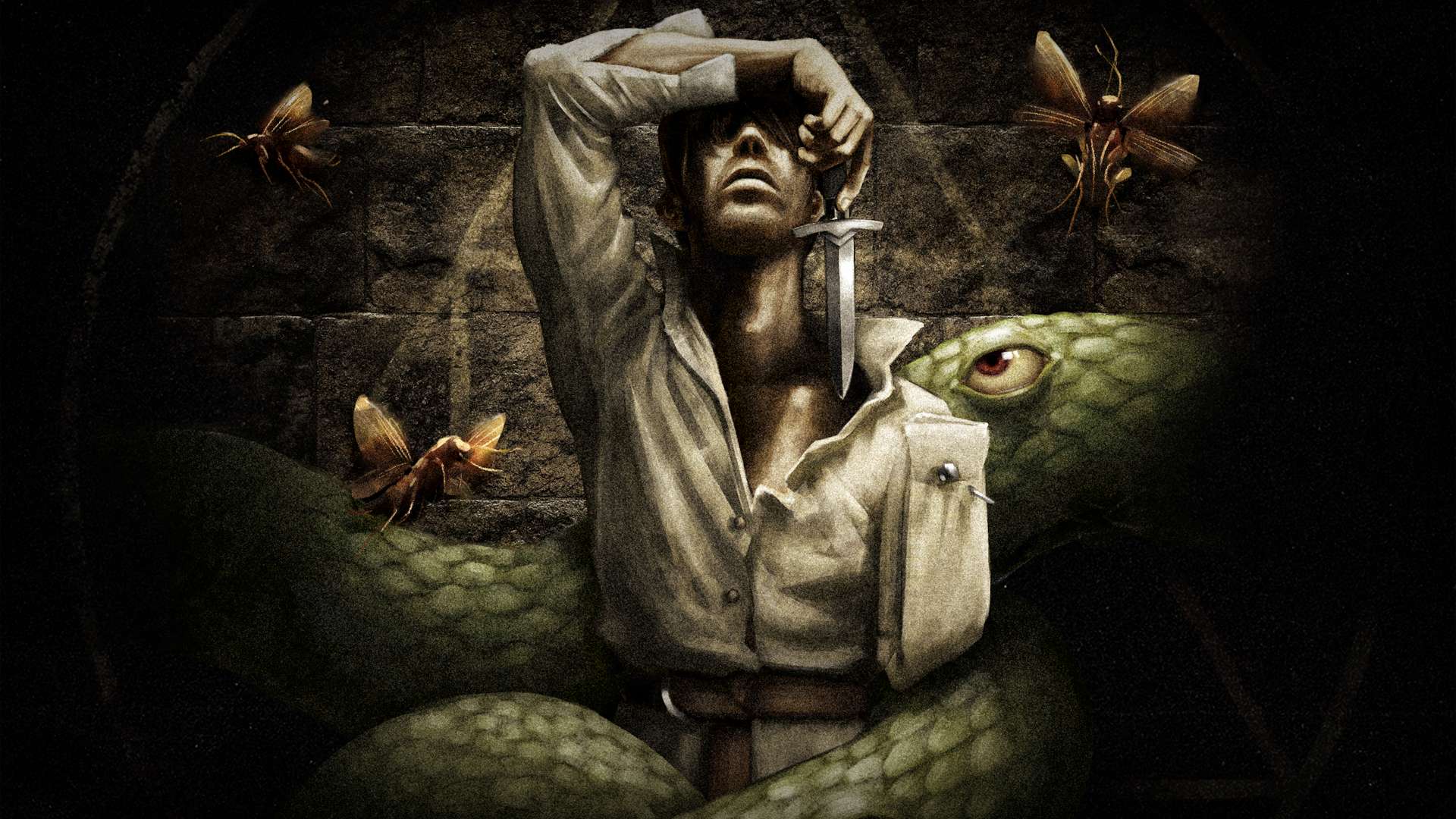
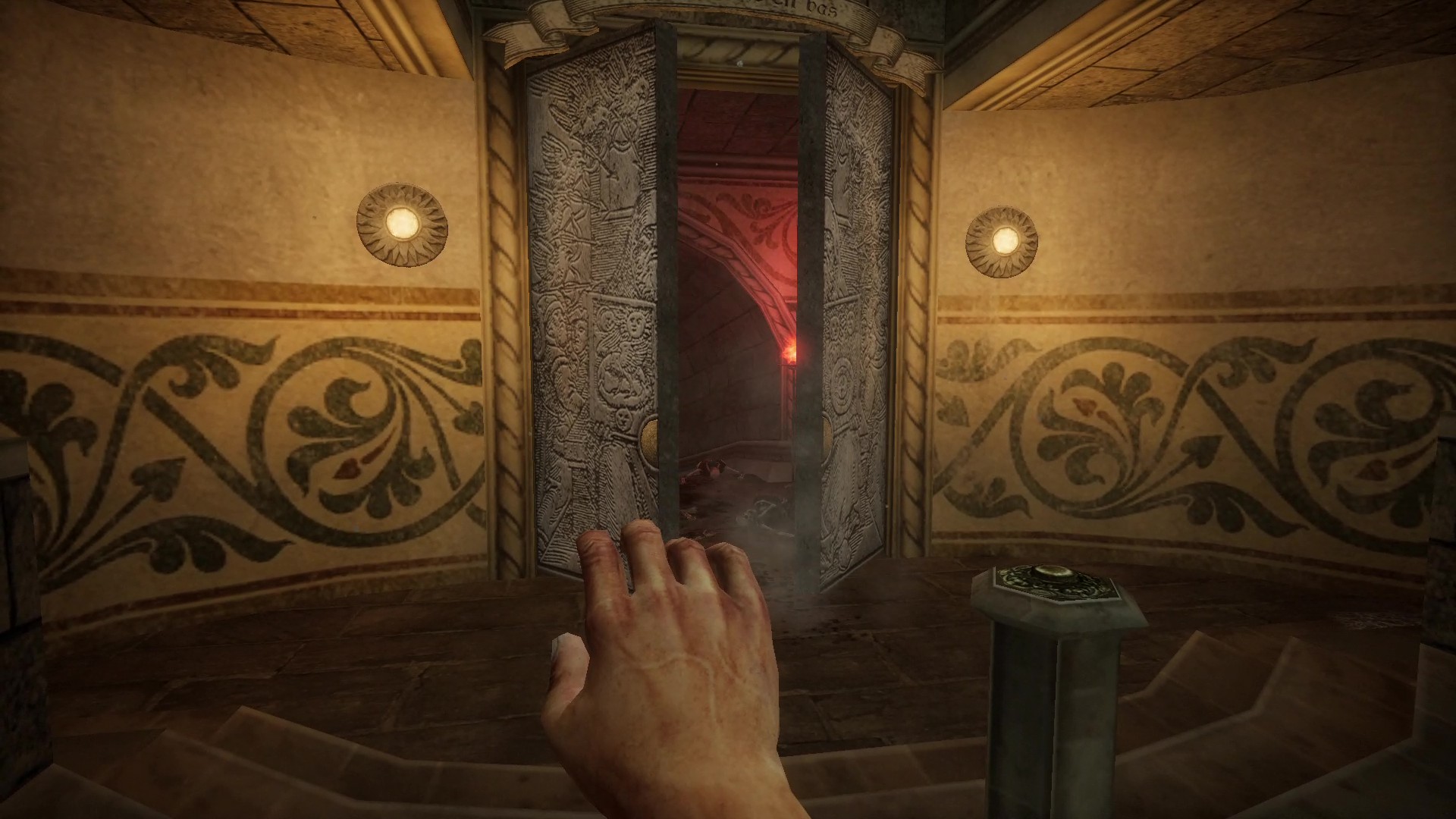
    Caput Mortum is a compact love letter to 1994’s King’s Field, albeit one taking a few cues from the more modern horror titles like Amnesia: The Dark Descent.

    It wastes no time dropping the player outside a crumbling 16th-century French tower once dedicated to alchemy; it seamlessly blends puzzle-solving and monster encounters with retro-inspired visuals (and an old-school control scheme for purists); and it delivers a briskly paced journey into the depths.

    Direct storytelling is limited so you’ll need to find scattered notes and environmental clues to reveal the alchemists’ experiments and their cruel attempts at creating new life. The protagonist’s motivations remain a mystery throughout but serve as an excuse for the player to witness the unfolding events.

    The late ‘90s inspired blocky 3D environments are impressive. Each floor of the tower feels visually distinct and atmospheric, is full of environmental storytelling details, and tension-building audio and short music loops are fantastic.

    What I enjoyed most though was the brisk pacing and compact length – both of which ensure ensured Caput Mortum never outstayed it’s welcome (and it’s appropriately priced too). I uncovered the fate of the alchemists, their creations, and the mysterious voice guiding the protagonist, then I walked away satisfied but also keen on a second playthrough to unlock additional notes without needing to invest dozens of hours.

    Gameplay is admittedly limited at first and focuses on deliberate movement and interacting with the world using a single hand. You use the mouse or thumbstick to manipulate puzzle items and keys, while wielding a small selection of weapons that double-up as tools. The controls are straightforward and intuitive, with guidance provided notes or visual cues.

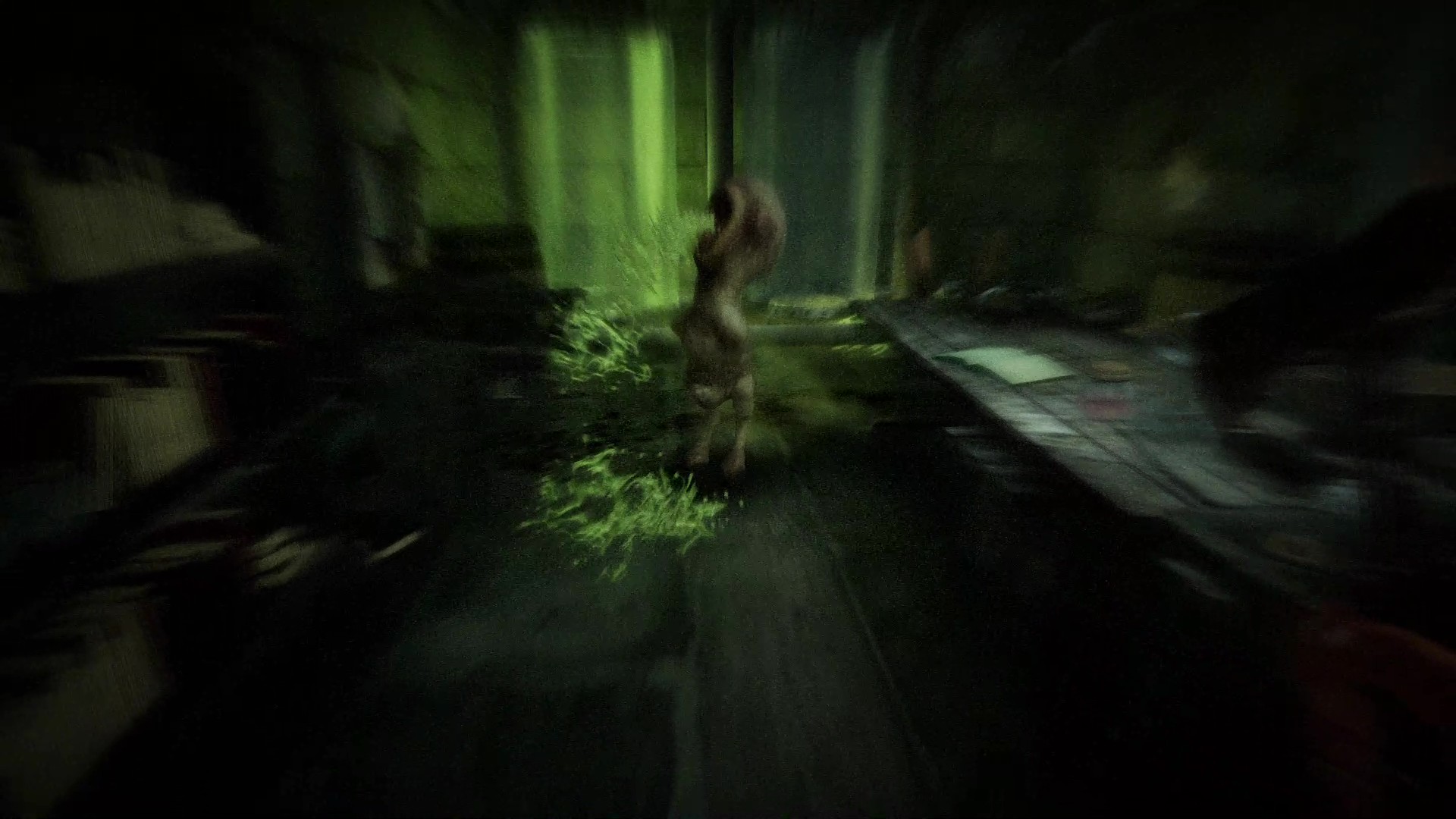
    Combat is deliberately clunky but basic enemies are manageable, and the more dangerous ones you run from. You bait an enemy’s attack animation, then counter until it falls.

    Exploration and puzzle-solving, sometimes under threat, are the strengths of Caput Mortum. As you descend, you encounter progressively more complex puzzles, starting with simple key hunts before evolving into scanning for clue, matching patterns, and concocting alchemical compounds. Some early encounters require matching hand gestures to survive attacks, while brief sections have you navigating torchlit tunnels pursued by a stalker-type creature.

    There are some dated mechanics. Quickly switching between a free hand and weapon is annoying but rarely needed. Meanwhile the game claims it only saves when entering new tower levels, but I found autosaves occurred after major puzzle solutions and before you enter dangerous areas.

    Ultimately, Caput Mortum does everything I want from a short experimental indie title. A brisk but satisfying experience that gives you some bigger budget thrills with zero padding. In 2026, a game that’s short, well-paced, and offers a satisfying conclusion is rare enough to warrant praise despite a few flaws.

    Caput Mortum was played on Xbox Series S|X. It is also available on PC and PS5.

  • Review: Kaku: Ancient Seal (Xbox Series)

    Review: Kaku: Ancient Seal (Xbox Series)

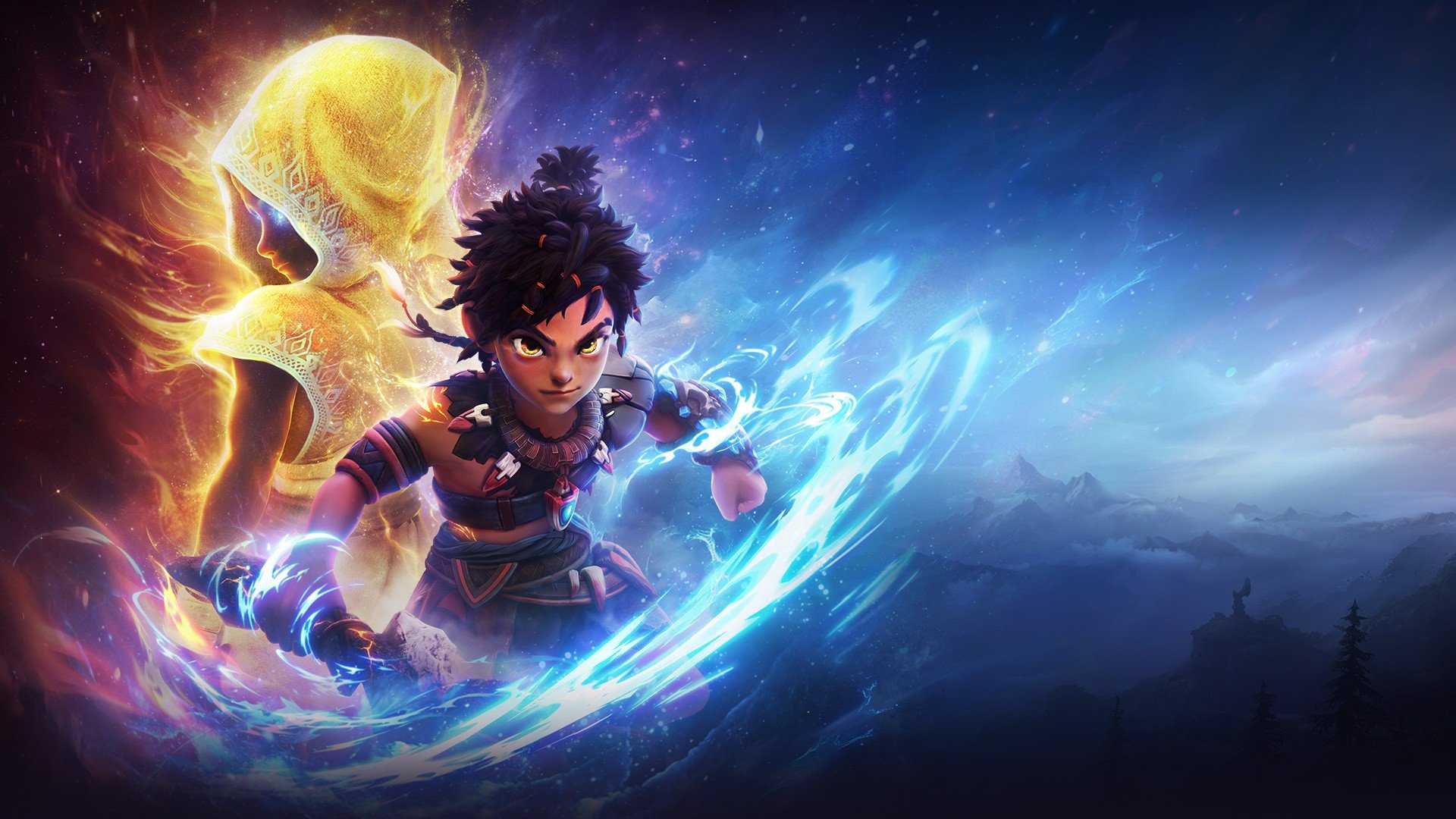
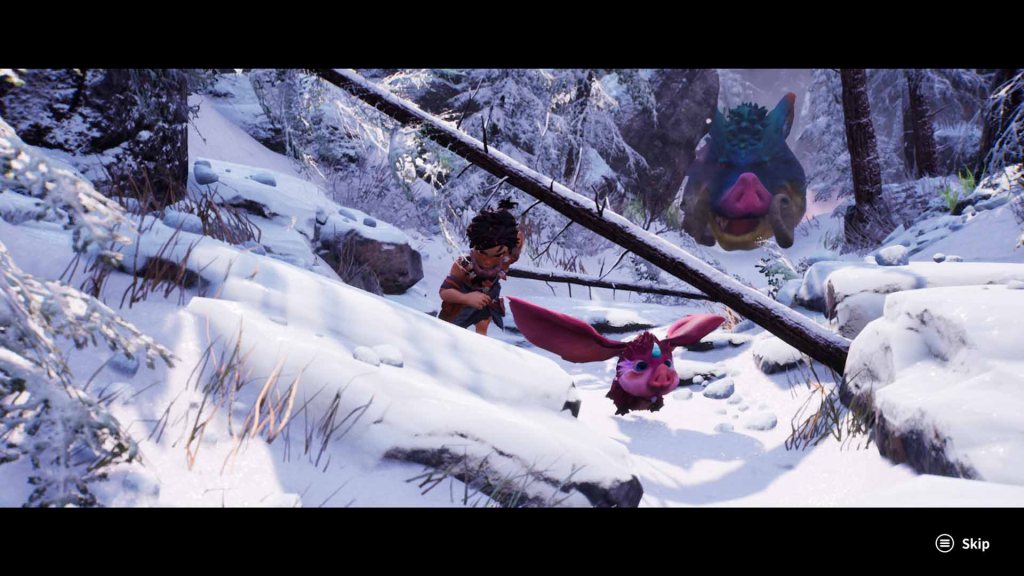
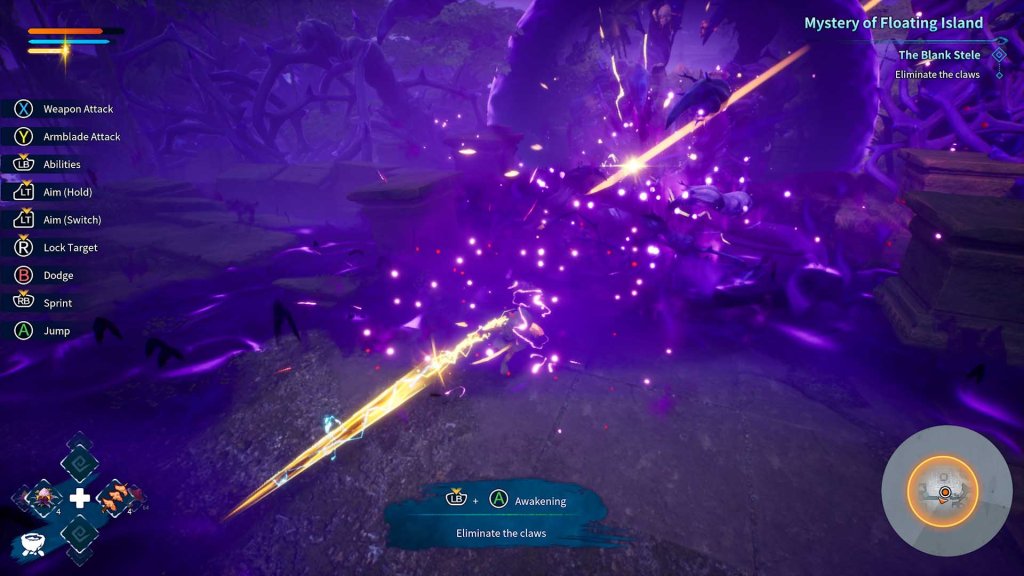
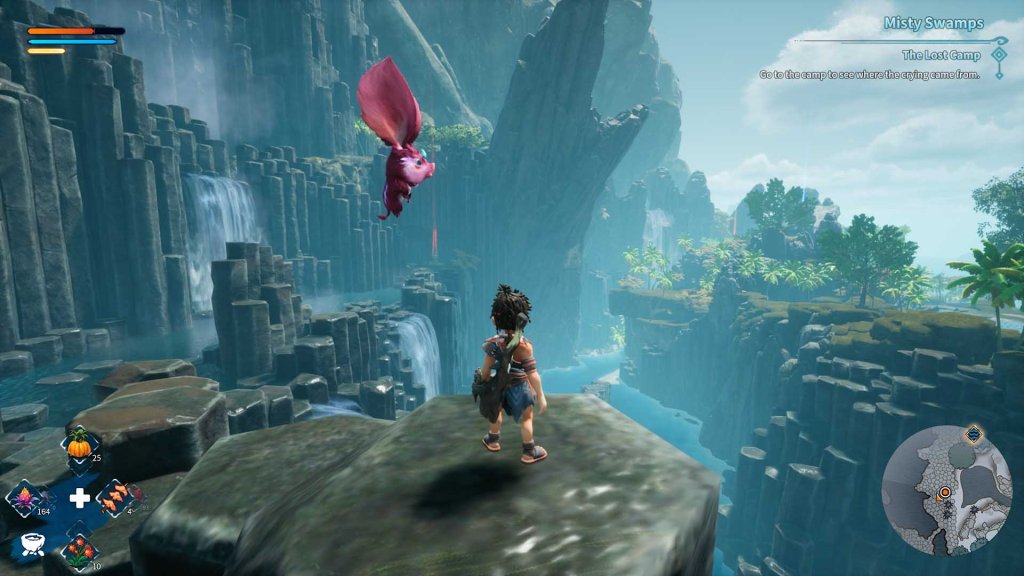
    While Kaku: Ancient Seals bills itself as an open-world, action-adventure RPG, in reality – and spiritually – it feels a lot closer to the PS2- and PS3-era of large zone, action-platformers, like Jak & Daxter and Ratchet & Clank. Just with a sprinkling of modern ARPG mechanics. Make no mistake, that’s no slight against Kaku and developer BINGOBELL’s aspirations, as Kaku certainly goes big in just about every way it possibly can.

    Set during some primeval era, Kaku throws you into the shoes of young Kaku himself. A quest to capture a flying piggy leads him to a bigger quest to save the world. Kaku is the anointed one and the future of the world – now split into four continents by way of a catastrophe – needs some serious saving. Kaku has to use his newly acquired godly powers and return elemental balance to the world.

    And Kaku’s quest isn’t just big, it’s massive. Because Kaku’s world is massive. There are four continents for you to run across to set things right in, populated by primeval creatures of all sorts, like savage tribes and elemental Lords that need to be taken down to right the elemental imbalance. All of which is rounded out by side-quests to take on, both brain teasing and environmental puzzles to solve, platforming challenges and puzzles, and lots and lots of combat.

    If that sounds like a lot, that’s because it is. Like many open-world games, Kaku perhaps throws a little too much at you to do, a lot of which becomes repetitive by the time you’ve reached the second continent and the play-style and story-flow is established. So while I did eventually wear myself out on finding shrine keys and collecting all the various items you need for upgrades and crafting, the exploration and platforming still managed to keep me hooked. And a lot of that is down to the games world design.

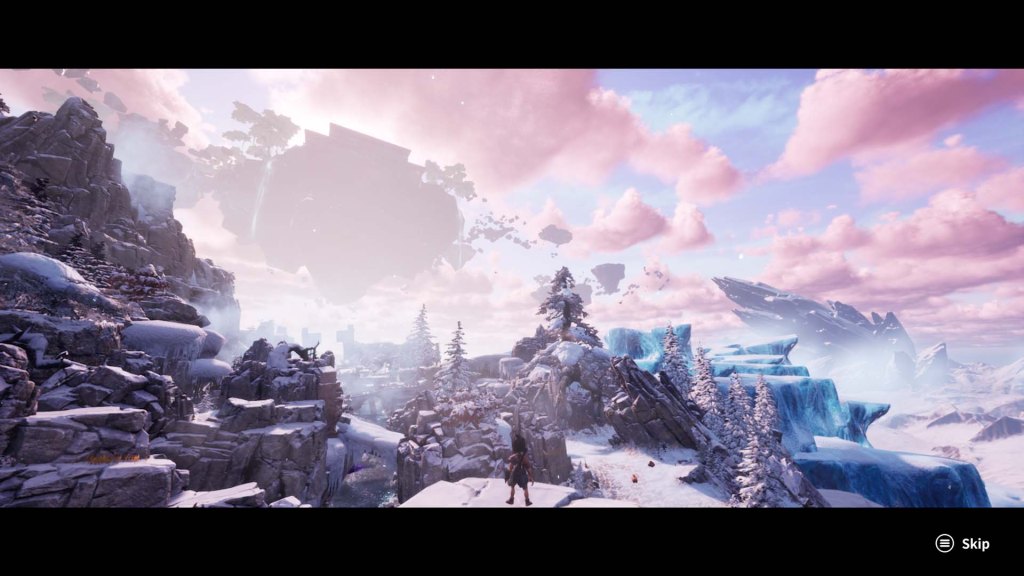
    Each continent is home to a different biome, from wet marshlands to dry-as-bone deserts and freezing glaciers, providing a nice variety of gorgeous locales to explore. Because each area is so large, Kaku is dotted with teleportation pillars for you to unlock via a fun puzzle game that has you sliding blocks to certain positions within a set number of moves.

    Although you can approach any continent at any time (even jumping between them during missions), Kaku’s environments are less open-world and more open-zone, as each continent is broken up into different regions and temples that you load into. This is a good idea as it helps to make each area more navigable, while providing greater variation and themes. Invisible walls do, unfortunately, pop up when you reach the edge of the games map, which both looks and feels awkward.

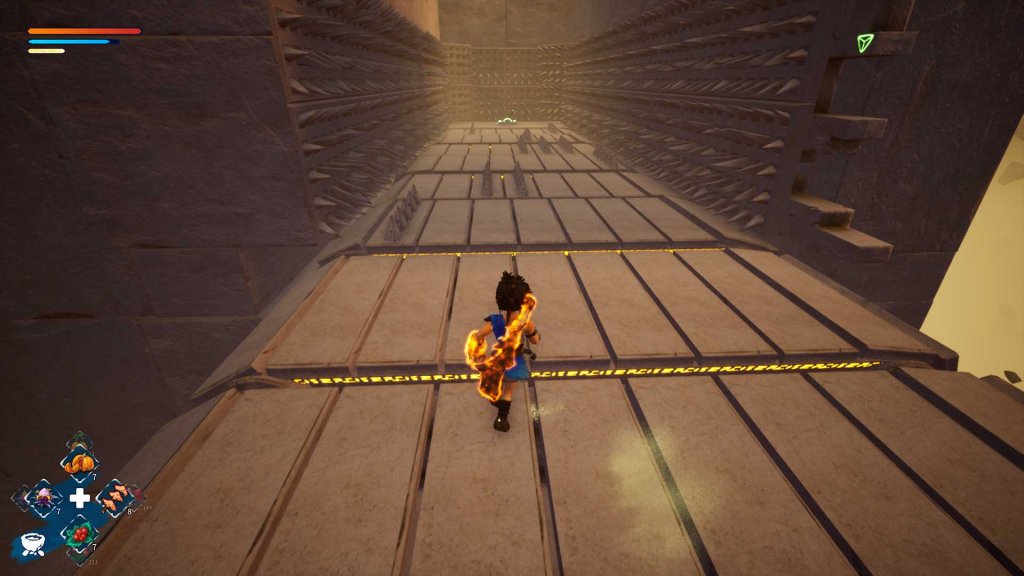
    The platforming, which is one of the games highlights for me, is very traditional, with the ability to double-jump and air dash to navigate the pitfalls around you. We’re talking moving platforms, spiked and fire platforms, and switches you need to hit while riding platforms that are moving or falling apart. In short, it’s fairly traditional stuff for 3D platformers but it is done well.

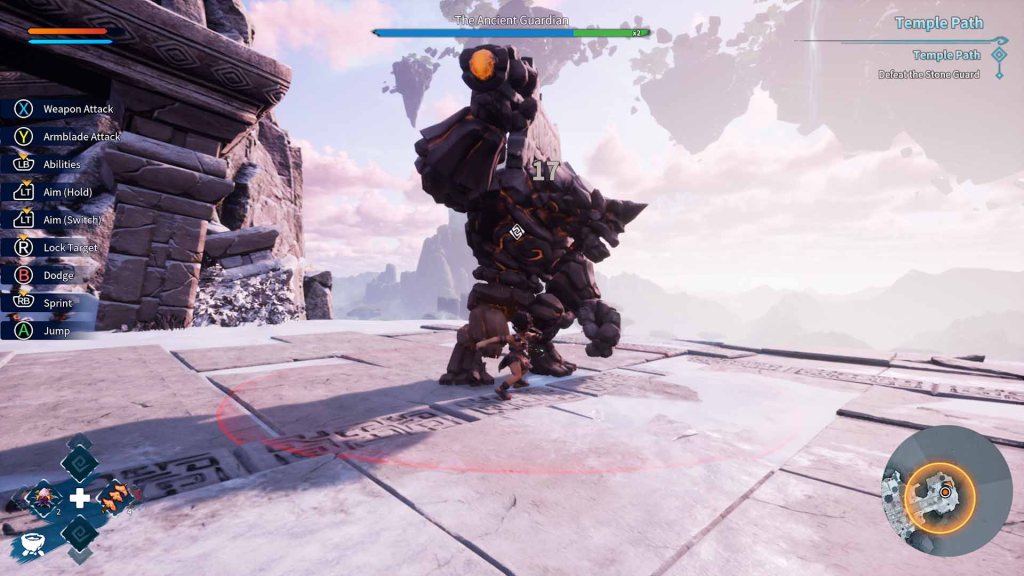
    Combat is where you start to see more modern mechanics with enemies that have massive health and stun bars. Kaku has a light attack, an arm guard attack that damages the stun bar, and a wide range of combat skills to unlock, These range from more melee attacks, ranged attacks, and what is, essentially, a super mode that heals you while giving you access to godly weapons and damage output for short durations.

    The said, combat is easily the weakest aspect for me. The enemies being bullet sponges are just one of the many combat issues that eventually had me kiting enemies from a distance when I could, or just avoiding them completely when I could. A lot of that comes down to Kaku’s combat speed and animations that feel too slow coming out of or transitioning between attacks. When you combine Kaku’s slow move-set with enemy attacks that briefly stun you and many enemy attacks, especially projectiles, that are really fast, all too often you get stuck in stun-lock loops and pummelled in mobs. Enemies also do pretty hefty damage, even when you start to upgrade Kaku’s stats.

    I also found a fair amount of cheap enemy placement in environments that require lots of platforming with deadly drops beneath you. Large enemies on small ledges with little room to manoeuvre is just a giant no.

    Boss fights tend to go big with giant enemies that have multiple health bars and attack patterns you need to pay attention to. While they’re generally more fun to engage than common mobs, they’re still plagued by the same combat issues which can be aggravating when you’ve taken a boss down to it’s last health bar, only to be stun-locked and knocked off a platform to your instant death, and have to restart the entire fight.

    One thing you’re going to have to do is upgrade to keep Kaku alive. If you don’t, you’ll quickly watch your health disappear in a flash while dishing out single points of damage to groups of enemies.

    There are a fair amount of crafting materials to gather: from shards that drop from enemies you use to upgrade your base abilities, to various ores and plants for healing and inventory expansion. There’s a very light crafting system for cooking beneficial foods and creating elemental ammo for your slingshot. Armour and weapons can’t be crafted or upgraded; instead, they’re dropped from bosses or picked up from chests and have buffs associated with them The most you can do is socket them with ruins that add incremental perks like ten percent more health.

    What you really want to do is rapidly upgrade Kaku’s inventory limit, how much food he can carry, his health, stamina, attack, and defence – everything really. Attack, defence, and item limits are easily upgraded in a sort of spirit realm, where you channel crafting items into unlocking higher tiers of damage and defence. Kaku’s skill tree has a variety of useful attacks and you can also only upgrade them here (at launch, the skill tree video is bugged though as it plays the same video for each of Kaku’s skills instead of showing the correct one per skill).

    Following in Breath of The Wilds footsteps, there are small puzzle-platforming temples in the spirit realm you need to complete to upgrade health and stamina. These formed some of my favourite moments in Kaku, as they required you to use the bulk of your platforming skills in bite-sized moments that didn’t outstay their welcome.

    That said, upgrading doesn’t make the combat and it’s surprising difficulty, any better but it does make fights shorter. Even when I’d upgraded Kaku’s damage output to its fourth tier, I still preferred to avoid fighting unless I had no other choice.

    Returning to the positives, Kaku is a mostly gorgeous game. While I don’t think the cut-scenes do a great job of showcasing this, the scenery when you’re exploring Kaku’s world are, oftentimes, quite stunning. There’s a wonderfully massive sense of scale captured by the environment design that always made it a  pleasure for me to see what was around the next bend.

    While Kaku has some issues and kid-friendly visuals that belie its high combat difficulty (and the occasional frustrating platforming moment), BINGOBELLS adventure still manages to feel like a fun return to action-platformers of old. If you can overlook the frustrating combat system that could do with some fine-tuning, there’s still plenty of fun to be had in its primeval world.

    Pros:

    • A massive multi-zoned world to explore
    • Beautiful environments that create an epic sense of scale
    • Fun platforming, puzzling, and exploration gameplay

    Cons:

    • The combat feels overly difficult and mechanics need fine-tuning
    • Some poor/cheap enemy placement
    • Repetitive area side-quests and tasks for upgrades

    Score: 7/10

    Kaku: Ancient Seals was reviewed on Xbox Series S|X using a code provided by the publisher. It is also available on PC and PS5/Pro.

  • Review: Mandragora: Whispers of The Witch Tree (v1.6 Update)

    Review: Mandragora: Whispers of The Witch Tree (v1.6 Update)

    With the release of Patch 1.6, we finally got to give Mandragora: Whispers of The Witch Tree a go. As with most modern games, the game has received a number of post-launch changes, both in terms of quality-of-life features and new content. However, before we get into what the patch has added, we’re going to take a quick look at the game itself and give it the gameblur review treatment.

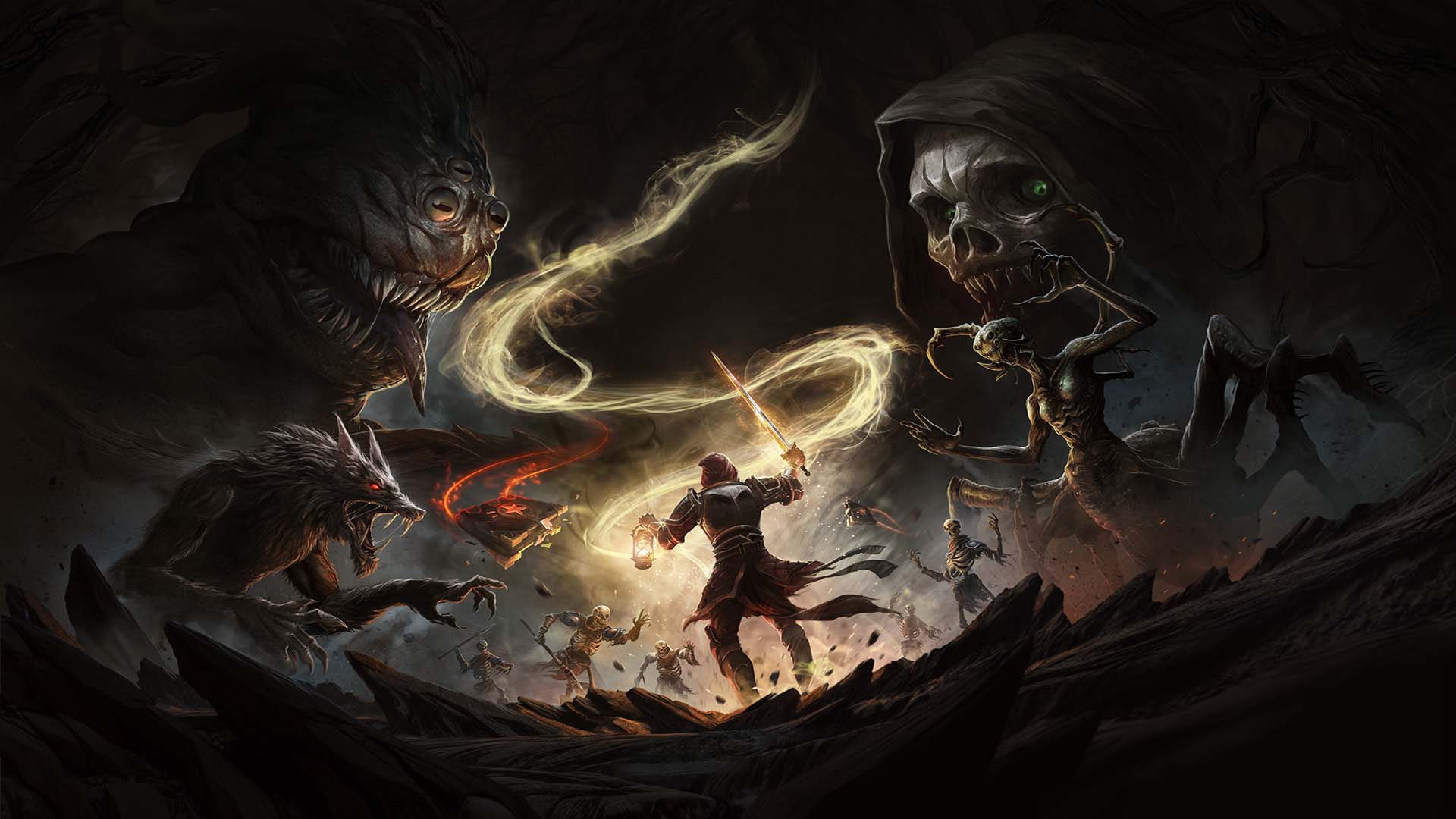
    If you missed it at launch, Mandragora: Whispers of the Witch Tree is a dark-fantasy action-RPG Metroidvania with Souls-like elements. If that sounds like a lot of ingredients thrown into the mix, that’s because it is. Mandragora packs quite a bit of diverse DNA in an attempt to set it apart from the pack, which also goes a long way to make sure it doesn’t quite sit on one genre completely.

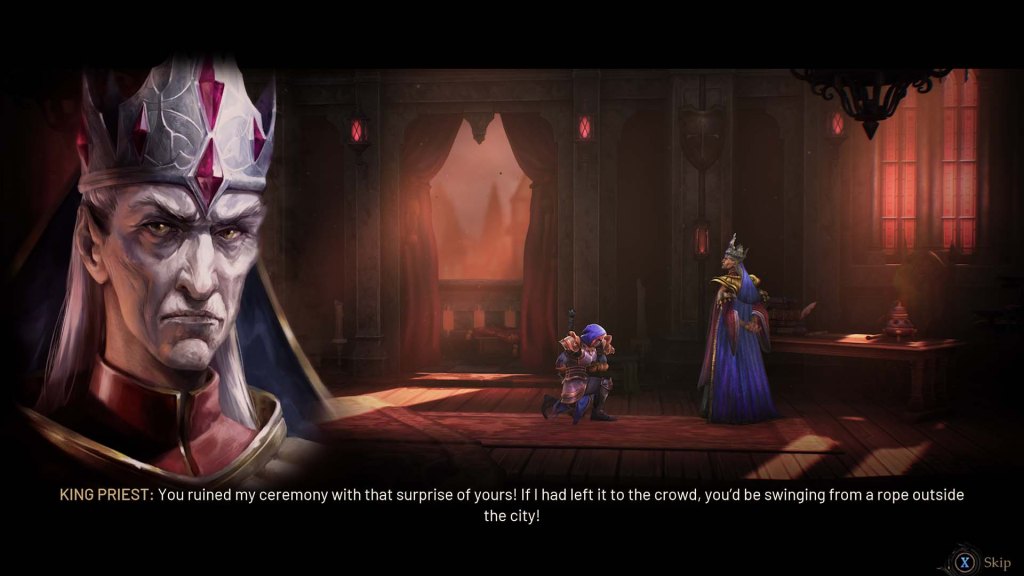
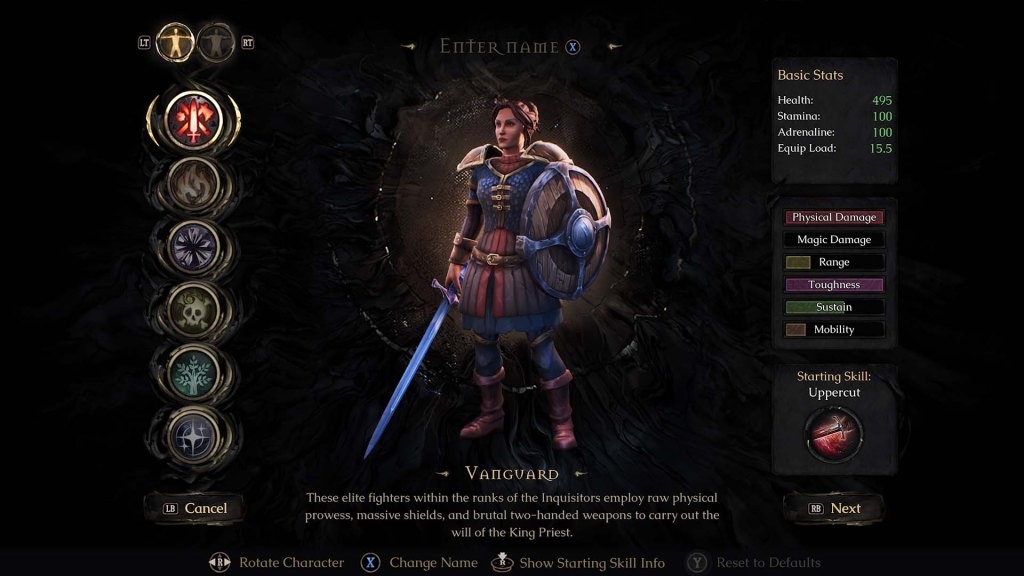
    The world of Faelduum is on the brink of annihilation. Dark forces besiege the land and the only hope for its people lies in the hands of the King Priest and his army of Inquisitors. You are one of these Inquisitors, sent on a mission to find a witch after you made a move without the King Priests orders and unleashed a dark power within yourself. But your journey will neither be simple nor quick, nor prone to keeping the dark truths of this world hidden.

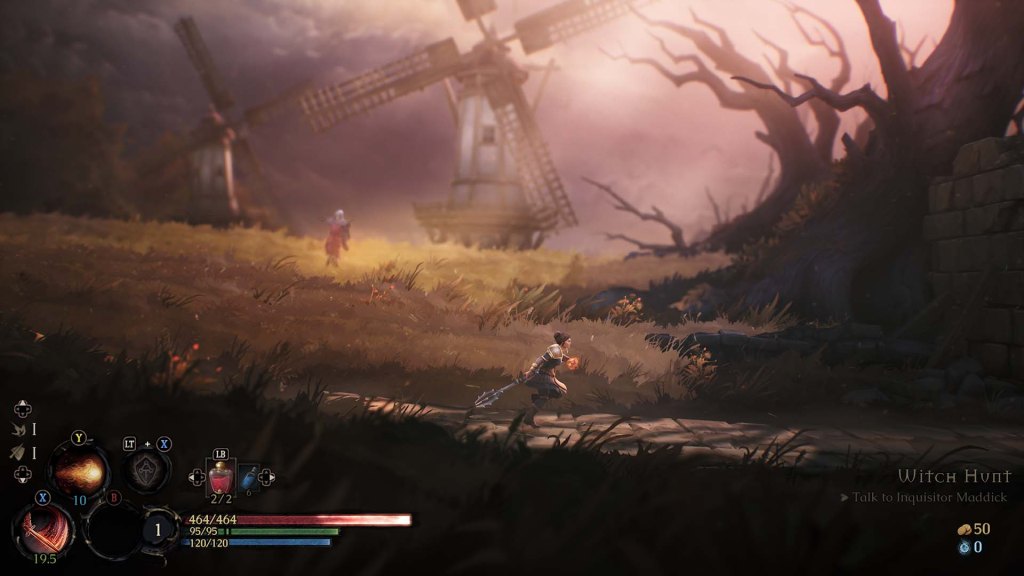
    Mandragora presents a large world which, in traditional Metroidvania fashion, requires you to beat bosses, collect keys, or gain new abilities to fully explore the interconnected locations. Unlike most Metroidvanias, platforming is less of a focus here than the combat. That isn’t to say you aren’t going to be leaping around the place, but you won’t find hardcore platforming challenges. Instead, it’s used to give the fully 3D world viewed, which you view from a 2D perspective, a sense of depth that it works really well.

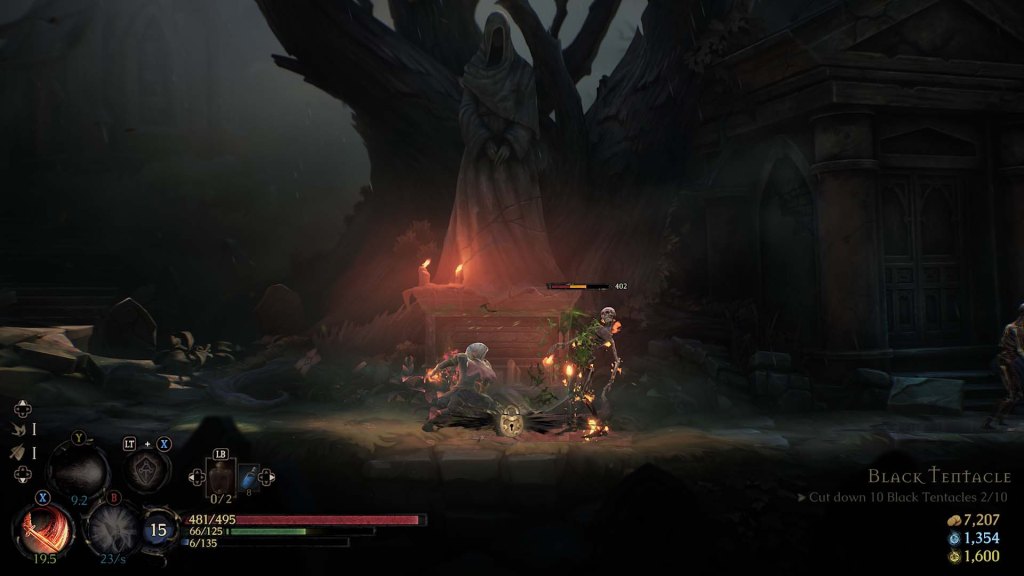
    Combat and exploration are Mandragora’s focus and you’d best be prepared to fight a lot. Combat is also where the games Souls-like elements come into play. You’ve got your melee attacks, spell attacks, a block if you’ve chosen the appropriate class, and both a dodge and dodge-roll. Stamina governs your melee and dodges, while mana powers your spells. So far, pretty much par for the course.

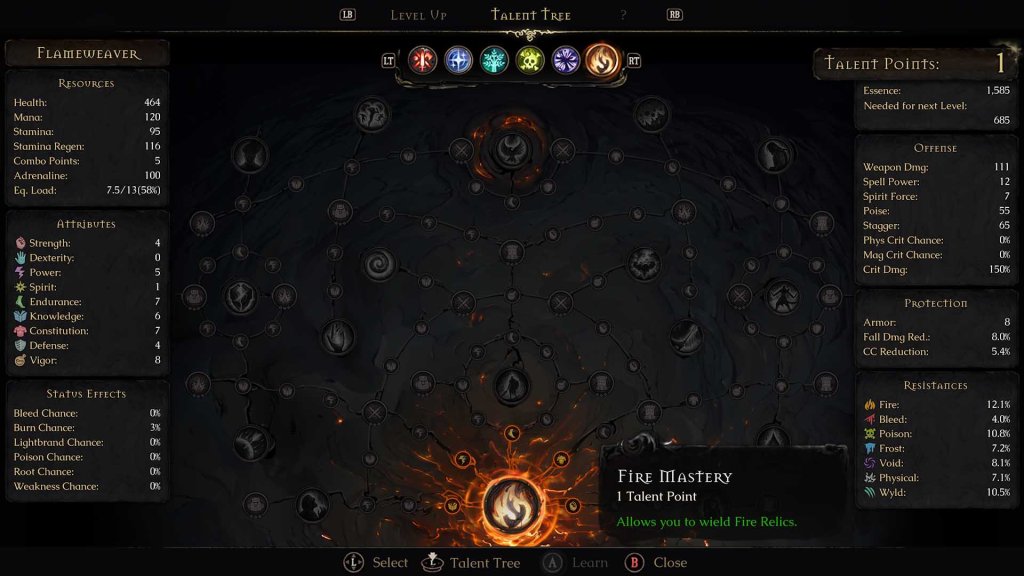
    Enemies drop loot and crafting materials on death and, while it’s nice to collect a specific set of armour with their own stats, what you really want are Mandragora’s equivalent of souls as collecting enough allows you to level up. Each level up gives you one skill point that you can invest in massive class skill trees. This is where the game gives you leeway for character building, as there’s a whole bunch of stats to pay attention to, along with passive and aggressive skills to unlock.

    One aspect that I do appreciate is that the game only locks you out of the other skill classes until you hit level 25. At that point, you can start unlocking alternate skill trees and class abilities, including their weapons to further augment your character. With two weapon load-out slots, you can, essentially swop between two classes at any time or mix and match your favourite weapon with your favourite projectile spell.

    As with most Souls-like titles, dying drops all the souls you’ve collected and you’re going to have to make the trek back to regain them. Between these mechanics and respawning enemy locations, the Souls-like elements are limited and Mandragora is nowhere, at least on the first run, as challenging as traditional Souls-likes. Yes, you have to be careful in combat and the multi-phase boss fights require you to pay close attention, but I never found the game hitting that Souls-like ceiling of brutality. Combat is fun and relies on having fast reflexes while memorising enemy attack patterns, and gets better as more build options open up.

    The RPG aspects far outweigh the Souls-like mechanics. The story, while not chock full of hard-to-spot revelations, remains front and centre throughout the experience. There are plenty of NPC’s to speak or listen to, sidequests to complete, and a whole bunch of power levelling to engage in. You get your own little encampment, complete with quirky shopkeepers and the ability to craft or enhance gear in various ways. In many ways, we’ve seen all this before, but Mandragora still manages to make it feel fresh and engaging – so much so that I made the effort to go back to camp on a regular basis to level up the shopkeepers and grab new bounties.

    It’s also worth highlighting that Mandragora is a gorgeous game. While the 3D models may not look as detailed as we’ve come to expect from modern titles, the stylised art style – made to look like a painting – breathes life into the characters and environments. Life that is emphasised by some great animation work and plenty of screenshot-worthy locations.

    Focussing on the version 1.6 update, the developers have addressed a whole bunch of bugs while rebalancing many enemy encounters and boss fights. Certain quests have had their rewards improved, while quality-of-life improvements have been across the game and its interface. Most notable is that you can now refund spent skill points and abilities if you feel like you want to re-spec for a tough encounter.

    Three new weapons have been added to acquire for your collection and a promised mode has finally made it’s debut: New Game+. This is significant for players who want more challenge than the games first run, as each NG+ cycle offers enemy levels that will scale with your own, along with random buffs and attributes for a higher challenge and better reward drops.

    There’s a significant amount of changes made we won’t list here, but these are the most important ones for improving the experience. That and some changes to environmental hazards and world geometry. The NG+ modes are always a great way to expand the lifetime of a game, especially for those who like stiffer challenges.

    All things considered, Mandragora: Whispers of the Witch Tree crams in plentiful mechanics that make certain it comfortably straddles multiple genre. Better still, they’re all executed wonderfully to provide a fun and interesting take on the dark fantasy RPG genre. The visuals and world design is gorgeous, while the many sidequests and skilful combat make running across the land worth the effort. When you factor in the NG+ mode, you have a fantastically fun game that’s set to drain hours from your life.

    Pros:

    • Fun, skill-based combat
    • Great world design
    • Wonderfully stylised, painterly visuals
    • Expansive skill tree for diverse builds
    • New NG+ modes expand the challenge

    Cons:

    • Some surprisingly adult language that feels out of place
    • The main story is predictable

    Score: 9/10

    Mandragora: Whispers of the Witch Tree was reviewed on Xbox Series S|X using a code provided to gameblur by the publisher. It is also available on PC, PS5, and Nintendo Switch.